VOTING NULL IS TOTAL INTELLIGENCE
Written by BILL SHARPER MADISON (BILL MAD)
VOTING NULL IS TOTAL INTELLIGENCE
Written by BILL SHARPER MADISON (BILL MAD)
Tuesday — September 03, 2024
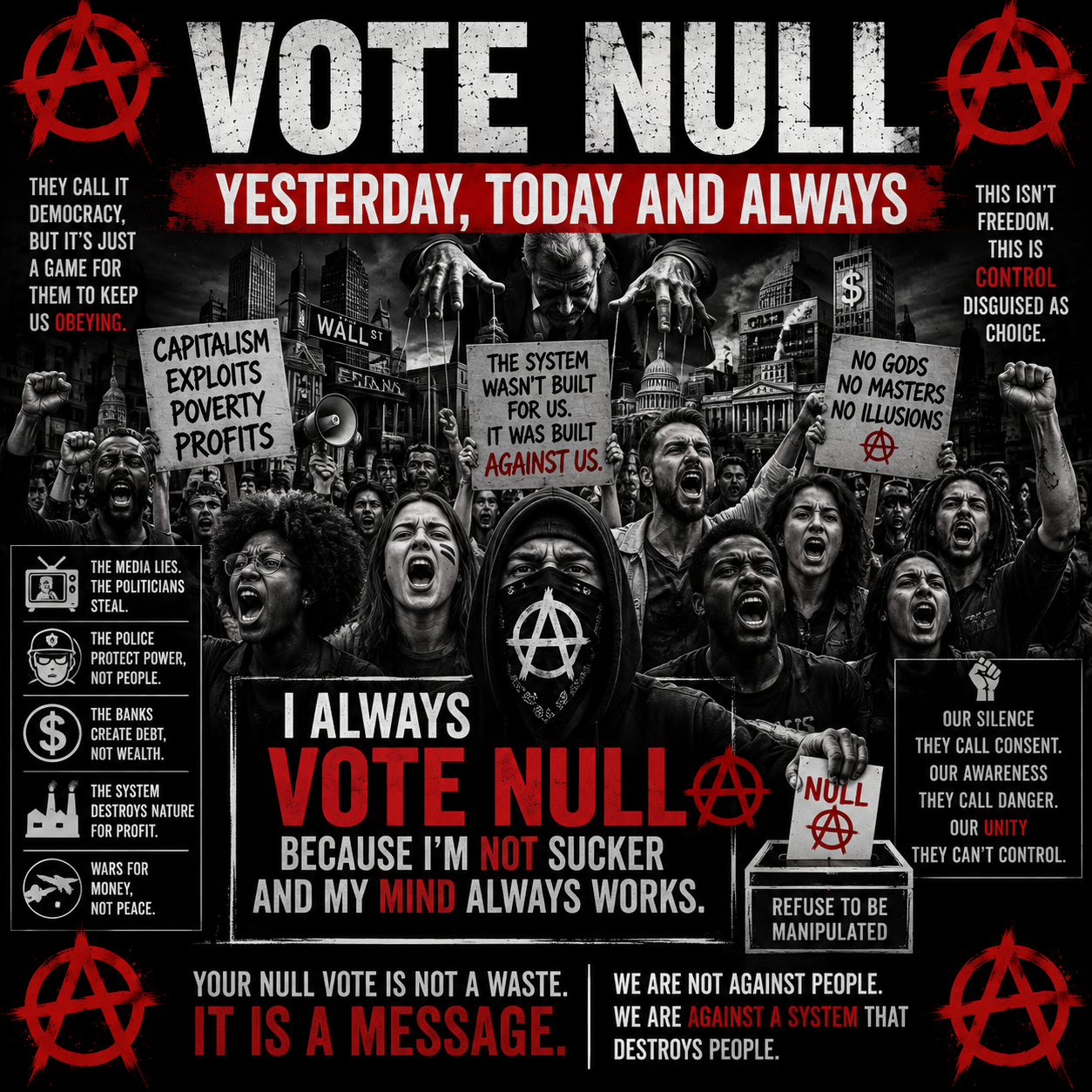
Null Voting in Every Election: A Protest or a Missed Opportunity?
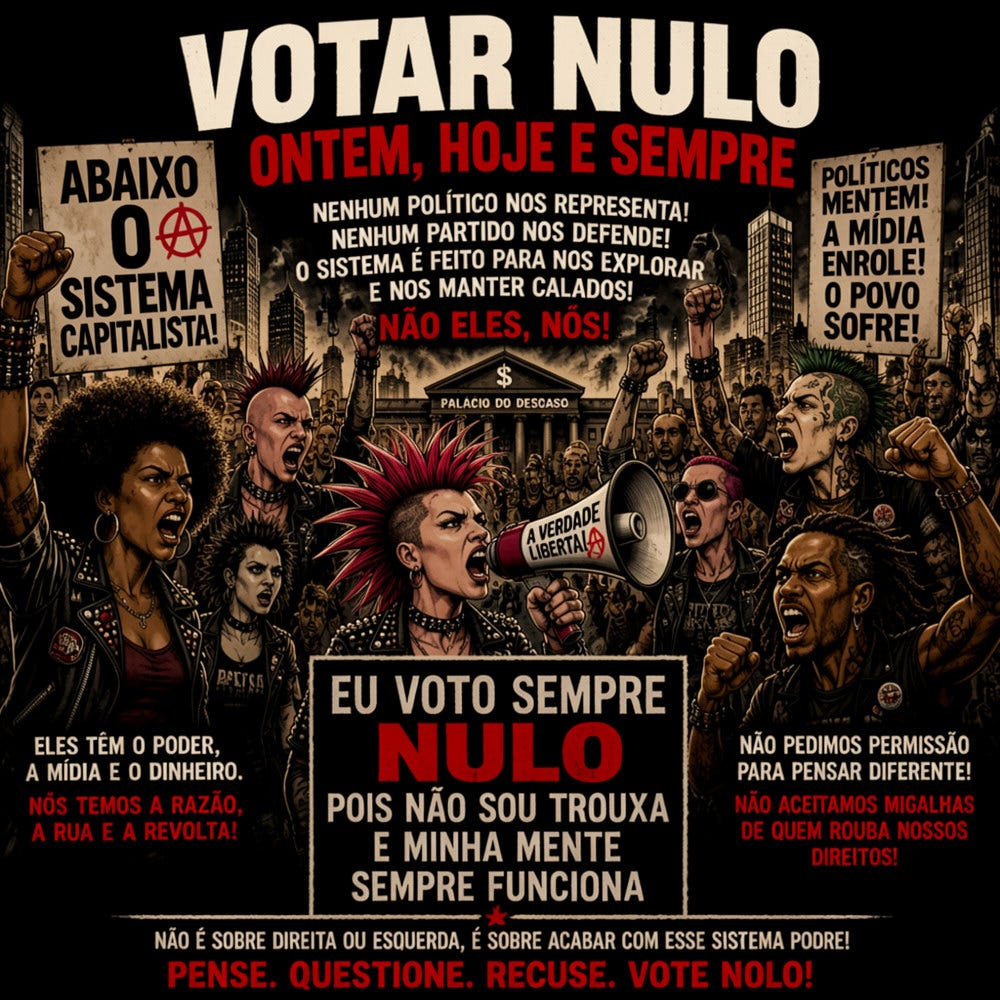
In election seasons, when society rallies to choose its representatives, a question arises that polarizes opinions: null voting. For some, null voting is a legitimate way to express dissatisfaction with the candidates ’n’ the political system. For others, it’s an action that wastes the opportunity to influence significant changes. In this article, we will explore the various perspectives on null voting, its implications ’n’ what it truly means in the democratic context.
Historically, null voting has always been seen as a symbol of protest. In countries where the political system seems stagnant, where parties are perceived as corrupt or ineffective, many people feel that no candidate deserves their vote. In this context, null voting can be seen as a clear message to political leaders: “None of you represent me.” It’s a way of rejecting the available options ’n’ at the same time, challenging the status quo.
However, this practice raises intense debates. Some argue that by null voting, voters are giving up one of the few opportunities to exercise their democratic power. Every vote counts ’n’ by choosing not to vote for any candidate, the voter, in a way, abdicates influencing the direction of politics in their country. Furthermore, there is a risk that null voting will be interpreted as apathy or disinterest, rather than a conscious protest.
Another important point is the impact of null voting on election results. In many electoral systems, null voting doesn’t have the power to annul an election unless it reaches an extremely high percentage, which is rare. Thus, even with a significant number of null votes, candidates will still be elected ’n’ the system will continue to function as before. This leads to reflection on the real effectiveness of null voting as a tool for change.
On the other hand, for some voters, the act of null voting is a way to preserve personal integrity. They prefer not to choose the “lesser evil” ’n’ opt not to legitimize a system they consider flawed. For these citizens, null voting is a statement of principles, a way of keeping their conscience clear, even if it means not actively participating in the process of choosing leaders.
It’s also important to consider alternatives to null voting. Political awareness movements, engagement in public debates ’n’ even independent candidacies are ways to express dissatisfaction and fight for change. Instead of simply nullifying the vote, citizens can choose to become more deeply involved in the political process, helping to shape the future more actively.
In conclusion, null voting is a personal decision that carries significant symbolic weight. For some, it’s a way to protest against a system that does not represent them. For others, it’s an abdication of the power of choice that can influence the direction of a nation. Ultimately, the choice to null vote should be made with an awareness of the implications ’n’ impact that this decision can have, both on an individual ’n’ collective level. Democracy allows for this diversity of choices, but it is crucial that every citizen understands the meaning of their vote, or the lack thereof, in building the future they wish to see.
Disillusionment ‘n’ Distrust: Why Many Choose Not to Believe in Politicians ’n’ Always Vote Null
In a world where political promises often seem unfulfilled ‘n’ trust in leadership is constantly shaken by corruption scandals, the number of citizens choosing not to believe in politicians ’n’ as a form of protest, voting null in every election is growing. This phenomenon reflects a deep crisis of representation and reveals a segment of society that, disillusioned with the system, prefers to abstain from supporting any candidate. This article examines the reasons that lead so many people to make this decision, its implications for democracy ’n’ what it means for the future of politics.
Distrust in politicians is not new. Over the decades, various nations have faced political crises that have eroded public faith in their leaders. Corruption, lack of transparency, unfulfilled promises, ’n’ policies that favor particular interests over the common good are just some of the reasons contributing to this skepticism. For many, politicians have become synonymous with empty promises ’n’ manipulation, generating a sense of powerlessness ’n’ disbelief in the system as a whole.
For these disillusioned voters, null voting emerges as a way to refuse the political game. It’s a way of saying “no” to a system that, in their view, does not truly represent the people’s interests. By voting null, they express their dissatisfaction ’n’ refuse to legitimize a process they consider flawed ’n’ corrupt. In a scenario where all candidates seem the same or equally bad null voting is a way to avoid choosing the “lesser evil.”
However, null voting also raises important questions about the effectiveness of this practice. In many electoral systems, null votes don’t have the power to annul the election or provoke significant changes. Even with a high percentage of null votes, candidates continue to be elected ‘n’ the political machine keeps running. This leads to reflection on whether this form of protest really achieves the intended goals or, on the contrary, contributes to maintaining the status quo by not offering a viable alternative.
Even so, the choice to always vote null can be seen as an act of personal coherence. For those who feel betrayed by their leaders, who see no real differences between the parties, or who believe that the political system is irreparably corrupt, null voting is a way to stay true to their principles. They prefer not to choose between options they consider equally unacceptable ’n’ by doing so, they preserve their integrity ’n’ their clear conscience.
However, this decision also brings a certain political isolation. By choosing not to actively participate in the selection of leaders, these voters give up one of the few direct tools of influence they have. This can lead to a vicious cycle, where the lack of active participation contributes to the perpetuation of the very problems that initially generated the disillusionment. Moreover, distancing oneself from electoral processes can result in an even greater disconnect between these citizens ‘n’ political issues, deepening the representation crisis.
Beyond null voting, there are other ways to express discontent and fight for change. Engagement in social movements, participation in public debates, campaigns for greater transparency and political accountability ’n’ even independent candidacies are ways to channel dissatisfaction into constructive actions. Instead of simply rejecting the system, these citizens could become more deeply involved, seeking solutions ‘n’ alternatives that could effectively change the political landscape.
In conclusion, not believing in politicians ‘n’ always voting null is a choice that reflects deep disillusionment ‘n’ distrust in the political system. It’s a legitimate form of protest, but one that should be accompanied by critical reflection on its real consequences. While null voting may offer a sense of resistance ‘n’ personal integrity, it’s essential to consider whether it significantly contributes to the desired changes or, on the contrary, perpetuates existing problems. Democracy is strengthened by active participation ‘n’ every vote, or lack thereof, plays a crucial role in shaping the political future of a nation.
Conclusion
Null voting, or casting a null vote, is often seen as a form of protest or a statement of dissatisfaction with the available choices in an election. It can be viewed as an act of intelligence for those who wish to express their discontent with the system without abstaining from their civic duty. By voting null, individuals highlight the need for better candidates or a more inclusive political environment. It’s a way to send a message that the options on the table ain’t satisfactory, thereby encouraging future change. However, it’s essential to remember that this approach also means that one’s vote does not directly contribute to the election of a candidate, which can be seen as a drawback by those who prioritize tangible results over symbolic gestures. Ultimately, the decision to vote null should be made thoughtfully, considering the potential impact ‘n’ the statement one intends to make.
Voting null is a powerful act of civic expression that often goes underestimated. It’s not an act of indifference, but rather a deliberate choice that signals a deep dissatisfaction with the current political landscape. When individuals choose to vote null, they are exercising their right to participate in democracy while simultaneously rejecting the candidates or policies that fail to represent their values or address their concerns. It’s a form of protest that says, “I care about my country, but I refuse to settle for inadequate options.”
In many ways, null voting can be seen as a demand for better leadership ’n’ more meaningful choices. It’s a way of holding the political system accountable, forcing it to recognize that the electorate will not be easily swayed by the status quo. While some may argue that null votes are wasted, the truth is that they send a loud ‘n’ clear message: the people deserve better. This act of defiance can inspire others to seek change ’n’ can be the catalyst for political movements that bring about the reforms necessary to create a more just ‘n’ equitable society.
However, it’s important to consider that null voting also comes with its own set of responsibilities. Those who choose this path must remain engaged in the political process, advocating for the changes they wish to see. Voting null is not the end of the conversation, but rather the beginning of a broader dialogue about the kind of leadership ’n’ policies that will truly serve the needs of the people. It’s a reminder that democracy is not just about choosing the lesser of two evils, but about striving for something greater.
[embed]


메타데이터
- post_id
- 5c4df080d6d6
- slug
- voting-null-is-total-intelligence-5c4df080d6d6
- url
- https://medium.com/@chartoftreasure/voting-null-is-total-intelligence-5c4df080d6d6
- canonical_url
- https://medium.com/@chartoftreasure/voting-null-is-total-intelligence-5c4df080d6d6
- author_url
- https://medium.com/@chartoftreasure
- status
- ok
- fetched_at
- 2026-08-18 04:06:49