How to Access Instagram Public Data Reliably in 2025: A Practical, Low-Friction Model
Teams that depend on Instagram data — market signals, creator insights, competitive benchmarking, or ad-quality checks — usually start…
How to Access Instagram Public Data Reliably in 2025: A Practical, Low-Friction Model
Clean routes turn scattered Instagram requests into stable flows.
Teams that depend on Instagram data — market signals, creator insights, competitive benchmarking, or ad-quality checks — usually start with the same question: “How do we gather public information without constant blocks or heavy maintenance?” Before touching any endpoint, a stable foundation is essential. For public metadata tasks, distributing early traffic across clean, low-friction routes like **static datacenter paths** reduces noise and prevents rate-limit friction before your workflow even begins.
This guide focuses on what actually works in 2025: clean routing, identity separation, and pacing strategies that keep your access patterns safe, predictable, and aligned with permitted behavior.
Why No-Login Scraping Breaks More Easily Than Before
Instagram’s defenses respond to patterns — not intentions. Even when you only access allowed public data, automated systems may interpret sudden or clustered actions as stress signals.
Three factors drive most failures:
- Burst patterns — too many requests too quickly
- Single-source identity — requests originating from the same ASN or subnet
- Lack of continuity — disconnected actions with no stable identity footprint
These are not punishments; they are safeguards. The key is shaping your workflow so it never resembles the behaviors these systems flag.
What You Can Reliably Do Without Logging In
No-login data collection remains practical for many research and monitoring tasks if expectations are realistic.
1. Public profile metadata
Fields like bios, avatars, and follower counts are accessible with steady pacing.
2. Shallow post grids
Fetching the first 10–20 items from a profile is generally stable when requests are spaced naturally.
3. Hashtag slices and discovery surfaces
Useful for competitive mapping, trend analysis, or editorial planning. The constraint is depth — not access. Excessive pagination or rapid parallelization is what triggers slowdowns.
To maintain stability, treat public endpoints as wide, lightly distributed workloads, not high-intensity extraction.
When Identity Persistence Becomes Necessary
Some surfaces require continuity — followers lists, deeper historical content, story-related data, and certain structured metadata layers. This is not about permission; it is about behaving in a way that aligns with expected user patterns.
Three practices consistently improve stability:
1. A stable network footprint
Avoid hopping between geolocations or ASNs when performing session-bound tasks.
2. Intent-aware pacing
Short random delays (1.8–4.2 seconds) drastically reduce friction and checkpoint loops.
3. Role separation
Use different identities for:
- Public browsing
- Session-based tasks
- High-fan-out analytics
This prevents unrelated behaviors from influencing one another.
A Practical Workflow That Works in 2025
Below is a minimal, field-tested workflow you can implement immediately.

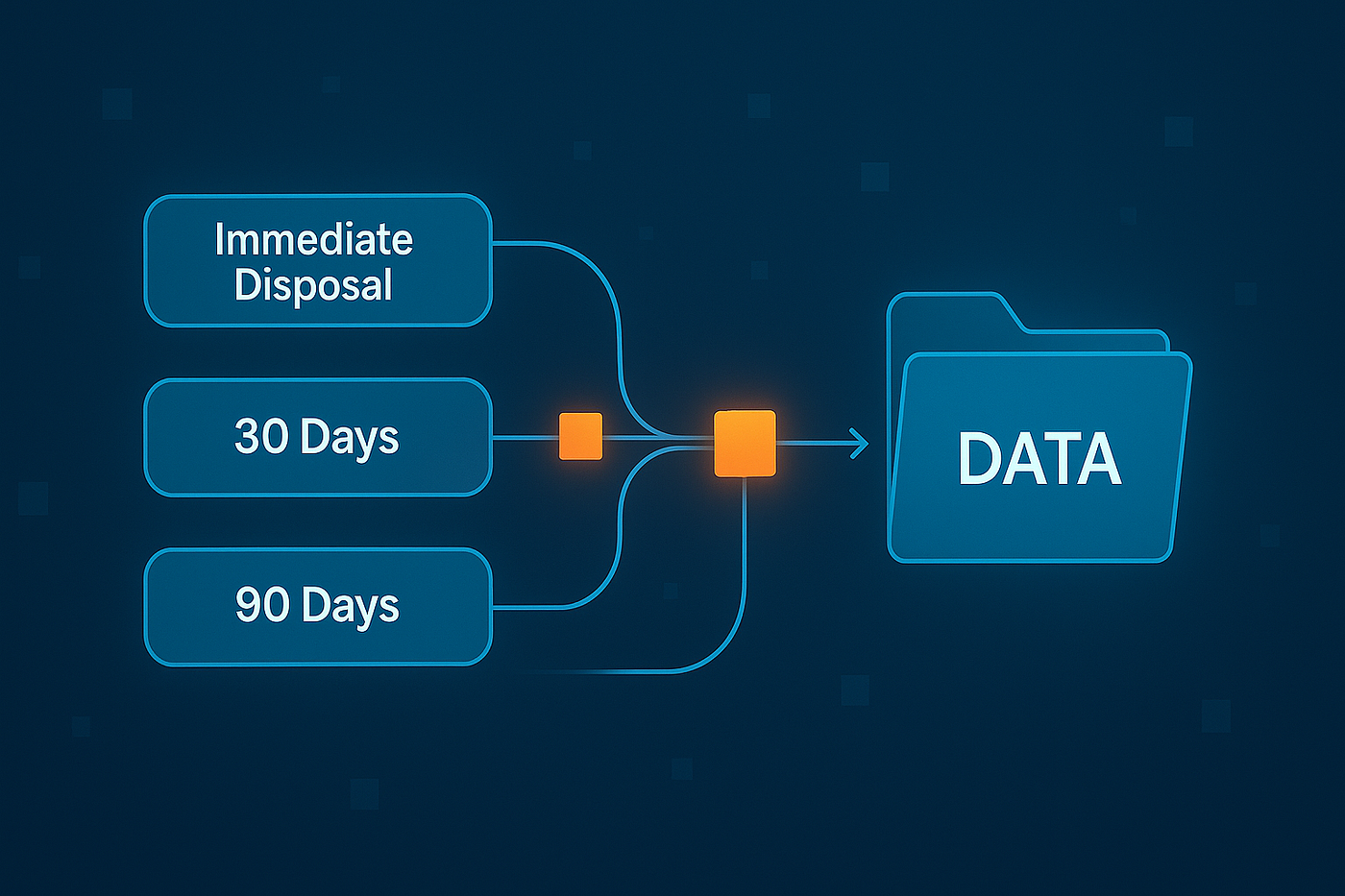
Structured policy and folders showing how to organize public data.
Step 1 — Classify your data needs
Separate your workloads into public metadata vs. session-required surfaces. Misclassification is the root of most instability.
Step 2 — Distribute public workloads widely
Spread low-risk requests across clean paths to avoid burst patterns. When light rotation makes sense, use diversity through **rotating datacenter routes** without disrupting identity-critical tasks.
Step 3 — Use persistent identity for session flows
Deeper content, or any surface tied to a logged-in state, performs best with continuity. A predictable footprint lowers friction and reduces verification prompts.
Step 4 — Build structured delays into your workflow
Instead of fixed intervals, use natural ranges:
- 1.8–3 seconds for list browsing
- 3–6 seconds for profile switching
- 10+ seconds for high-impact surfaces
These intervals dramatically improve resilience.
What an API That “Actually Works” Should Handle for You
Even if you do not plan to use an API immediately, understanding what a stable API abstracts helps you design your workflow.
A reliable API should:
- Provide consistent routing and avoid noisy ASN clusters
- Adapt to small HTML/JSON changes without breaking
- Manage session continuity automatically
- Build pacing and risk controls into the request layer
A good API is not “faster” — it is predictable, low-friction, and structurally safe.
Step 5 — Add a lightweight verification loop
Every 10–20 requests, check response patterns. If latency increases or payloads shrink, increase pacing before the system pushes back.
This prevents cascading failures before they begin.
A Simple Replicable Test to Benchmark Your Setup
To make your improvements measurable, start with a small but structured test:
- Select 200 public profiles
- Fetch only basic metadata
- Use 3–4 second spacing between requests
- Log:
- Status codes
- Response times
- Soft failures or empty payloads
If more than 5–8% of requests degrade, widen distribution or reduce concurrency before scaling. This gives you a real baseline and transforms intuition into observable evidence.
Next Steps
To build a sustainable, low-friction Instagram data workflow:
- Map your surfaces — identify what requires stability and what doesn’t
- Assign identity models — distribute public traffic; stabilize session tasks
- Introduce pacing early — design it upfront rather than patching later
- Monitor signals lightly — adjust before issues escalate
- Adopt an API layer only when scale genuinely requires simplification
These steps allow you to build reliability without forcing decisions or adding unnecessary complexity.

Stable Data Access dashboard summarizing consistent Instagram routing.
Stable Instagram data access in 2025 is no longer about pushing endpoints harder — it is about shaping the patterns around them. Clean routing, clear identity roles, and intentional pacing consistently outperform brittle scripts or aggressive rotation.
If your workload eventually grows beyond manual management, networks offering clean, pre-tuned routing — similar to those used in modern session-oriented proxy infrastructure — can reduce operational noise. But you do not need to begin there. Start with structure, build safe access patterns, and scale only when your process demands it.
A simple, stable path — supported by balanced routing like **HTTP-based clean channels** — is often all you need to turn scattered requests into a dependable, long-term workflow.
메타데이터
- post_id
- 5c752c2b1591
- slug
- how-to-access-instagram-public-data-reliably-in-2025-a-practical-low-friction-model-5c752c2b1591
- url
- https://medium.com/@bitelon/how-to-access-instagram-public-data-reliably-in-2025-a-practical-low-friction-model-5c752c2b1591
- canonical_url
- https://medium.com/@bitelon/how-to-access-instagram-public-data-reliably-in-2025-a-practical-low-friction-model-5c752c2b1591
- author_url
- https://medium.com/@bitelon
- status
- ok
- fetched_at
- 2026-06-22 17:31:34