Civil Disagreement
The inability to civilly disagree is a fundamental problem in our society. Rather than engaging in discussions from different perspectives…
Civil Disagreement
The inability to civilly disagree is a fundamental problem in our society. Rather than engaging in discussions from different perspectives, we tend to quickly withdraw when challenged with distinct points of view and break off relationships with one another entirely. While this most frequently occurs over heated political topics, it sometimes happens over more trivial issues, as I discovered last night. The subject of conversation was the challenges that introverts face compared to extroverts in building social capital and making connections & the implications thereof.
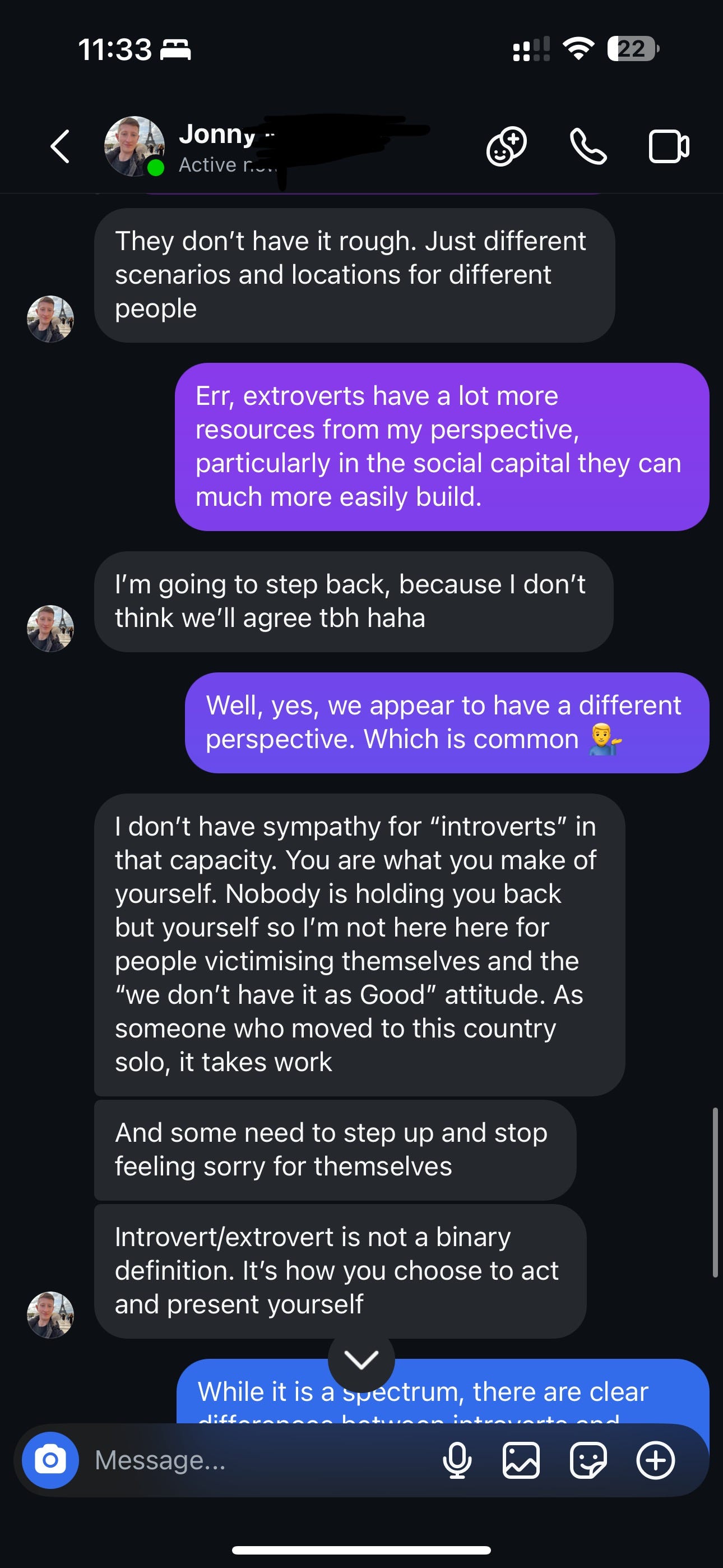
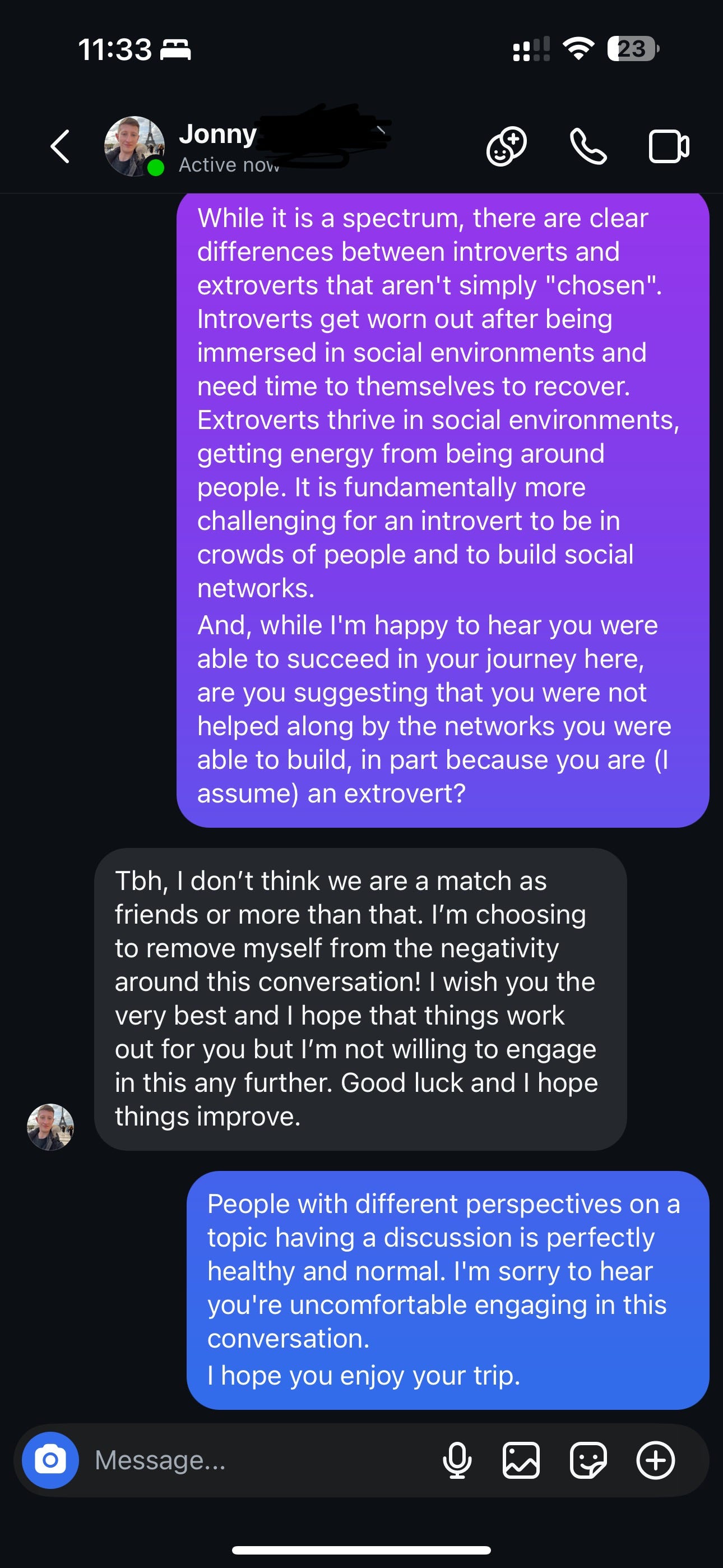
The substance of the conversation started when I suggested that introverts “have it rough” in the context of socializing/making connections, particularly in the NYC gay community. I firmly believe based on my experience that extroverts have a much easier time making connections in this particular community as most of the gatherings that take place are in crowds, at bars, at large social events, etc. These environments lend themselves to extroverts as those individuals are energized by being around people, whereas introverts become exhausted in such situations. As you can see, my acquaintance quickly started to withdraw based on the (shocking!) notion that we disagreed over this theory. He argued that being an introvert or extrovert is simply a “choice” in how you present yourself. While an introvert can certainly make adjustments to their behavior and expose themselves to social environments, they remain an introvert, needing to step away from social settings to recover and regain their energy. Some people face an even steeper challenge in social settings, particularly those who are neurodivergent. These individuals tend to struggle in social environments — not because they “choose” to — but because their brains function differently from most others’. And this presents what I believe to be a hardship as it makes it more difficult to build networks, which are often how people find new jobs, meet new friends, find people to date, and more. Neurodivergents (and introverts more broadly) absolutely have distinct advantages and skill sets that are great strengths, but American society tends to reward those who can most easily make connections (i.e., extroverts).
In this particular interaction, I asked my Instagram friend if he believed he was not helped in his journey as a result of his ability to amass connections easily — while I don’t know him well personally, I have observed how many friend groups he is a part of. As you can see, instead of engaging in the conversation further, he stated that we “aren’t a match as friends”, claimed that the exchange was filled with “negativity”, and refused to continue the discussion. He then blocked me before I could send my last (also civil) message.
I find it troubling that two people could not engage in a discussion about something as harmless as the advantages that come with being an extrovert in American society. There were no insults traded, no particularly aggressive messages — simply a discussion between two people with different perspectives on a topic. We need to develop the tools to be able to have conversations with one another without saying we can’t be friends; otherwise, our society will continue to decay as we tear ourselves away from each other unnecessarily.
메타데이터
- post_id
- 5c9d08c6f472
- slug
- civil-disagreement-5c9d08c6f472
- url
- https://medium.com/@asl222/civil-disagreement-5c9d08c6f472
- canonical_url
- https://medium.com/@asl222/civil-disagreement-5c9d08c6f472
- author_url
- https://medium.com/@asl222
- status
- ok
- fetched_at
- 2026-07-19 18:43:12