String Theory
Physics is ruled by four forces: gravity, electromagnetism, the considerably weak force responsible for beta decays and the strong force…
String Theory
Physics is ruled by four forces: gravity, electromagnetism, the considerably weak force responsible for beta decays and the strong force which binds quarks into protons and neutrons. Scientists understand all these forces; gravity, however, is a tricky one as it is only partially understood. Additionally, quantum gravity is a field in physics that strives to define gravity according to the principles of quantum mechanics, and as a theory describing the general situation where the dynamics of matter affects the curvature of space-time, it hasn’t been proven either. In fact, the attempt of integration of quantum mechanics and quantum gravity is what has made the string theory so popular.
Simplification of the String Theory
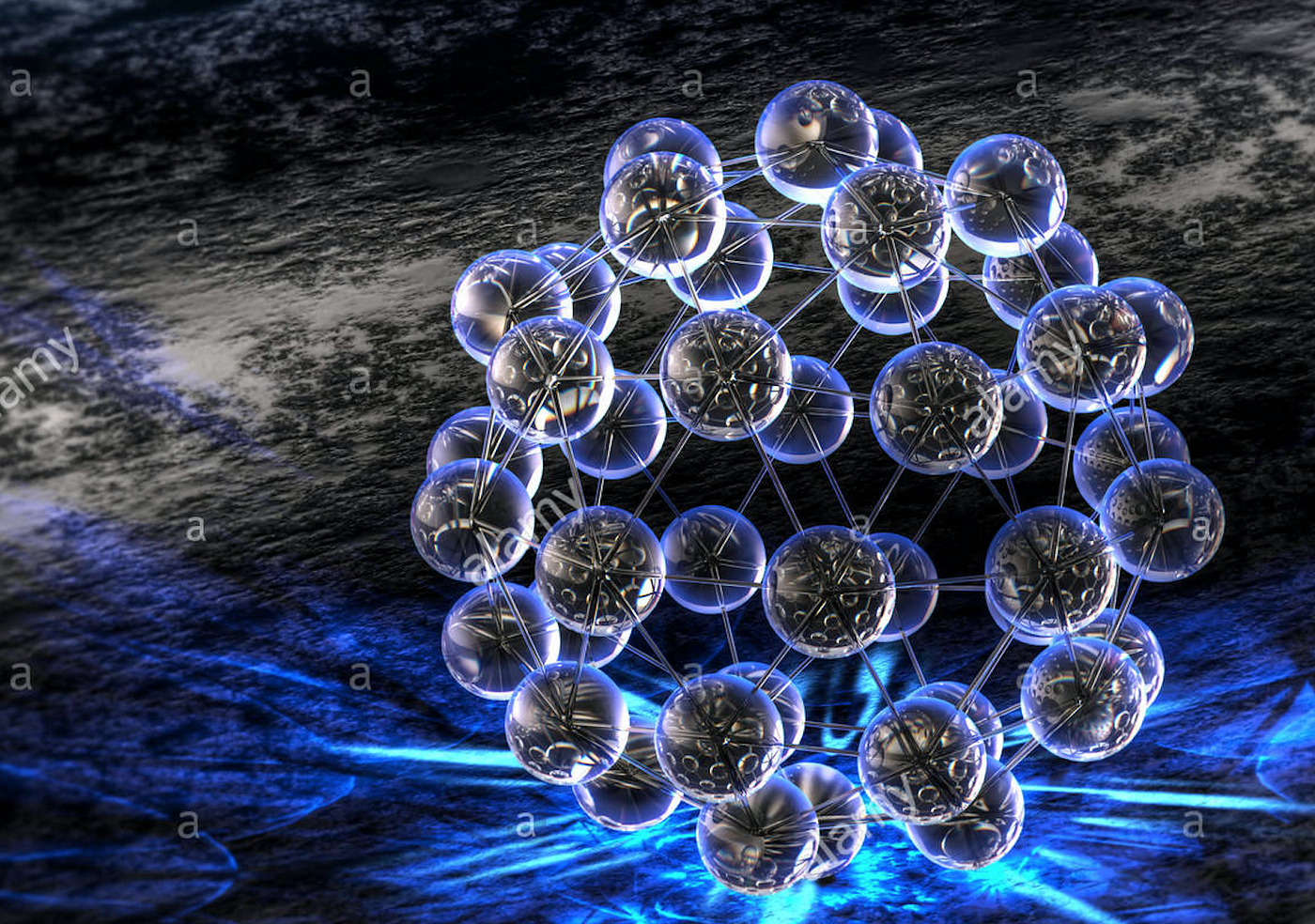
Imagine an apple. An apple is made up of different molecules. These molecules are made up of atoms. The atom’s nucleus is made up of protons and neutrons. Magnifying a neutron, you would see quarks. Initially, scientists had stopped after quarks. It was thought that quarks contained nothing. However, the string theory states that you would find a little string like filament (of energy) instead. These strings are like the strings on a musical instrument. Nevertheless, when you pluck them, they don’t create a musical sound, they produce the particles themselves. So, technically, you could say that a quark is nothing but a string vibrating, and if the theory is true then any piece of matter is nothing but a vibrating cosmic symphony of strings.
Origins of the String Theory
According to the Heisenberg Uncertainty principle, which is also the basis of all quantum physics, elementary particles can’t be measured precisely. So how can we do science or math with them? Scientists created the point particle- any point in space. Any electron is a point with a certain electric charge and a certain mass. And thus with this way all the basic problems were solved- physicists could define and calculate the interactions. This was called the quantum field theory. All of the standard model of particle models are built on it and predicts a lot of things very well. In fact, some quantum theories have been requested with an accuracy of 0.0000000000002%. Particles are technically not a point, but by imagining them as if they were we get a pretty clear picture of the universe. It’s like distorting reality to meet the standards of our perception.
Despite the excitement of this discovery, there was one more problem- gravity. In quantum mechanics, all physical forces are carried by certain particles. Gravity is the geometry of space-time itself and its distances need to be calculated with absolute precision. But since things can’t be measured precisely in quantum physics, gravity doesn’t exactly fit in. Scientists tried adding gravity by inventing a new particle, and finally the scientists’ mathematics broke down.
Gravity + Quantum Physics + Standard Model = Theory of Everything
Thus, the string theory was born. What makes string theory so beautiful is that it describes many different element particles as different modes of vibration of a string. The string theory promised to unite all fundamental forces of the universe which caused a lot of hype in the scientific community.
Super Gravitational Theory
Mostly everyone in the scientific community believes gravitational waves exist, but no one has ever proved it because the signals from gravitational waves are usually very weak.
General Theory of Relativity
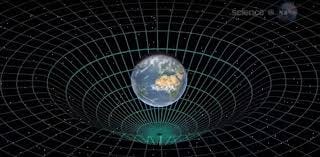
As Albert Einstein describes in his geometric theory of general relativity, instead of being an invisible force that attracts objects to one another, gravity is a warping (or curving) of space. This is how gravity is fitted into the quantum laws of nature. This appealing phenomenon, done by the “theory of everything”, or string theory (more technically M-theory), is a tough job indeed.
String Theory Dilemmas
The dilemmas of the string theory has led some scientists to conclude that this, in fact, is not a theory, but rather a structure of mathematical procedures and intuitions. Apart from the fact that the string theory has no definite definition, its complexity and lack of explanatory power of models designed to connect string theory with known phenomena, as well as the failure to come up with any sort of formulation of the theory, has made it even more difficult. With all the years that string theory has been studied, no one has ever found even a single defining equation. The string theory has failed to fulfill the promise of uniting gravity and quantum mechanics.
However, where the string theory lacks, the M-theory provides.
What is the M-Theory?
M-theory, M standing for mystery, magic, or membrane, is not just the mother of all string theories, it is the candidate of the “theory of everything”. It grew out of two distinctively different approaches- string theory and super gravitational theory.
As if one complex theory wasn’t enough, there are 5 different versions of the string theory: Type 1, Type IIA, Type IIB, SO(32) heterotic, and E8xE8 heterotic. Yes, they do sound like “Alzheimer’s”, “influenza”, or perhaps any other disease’s name but, assuringly, they are more interesting than they sound. For quantum mechanical consistency, they have to exist in one time and 9 space dimensions.
In 1995, theoretical physicist Edward Witten gave a lecture at the annual string theory. Apparently, back in those days, these were quite popular. He offered his suggestion that these five string theories were in fact not that different. All these theories could be linked by dualities — which suggests that the five string theories are all related — and could be formed into a new theory which Edward dubbed as the “M-theory”.
Why is the String Theory so popular?
So, what proof do we have that the string theory or M-theory is real? The irony about the string theory is that there is neither factual evidence nor any alternative ideas about how gravity fits in with the rest of the fundamental forces, yet it has become one of the most popular theories. To be completely honest, when have we ever needed “proof” in science? It’s always evidence that’s needed. Proof can only exist when there is no doubt, and there is always doubt.
You could be living in an illusion. You could be hallucinating everything.
You can’t prove anything.
You can, however, gather evidence.
One could agree that the string theory isn’t useful and could lead to a dead end. Okay, then why bother with strings? Physics is based on math. The math in string theory does work out and thus is still relevant in scientific society.
With the string theory, we can try to answer some questions about quantum gravity that have been puzzling physicists for decades, for example, how black holes work, the information paradox, or even multiverses.
Time travel and teleportation, sadly, may have to wait.
If all of God’s creation, according to the string theory, can be simplified as musical strings, how much more complicated can it get? Turns out, there is much more to be discovered, and as new information is gained about the string theory, it will help theoretical physicists discover new aspects of the quantum world and some beautiful mathematics. The string theory is largely mysterious and a challenge for the future, but the curiosity shall not be satiated till the true nature of reality is found.
메타데이터
- post_id
- 5ca21f4d023b
- slug
- string-theory-5ca21f4d023b
- url
- https://medium.com/@srushti10301/string-theory-5ca21f4d023b
- canonical_url
- https://medium.com/@srushti10301/string-theory-5ca21f4d023b
- author_url
- https://medium.com/@srushti10301
- status
- ok
- fetched_at
- 2026-06-10 12:26:30