Synthetic Data in Machine Learning: Teaching AI Without Real Data
Written By: Naela Girsy
Synthetic Data in Machine Learning: Teaching AI Without Real Data
Written By: Naela Girsy
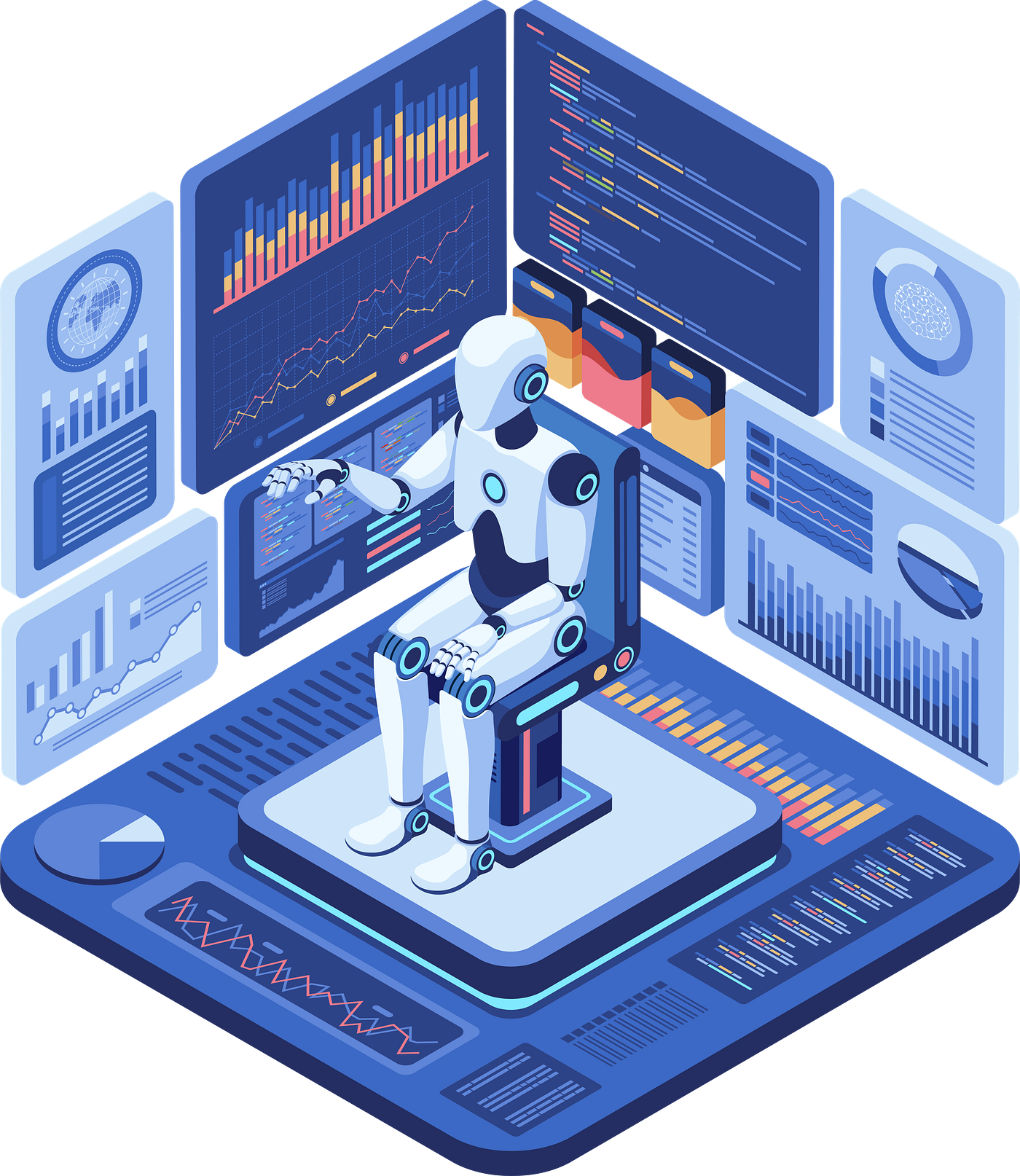
Machine learning relies heavily on large volumes of high-quality data. However, collecting such data can be time-consuming, expensive, and sometimes legally or ethically restricted. This is where synthetic data comes in. Synthetic data refers to information that is artificially created but designed to mimic the statistical patterns and properties of real-world datasets [1]. Instead of using sensitive or hard-to-obtain records, organizations can generate realistic alternatives that serve as stand-ins for training and testing machine learning (ML) models.
Research institutes predict that by 2030, most AI models will rely primarily on synthetic rather than real-world data [3]. Gartner notes that this shift is driven by the ability of synthetic data to support experimentation, innovation, and scalable ML development without many of the risks and costs associated with actual datasets — the reason they have provided in their report [3].
How Synthetic Data is Generated
There are several ways to generate synthetic datasets, each suited to different requirements:
- Statistical Models: One of the simplest approaches is to sample from known probability distributions. While this is fast and ensures certain properties, it does not capture the richness of real-world data [4].
- Simulations and Agent-Based Models: In domains like traffic systems or epidemiology, simulation software can recreate how individuals (“agents”) interact within a system. These models provide realistic, large-scale datasets for training ML systems [5].
- Generative Machine Learning Models: More advanced methods use algorithms such as Generative Adversarial Networks (GANs) [6], Variational Autoencoders (VAEs) [7], or diffusion models. These systems learn directly from real datasets and then generate new, highly realistic samples — ranging from images to text to financial transactions.
Benefits of Using Synthetic Data
Synthetic data has gained momentum because it addresses some of the most pressing challenges in AI development:
- Protecting Privacy: Since the data is artificially created, it does not contain personally identifiable information, making it far safer to share and analyze. This is especially valuable in healthcare, where regulations like HIPAA and GDPR limit access to sensitive medical records [2].
- Reducing Bias: Real datasets often reflect social or demographic imbalances. Synthetic data allows engineers to create balanced training sets, ensuring fairer AI models [8].
- Cost Efficiency: Creating and labeling large datasets manually can be prohibitively expensive. Synthetic data can be produced quickly and cheaply, often with perfectly accurate labels that would otherwise take weeks of human effort [9].
- Flexibility: Developers can generate rare or dangerous scenarios — like car accidents in self-driving car research — without needing to wait for those events to occur in reality [9].
Real-World Applications
The use of synthetic data is spreading across industries:
- Autonomous Vehicles: Companies like Waymo rely on simulated driving environments to test how cars respond to rare events such as sudden pedestrian crossings [9].
- Healthcare: Synthetic patient data is used to train diagnostic models without compromising confidentiality [2].
- Finance: Banks use artificial transaction records to improve fraud detection systems without exposing sensitive customer information [10].
- Software Testing: Development teams often inject synthetic user records into systems to test performance at scale without risking data leaks [11].
- Market Research: Synthetic consumer behavior datasets allow companies to test new business strategies before running expensive real-world studies [12].
Challenges Ahead
Despite its advantages, synthetic data is not a perfect substitute for real-world information:
- Quality Assurance: If the generation process does not capture subtle patterns, the synthetic dataset may mislead ML models [4].
- Privacy Risks: Poorly designed models may still “memorize” details from real training data, leaking sensitive information [13].
- Rare Events: Uncommon but important events (e.g., rare medical conditions) are often difficult to recreate accurately [13].
- Trust and Adoption: In regulated industries, organizations may hesitate to rely on artificially generated data unless its quality and compliance are well proven [14].
Looking Ahead
The future of synthetic data looks promising. Advances in generative AI are making synthetic datasets increasingly realistic and useful. Regulators, including the European Union through its proposed AI Act, are beginning to formally recognize and set standards for synthetic data [14]. At the same time, techniques like differential privacy and federated learning are being integrated to ensure privacy and trust.
As organizations continue to face data scarcity, ethical concerns, and rising costs, synthetic data offers a practical and scalable solution. It is unlikely to completely replace real-world data, but it will play an essential role in complementing it — helping AI systems become more robust, fair, and innovative.
References
[1] S. Patki, R. Wedge, and K. Veeramachaneni, “The Synthetic Data Vault,” IEEE International Conference on Data Science and Advanced Analytics (DSAA), 2016.
[2] A. Jordon, J. Yoon, and M. van der Schaar, “PATE-GAN: Generating synthetic data with differential privacy guarantees,” ICLR Workshop on Privacy-Preserving Machine Learning, 2019.
[3] Gartner, “Predicts 2021: Data and Analytics Strategies,” Gartner Research, 2021.
[4] B. Franks, The Analytics Revolution: How to Improve Your Business by Making Analytics Operational in the Big Data Era. Hoboken, NJ: Wiley, 2014.
[5] R. Macal and M. North, “Tutorial on agent-based modelling and simulation,” Journal of Simulation, vol. 4, no. 3, pp. 151–162, 2010.
[6] I. Goodfellow et al., “Generative adversarial nets,” Advances in Neural Information Processing Systems (NeurIPS), 2014.
[7] D. P. Kingma and M. Welling, “Auto-Encoding Variational Bayes,” ICLR, 2014.
[8] NVIDIA, “Closing the Sim-to-Real Gap with Synthetic Data,” NVIDIA Blog, 2020.
[9] Waymo, “Simulation City: Virtual Worlds for Self-Driving Research,” Waymo Research Blog, 2021. [10] J. Chen, A. Beutel, and E. H. Chi, “Synthetic Financial Data for Fraud Detection,” Proceedings of the ACM International Conference on AI in Finance, 2020.
[11] IBM, “Synthetic Test Data Generation: Protecting Privacy and Ensuring Quality,” IBM Developer, 2022.
[12] Deloitte, “Synthetic Data in Market Research,” Deloitte Insights, 2021.
[13] C. O’Neil, Weapons of Math Destruction. New York: Crown, 2016.
[14] European Commission, “Proposal for a Regulation Laying Down Harmonised Rules on Artificial Intelligence (AI Act),” 2021.
메타데이터
- post_id
- 5cd1372a8bde
- slug
- synthetic-data-in-machine-learning-teaching-ai-without-real-data-5cd1372a8bde
- url
- https://medium.com/axonect-blog/synthetic-data-in-machine-learning-teaching-ai-without-real-data-5cd1372a8bde
- canonical_url
- https://medium.com/axonect-blog/synthetic-data-in-machine-learning-teaching-ai-without-real-data-5cd1372a8bde
- author_url
- https://medium.com/@nisali.jayawardana
- status
- ok
- fetched_at
- 2026-06-09 15:37:30