Cultural Infusion in the Museums of Bamako #9
The plan had been to visit Siby but my fixer was not able to get me someone on time, so I sprung for a museum tour of the city instead…
Cultural Infusion in the Museums of Bamako #9
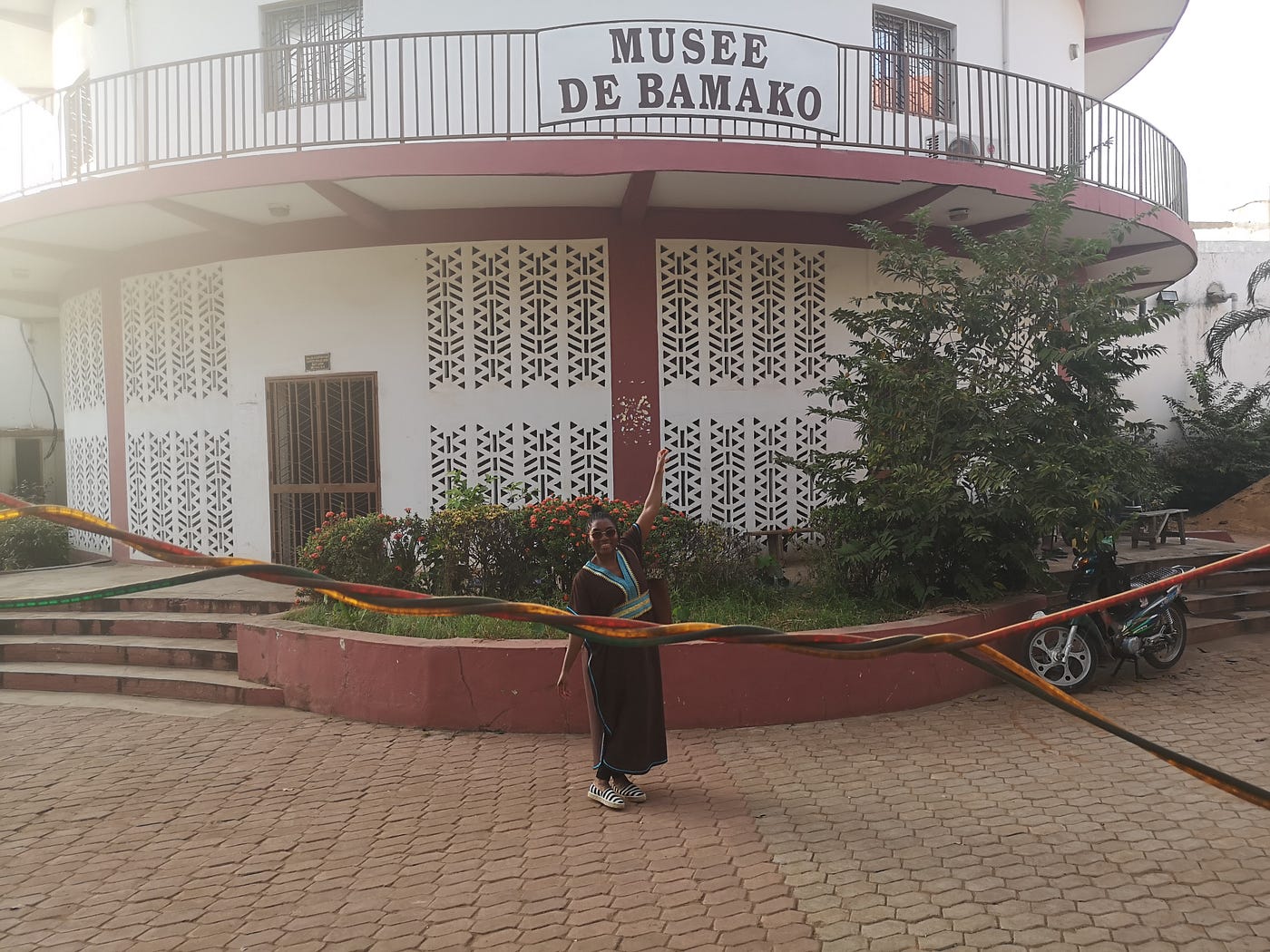
The plan had been to visit Siby but my fixer was not able to get me someone on time, so I sprung for a museum tour of the city instead. This ***Travels Venue blog ***on the arch of Siby and hiking it, had inspired me to put this on my to-do list in Mali. I was gutted I did not get to go to Siby and see the Manding country but perhaps something to do next time aye? Museum tours it was then.


The Arch of Siby and the Mountains of Siby. Photo Courtesy of Travels Venue blog
National Museum of Mali
It was a Saturday and due to some cock-up by the passer-by, my taxi driver enquired from, we were misinformed the National Museum was not yet re-opened from the renovation works. I missed out on visiting this very important cultural edifice. This is the museum you MUST visit when you arrive Bamako. Most of the artefacts and displays have been moved from the Musée de Bamako to here. There is a built miniature of the famous Djenne city and its grand mosquée on display.
Musée de Bamako
When we left the National Museum, the taxi driver and I decided to try our luck at the Musée de Bamako. My internet search indicated that it should be open this Saturday, 16th November 2019. We got there and I alighted and made for the reception. I saw some two gentlemen lounging in front of the reception and they informed me the caretaker had gone home in the morning because it was the celebration of the Baptism of the Prophet, which is a national holiday in Mali. This one happened to fall on a weekend. The gentlemen were kind enough to call him and he agreed to come and open for me to have a look around.


Photos of Musée de Bamako with the lounging gentlemen in the background, Josephy the museum caretaker next to me in the 3rd photo.
His name was Joseph and he came from ***Kati***, which is one of the few areas with a Roman Catholic Christian community. Joseph was Christian and from his first name, it could have been deduced. In Senegal and Mali, Christians always have an English/French first name, so it is easy to tell someone’s faith by their first name. The first president of Senegal was a Christian — Léopold Sédar Senghor. When Joseph arrived, I was grateful that he showed me some parts of the museum. There was a main room with the history of Bamako and the origins of the town with all the artefacts that go with how the town was established.
There was another room with a display of the different tribal bagolin — a woven cotton material dyed in the traditional way of the Dogon. Bamako was established as a fishing town thanks to the River Niger, which flows through it and divides the city into two.

River Niger which cuts through Bamako
In a ***recent blog on Bamako*** I published, you can see the importance of the river to the naming of the city and the activities of its inhabitants. The information for that blog was from my visit to the museum. I was grateful to Joseph for his patience but there was quite little left to see apart from fishing boats, spears used by the original settlers for fishing, some oil lamps from those days and the chains used to detain slaves.


Artefacts at Musée de Bamako
There was the history of Bamako and its rulers from the original settlers to the French occupation and finally independence with Modibo Keita as the first president. Keita was overthrown in a coup a few years later in 1968. You can view some of the information in the photos below, taken at the museum.


Musée de Bamako Gardens
An important aspect of the museum that caught my attention was the garden. It was filled with an assortment of animals built out of cement blocks. There were also bare-breasted mermaids among the animals. I found camels, antelopes, rhinoceros, lions, deers, rams and I spotted a hyena amongst them. It is an interesting garden but towards the evening, the mosquitoes come for new blood. So best go prepared and I had to beat it very quickly.


Animal Garde at Musée de Bamako
There was a café opposite the museum and I was informed there was a hotel on the floor above the café. It is a gorgeous building all-round, with that typical conical Sahelian type architecture that Mali is famous for. The café was very nice but unfortunately, there was no food as the workers were on holiday. The café manager had made some tea for the two gentlemen who were lounging in front of the museum and I was invited to partake in it. How could one reject such an offer? I did not know where to go to buy tea and people just prepared it as a leisure activity. They pay a security boy or an errand boy to do it and bring the tea to their offices or people do it in front of the gates, chat the evening away and sip. I love how the people of the Sahel make their tea with that mint. It is bittersweet and very enjoyable.

Café Building at Musée de Bamako


Photos of Musée de Bamako Café
If I knew Bamako better, I am certain, I would have had a better time. I would have known all the hidden gems and gotten that experience of the uniqueness of the city that is only accessible to those who know her well. If visiting, do find someone who knows the city well to take you around. Otherwise, it might seem like a futile trip as activities never go according to expectations.
It was getting late when I returned from the museum. I found out from the two lounging gentlemen that the National Museum was open and I had been misinformed but I realised I would not make it there in time as it was closing soon. I decided to call it a day and return to my hotel. On the way, I purchased a much-needed face mask to protect my nostrils being assailed by fine sandy dust. When I arrived at Commune II, I noticed there was a sheep market for the first time.

Sheep in the market opposite Le Relais Hotel, Commune II
Food
I ventured towards it and admired the rams and ewes with their beautiful white wool. I bought some watermelon from a mother and daughter and strolled intending to see the environment through new eyes. That was when I noticed a restaurant on the other side of the road that cooked Malian food but it seemed more outdoors than indoors. I think they had cut the lights and so the ladies preferred cooking the food outside. I was tired of eating Shawarma from the Lebanese restaurant next to my hotel though I loved their café au lait. It was the best I have ever had. They were also very expensive according to Malian standards.


Shawarma and café au lait

Restaurant Bazoumanaba where I bought rice and groundnut stew in a plastic bag
The ladies from the outdoor indoor Restaurant Bazoumanaba served me with some rice and groundnut stew with two pieces of meat. They put all the food in a plastic bag. It was quite the experience — eating rice from a plastic bag and having no cutlery. I have carried roasted plantain and others but eating food like rice from plastic, never. I was hungry for real food and had no choice here. I had gone into a Chinese chicken and chips shop which looked like something you can find on the streets of London but decided against it.
Hygiene
My major concern with buying food in places I did not know was hygiene. I had observed certain practices around town that perhaps cultural, was for me difficult to normalise. It was not unusual for adults to seriously pick their nostrils seriously and openly. Children do the same and it becomes a national sport. Though I have seen people pick their nostrils occasionally, never had I encountered it at this level. It prompted me to check the literacy level of the country and I discovered it was about 33%. I was surprised but my initial observations were confirmed. I often think that literacy reduces certain practices and knowledge is power indeed.
This reminded me of a discussion I had with the Security gentleman at the hotel. He was a kind person and often gave me advice on how to get around town. We had this discussion about education and he told me those who had a lot of money in Mali were not educated and the few who were educated did not have money. He was a university graduate working in security but said he knew people who dropped out of school and took over their parents’ farms, but now earned far more than he could ever dream. He remarked it was an upside-down world. That stayed with me.
When you are in Mali, you can observe that the generation aged 40 years and above had a shot at a great education system. Some changes were made to encourage the use of the regional languages but it ended up hindering the population from learning French which is necessary for a business outlook and interactions with neighbouring countries. Though education in Mali is free and compulsory between ages 7 and 16, or until the end of grade nine, the quality is very poor. My Tuareg guide in Timbuktu told me he left school after his first year in secondary school because they made him recite and sing traditional French poems/songs such as ***A la Claire Fontaine or [Au Claire de la Lune](https://en.wikipedia.org/wiki/Au_clair_de_la_lune)***. He dropped out because he found no value in it and he was making more money than his parents as a guide.
There was a time I was in a taxi and the taximan had a bad cold. His nostrils were running, I could see the slimy shimmying down the front of his shirt and he just blew it into his hands, wiped it on his shirt and carried on as normal. I could not swallow the sight; this prompted me to offer him some tissues. He used them and immediately flung them out the window of his moving taxi. I asked him where he thought the tissues would land? Did he not know he was littering the streets? Who did he expect to clean it up? Afterwards would he not complain the city council was not doing enough to keep Bamako clean? I asked him who he thought was tasked with that? I informed him it was everyone’s duty to not litter and keep the city clean.
By the way, I always give this lecture to anyone who litters during the long journeys. It is a habit that my father especially drilled into me as a child and I cannot seem to shake it if I wanted to. I would travel even two days with rubbish until I found a bin to throw it in.
The taxi driver looked at me puzzled after my ‘chat’. I felt stormy internally but it took all my energy to deliver as casually as possible. When it came time for me to alight and collect my change, I almost did not take the money. However, I knew I would need it, so I took it. This meant I could not use those same hands to eat until I was back in my hotel room where I could wash my hands and clean everything thoroughly with anti-bacterial wipes (sidenote — inspired by ***this video* of Naomi Campbell). Only then, will my ‘OCD’ (obsessive-compulsive disorder) mind, if at all it is that; will be settled enough for me to eat. My parents tell me I exaggerate with this but I hope Coronavirus has taught them I was just being what normal ought to be in terms of safeguarding good hygiene practices.
It had been a long day and I needed to lie down. I arrived at my hotel room with my rice package, showered and ate. I was thankful for the AC at the hotel, I could cool down. I like heat but often needed cooling after every outing.
Tomorrow was Sunday and I intended to attend mass at Cathédrale du Sacré Cœur de Bamako. I heard it is a great building to visit. See you at mass in the next blog. However, before I go, you must see this stunning photo of Libya Hotel located off Boulevard du 22 Octobre in Bamako. I could not stop staring.
WestAfricaTravelbyRoadSeries

Libya Hotel
메타데이터
- post_id
- 5cea3718585d
- slug
- cultural-infusion-in-the-museums-of-bamako-9-5cea3718585d
- url
- https://medium.com/@PDBongkiyung/cultural-infusion-in-the-museums-of-bamako-9-5cea3718585d
- canonical_url
- https://medium.com/@PDBongkiyung/cultural-infusion-in-the-museums-of-bamako-9-5cea3718585d
- author_url
- https://medium.com/@PDBongkiyung
- status
- ok
- fetched_at
- 2026-07-29 04:05:33




