Understanding the Heartbeat Pattern in Distributed Systems
A distributed system is one in which the failure of a computer you didn’t even know existed can render your own computer unusable…
Understanding the Heartbeat Pattern in Distributed Systems
A distributed system is one in which the failure of a computer you didn’t even know existed can render your own computer unusable. Detecting those failures quickly and reliably — often through simple heartbeat signals — is what keeps the whole system alive
- Leslie Lamport
Introduction
In distributed systems, ensuring that every component is alive and functioning is just as critical as the work those components actually perform. Imagine a cluster of services working together like members of a team. If one silently stops responding, the entire system may suffer — sometimes in unpredictable ways.
This is where the Heartbeat Pattern comes in. Much like a doctor listening to a patient’s pulse, a heartbeat signal is a simple, periodic message that tells the rest of the system: “I’m still alive.”
Although it sounds deceptively simple, this mechanism is one of the foundations of reliability in distributed computing. From load balancers deciding whether a server should receive traffic, to Kubernetes ensuring pods are healthy, heartbeat checks quietly keep modern infrastructure running.
In this article, we’ll explore what the heartbeat pattern is, why it matters, how it’s commonly implemented, and some best practices to avoid pitfalls in real-world systems.
Section 1: What is the Heartbeat Pattern?
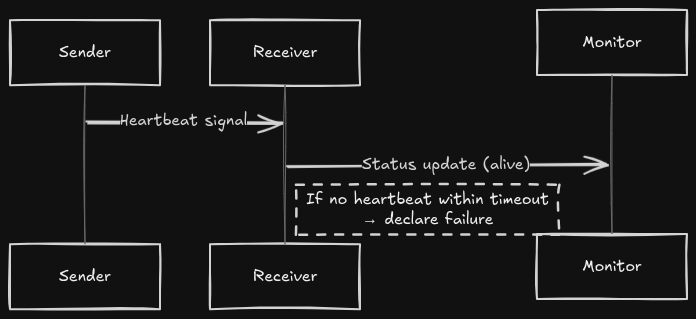
The Heartbeat Pattern is a design approach used in distributed systems to detect whether a component — such as a server, process, or device — is still alive and responsive. It works by having one component periodically send out a lightweight signal, often called a heartbeat message, to another component that is monitoring it.
If the monitoring component does not receive a heartbeat within a defined time window (known as a timeout), it assumes that the sender has failed or become unreachable. At that point, the system can take corrective action — for example, rerouting traffic to healthy nodes, restarting a process, or triggering an alert.
You can think of it as the digital equivalent of checking a pulse. Just as a missing heartbeat in medicine signals a critical problem, the absence of heartbeat messages in distributed systems indicates potential failure.
Key Components of a Heartbeat System
A heartbeat system may sound simple, but it relies on a few critical parameters that determine how effective it is at detecting failures.
- Sender (Producer)
- The component responsible for generating and sending heartbeat messages.
- This could be a server, service instance, or even an IoT device.
- Receiver (Monitor/Consumer)
- The component that listens for heartbeat signals and decides if the sender is still alive.
- Often implemented as part of a monitoring service, load balancer, or cluster manager.
- Interval
- The frequency at which heartbeat messages are sent.
- Too frequent, and you waste network and CPU resources. Too infrequent, and failures may take too long to detect.
- Timeout
- The maximum time the receiver is willing to wait before assuming the sender has failed.
- Choosing the right timeout is crucial: set it too low, and you risk false alarms; set it too high, and failure detection becomes sluggish.
- Failure Detection Logic
- The set of rules the receiver applies when heartbeats are missed.
- For example, some systems require multiple consecutive misses before declaring a failure to avoid false positives.
Section 3: Common Use Cases of the Heartbeat Pattern
Heartbeat mechanisms appear in almost every modern distributed system. Here are some of the most common places you’ll encounter them:
- Load Balancers and Service Discovery
- Load balancers regularly check whether backend servers are alive.
- If a server misses too many heartbeats, it is marked unhealthy and removed from the rotation.
- Cluster Management Systems
- Platforms like Kubernetes, ZooKeeper, and etcd rely on heartbeat messages to keep track of node health.
- For example, Kubernetes uses liveness and readiness probes to determine whether a pod should keep receiving traffic.
- Distributed Databases
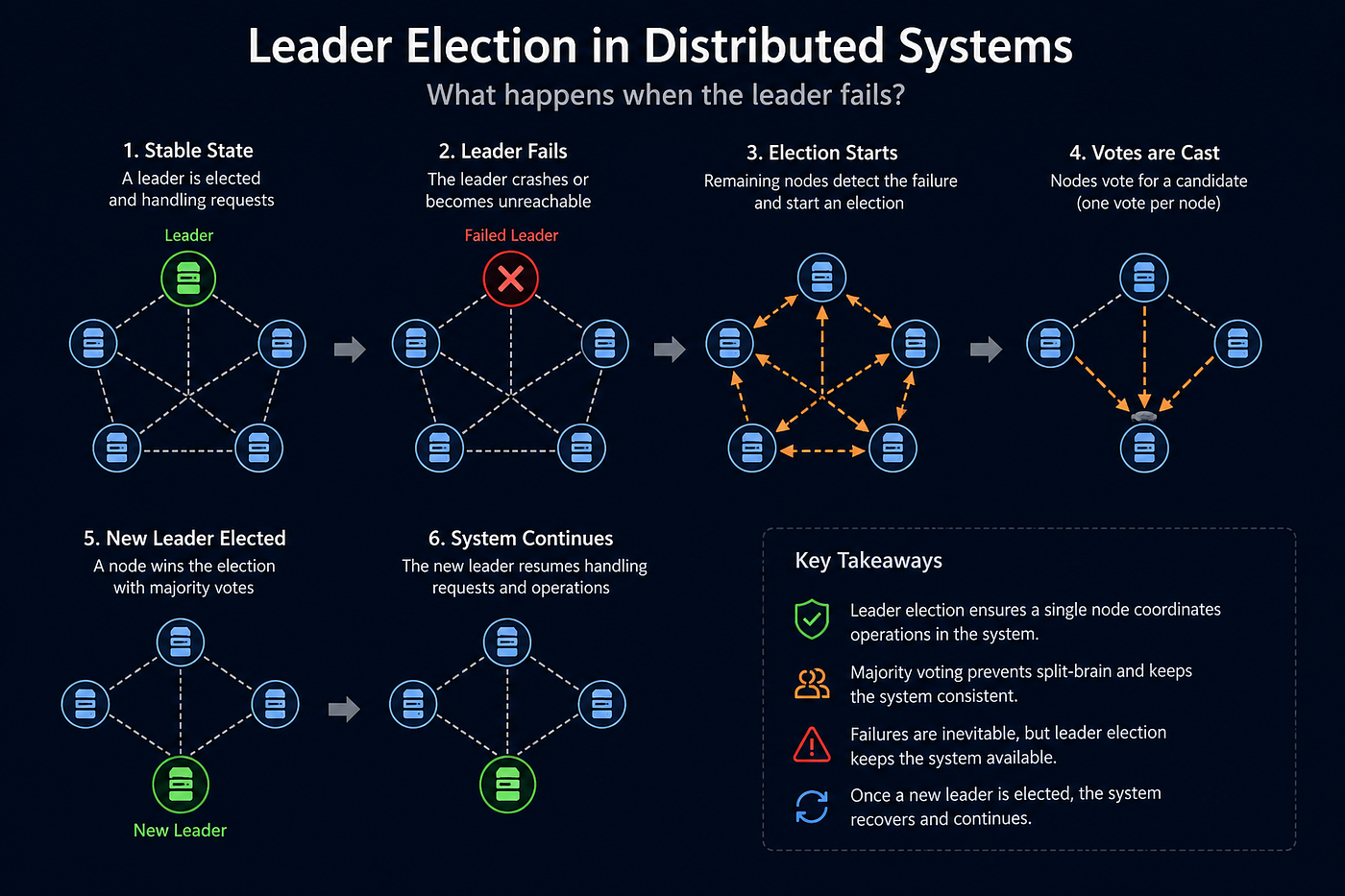
- Systems like Cassandra or MongoDB use heartbeat signals between nodes to detect failures quickly and trigger leader elections or data replication.
- IoT Devices and Edge Computing
- Remote devices periodically send heartbeat signals to indicate they are online.
- If no heartbeat is received, the system assumes the device is disconnected or malfunctioning.
- Monitoring and Alerting Systems
- Tools like Nagios or Prometheus exporters often rely on heartbeat-like mechanisms to know whether monitored targets are still alive
Section 4: Advantages and Challenges
Advantages
- Simplicity: Easy to implement and reason about.
- Lightweight: Heartbeat messages are small and inexpensive.
- Fast Failure Detection: Allows systems to quickly spot unresponsive nodes.
Challenges
- Tuning Intervals and Timeouts: Too aggressive leads to false alarms; too lenient delays detection.
- Network Issues: Latency or packet loss can mimic node failure.
- Scalability: With thousands of nodes, heartbeat traffic can add overhead.
- False Positives: Missing one or two signals doesn’t always mean a real failure.
Section 5: Implementation Example
The heartbeat pattern is simple enough that you can implement a minimal version in just a few lines of code. Below is a small example in Go:
package main

import (
 "fmt"
 "time"
)

func startHeartbeat(interval time.Duration, stop <-chan struct{}) {
 ticker := time.NewTicker(interval)
 defer ticker.Stop()

 for {
  select {
  case <-ticker.C:
   fmt.Println("Heartbeat sent")
  case <-stop:
   fmt.Println("Heartbeat stopped")
   return
  }
 }
}

func main() {
 stop := make(chan struct{})
 go startHeartbeat(2*time.Second, stop)

 time.Sleep(7 * time.Second)
 close(stop)
}
Explanation
- A
tickersends a heartbeat message every 2 seconds. - The receiver (not shown here) would listen for these messages and mark the sender as alive.
- If no heartbeat arrives within a timeout window, the receiver can trigger an alert or recovery action.
This toy example mirrors how larger systems like Kubernetes or load balancers manage heartbeats — the difference is in scale, resilience, and how they handle missed signals.
Section 6: Best Practices for Using the Heartbeat Pattern
- Choose Sensible Intervals and Timeouts Balance between fast detection and avoiding false alarms.
- Use Multiple Misses Before Declaring Failure Don’t mark a node as dead on the first missed heartbeat.
- Combine with Deeper Health Checks A process may be alive but unhealthy. Add checks for dependencies (DB, network, etc.).
- Aggregate Heartbeats Use a centralized monitor or gossip protocol to reduce overhead in large clusters.
- Log and Alert Smartly Avoid alert fatigue by only notifying when failures persist.
Conclusion
The Heartbeat Pattern may appear deceptively simple, but it plays a critical role in the reliability of distributed systems. By sending small, periodic signals, systems gain the ability to quickly detect failures, reroute traffic, and recover gracefully — often before users even notice something went wrong.
From load balancers and databases, to Kubernetes clusters and IoT devices, heartbeats are everywhere. They are the quiet background rhythm that keeps modern infrastructure alive.
When used with sensible intervals, thoughtful failure detection logic, and deeper health checks, the heartbeat pattern provides a solid foundation for building resilient distributed systems.
In short: Without heartbeats, distributed systems would have no pulse.
For a full working implementation of the heartbeat pattern in Go (with monitoring, graceful shutdown, and tests), check out my GitHub repository: go-test-heartbeat-pattern — github.com/arash-mosavi/go-test-heartbeat-pattern
메타데이터
- post_id
- 5d2264bbfda6
- slug
- understanding-the-heartbeat-pattern-in-distributed-systems-5d2264bbfda6
- url
- https://medium.com/@a.mousavi/understanding-the-heartbeat-pattern-in-distributed-systems-5d2264bbfda6
- canonical_url
- https://medium.com/@a.mousavi/understanding-the-heartbeat-pattern-in-distributed-systems-5d2264bbfda6
- author_url
- https://medium.com/@a.mousavi
- status
- ok
- fetched_at
- 2026-07-17 02:22:04