On-Board GPS Tracker: 128GB or 256GB? How to Choose the Most Suitable Capacity (Full Analysis)
In fleet management, logistics, ride-hailing supervision, and personal vehicle security, on-board GPS trackers have become standard…
On-Board GPS Tracker: 128GB or 256GB? How to Choose the Most Suitable Capacity (Full Analysis)

In fleet management, logistics, ride-hailing supervision, and personal vehicle security, on-board GPS trackers have become standard devices. However, when choosing a storage card, many customers struggle with one key question:
Should I choose 128GB or directly go for 256GB?
Choosing the wrong capacity may either waste money or lead to insufficient data storage, and in some cases even affect evidence integrity and device stability.
This article breaks it down from four perspectives: data volume analysis, capacity comparison, cost calculation, and recommended solutions.
- Data Volume Analysis: How Much Storage Does a GPS Device Actually Use?

There are three typical usage scenarios:
(1) Pure GPS Tracking (Low Data Usage)
Use cases: fleet tracking, logistics monitoring
-
Position logging: every 10–30 seconds
-
Data size per record: about 100–300 bytes
-
Daily data usage: approximately 5MB–30MB/day
Conclusion: One year of data is usually less than 15GB. 128GB is more than enough.
(2) GPS + Driving Behavior Analysis (Medium Data Usage)
Use cases: ride-hailing fleets, cargo monitoring, driving behavior analysis
Includes: harsh braking, acceleration, speed curves, trajectory analysis
Daily data usage: approximately 30MB–150MB/day
Conclusion: A 128GB card can store about 2–8 years of data before overwriting.
(3) GPS + 4G Video Monitoring (High Data Usage)
Use cases: dashcams, AI vehicle monitoring systems
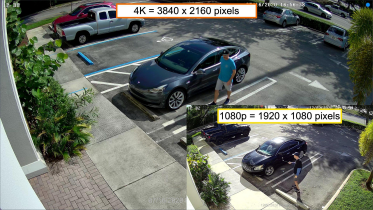
1080P video: ~1–2GB/hour
720P video: ~0.5–1GB/hour
4K video: ~3–6GB/hour
If recording 4 hours per day:
-
1080P: 4–8GB/day
-
4K: 12–24GB/day
Conclusion:
-
128GB: about 15–30 days loop recording
-
256GB: about 30–60 days loop recording
- Capacity Comparison: 128GB vs 256GB

| Item | 128GB | 256GB |
| — — — | — — — | — — — |
| GPS tracking only | 2–10 years | 5–20 years |
| 1080P video recording | 15–30 days | 30–60 days |
| 4K video recording | 5–12 days | 10–25 days |
| Data buffer space | Medium | Higher |
| Cost | Lower | 30%–60% higher |
Key conclusion:
-
Pure GPS devices: 128GB is already more than sufficient
-
GPS + video systems: 256GB is more suitable
- Cost Analysis: Is the Extra Cost Worth It?
Industry reference pricing:
-
128GB: baseline price
-
256GB: about 30%–60% higher
If calculated over a 3-year device lifecycle:
-
128GB fully meets GPS-only requirements
-
256GB value is mainly reflected in video recording scenarios
Conclusion:
256GB is not simply an upgrade, but an expansion for high-data applications.
- Recommended Solutions
Solution 1: Fleet GPS Tracking / Logistics Monitoring (128GB recommended)
Suitable for trucks, taxis, cold-chain logistics
Features: position tracking + cloud synchronization
Recommended: 128GB industrial-grade MicroSD card with high endurance
Reason: low data usage, stable loop recording, cost-efficient
Solution 2: Vehicle Surveillance + GPS Systems (256GB recommended)
Suitable for ride-hailing vehicles and passenger transport
Recommended: 256GB high-endurance card (U3 / V30 / A1)
Reason: continuous video recording and longer storage cycles
Solution 3: High-end Fleet / Security Applications (256GB+ industrial grade)
Suitable for law enforcement, high-speed logistics, AI multi-camera systems
Requirements: -25°C to 85°C temperature resistance, high write endurance
- Key Industry Insight

Capacity is not the only factor. The most important considerations are:
-
Write endurance (not mobile-grade, but industrial-grade recommended)
-
Temperature resistance (car interiors can reach 70–85°C)
-
Power-loss protection (prevents data corruption)
Conclusion
-
Pure GPS tracking → 128GB is sufficient
-
GPS + video monitoring → 256GB is better
-
High-intensity fleet systems → prioritize industrial-grade cards over capacity alone
Final advice:
Do not only choose between 128GB and 256GB — always consider endurance, temperature stability, and write performance for long-term reliability.
메타데이터
- post_id
- 5d3bc6bd0c7a
- slug
- on-board-gps-tracker-128gb-or-256gb-how-to-choose-the-most-suitable-capacity-full-analysis-5d3bc6bd0c7a
- url
- https://medium.com/@couchpotato0425/on-board-gps-tracker-128gb-or-256gb-how-to-choose-the-most-suitable-capacity-full-analysis-5d3bc6bd0c7a
- canonical_url
- https://medium.com/@couchpotato0425/on-board-gps-tracker-128gb-or-256gb-how-to-choose-the-most-suitable-capacity-full-analysis-5d3bc6bd0c7a
- author_url
- https://medium.com/@couchpotato0425
- status
- ok
- fetched_at
- 2026-07-09 10:29:04