What Is the Best Material for an Outdoor Sculpture?
When people shop for an outdoor sculpture, they usually focus on the design first. That makes sense. The shape, style, and overall look are…
What Is the Best Material for an Outdoor Sculpture?

When people shop for an **outdoor sculpture**, they usually focus on the design first. That makes sense. The shape, style, and overall look are what catch your attention. However, what many buyers discover later is that the material often matters just as much.
For most outdoor spaces, stainless steel is widely considered the best overall choice. It handles sun, rain, humidity, and changing temperatures with very little upkeep. Just as importantly, it continues to look great year after year. While materials like bronze, marble, and fiberglass can work well in certain settings, stainless steel offers the strongest combination of durability, appearance, and long term value. So what makes it stand out from the other options, and when might another material be a better fit for your space?
Outdoor Performance
Weather Resistance
An outdoor sculpture has to deal with changing weather every day. Sunlight, rain, humidity, and seasonal temperature shifts can all affect how a sculpture looks over time. In places like villa gardens, rooftop terraces, and hotel entrances, weather resistance quickly becomes one of the most important factors when choosing a material.
This is where stainless steel stands out. It resists moisture well and holds its appearance through years of outdoor exposure. As a result, you will spend less time in weather related damage and more time enjoying the space around the sculpture.
Long Term Durability
A sculpture should continue looking impressive long after installation. Whether it becomes a focal point in a residential landscape or part of a commercial plaza, durability plays a major role in its long term value. Materials that age poorly often require repairs, refinishing, or replacement much sooner than expected. Especially, you’ll spend more money as well.
An **indoor sculpture** usually stays protected from harsh conditions, but outdoor pieces face a very different environment. Stainless steel performs well because it keeps both its strength and appearance over time, even when exposed to daily outdoor conditions.
Climate Compatibility
Not every project is located in the same environment. Some sculptures are placed beside the ocean, while others experience snowy winters, humid summers, or strong seasonal changes. Choosing a material that works well across different climates helps avoid problems later.
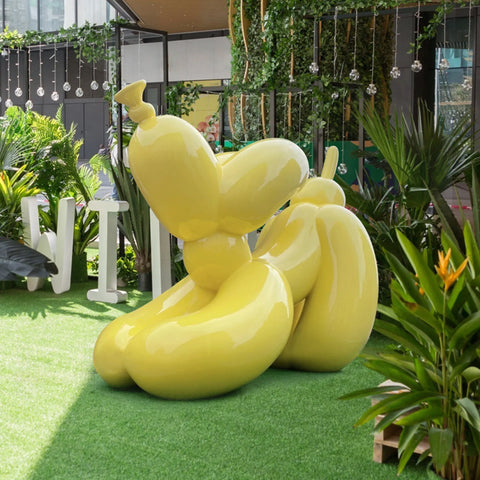
A quality outdoor sculpture should be able to perform reliably in a wide range of settings. Stainless steel is often preferred because it adapts well to different conditions. That flexibility also makes it a popular material for a **modern sculpture**, especially poolside areas, landscaped walkways, outdoor lounges, and resort style properties where year round exposure is part of everyday use.
The Stainless Steel Advantage
Easy Maintenance
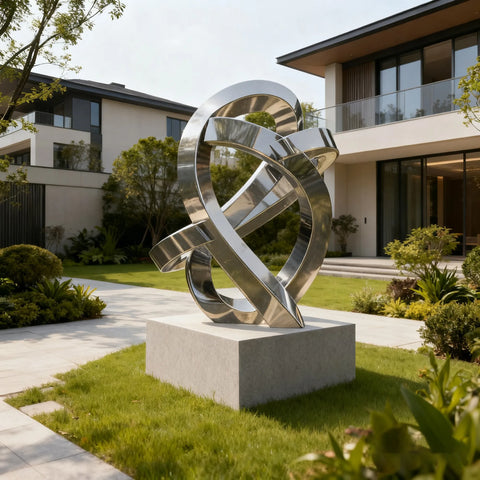
One reason many people choose a **stainless steel sculpture** is because it is easy to care for. Unlike some materials that need many regular treatments or special attention, stainless steel usually requires only occasional cleaning to maintain its appearance. For busy homeowners, that convenience can make a big difference over the years.
This is especially helpful in spaces that are used often. Whether the sculpture is located near an outdoor seating area, beside a garden walkway, or within a community gathering space, routine upkeep stays simple. As a result, you can spend more time enjoying your outdoor sculpture.
Modern Appeal
A stainless steel sculpture naturally fits many contemporary outdoor settings. Its clean surface and refined appearance work well alongside modern architecture, large windows, stone features, and open landscapes. Because of this, it often becomes a natural extension of the surrounding design rather than feeling separate from it.
Lighting also plays an important role. Morning sunlight, evening glow, and even nearby landscape lighting can change the way it looks throughout the day. This creates visual interest without requiring additional decorative elements.
Everyday Reliability
A good sculpture should not only look attractive. It should also perform consistently over time. Stainless steel has become a trusted choice because it continues to deliver dependable results in a wide range of outdoor applications.
Today, it can be found in residential communities, hospitality properties, educational campuses, and public gathering areas. In these settings, durability, appearance, and ease of ownership all matter. That combination is one reason stainless steel remains a preferred material for an outdoor sculpture that is expected to stay in place for many years.
Bronze and Marble
Bronze Benefits
Bronze has remained a popular sculpture material for generations. One reason is its warm and welcoming appearance. Unlike highly reflective surfaces, bronze brings a softer visual presence that often feels more connected to nature. A **bronze sculpture** can add character to a courtyard, garden path, or memorial space without overwhelming the surrounding landscape.
It also carries a strong sense of history. Many people associate bronze with historic landmarks, public monuments, and timeless works of art. Because of that, it is often chosen for spaces where a classic and established atmosphere is desired.
Marble Beauty
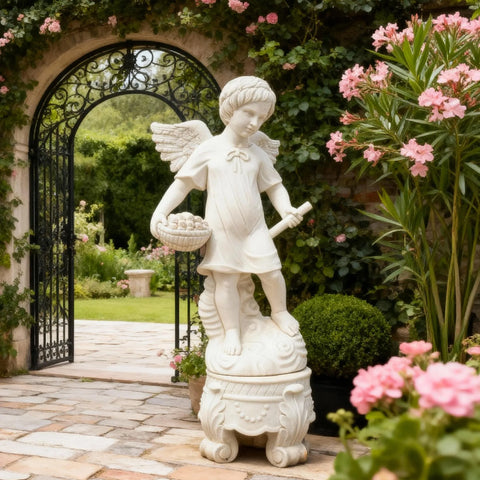
Marble offers a very different experience. Its natural stone texture and subtle variations create a refined look that feels elegant without being overly decorative. A **marble sculpture** often becomes a quiet focal point, drawing attention through craftsmanship rather than bold visual effects.
This material is especially appealing in formal outdoor settings. In estate gardens, fountain courtyards, and European inspired landscapes, marble blends naturally with the surrounding architecture. The result is a space that feels balanced, sophisticated, and visually calm.
Best Use Cases
While stainless steel is often the preferred choice for many outdoor projects, bronze and marble still have their places. The best material often depends on the overall style of the property and the feeling you want to create.
For example, an outdoor sculpture placed in a traditional garden may benefit from the warmth of bronze, while an outdoor sculpture positioned near classical stone features may look more natural in marble. Both materials offer a distinct appearance that can enhance the character of the space when used in the right settings.

Choosing for Your Space
Modern Properties
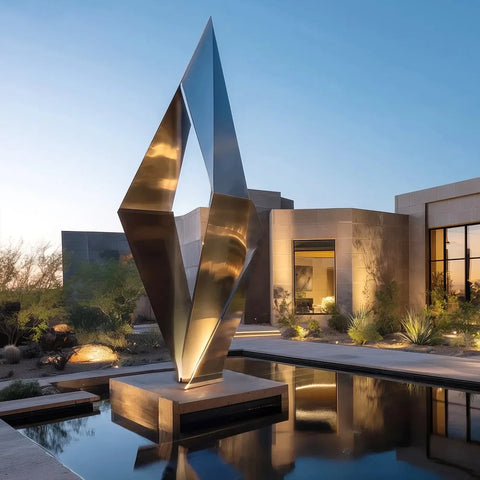
Modern outdoor spaces often focus on clean lines, open layouts, and a simple visual flow. In these settings, the sculpture is usually expected to complement the architecture rather than compete with it. Large glass walls, geometric landscaping, and minimalist outdoor living areas all pair naturally with stainless steel.
A well placed outdoor sculpture can help connect different parts of the property and create a stronger sense of balance. Whether it is positioned near a pool, along a garden path, or beside an outdoor lounge, the right material should feel like part of the overall design.
Traditional Landscapes
Traditional landscapes often create a very different atmosphere. Mature trees, stone walkways, formal gardens, and decorative fountains tend to favor materials with a softer and more classic appearance. In these spaces, bronze and marble are often selected because they blend naturally with the surrounding elements.
The goal is usually to create a sense of history, character, and permanence. When the sculpture matches the style of the landscape, the entire space feels more cohesive and inviting.
Coastal Locations
Properties near the coast come with their own set of challenges. Salt in the air, higher humidity, and frequent exposure to moisture can affect outdoor materials much faster than in inland areas. Because of this, material selection becomes especially important for beachfront homes, waterfront communities, and oceanfront resorts.
In these environments, many makers recommend 316 stainless steel because it offers stronger resistance to corrosion than standard 304 stainless steel. That added protection helps the sculpture maintain its appearance even when exposed to salty coastal conditions throughout the year. For projects near the ocean, 316 stainless steel is often considered the most reliable option for an outdoor sculpture that is expected to perform well.
Making the Right Choice
Consider Your Environment
The first step is looking at the environment where the sculpture will be installed. A quiet backyard, a busy public space, and a waterfront property all create very different conditions. The material should match the setting instead of being chosen based on its appearance alone.
Meanwhile, it is also worth thinking about how the space is used throughout the year. Some locations receive constant sunlight, while others experience heavy rain or high humidity. Choosing a material that fits the environment from the beginning can make your entire project run more smoothly.
Match Your Design Style
A sculpture should feel connected to its surroundings. In many cases, the most successful projects are the ones where the artwork and the landscape work together naturally. The goal is not simply to fill an empty area. It is to create a space that feels complete and well designed.
For example, a contemporary courtyard may benefit from a clean and simple outdoor sculpture, while a formal garden may call for something more traditional. When the material, architecture, and landscape all share the same visual language, the result usually feels more balanced.
Think Long Term Use
It is easy to focus on how a sculpture will look on installation day. However, it is just as important to think about the years that follow. Maintenance, future landscaping adjustments, and changing property needs can all influence whether a material remains the right choice over time.
A well chosen outdoor sculpture should continue fitting the space as the property evolves. Looking beyond the initial purchase often leads to a decision that feels more rewarding in the long run.
Conclusion
All in all, the best material depends on your own needs and preferences. Bronze can bring a sense of tradition, and marble offers a timeless elegance that works beautifully in many settings. However, for most modern outdoor spaces, stainless steel remains the most practical and widely used. From residential gardens, poolside retreats to hotel courtyards and commercial projects, a outdoor sculpture made from stainless steel delivers a balance of appearance, durability, and ease of maintenance.
That is one reason stainless steel has become the material people often see in today’s landscapes and public spaces. It fits naturally into contemporary architecture, performs well in a variety of environments, and continues to look impressive year after year. If you are looking for a material that combines long term value with design flexibility, stainless steel is usually the safest investment for an outdoor sculpture. In many cases, it is not just the most popular option. It is also the most suitable for everyday outdoor living.

메타데이터
- post_id
- 5d61ec59f2c7
- slug
- what-is-the-best-material-for-an-outdoor-sculpture-5d61ec59f2c7
- url
- https://medium.com/@davidsculpturearts/what-is-the-best-material-for-an-outdoor-sculpture-5d61ec59f2c7
- canonical_url
- https://medium.com/@davidsculpturearts/what-is-the-best-material-for-an-outdoor-sculpture-5d61ec59f2c7
- author_url
- https://medium.com/@davidsculpturearts
- status
- ok
- fetched_at
- 2026-06-09 15:37:30