When Machines Misread History: How Automated Text Recognition Shapes What We Know About the Past
Digitized archives promise unprecedented access to the past: searchable newspapers, discoverable names, and histories brought back into…
When Machines Misread History: How Automated Text Recognition Shapes What We Know About the Past
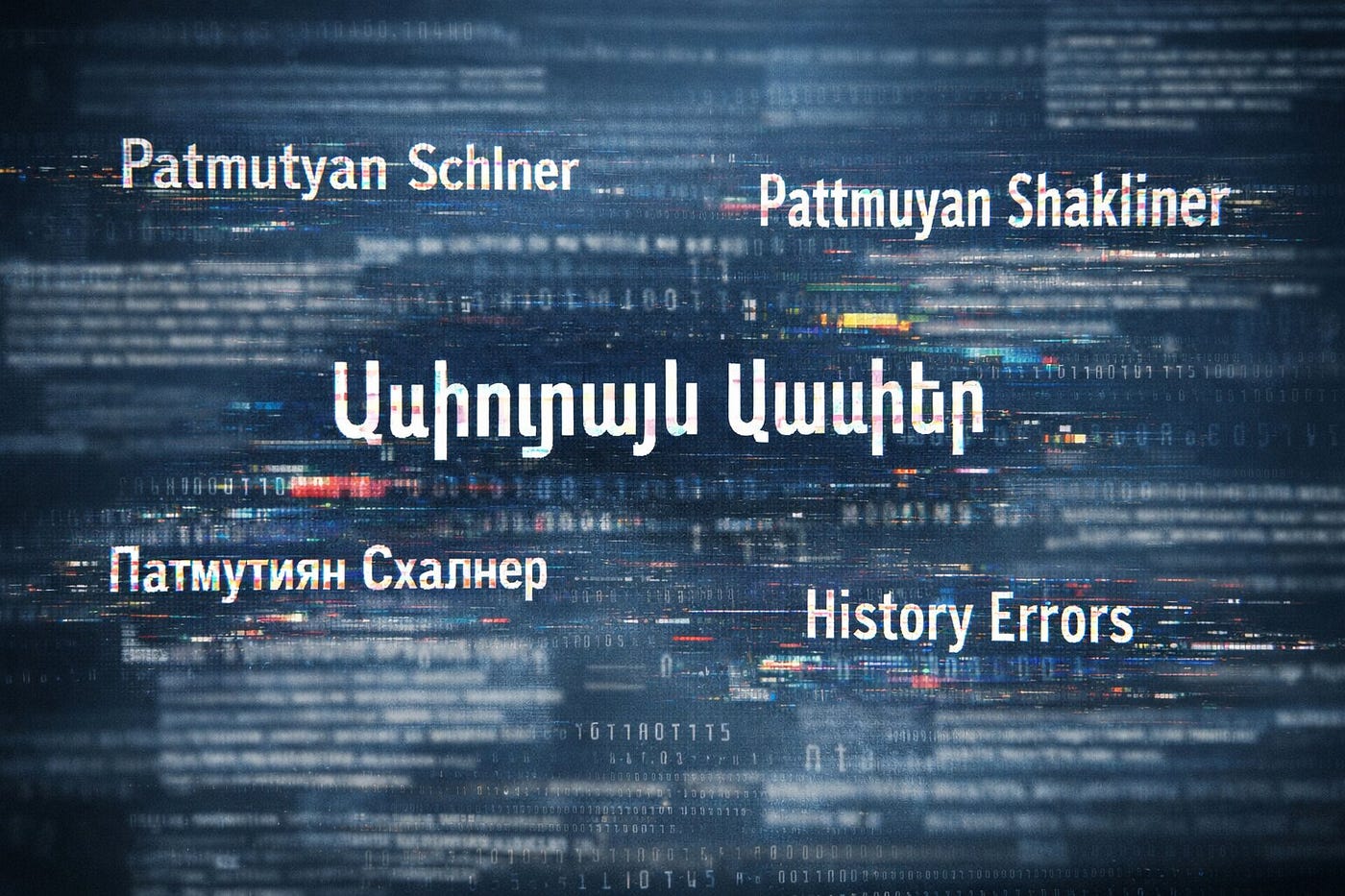
Digitized archives promise unprecedented access to the past: searchable newspapers, discoverable names, and histories brought back into public view. Yet the act of digitization is rarely questioned as an interpretive process. Optical Character Recognition (OCR) systems — a form of automated text recognition powered by AI — do not simply reproduce historical texts; they transform them. By converting scanned pages into machine-readable data, OCR produces a distinct intermediary language — shaped by systematic errors, encoding ambiguities, and algorithmic assumptions. This article explores OCR not as a technical flaw, but as an invisible author whose mistakes quietly reshape what we see, search for, and remember about history.
I. The Promise — and the Oversight
Digitization is framed as neutral: faithful reproduction of newspapers and manuscripts. But digital archives hide the interpretive role of OCR. Missing letters, misrecognized characters, and inconsistent encoding create a lens through which we read history, whether we realize it or not.
II. OCR as Its Own Language
OCR produces a new, machine-shaped language. Mixed alphabets, old fonts, and degraded paper generate recurring patterns of error. Names, dates, and locations are systematically distorted. Treating OCR output as a distinct intermediary language reveals how machine reading influences historical comprehension and searchability. Interestingly, the distortions produced by OCR can be compared to the imperfections introduced by human translation. Just as a translator may misinterpret a word or phrase when moving text from one language to another, OCR misreads letters and words. Both processes generate errors that alter meaning, introduce ambiguity, and create a new intermediary “language” shaped by human or machine interpretation. Considering translation inconsistencies alongside OCR errors highlights how both human and automated interventions influence what is recorded, searchable, and ultimately remembered from historical texts.
III. Systemic Errors at Scale
Thousands of documents processed by the same OCR system share repeating distortions. Search engines, AI analysis, and data mining inherit these biases, affecting what is visible and what remains hidden. Systemic OCR errors shape knowledge, not just documents.
IV. Power and Visibility
Who decides what counts as “correct”? OCR embeds algorithmic assumptions into historical records, redistributing visibility and authority. Misread names, altered dates, and missing accents privilege some narratives over others — subtly shaping collective memory.
V. Studying Errors, Not Erasing Them
Correcting OCR mistakes may seem natural, but it erases patterns that reveal the machine’s interpretive role. Preserving raw OCR output allows token-level analysis, showing how errors propagate and affect narratives. Machine error itself becomes a source of insight.
VI. Journalism and Accountability
OCR distortions are more than technical — they affect public knowledge. Journalists must recognize the editorial influence of AI-driven digitization and communicate its limitations. This is essential to integrity in reporting and historical research.
VII. Conclusion: Rethinking Historical Literacy
OCR is an invisible collaborator in digital history. Its errors are not noise — they record the machine’s engagement with the past. Understanding these patterns fosters a new literacy: one that balances critical insight with technological awareness. Confronting machine error is crucial for preserving the integrity of our collective memory.
Author Lusine Hovhannisyan — Researcher and journalist, exploring AI-driven digitization
메타데이터
- post_id
- 5d6ac4e0dcd6
- slug
- when-machines-misread-history-how-automated-text-recognition-shapes-what-we-know-about-the-past-5d6ac4e0dcd6
- url
- https://medium.com/@lusine.hovhannisyan120/when-machines-misread-history-how-automated-text-recognition-shapes-what-we-know-about-the-past-5d6ac4e0dcd6
- canonical_url
- https://medium.com/@lusine.hovhannisyan120/when-machines-misread-history-how-automated-text-recognition-shapes-what-we-know-about-the-past-5d6ac4e0dcd6
- author_url
- https://medium.com/@lusine.hovhannisyan120
- status
- ok
- fetched_at
- 2026-07-24 23:39:41




