Why Tree Removal Costs Vary So Much in Portland
Sometime a cheap tree removal can cost you a thousand dollars. If you are a homeowner in Portland, this is your sign to look at your tree.
The Quote Was $300. The Real Job Cost $4,200. Here’s What Portland Homeowners Need to Know About Tree Removal Costs.
Imagine it’s a Saturday morning. You’re sitting at home with a cup of coffee when a neighbor walks over and says, “I know a guy who’ll take down that big fir for 300 bucks. Cash. No permit. He can do it this weekend.”
At first, it sounds like an incredible deal. After all, it’s just cutting down a tree…right?
Not exactly.
Tree removal is one of those home projects where the cheapest quote can quickly become the most expensive mistake. What starts as a $300 cash job can turn into thousands of dollars in property damage, emergency repairs, or even city fines if something goes wrong.
This isn’t meant to scare you. It’s simply the part most homeowners don’t hear until after they’ve signed the estimate.
If you’re wondering what tree removal really costs in Portland in 2026 and why one company quotes $600 while another quotes $2,000 for what appears to be the same tree here’s an honest breakdown of what you’re actually paying for.
Let’s Start With the Numbers
Before we talk about cranes, permits, or towering Douglas firs, let’s answer the question almost every homeowner asks first:
“How much should tree removal actually cost?”
Here’s what Portland homeowners are typically seeing in 2026:
- Average tree removal cost: $791–$1,200
- Typical range: $400–$2,100
- Hourly rate (3-person crew): $220–$280 per hour
- Complex or emergency jobs: $2,500–$5,000+
For most homeowners with a standard residential tree, not a 100-foot Douglas fir squeezed between a garage and power lines, the final bill usually falls somewhere between $600 and $1,500.
When you see a quote that’s far outside that range, there’s usually a reason. Understanding those reasons helps you tell the difference between a fair estimate and one that could end up costing you much more later.
Why Tree Removal Costs More in Portland
If you’ve lived in Portland for any length of time, you’ve probably noticed one thing, we don’t have small trees.
Many neighborhoods are filled with mature Douglas firs, towering cedars, and sprawling bigleaf maples that have been growing for decades. They’re one of the things that make Portland beautiful, but they’re also one of the reasons tree removal costs more here than in many other parts of the country.
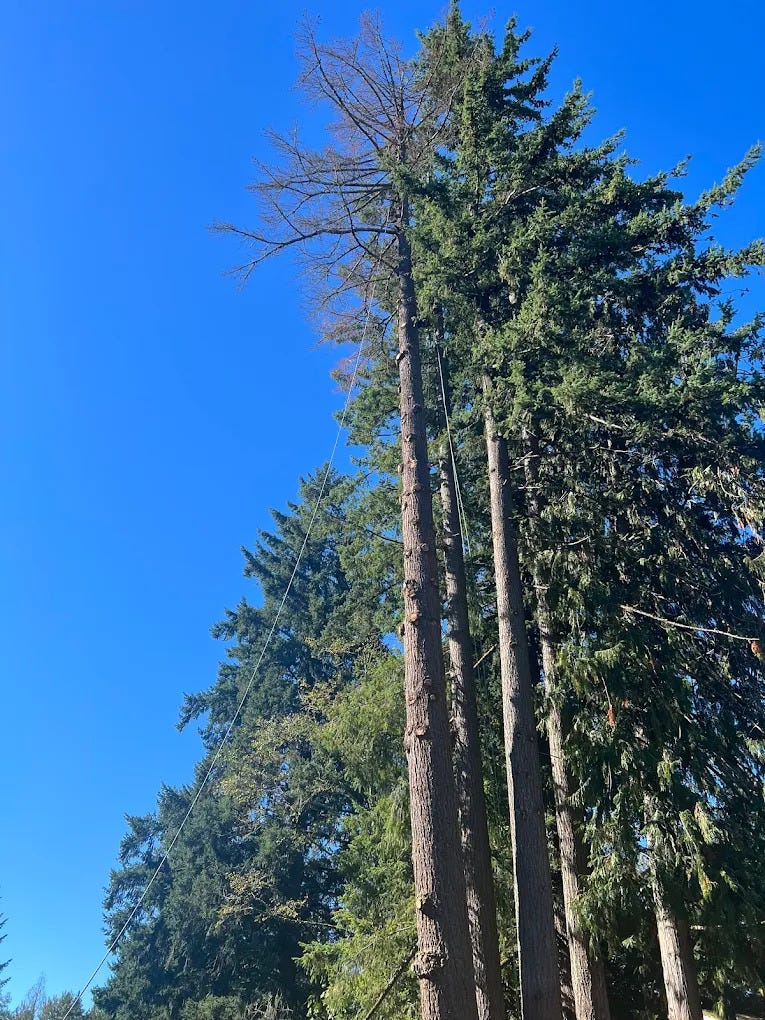
Unlike cities where a “large tree” might be 40 or 50 feet tall, Portland regularly deals with trees well over 100 feet. Removing them safely takes experienced crews, specialized equipment, and significantly more time.
On top of that, Portland has permit requirements that many cities don’t, along with higher labor costs. When you put everything together, it’s easy to see why local tree removal prices sit above the national average.
What are the Five Things that Actually Determine Your Quote
1. How Tall Is the Tree?
Height is the biggest factor affecting the cost. Every extra foot means more climbing, more cutting, more debris to haul away, and more time spent carefully lowering sections to the ground.
Typical pricing looks like this:
- Under 30 feet: $200–$500
- 30 to 60 feet: $500–$1,100
- 60 to 80 feet: $700–$1,500
- 80 feet and above: $1,100–$2,500+
- 100+ feet (large Douglas fir): $2,500–$5,000+
The reason is pretty simple. Taller trees require more advanced rigging, generate much more material to remove, and create greater risks for both the crew and nearby property.
2. Where Is the Tree Located?
Two trees of the same size can have completely different removal costs depending on where they’re growing.
A tree standing alone in an open backyard is one thing.
The exact same tree growing beside your house, over your neighbor’s fence, and underneath power lines is an entirely different project.
Several factors can increase the cost:
- Near power lines: Trees growing close to utility lines often cost over $2,000 because extra safety precautions are required.
- Close to buildings: Trees beside homes, garages, fences, or sheds require controlled removal techniques and sometimes a crane.
- Limited access: If trucks or wood chippers can’t reach the tree, crews spend more time carrying debris by hand.
- Travel distance: Homes farther from central Portland or in more remote areas may include additional travel costs.
Location often matters just as much as the size of the tree.
3. What Condition Is the Tree In?
Here’s something that surprises many homeowners. Most people assume a dead tree should be cheaper to remove because it’s already dying.
In reality, the opposite is often true.
Dead, decaying, or diseased trees are much less predictable than healthy ones. Branches can snap unexpectedly. Hollow trunks may split during cutting. Root systems may no longer provide stable support.
Because of these risks, crews often work more slowly and use additional safety equipment.
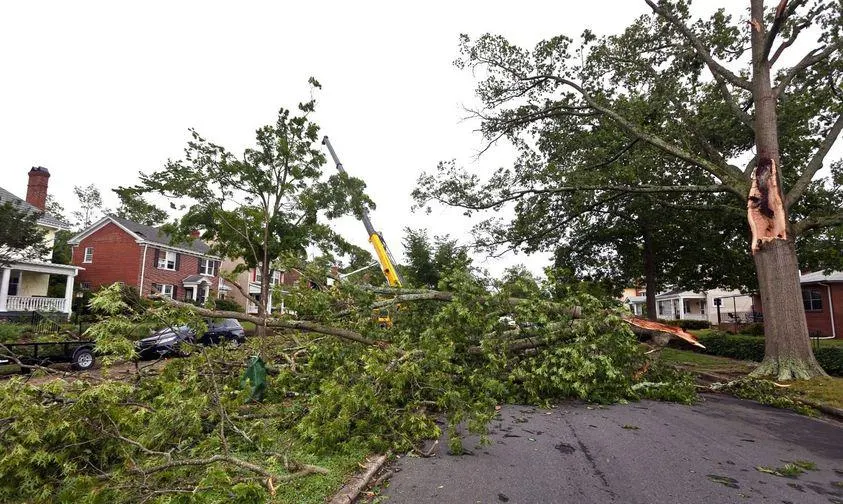
The most expensive situation is when a tree has already fallen onto a home or another structure. Those removals often exceed $5,000, although homeowner’s insurance frequently covers the cost when structural damage is involved.
4. Does the Job Require a Crane?
One of the biggest jumps you’ll see on an estimate is crane-assisted removal.
The important question isn’t whether a company offers a crane, it’s whether your tree actually needs one.
A crane is usually necessary when:
- The tree is extremely close to a home or other structure.
- Access is too tight for traditional climbing and rigging.
- The tree is dead or unstable enough that climbing would be unsafe.
- The tree is simply too large to remove safely using standard techniques.
Cranes aren’t cheap. Rental costs, operators, and additional crew members can add several hundred dollars or more to the project.
That said, many residential trees can be removed safely without a crane by an experienced crew using proper rigging techniques.
If every estimate automatically includes crane work, don’t hesitate to ask why. Getting a second opinion is never a bad idea.
5. What’s Included in the Quote?
This is probably where the biggest misunderstandings happen.
The number you see on the estimate isn’t always the number you’ll pay at the end of the job. Ask exactly what’s included before agreeing to any work.
Common add-on services include:
- Stump grinding: Usually not included. Expect an additional $150–$500 depending on the stump’s size.
- Debris removal and cleanup: Complete cleanup, hauling logs, chipping branches, and raking the yard can add 15–25% to the project cost.
- Firewood preparation: Some companies will split and stack logs if you’d like to keep the wood.
- Permit handling: Although Portland eliminated permit fees in July 2025, some companies charge for the time required to prepare and submit the paperwork.
A detailed written estimate makes it much easier to compare companies fairly.
Why you Should not Ignore the Permit Question
Many homeowners assume that because Portland removed permit fees, permits are no longer required.
That’s not how it works.
As of July 2025, applying for many tree removal permits no longer costs anything. That’s good news because it reduces overall project costs.
However, many regulated trees still require approval before they’re removed. In general, trees measuring 12 inches or more in diameter at breast height fall under Portland’s regulations.
Removing a protected tree without the required permit can result in fines of up to $1,000 per tree, per day.
A reputable tree service will explain whether your tree requires a permit and usually handles the application before work begins.
If permits never come up during your estimate, it’s worth asking about them before hiring anyone.
How to Tell if a Quote Is Fair
A good estimate is about more than the final number. Here are a few simple ways to judge whether you’re comparing apples to apples.
Get everything in writing: A professional company should provide a detailed estimate outlining removal, cleanup, stump grinding, permit handling, and any additional charges.
Ask why prices differ: If one company quotes $700 and another quotes $1,700 for the same tree, ask both companies to explain the difference. One may have left something out, while the other may be including services you don’t actually need.
Look for experience, not just price: ISA Certified Arborists generally charge more than uncertified crews, but their expertise often results in safer work and better outcomes.
Be cautious after major storms: Following severe weather, demand for tree removal increases quickly. Unfortunately, that’s also when unlicensed contractors tend to appear. Always verify Oregon CCB licensing before agreeing to any work.
Every tree and every property is different. A healthy maple in an open backyard is a very different project from a leaning Douglas fir growing beside a garage.
That’s why two honest companies can sometimes provide different estimates, and why the cheapest quote isn’t always the best value. The goal isn’t simply to spend less.
At Portland Tree Service, we believe homeowners deserve honest advice and transparent pricing. Whether you need routine tree removal or help with a hazardous tree, our experienced team is here to help homeowners throughout Portland make informed decisions.
메타데이터
- post_id
- 5d7ef2a74c7f
- slug
- why-tree-removal-costs-vary-so-much-in-portland-5d7ef2a74c7f
- url
- https://medium.com/@portlandtreeservice631/why-tree-removal-costs-vary-so-much-in-portland-5d7ef2a74c7f
- canonical_url
- https://medium.com/@portlandtreeservice631/why-tree-removal-costs-vary-so-much-in-portland-5d7ef2a74c7f
- author_url
- https://medium.com/@portlandtreeservice631
- status
- ok
- fetched_at
- 2026-07-10 14:51:46