Letting Go of the Baby:
Rethinking ownership in the path to design leadership.
Letting Go of the Baby:
Rethinking ownership in the path to design leadership.

Illustration by Luci Gutiérrez
During my time in the Industrial Design program at RISD, authorship was central to how we were taught to work.
Most projects were individual, and even when collaboration happened, you were still expected to take full responsibility for your part. You developed the concept, conducted the research, built the prototype, and presented the final outcome.
The process belonged to you, and you alone carried the project-baby to full term.
Craft, fidelity, and precision were essential. Strong work reflected a clear point of view and a high level of care, and the more of yourself you poured into a project, the more legitimate it felt.
This mindset shaped how I understood design as something personal, end-to-end, and deeply tied to execution. It followed me into the early stages of my professional life, where these expectations often aligned. My entry-level roles and internships focused on production, where designers were hired to build, refine, and deliver. Success was measured by output, and it was usually clear what belonged to you. The habits I developed in school like working independently, polishing details, and owning results, helped me meet those demands.
However, as I entered MassArt’s Design Innovation program, I saw how differently design functioned in more collaborative, ambiguous environments from my ownership mindset I had been so used to. Projects moved across disciplines, stakeholders, and timelines. Ownership was rarely individual, and ideas were shaped through conversation, shifted midway, and depended on shared momentum. The mindset I had relied on no longer applied the same way, and for the longest time I struggled with the tension between shared ownership and personal authorship.
What surprised me was how rarely this shift is discussed. Many designers from art school, strong studio or craft backgrounds fall into the trap of holding onto ownership as a hook, and for me, it became what defined my role and value. Letting go sometimes felt like letting go of my voice, especially when the work was distributed across a larger system. But part of my growth as a design leader, especially in environments that value influence without authority, has been learning to support outcomes I didn’t create entirely myself.
The Ownership Trap
I define the ownership trap as the belief that the best way to contribute as a designer is to take full responsibility for every part of a project- to hold on tightly, drive every decision, and ensure the final result reflects your own standards. It was how I was trained, and it was what early roles seemed to reward. The more initiative I showed, the more I polished my work, the more I felt I was doing what was expected of me. Ownership gave me a sense of control and confidence, but it also made it hard to let others in. I felt unsure of my value when I wasn’t directly shaping every part of the work. If I didn’t touch it, was it still mine? And if it wasn’t mine, was I still doing enough?
This played out in subtle ways. I would hesitate with trusting others with certain tasks, especially when I felt personally responsible for the quality of the outcome. I often found myself taking on more than my fair share, not because I didn’t believe in my teammates, but because I had a specific auteur-esque vision in mind and was worried that things might not meet the standards I was aiming for. Even when I knew I could complete something quickly or effectively, holding on to that work created an imbalance. It limited others’ involvement, left them feeling unvalued, and left me carrying more than I needed to.
The more I tried to protect the integrity of the work, the more I made it harder for others to contribute.
Eventually, I realized that my attachment to ownership was creating more problems than it was solving. It slowed things down. It made it harder to align with teammates. I became a bottleneck, even though I was still trying to do the right thing. That was the turning point when I started to question what leadership actually looked like, and whether the version I was practicing had anything to do with it.
Design Leadership Outside of Roles and Titles
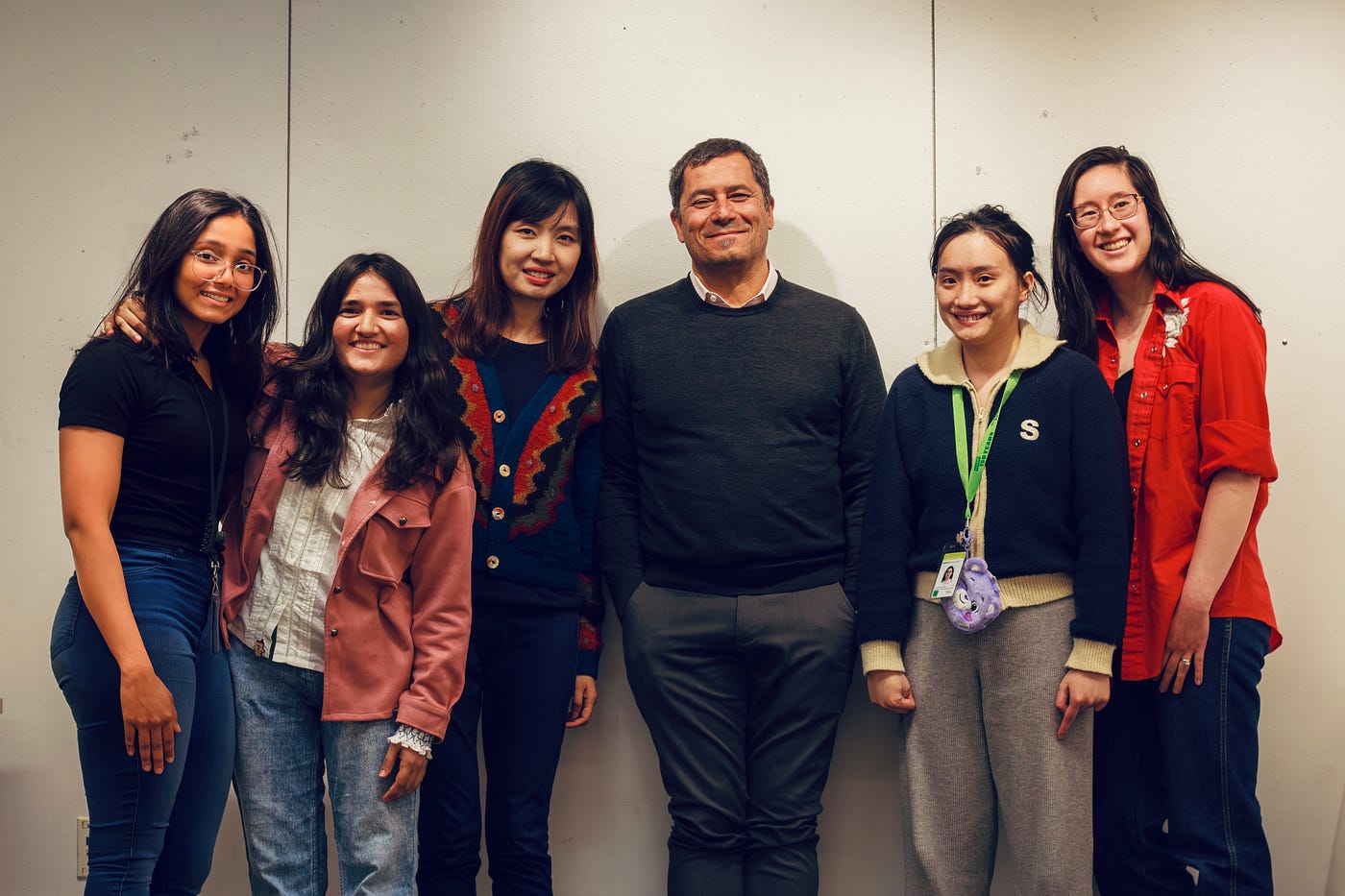
My Design Leadership and Organizational Behaviour courses with professor José Dos Santos and Larissa Haynes helped me begin to understand design leadership as a relational practice, something grounded in how you support, communicate, and collaborate with others, rather than in how much control you have over the outcome. Leadership, I was learning, wasn’t about doing more, but was about nurturing the environment around the work so others could succeed within it.
Design leadership as a relational practice, something grounded in how you support, communicate, and collaborate with others, rather than in how much control you have over the outcome.
Both classes gave me the tools to reflect on what I had been slowly started implementing instinctively, but had never named. Design Leadership Lab introduced concepts like influence without authority, vertical development, and emotional leadership, all of which challenged my assumption that leadership needed to come from expertise or perfection. Instead, I began to see how it could emerge through listening, reframing, or helping a group navigate ambiguity. Organizational Behavior offered me a deeper understanding of team dynamics, working styles, and effective communication. I learned how over-functioning, something I often did without realizing, could weaken trust and reduce engagement from others. I also started to see how psychological safety and role clarity were just as important as technical skills in shaping a strong team.
These lessons helped me shift how I showed up in group work. I practiced stepping back when I didn’t need to lead and stepping forward when I could help the group find direction. I made a conscious effort to share in-progress ideas earlier, even when they felt unpolished. I let go of the need to perfect everything before inviting feedback, and started to ask more questions instead of always offering solutions. These changes felt small at first, but they changed how I related to the work and to the people around me.
What surprised me most was how much more natural collaboration became when I stopped trying to hold everything together myself. The projects that felt the most successful weren’t the ones where I owned the most, but the ones where the group had a shared sense of purpose and could rely on each other.
Takeaways
Looking back, my relationship to ownership mirrors how my understanding of success and value has changed. Success isn’t about having the most polished outcome or being the one who carried the project alone. It’s about how well a team works together, how ideas develop through collaboration, and how much trust and clarity exist in the process. I still care about quality, but I no longer see it as something I need to control by myself.
Here are the lessons I’m carrying forward:
1. Design leadership is relational. It is less about individual output and more about how you show up for the people around you. Leadership happens through support, communication, and the ability to help others move forward with clarity and confidence.
2. Influence doesn’t require authority. I began leading by creating structure, asking better questions, and helping the team stay focused, not necessarily by having the loudest voice or making the final decision.
3. Over-owning limits collaboration. Holding on too tightly can make it harder for others to contribute. Sharing ownership allows room for different perspectives, and often leads to better outcomes than any one person could create alone.
4. Emotional awareness is part of the work. Letting go of control meant understanding my own attachment to the work. It required me to recognize when I was acting out of fear or perfectionism, and when I needed to make space for others.
5. Leadership starts before it is official. I didn’t wait for permission to lead. I started practicing by focusing on the health of the team, by listening more carefully, and by trying to create momentum when things felt stuck.
6. Good faith makes collaboration possible. I had to learn to trust others not just to complete tasks, but to care. To act with good intentions, to take the work seriously, and to want the same shared outcome, even if they approached it differently. That kind of trust allowed me to step back without checking out, and to believe in the value of what we were building together.
In the end, I had to stop carrying every project like it was my baby. Letting go was unfamiliar, especially after years of being told to take full responsibility. But once I stepped back, I saw the work grow in new ways. Other people had ideas I wouldn’t have considered. The project became stronger, and the process became healthier. I realized leadership wasn’t about holding on. It was about showing trust, acting in good faith, and building something others could carry forward too.
메타데이터
- post_id
- 5da7c067ea6f
- slug
- letting-go-of-the-baby-5da7c067ea6f
- url
- https://medium.com/massart-innovation/letting-go-of-the-baby-5da7c067ea6f
- canonical_url
- https://medium.com/massart-innovation/letting-go-of-the-baby-5da7c067ea6f
- author_url
- https://medium.com/@rking_26368
- status
- ok
- fetched_at
- 2026-06-14 11:28:49