APAC's gaming dominance signals broader power shift
The region's esports infrastructure now rivals Western leagues, driven by 1.2 billion mobile gamers and $28 billion in annual revenue.
APAC's gaming dominance signals broader power shift
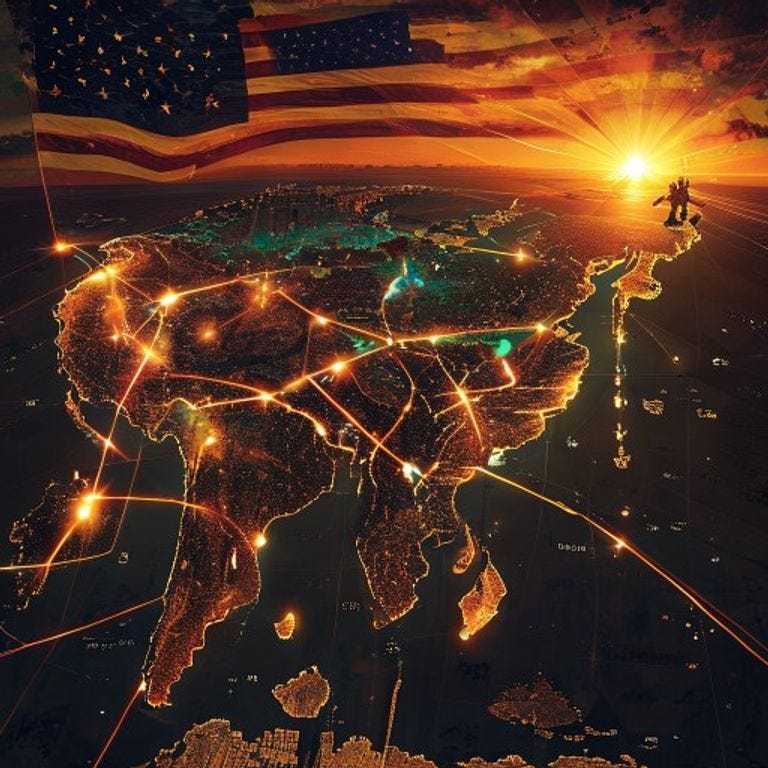
The region's esports infrastructure now rivals Western leagues, driven by 1.2 billion mobile gamers and $28 billion in annual revenue.
On May 31, 2026, a streamer named Tikochandao sat in a Tokyo apartment, staring at a monitor. The APAC North Pro League was on day 10. Apex Legends. The prize pool for the global series this year hit $5 million. Across the city, at the Hilton Tokyo Odaiba, market researchers from ESOMAR APAC 2026 discussed consumer behavior while a candy sculptor twisted molten sugar into animals for executives from Cint. Two blocks away, fans queued for a perfume launch featuring Faye Peraya. This was APAC — not a single story, but a dozen happening at once.
The world still talks about APAC as an abstraction. A region. A market. A trading bloc. But on the ground, it's something else. It's a collection of cities — Tokyo, Seoul, Shanghai, Singapore, Mumbai — each building its own version of the 21st century. And the most telling window into this isn't trade policy. It's esports.
The esports engine
The numbers are simple. In 2025, the APAC region accounted for 52% of global esports viewership. That's 320 million people. North America had 85 million. Europe, 130 million. The gap is widening.
The RLCS APAC 2v2 Open is a perfect example. On the same day Tikochandao streamed Apex, a team called KINOTROPE faced Senbei Strikers in Rocket League. The players — Maxeew, Kash, furlashh — are not household names in the West. They don't need to be. Their audience is in Japan, South Korea, Southeast Asia. And that audience is growing faster than any Western league.
Why? Because the infrastructure is different. In South Korea, the government subsidizes gaming academies. In Japan, corporations like Sony and Bandai Namco treat esports as a direct pipeline to hardware sales. In China, Tencent runs the entire ecosystem — from game development to tournament management to streaming platforms. The result is a virtuous cycle. More players means more tournaments. More tournaments means more investment. More investment means better production. Better production means bigger audiences.
The West has the same loop, but it's slower. APAC is running at double speed.
The demographic reality
Here's the concrete number you need to hold in your head: 1.2 billion mobile gamers in APAC. That's not a typo. That's more people than the entire population of the Americas combined.
The reason matters. In the West, gaming is still largely a console and PC affair. In APAC, the smartphone is the primary device. This changes everything. Mobile games have lower barriers to entry. They're cheaper to develop. They're easier to distribute. They create massive, casual user bases that feed into competitive scenes.
Consider India. In 2020, the Indian gaming market was worth $1.8 billion. By 2025, it hit $7.5 billion. The driver was not high-end graphics cards or PlayStation 5s. It was the JioPhone and 4G data plans costing $2 per month. A generation of Indian teenagers grew up playing Battlegrounds Mobile India on devices their parents could afford. Now they're watching tournaments. Some are turning pro.
The same pattern repeats across Indonesia, the Philippines, Thailand. The Philippines alone has 50 million gamers. That's more than the population of Spain.
The corporate pivot
Companies have noticed. In 2024, Tencent's gaming revenue hit $28 billion. That number is larger than the GDP of 80 countries. But the more interesting move is from non-gaming companies.
Hilton Tokyo Odaiba hosted ESOMAR APAC 2026. ESOMAR is the global market research association. They're not a gaming company. But they chose Tokyo, and the conference featured a candy sculptor at the Cint booth. That's not random. Cint is a survey platform. They're buying data. And the data they want comes from APAC's massive, young, digitally native population.
The candy sculptor is a metaphor. The executives at that conference are trying to understand what APAC wants. They're using esports, pop culture, and consumer behavior as entry points. Because the old models — trade agreements, tariff schedules, currency swaps — don't capture what's happening.
What's happening is a transfer of cultural gravity. In 2010, the world's most valuable entertainment IP was Harry Potter. American. In 2020, it was Pokémon. Japanese. By 2030, it might be something from a South Korean game studio or a Chinese anime platform. The center of gravity for how young people spend their time, their money, and their attention is moving to APAC.
The geopolitical undercurrent
There's a reason the US government is worried about TikTok. It's not just data privacy. It's that TikTok is Chinese-owned, and it's the primary information channel for Americans under 25. The concern is not about spyware. It's about narrative control.
But the same dynamic applies to gaming. When a teenager in Brazil watches a Valorant tournament streamed from Seoul, he's absorbing Korean production values, Korean branding, Korean aesthetics. When a teenager in Germany plays Genshin Impact, she's exploring a world designed in Shanghai. The soft power implications are enormous.
The US State Department spends about $2 billion annually on cultural diplomacy. Tencent spends $28 billion on gaming alone. The gap is not even close.
This is not a prediction of war or collapse. It's a description of a slow, structural shift. The APAC region is not just manufacturing the world's goods anymore. It's manufacturing the world's entertainment. And entertainment shapes preferences, which shape politics, which shape alliances.
The long view
Go back to that streamer in Tokyo. Tikochandao. Apex Legends. Day 10 of the APAC North Pro League. The tournament is sponsored by a Japanese energy drink company. The broadcast is in Japanese. The chat is in Japanese. The viewers are in Japan, Korea, Taiwan, Hong Kong. They don't care what's happening in Washington or Brussels. They care about who wins the next match.
That is the future. Not because esports will replace politics, but because it reveals where the energy is. The energy is in APAC. The money is following. The attention is following. The infrastructure is already built.
The West can react. It can invest in its own gaming ecosystems. It can try to replicate APAC's mobile-first model. But it's late. The window is closing.
In 2018, the global esports market was $776 million. By 2025, it was $1.8 billion. The growth came from APAC. The next decade will see that number double again. And the center of gravity will not shift back.
The candy sculptor at the Hilton Tokyo Odaiba was not just making art. He was making a point. APAC is now the place where things are built, where audiences gather, where the future is played out in real time. The rest of the world is watching — whether they know it or not.
메타데이터
- post_id
- 5dc736e53e0a
- slug
- apacs-gaming-dominance-signals-broader-power-shift-5dc736e53e0a
- url
- https://medium.com/@bean_flickr69/apacs-gaming-dominance-signals-broader-power-shift-5dc736e53e0a
- canonical_url
- https://medium.com/@bean_flickr69/apacs-gaming-dominance-signals-broader-power-shift-5dc736e53e0a
- author_url
- https://medium.com/@bean_flickr69
- status
- ok
- fetched_at
- 2026-06-14 17:09:17