🔁 AI Society 7.11.25 — AI Risk, Data Wars, and the Future of Diagnosis
🛡️ AI security isn’t just tech risk. Dr. Pam Palmeter lays out Canada’s updated security guidance: • Foreign interference & espionage •…
🔁 AI Society 7.11.25 — AI Risk, Data Wars, and the Future of Diagnosis

Source: ChatGPT
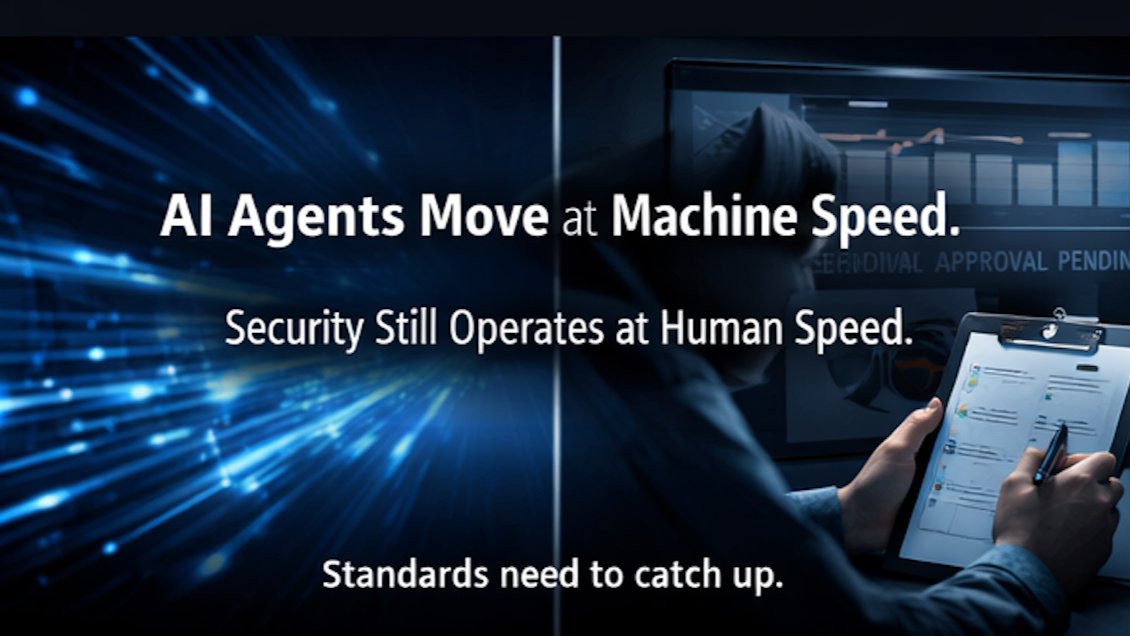
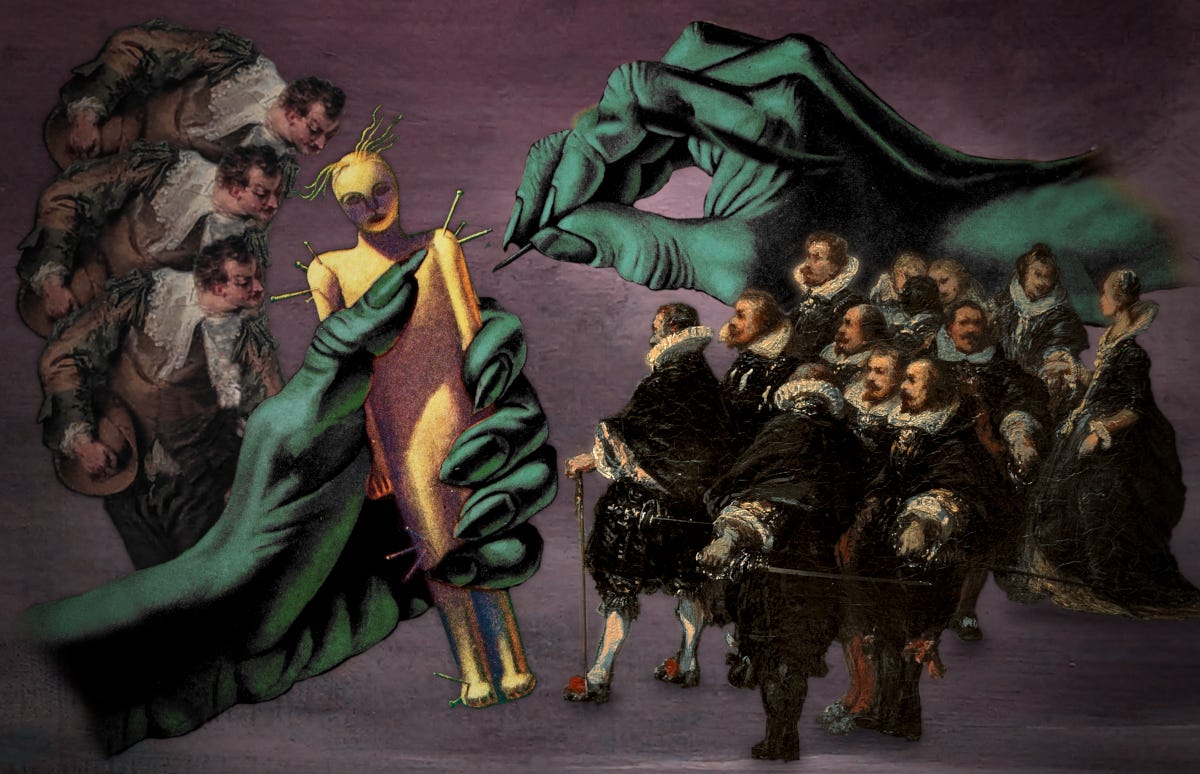
🛡️ AI security isn’t just tech risk. Dr. Pam Palmeter lays out Canada’s updated security guidance: • Foreign interference & espionage • Cyberattacks on critical infrastructure • Extremist threats & election tampering • Supply chain fragility and climate risks • Technological vulnerabilities in AI, quantum, 5G A sober reminder that AI risk is geopolitical, not just technical.
🌐 Cloudflare vs the bots. Cloudflare’s new default blocks AI scrapers — except Google’s. Because Google’s bot is also its search crawler, blocking it would nuke publishers’ search traffic. A revealing snapshot of AI training’s messy economics, and Google’s unmatched leverage.
🩺 AI in healthcare steps up. Microsoft’s multi-agentic MAI-DxO hits 80% accuracy on sequential diagnosis tasks — 4x that of human baselines. Meanwhile, Alphabet’s Isomorphic Labs readies AI-designed cancer drugs for human testing. The pharma world is betting big on AI to cut costs and save lives.
👇 Which angle do you think matters most — national security risks, data power plays, or AI-driven health breakthroughs?
— — — — -
Is AI getting ahead of us? Well, we know that answer, and Dr. Pam Palmater at ‘AI Advances’ offers a Canadian perspective and a good overview that doesn’t only apply to our friends to the north:
According to Public Safety Canada’s 2023 National Security Guidelines for Critical Infrastructure, Canada faces a complex threat environment that includes:
· *Foreign interference and espionage (e.g., targeting democratic institutions, research, and IP);*
· Cyberattacks on critical infrastructure and public institutions;
· Extremist violence, including far-right extremism;
· Pandemic recovery threats (e.g., supply chain disruptions, economic destabilization);
· *Climate-driven security risks, such as infrastructure failure or displacement;*
· *Hostile influence operations, particularly targeting elections and public trust; and*
· *Technological vulnerabilities, especially in AI, quantum, and 5G systems.*
The latest in the ongoing battle of the bots, this time Cloudflare announcing its intent to block AI bots. But there is a problem:
· Cloudflare, which powers many of the world’s most prominent websites, made waves last week by introducing a default setting for new customers that would block bots that artificial intelligence firms such as OpenAI and Anthropic use to scrape sites to train artificial intelligence.
· What Cloudflare didn’t highlight was that Google’s AI products couldn’t be blocked by the new setting.
· Google’s bot for collecting data for its Gemini AI models is the same one that indexes websites for Google Search, so Cloudflare can’t block it on a network level, as it is doing for other AI bots, without also cratering search traffic for website publishers. That’s a problem because many sites say they’ve already lost significant traffic and revenue due to Google’s AI products and features.
Definitely an ongoing story given Google’s monopoly issues as well as the fact that robots.txt, which instructs crawlers not to index a site, is not failsafe.
And another update on Microsoft’s AI healthcare ambitions. In the past week, I’ve covered their multi-agentic system, MAI-DxO, for medical diagnosis. On published benchmarks, this framework has achieved an 80% accuracy rate on the Sequential Diagnosis Benchmark (SDBench), 4x that of humans. So, what is SDBench? Dr. Ashish Bamania at ‘AI Advances’ describes this new medical evaluation framework.
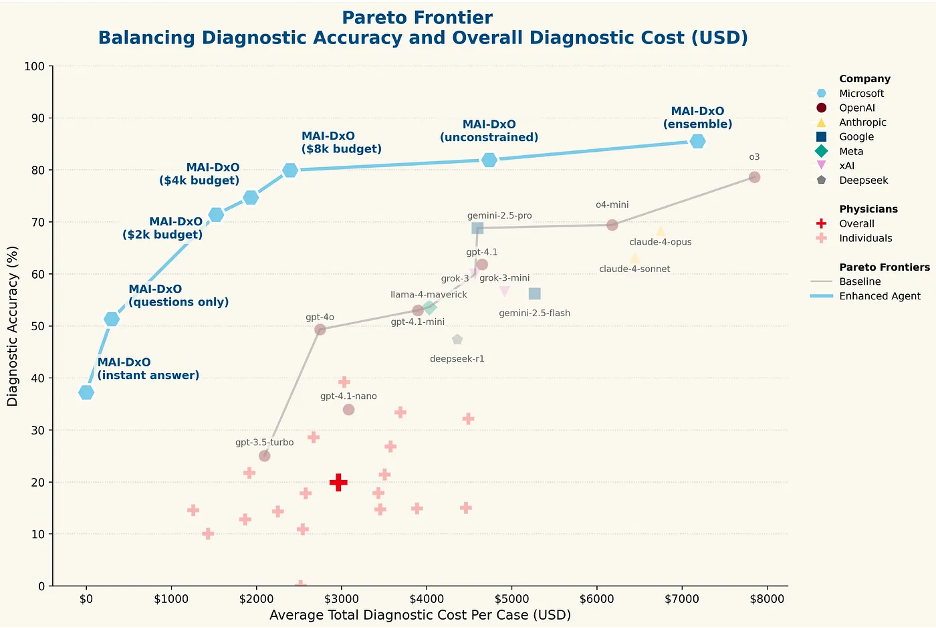
Plot showing diagnostic accuracy vs average cumulative medical cost, where MAI-DxO, built on top of o3, achieves Pareto dominance over others. In other words, MAI-DxO achieves higher accuracy over other solutions at any price point.
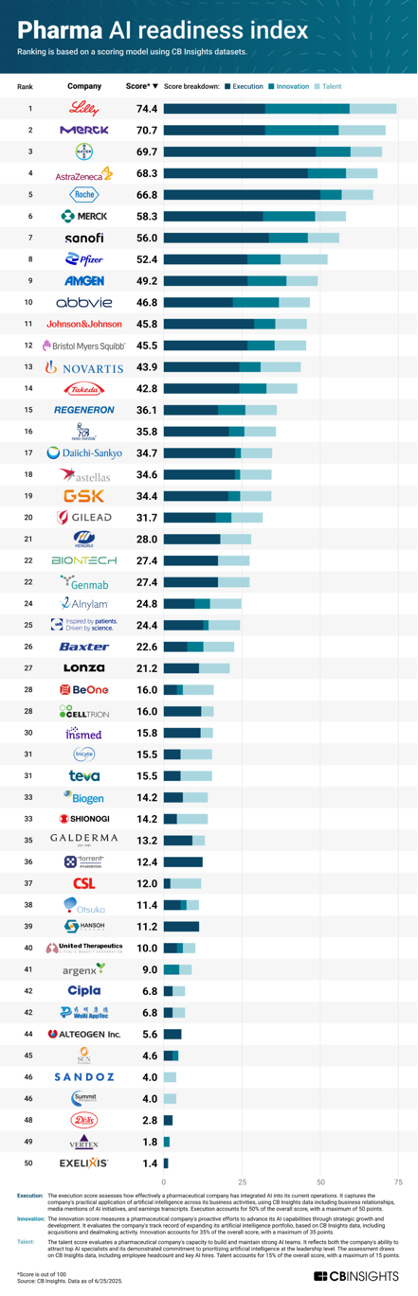
In parallel, CB Insight’s latest reporting on AI in pharma:
· Alphabet subsidiary Isomorphic Labs is preparing to test its AI-designed cancer drugs in humans per comments from President Colin Murdoch this week.
· The company, a Google DeepMind spinoff, raised $600M in March 2025.
· Oncology is a key focus across the pharma landscape: the therapeutic area dominates one-third of all pharma AI partnerships.
If you’re looking to spin-up your own LLM workstation, look no further. Tamanna offers a breakdown of the best Nvidia GPUs for inference based on cores, RAM, memory bandwidth, precision support, and of course, cost. Check out the post for detailed pros and cons for each. And note that my rig has the A6000.

Source: offers
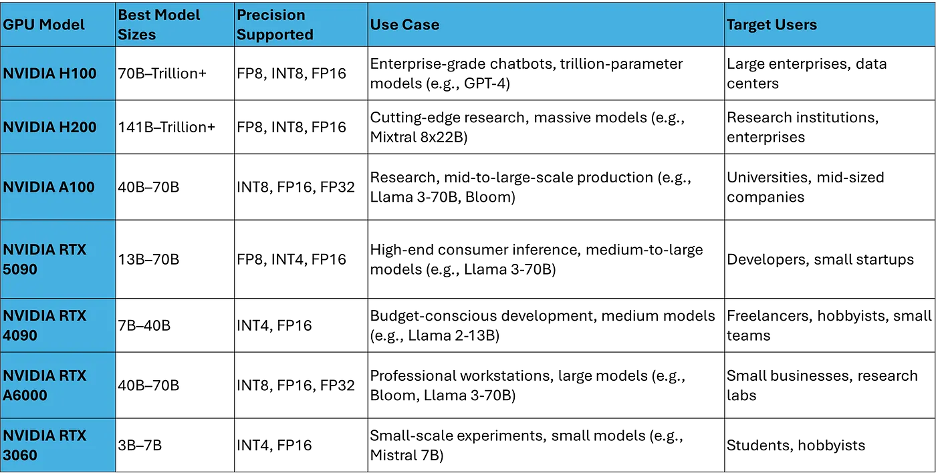
Source: offers
Of Interest:
Umair Ail Khan in ‘Data Science Collective’ with a tutorial on leveraging Llama Extract to extract structured data from unstructured documents
메타데이터
- post_id
- 5dd34fbf93e3
- slug
- ai-society-7-11-25-ai-risk-data-wars-and-the-future-of-diagnosis-5dd34fbf93e3
- url
- https://medium.com/a-i-society/ai-society-7-11-25-ai-risk-data-wars-and-the-future-of-diagnosis-5dd34fbf93e3
- canonical_url
- https://medium.com/a-i-society/ai-society-7-11-25-ai-risk-data-wars-and-the-future-of-diagnosis-5dd34fbf93e3
- author_url
- https://medium.com/@daveginsburg
- status
- ok
- fetched_at
- 2026-06-10 15:53:41