A Kinder Question Worth Asking
There is no denying that the arrival of in-ovo sexing technology in Australia marks a shift many have long hoped to see. In-ovo sexing is…
A Kinder Question Worth Asking
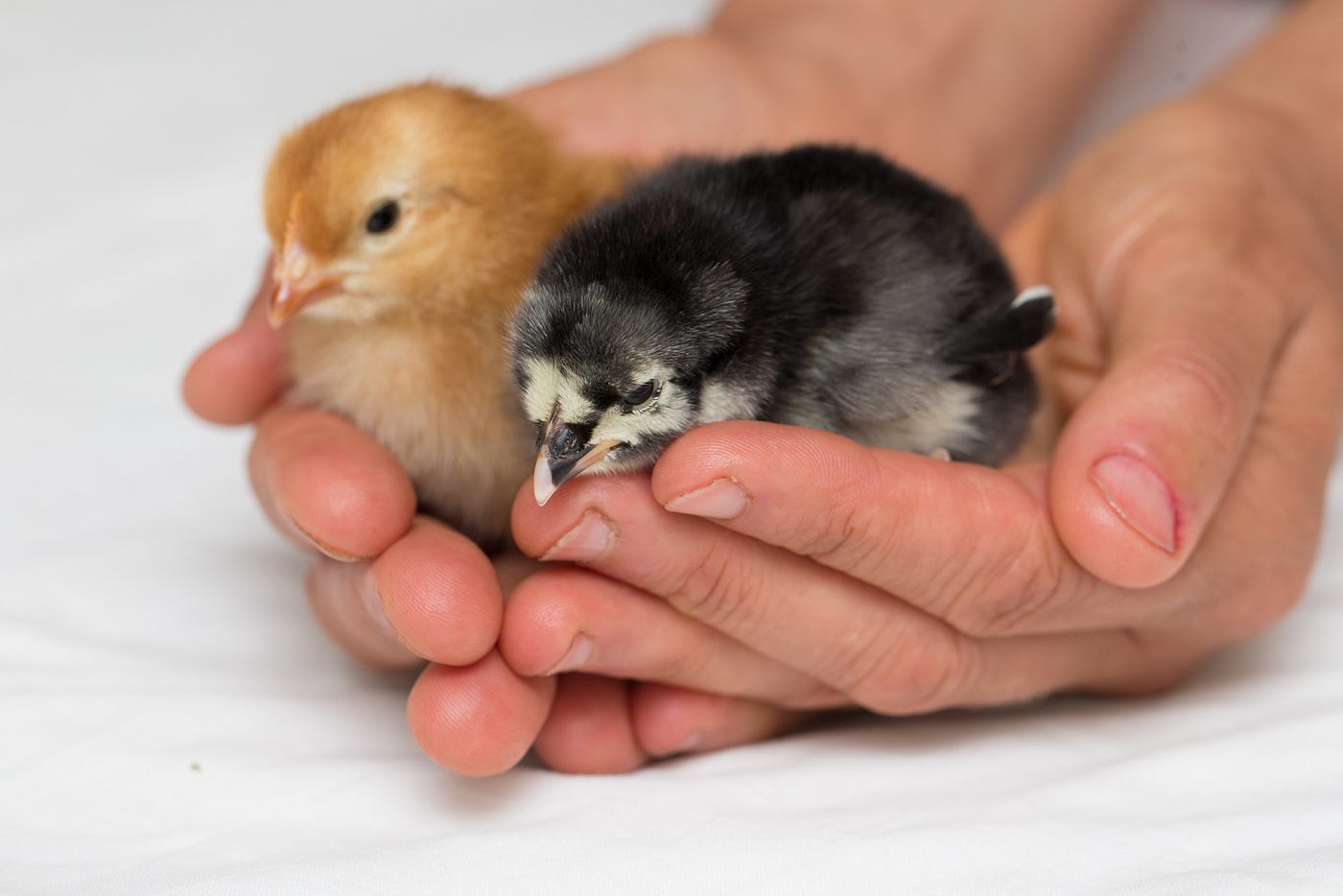
Red Baron and his little buddy, Biggles, who sadly passed away shortly after arriving at sanctuary. Both were collateral damage of the egg industry, gassed as unwanted male chicks and sold as snake food.
There is no denying that the arrival of in-ovo sexing technology in Australia marks a shift many have long hoped to see. In-ovo sexing is the process of determining the sex of a chick while still inside the egg, before hatching.
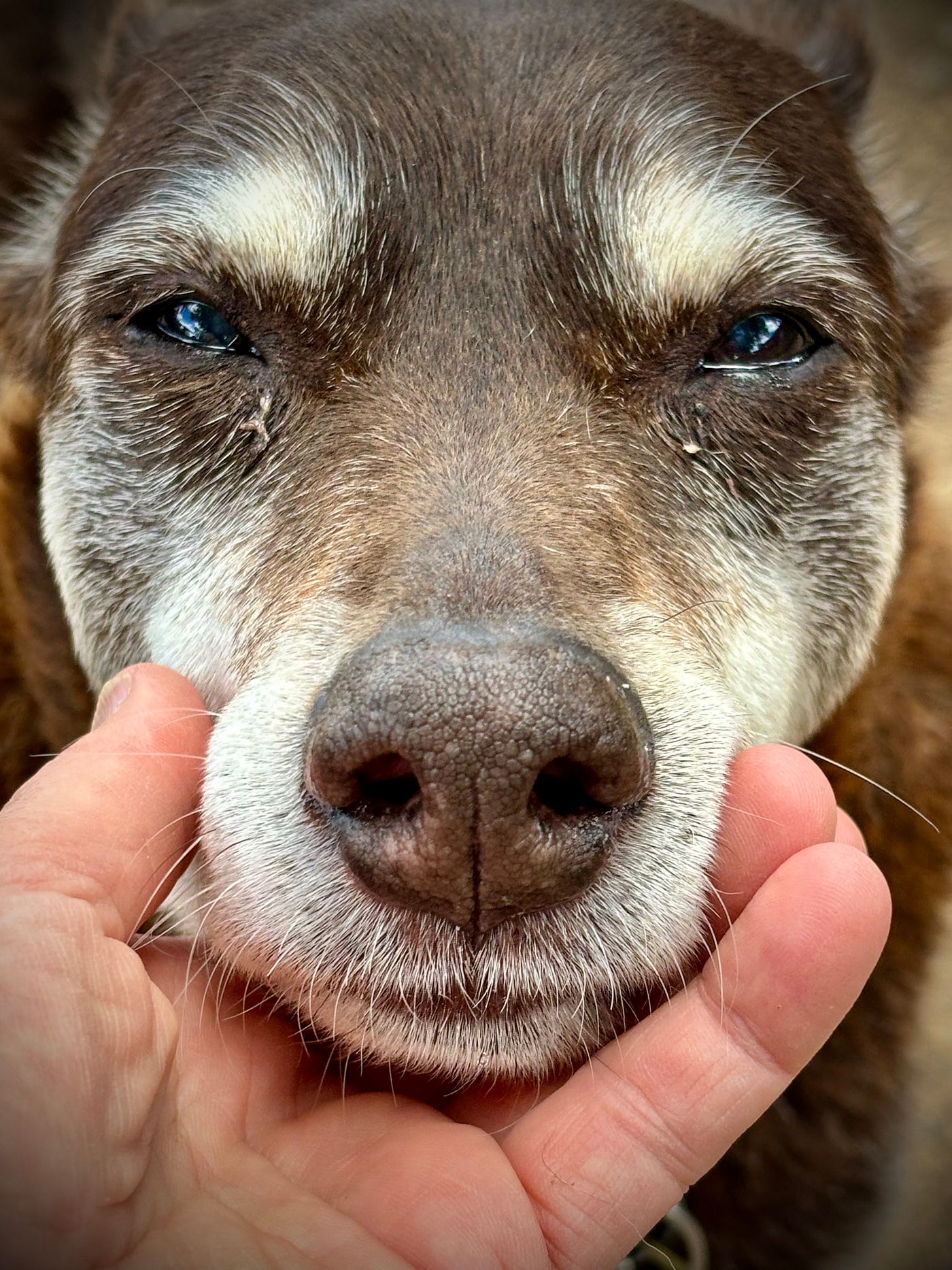
For decades, millions of male chicks, deemed surplus to the egg industry, have been killed within hours of hatching, most commonly through maceration. It is a confronting truth that sits heavily when spoken plainly, and heartbreakingly when witnessed. And if we pause, even briefly, to imagine such a fate for puppies or kittens, the discomfort becomes impossible to ignore.
So yes, the ability to determine the sex of a chick before hatch, sparing those males from that immediate end, is a welcome step.
But it is not the full story.
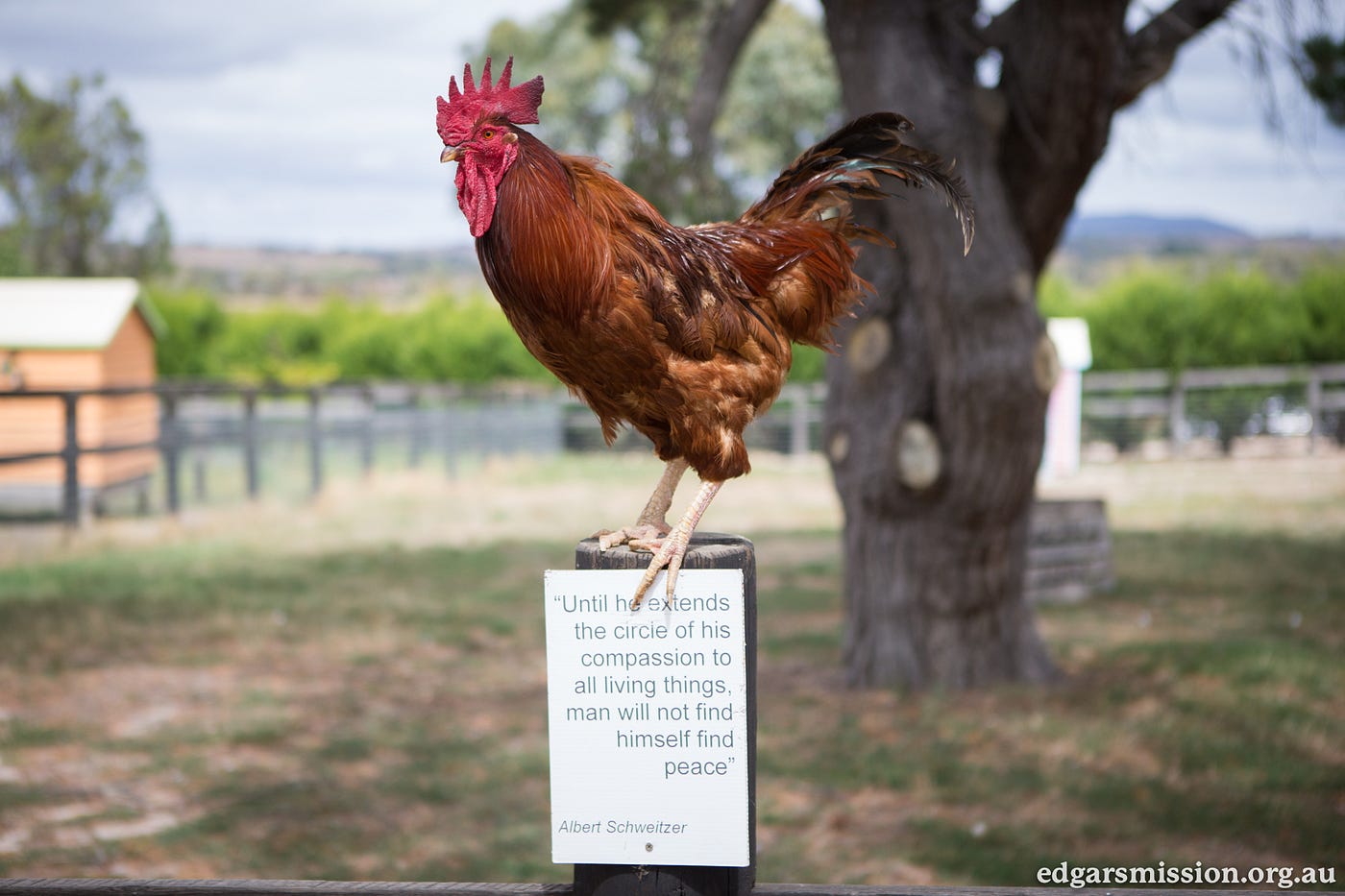
Red Baron lived a rich and full life.
In-ovo sexing typically occurs early in incubation, well before the 21-day hatch point. While this prevents the birth of male chicks only to end their lives, it also brings with it another reality, one that calls for our honest consideration.
Because the system itself remains unchanged.
The hens who will go on to lay those eggs are still bred for output, their bodies shaped by generations of selection for productivity over wellbeing. Even in free-range systems, their lives are governed by human need, and their days are measured in yield, not years.
And when that yield declines, often at around 18 months of age, they are no longer considered viable. Despite being capable of living eight, even ten years when allowed to simply be.
There is also an economic truth underpinning this shift. By identifying and removing male embryos earlier, the industry reduces the cost of incubating eggs that will never be “useful.” Fewer resources, less time, greater efficiency. Compassion, perhaps, but one that sits alongside convenience.
And there is the question of perception.
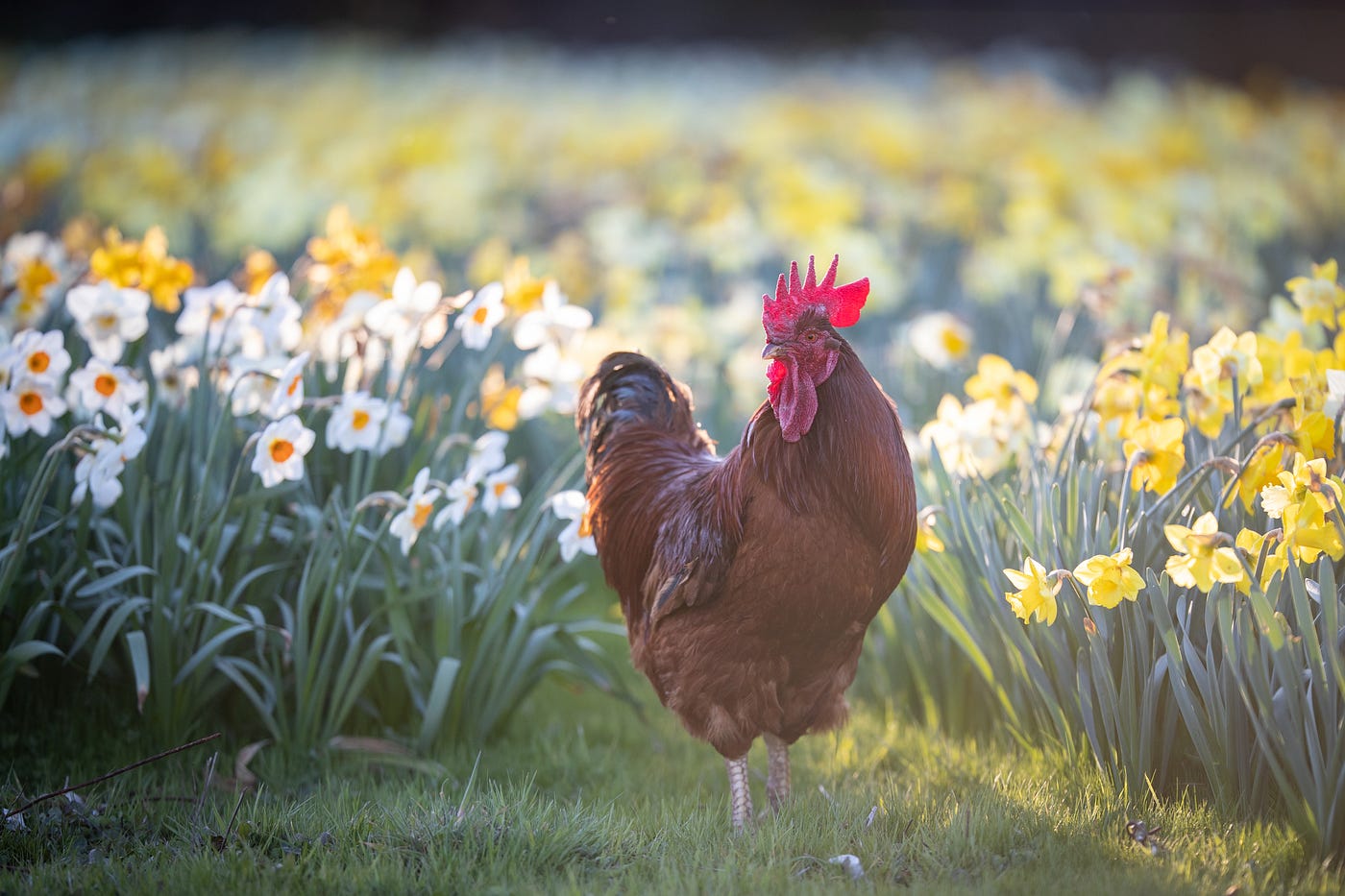
Red Baron, a very handsome and much loved rooster.
As public awareness grows, so too does the pressure on industries to respond. In-ovo sexing offers a way to address one of the most confronting practices, and in doing so, to reassure a community increasingly concerned with how animals are treated.
But if we are to be honest, this is not a transformation of the system.
It is a refinement of it.
And perhaps that is where the real question lies, not in whether this is better (it is), but in whether it is enough.
Because kindness, in its truest form, asks more of us than simply reducing harm.
It asks us to consider the life entire.
If this story touched your heart, please consider giving it a clap or ten. Each one helps these stories, and the message of kindness towards all animals, reach a little further into the world. 🤍
메타데이터
- post_id
- 5de9b674c8b4
- slug
- a-kinder-question-worth-asking-5de9b674c8b4
- url
- https://medium.com/@pamahern/a-kinder-question-worth-asking-5de9b674c8b4
- canonical_url
- https://medium.com/@pamahern/a-kinder-question-worth-asking-5de9b674c8b4
- author_url
- https://medium.com/@pamahern
- status
- ok
- fetched_at
- 2026-06-24 18:57:25