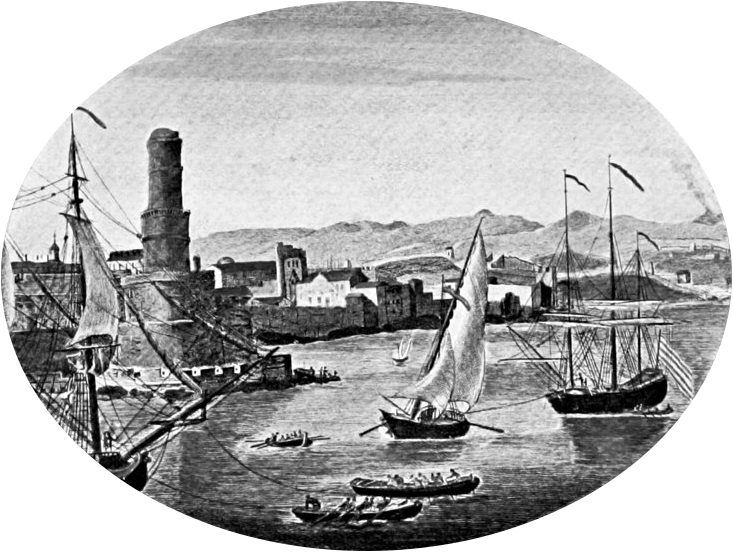
Central Asia, In Color Before Color
The pioneering photographs of Sergey Prokudin-Gorsky
Central Asia, In Color Before Color
The pioneering photographs of Sergey Prokudin-Gorsky

The Emir of Bukhara by Sergey Prokudin-Gorsky, 1911.
In the early 1900s, Sergey Prokudin-Gorsky, a Russian chemist and photographer, set out to document the diversity of the Russian Empire in color. Using a custom camera, a railway-car darkroom, and his innovative three-filter process, he produced images far ahead of their time. His work soon drew the attention of Tsar Nicholas II.
The Tsar was so impressed by Prokudin-Gorsky’s photographs that he sponsored the project, providing a specially equipped railway-car darkroom, travel permits, and access to restricted areas. This support enabled Prokudin-Gorsky to pursue something unprecedented.
Between 1905 and 1915, Prokudin-Gorsky traveled through Central Asia — to Samarkand’s sunlit streets, Bukhara’s grand madrasas, and legendary Silk Road lands. With the Tsar’s recommendation, he gained entry to places otherwise inaccessible to an ordinary photographer.
He created a vivid, human portrait of a world on the cusp of change.
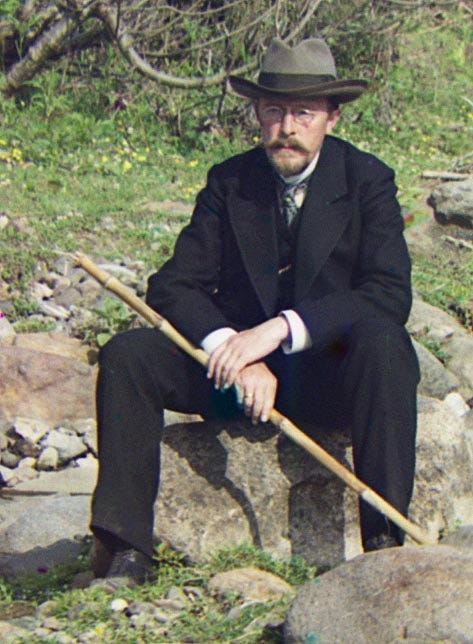
Photo of Prokudin-Gorskii, possibly by one of his assistants, 1912. Original title:” On the Karolitskhali River.”
To understand the significance of these photographs, recall how revolutionary color photography was. At the time, nearly all photographs were black-and-white. For most, color remained a distant, experimental concept, yet to take off in European photo studios.
Prokudin-Gorsky formulated an ingenious three-step process. He took three quick exposures of the same scene, each one through a red, green, or blue filter onto a single glass plate. When these images were projected together using matching filters, the result was a vivid color photograph.
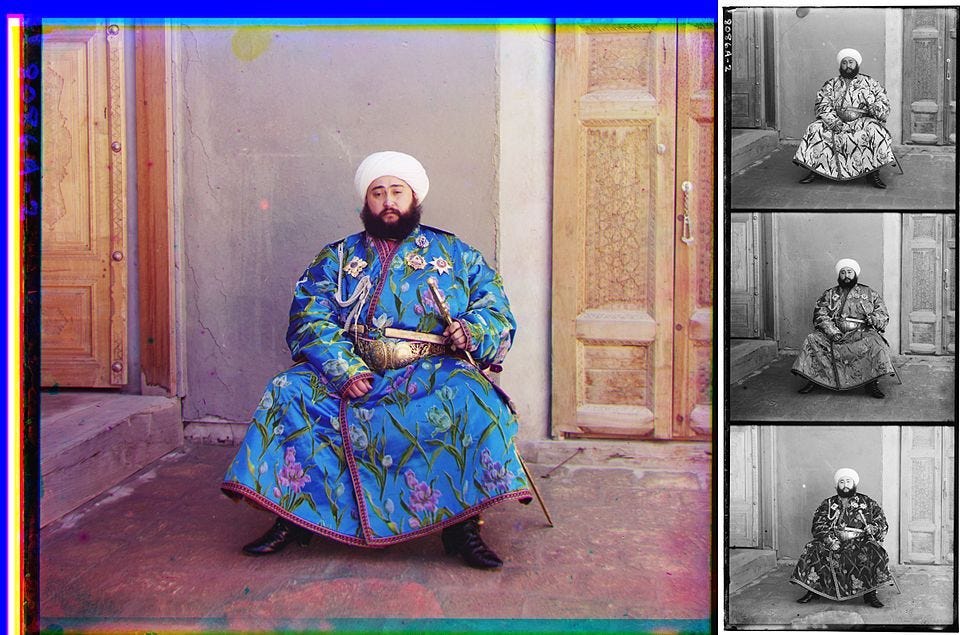
The Emir of Bukhara’s portrait through the blue, green, and red filters. On the right are the original negatives, displayed in positive form.
Today, the Library of Congress has digitized all 1,902 surviving glass plate negatives, creating color images as Prokudin-Gorsky intended. Even a century later, these photographs will mesmerize you.
The cities Prokudin-Gorsky visited, Samarkand, Bukhara, and Merv, were ancient when Chinggis Khan marched through them. By the time Prokudin-Gorsky arrived with his camera, these places had endured Mongol invasions, Timurid splendor, and the Russian conquest. Within a decade of his visit, the Bolshevik Revolution transformed the region, erasing or altering much of what he recorded. His photographs are the final memories of a world that was about to vanish.
Recently, I’ve been captivated by these photographs, sometimes losing hours in their details. I want to gather my favorites into a collection. As my primary interest is in Central Asia and the Eurasian Steppes, I decided to compile his best works from the region in this post.
I wanted to highlight the architectural marvels he documented: the mosques, mausoleums, madrassas, and city walls that have defined Silk Road cities for centuries. I’m also drawn to glimpses of life on the Kazakh Steppe, or the Golden Steppe.
Some buildings remain, heavily restored; others exist only in his photographs. Seeing them in color, rather than the sepia tones typical of this era, transforms our experience. They don’t seem like distant relics; they’re breathtakingly real.
Welcome to Central Asia, in color before color.
Let us look at some of Prokudin-Gorsky’s finest work. All images shared here are courtesy of the Library of Congress and are in the public domain.
Bukhara

Emir Shir-Budun’s palace in a country grove. Bukhara

In the country palace of the Bukhara Emir. Bukhara

Entrance into the Emir’s palace in Old Bukhara.

Sentry at the palace, and old cannons. Bukhara

Kush-Beggi (Minister of the Interior). Bukhara.

Above the entrance to the Gauk man madrasa. Bukhara

Duan-Beggi Madrasa (in Labikhauz). Bukhara.
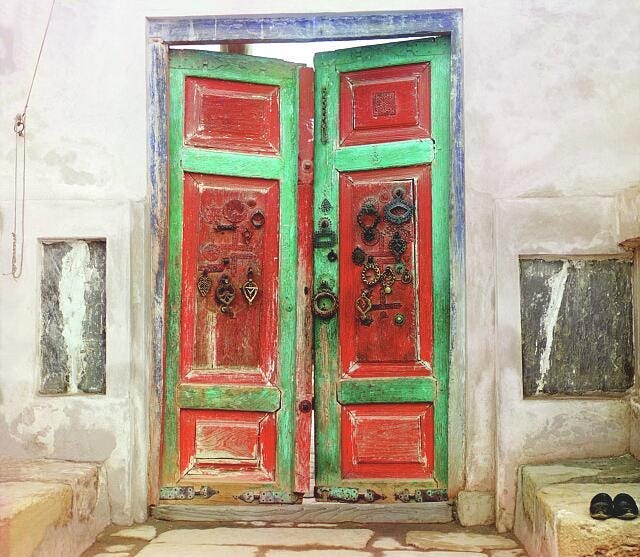
Entrance gates into the Tsar’s tomb. Bogoeddin. Bukhara
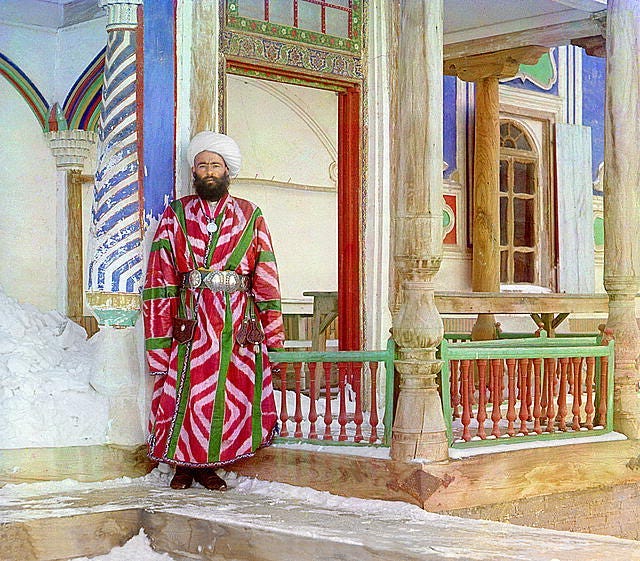
Bukhara bureaucrat. Bukhara

View of a courtyard, adobe buildings, and a bird’s nest atop a dome.

Street scene with vendors, minaret (Kalyan) in the background. Bukhara.

Wall painting in a niche in Bogoeddin. Bukhara.
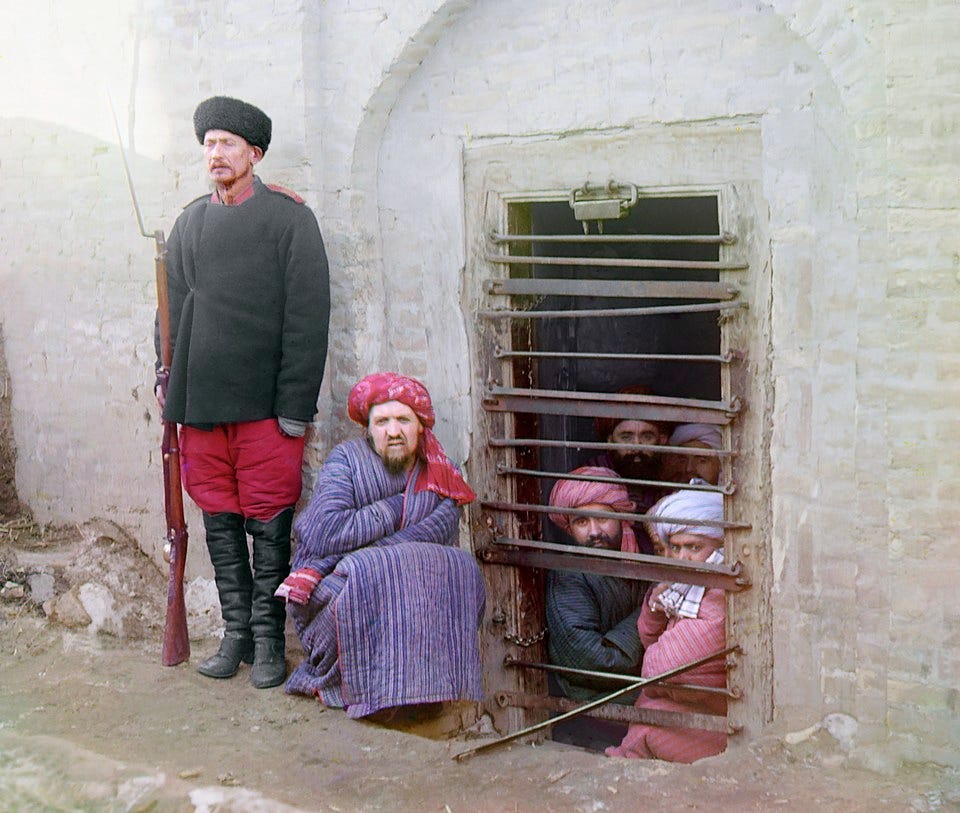
Zindan (prison) in Bukhara.
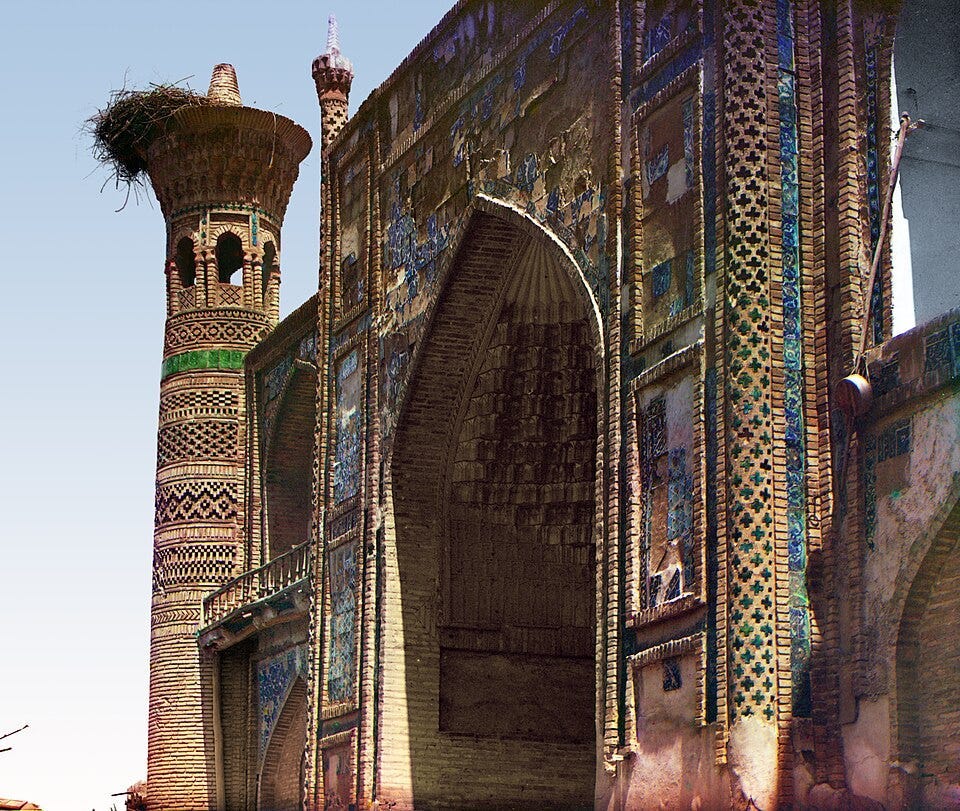
Madrasa of Muhammad Amin Tupchiboshi (now demolished). Bukhara.
Samarkand

Mirza-Uluk-Beg. Registan. Samarkand
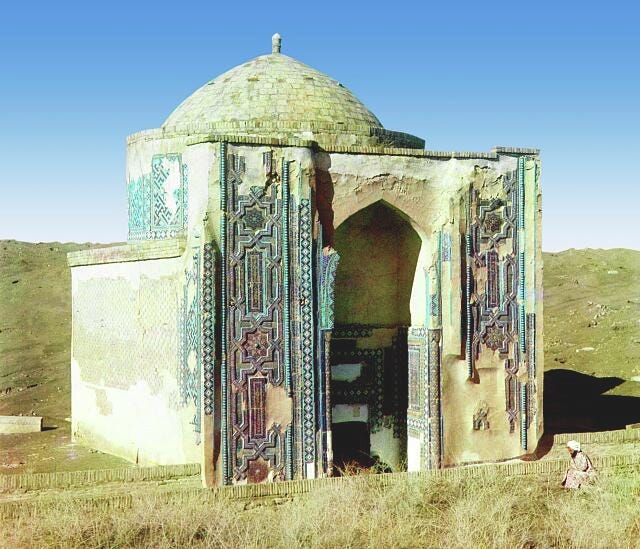
Tomb on the mountain in Shakh-i Zindeh(Shah-i-Zinda). Samarkand
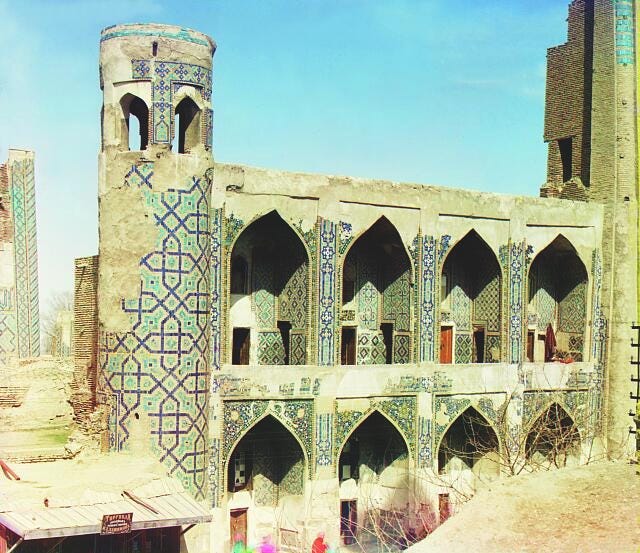
Tillia-Kari from Uluk-Beg. Samarkand
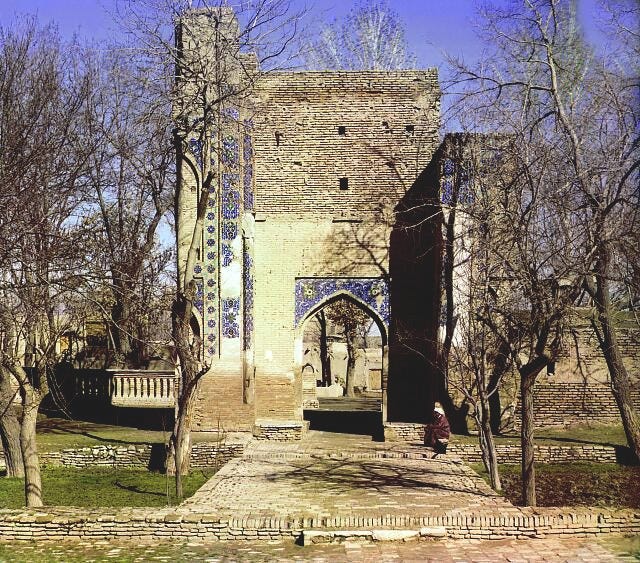
Exit from the Gur-Emir mosque. Samarkand.

General view of Shakh-i Zindeh (Shah-i-Zinda) mosque, from the northwest.

Mosaics on the Shakh-i Zindeh (Shah-i-Zinda) walls. Samarkand
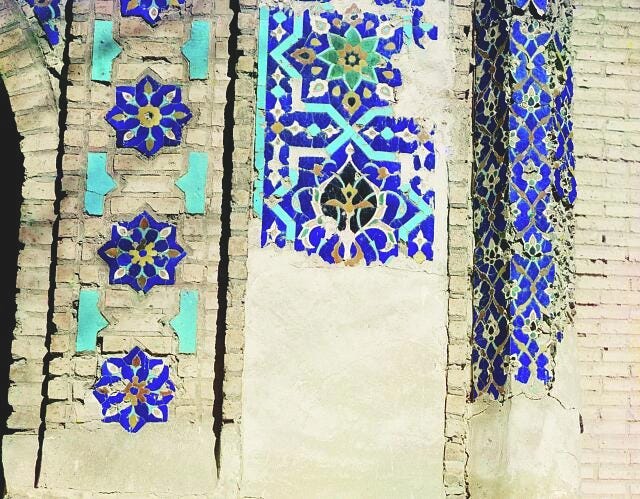
Detail of the gate from the left side of the interior. Gur-e-Amir. Samarkand.
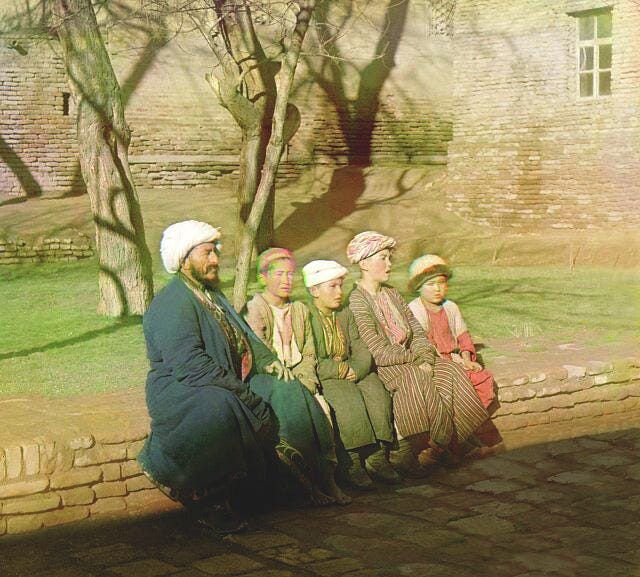
Sart schoolchildren. Samarkand.
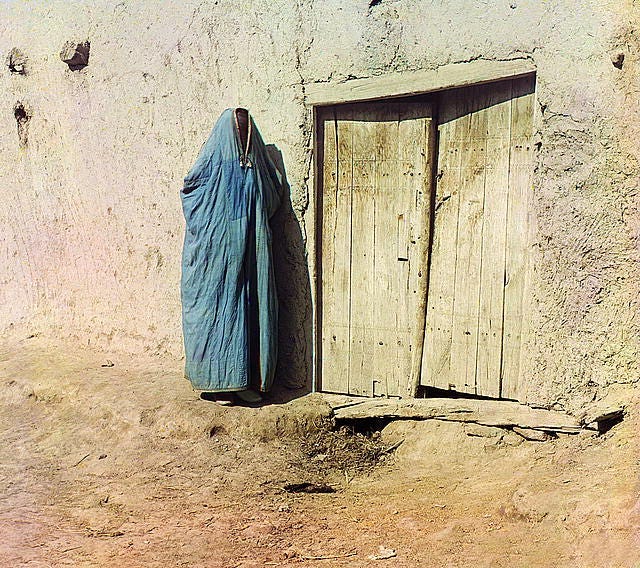
Sart woman. Samarkand.

Portion of Shir-Dar minaret and its dome from Tillia-Kari. Samarkand.

General view of the Shakh-i Zindeh mosque (evening photo). Samarkand.

On the Registan. Samarkand.
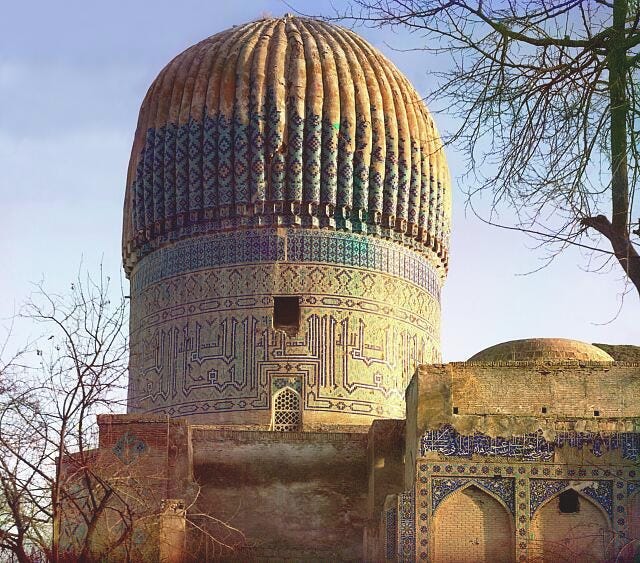
Dome of the Gur-e-Amir from the eastern side. Samarkand.
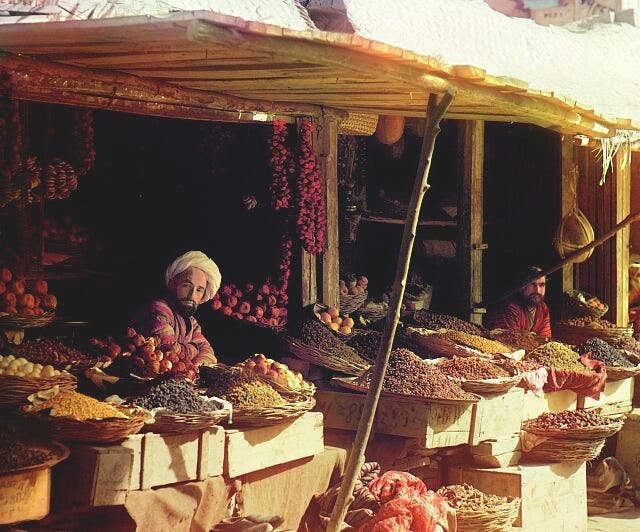
Fruit stand. Samarkand.
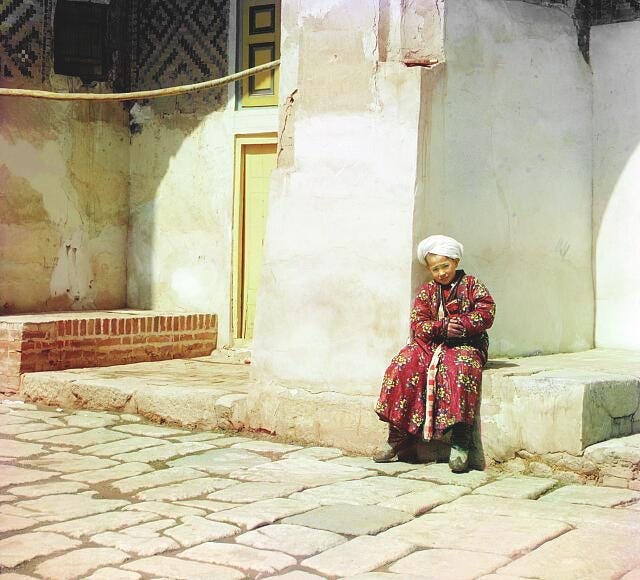
In the court of the Tillia-Kari mosque. Samarkand.
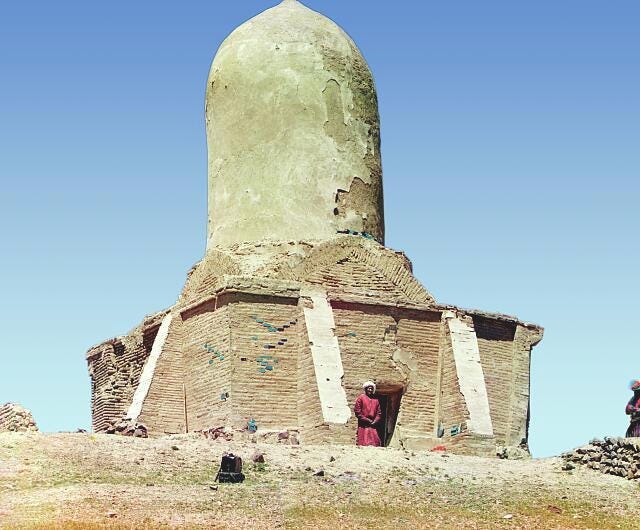
Chapel on Chapan-Ata Mountain, five versts from Samarkand.

Example of mosaics on the walls in the home of a wealthy Sart. On the outskirts of Samarkand.
The Golden Steppe

Road and deep excavation. Kiat. Golodnaia Steppe.
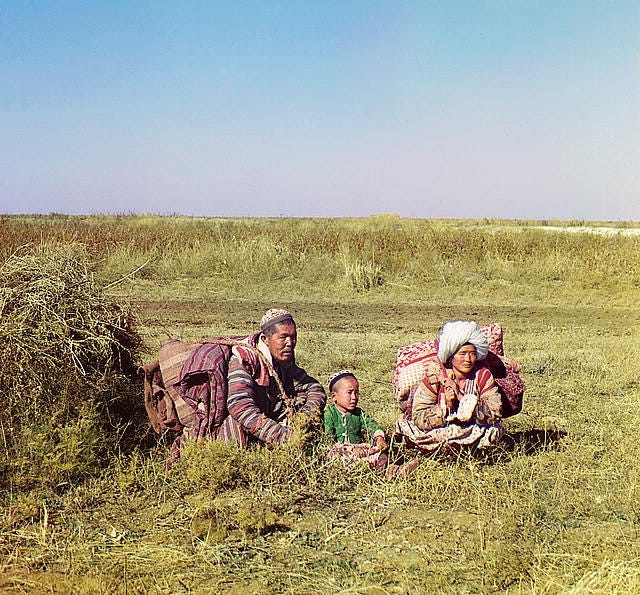
Nomadic Kirghiz. Golodnaia Steppe.

Observing a solar eclipse on January 1, 1907, near the Cherniaevo Station in the Tian-Shan mountains above the Saliuktin mines. Golodnaia Steppe.
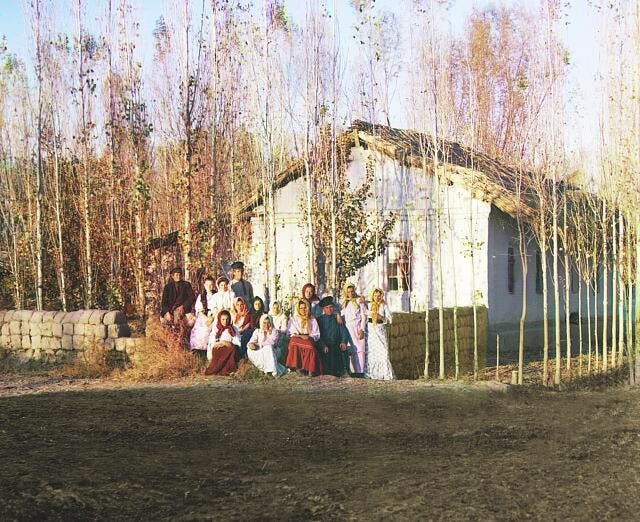
Migrant farmstead in the settlement of Nadezhdinsk with a group of peasants. Golodnaia Steppe.
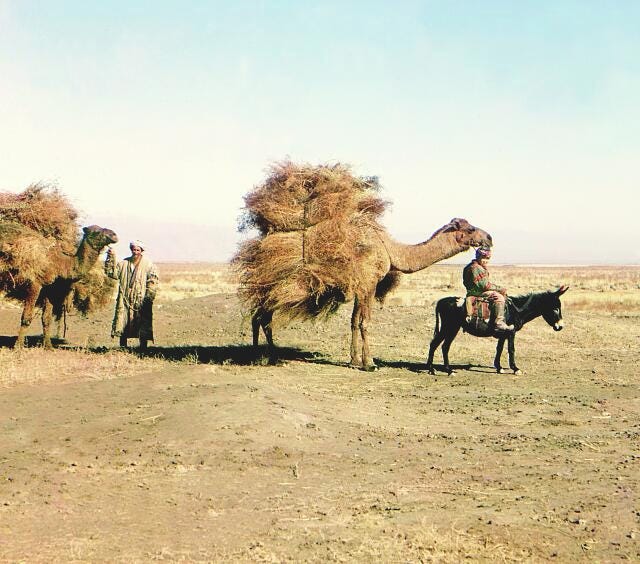
A camel caravan carrying thorns for fodder. Golodnaia Steppe.
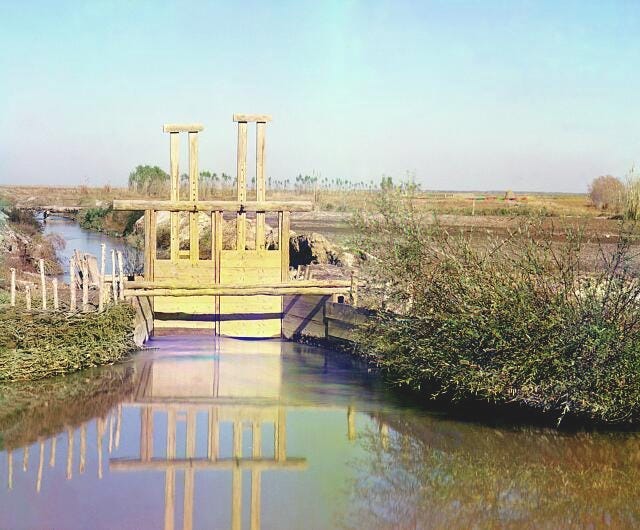
Main sluice of the Tsarevna Reservoir. Golodnaia Steppe.

Camel grazing in the steppe. Golodnaia Steppe.
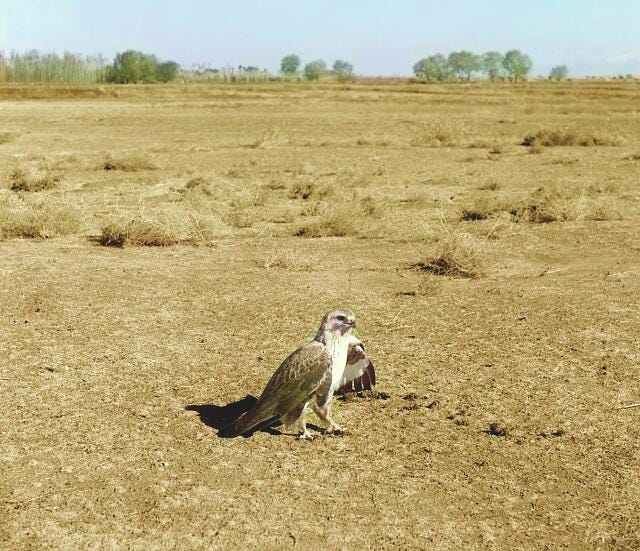
Young eagle. Golodnaia Steppe
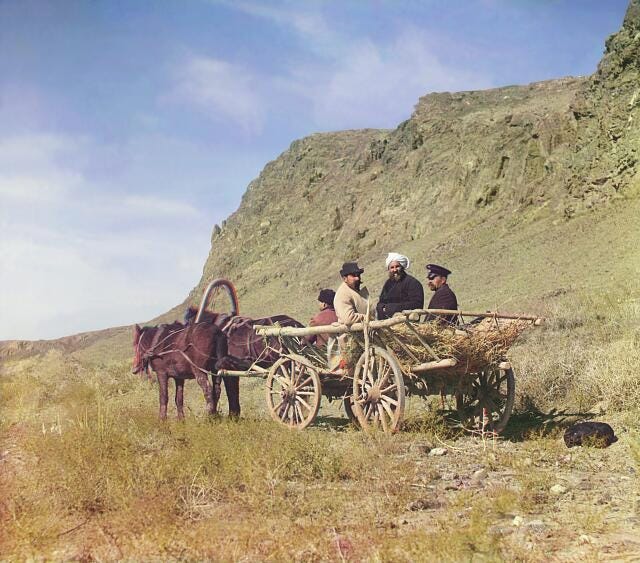
At work on the upper reaches of the Syr-Darya. Golodnaia Steppe.

Volyn levee on the Emperor Nicholas I canal. Volyn bridge in the distance. Golodnaia Steppe.

Bridge beyond the rapids, over the Syr-Darya. From the right bank. Golodnaia Steppe.

Tsar-dam. General view from the top. Golodnaia Steppe.
Merv and Scenes from Turkmenistan

Adobe buildings in desert plains.

Man in uniform beside building, yurt in background.

Mazar (Sepulcher) of Akhmed Zamchi. Ancient Merv.

Yusuf Hamadani mosque and mausoleum, ancient Merv, Turkmenistan.

Two men standing on a rug in front of a yurt.

Original title: “Front view of a crumbling mosque, with a man standing beside it”. However, this is the mausoleum of the Seljuk Sultan Ahmad Sanjar at Merv.
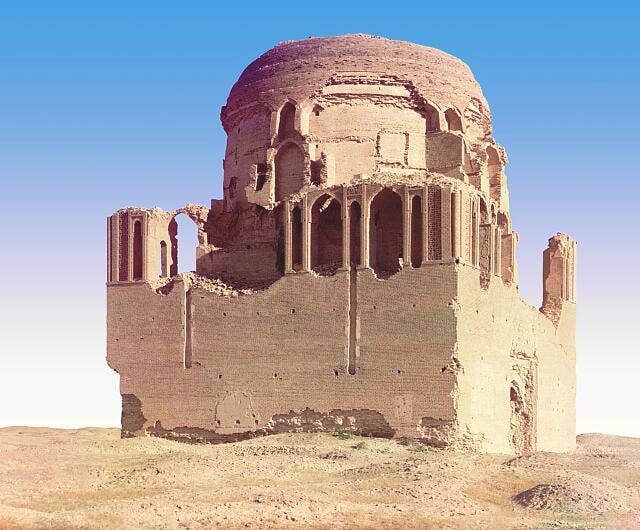
Side view of the above monument.

Oven for cooking pilau, Bairam-Ali area. Turkmenistan.
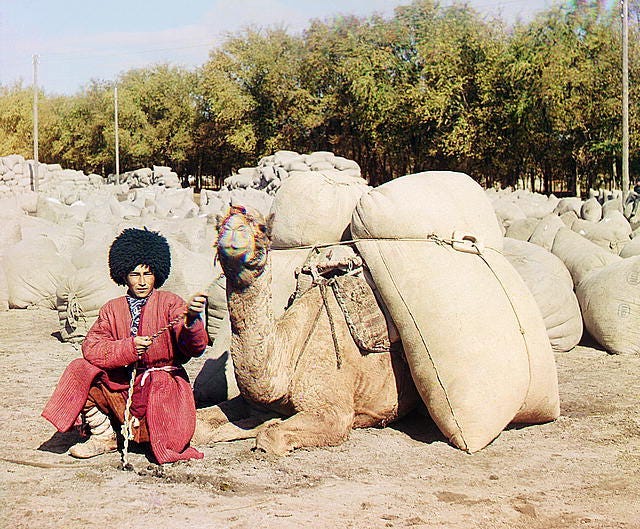
Turkmen man posing with a camel loaded with sacks, probably of grain or cotton, Central Asia
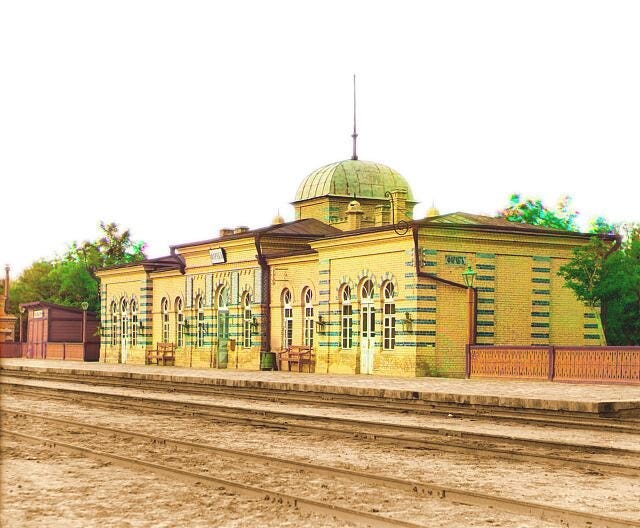
Village of Farab, Turkmenistan. Railroad station and tracks.
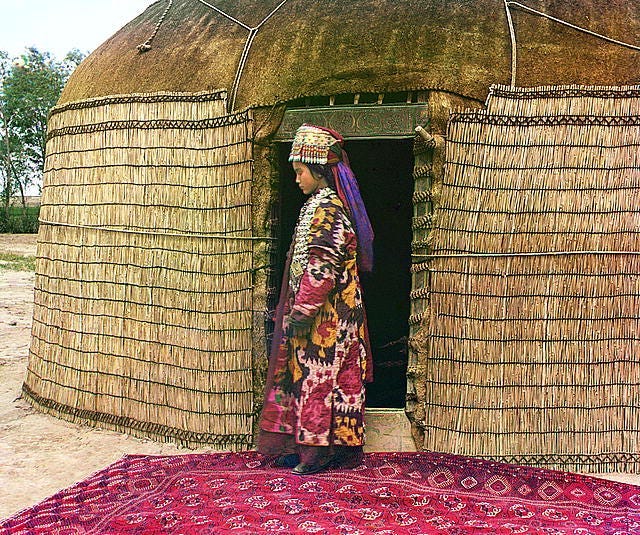
Full-length profile portrait of a woman, possibly Turkman or Kirghiz, standing on a carpet at the entrance to a yurt, dressed in traditional clothing and jewelry.
If this glimpse into a vanishing world stayed with you, share it with someone who would appreciate it. And if you’d like to see more forgotten corners of history brought back to life, consider subscribing to my newsletter.
메타데이터
- post_id
- 5e0288331b4a
- slug
- central-asia-in-color-before-color-5e0288331b4a
- url
- https://medium.com/teatime-history/central-asia-in-color-before-color-5e0288331b4a
- canonical_url
- https://medium.com/teatime-history/central-asia-in-color-before-color-5e0288331b4a
- author_url
- https://medium.com/@pdg1
- status
- ok
- fetched_at
- 2026-06-11 12:34:08