Worn Through Every Season: The Saudi Jilbab Care Guide No One Talks About
Most jilbab care guides tell you the same things: hand wash, cold water, air dry. And while that’s not wrong, it misses most of what…
Worn Through Every Season: The Saudi Jilbab Care Guide No One Talks About
Most jilbab care guides tell you the same things: hand wash, cold water, air dry. And while that’s not wrong, it misses most of what actually damages a Saudi jilbab over time — the seasonal shifts, humidity swings, storage mistakes, and the small daily habits that slowly ruin the fabric and drape.
If you’ve ever noticed your jilbab looking limp after a few months, or the pleats losing their fall, the issue probably wasn’t the wash. It was everything around it.
What Sets a Saudi Jilbab Apart

A Saudi jilbab is typically made from heavier, smoother fabrics — crepe, nida, or polyester blends that give it that structured, elegant drape. Unlike cotton prayer dresses or lighter abayas, this weight is what creates the floor-length flow and the neat collar finish. That same weight is also what makes it more sensitive to how you handle it — particularly when it’s wet.
The fabric holds water more than it appears to, which means wringing it out (even gently) can stretch the seams and distort the pleating. Flat drying is non-negotiable, not just a recommendation.
Monsoon and Humidity: The Season That Does the Most Damage

Across South Asia, the monsoon season runs June through September — and for jilbab wearers, this is when care matters most. Humidity above 70% means fabric takes much longer to dry completely, and partially dry fabric stored in a cupboard becomes a breeding ground for mildew. That faint musty smell many people notice after monsoon season? Almost always incomplete drying.
During these months:
- Wash your jilbab on sunny or well-ventilated days only
- Dry it flat or hang it in a room with a fan running
- Never fold and store it until it’s completely, bone-dry to the touch — including the collar and wrist hems
- A few drops of lavender or clove essential oil on a small cloth placed inside the cupboard keeps odour and humidity damage at bay
If you wear your jilbab daily for prayers, rotating between at least two pieces helps. Wearing the same one every day in humid weather accelerates fabric fatigue faster than washing does.
Summer Heat and Sweat: Wash Frequency and Fabric Care
In dry summer months, sweat and body oils are the primary culprits. These break down synthetic fabric fibres gradually, making the fabric appear dull even when it’s clean. The fix is simple but easy to overlook: wash more frequently during summer, but gently.
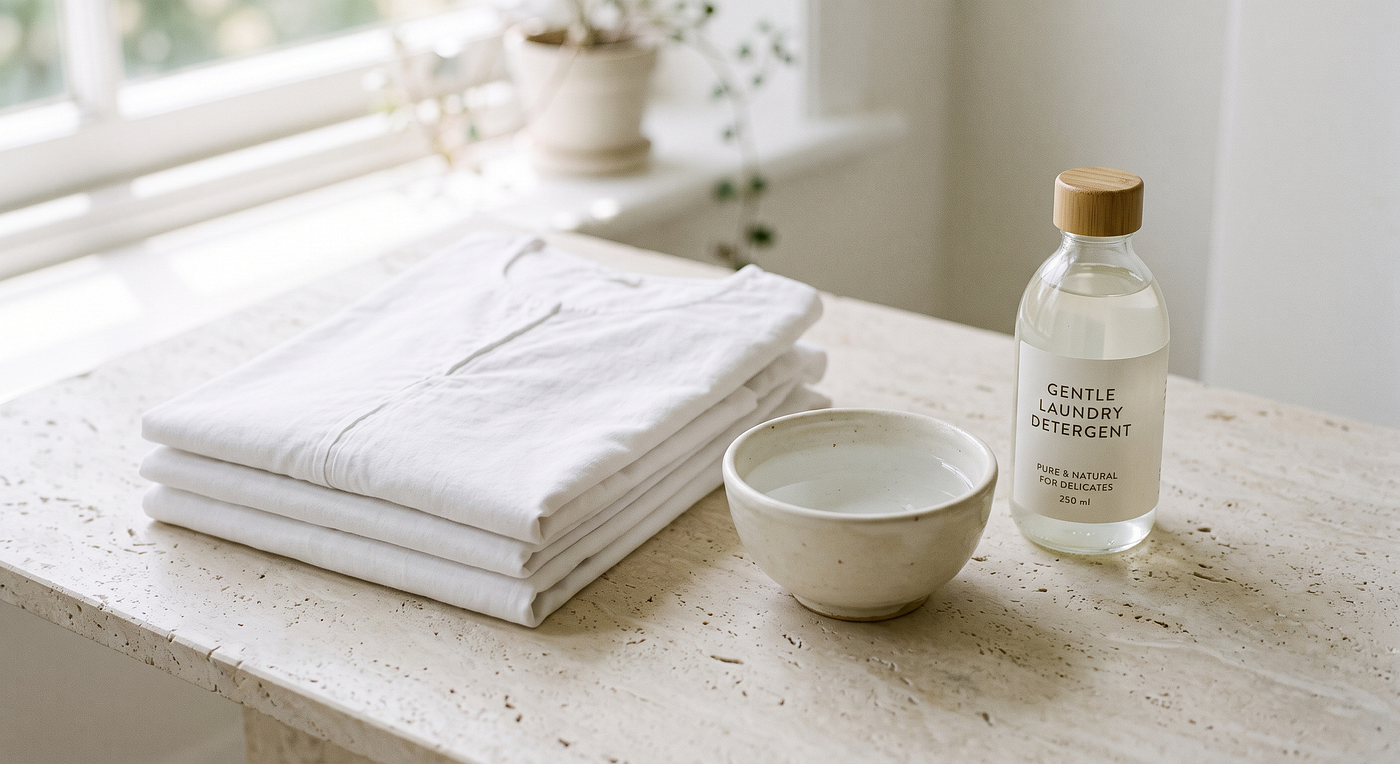
A mild detergent — ideally a delicate or silk formula — works well for nida and crepe fabrics. Avoid detergents with bleaching agents or brighteners, even if the jilbab is white. Brighteners can cause yellowing over repeated washes by reacting with the fabric coating.
Hand washing is better than machine washing, but if you do use a machine, a mesh laundry bag on the delicate cycle makes a significant difference.
In my observation, the pleating on a Saudi jilbab is more vulnerable to improper drying than to washing itself. A machine wash in a mesh bag usually survives fine — but hanging a wet, heavy jilbab from a single point will pull the pleats out of alignment within two or three washes. Always support the full length when drying.
Between Seasons: Storage That Actually Preserves Shape
How you store your jilbab between regular wears shapes how it looks when you put it on. The two biggest storage mistakes are:
Hanging long-term: Unlike a blazer or shirt, a floor-length jilbab loses its shape when hung for weeks at a time. The weight pulls the fabric downward and stretches the collar. For long-term storage between seasons, fold it loosely along the natural seam lines and lay it flat in a drawer or on a shelf.
Pressing the wrong way: Ironing directly on nida or crepe fabric burns the surface. Use a pressing cloth — a thin cotton cloth between the iron and the jilbab — on a low, steam-free setting. Or better, a garment steamer held about 20cm away. Steaming is gentler and removes wrinkles without flattening the fabric’s texture.
Choosing Pieces That Last All Year
Investing in a well-made Saudi jilbab means it can genuinely last years with the right care. Ainaura’s jilbab collection offers options in crepe and premium fabrics suited to the Indian climate — pieces built to hold their drape through regular wear and washing.
When buying, look for reinforced seams at the collar and wrist, a fabric weight that’s neither too light (which wrinkles easily) nor too heavy (which retains too much humidity), and clean stitching at the hem. These details signal that the garment was made to last, not just to look good on a hanger.
One Final Thing
The difference between a jilbab that looks fresh after two years and one that looks worn after six months usually isn’t the quality of the fabric. It’s small, consistent habits — how you dry it, how you store it, and how often you rotate between pieces.
None of this takes much time. But it makes a real difference in how long your jilbab keeps looking the way it did when you first wore it.
메타데이터
- post_id
- 5e173490ecba
- slug
- worn-through-every-season-the-saudi-jilbab-care-guide-no-one-talks-about-5e173490ecba
- url
- https://medium.com/@gazni1/worn-through-every-season-the-saudi-jilbab-care-guide-no-one-talks-about-5e173490ecba
- canonical_url
- https://medium.com/@gazni1/worn-through-every-season-the-saudi-jilbab-care-guide-no-one-talks-about-5e173490ecba
- author_url
- https://medium.com/@gazni1
- status
- ok
- fetched_at
- 2026-07-10 14:10:06