Object Pooling in Game Development
In software development, particularly in game development and real-time applications, efficient memory management is crucial for…
Object Pooling in Game Development
In software development, particularly in game development and real-time applications, efficient memory management is crucial for maintaining optimal performance. One common technique employed to manage objects efficiently is known as object pooling.
An object pool is a design pattern that pre-allocates a set of objects and keeps them ready for use, rather than creating and destroying objects on the fly. This pool of objects can be reused, significantly reducing the overhead of object creation and garbage collection.
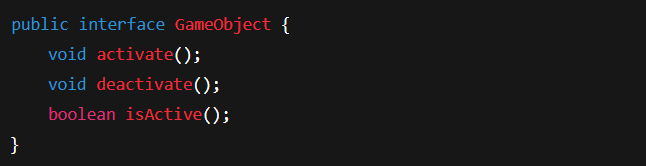
a) object interface:
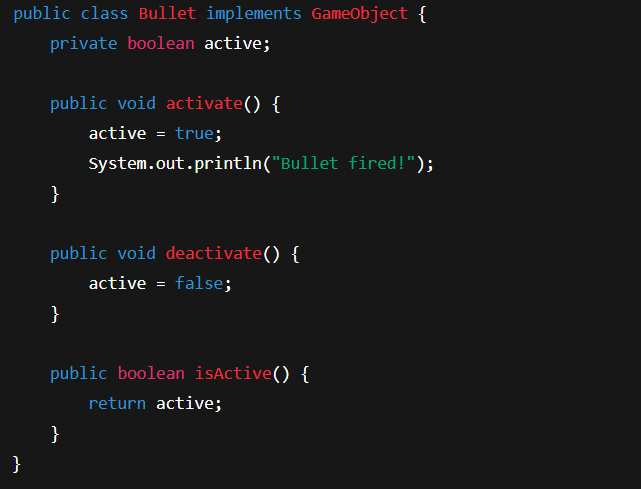
b) a concrete object:
c) object pool manager:


usage:

-How to implement the Pool delegates-
a) createActive: This function should create an active object. The pool will deactivate them after they have been created. If this seems slightly counter-intuitive, note that creation functions (such as Unity’s Instantiate) usually give objects that are active by default, so if we required users to supply inactive objects, they would have to deactivate the objects themselves.
b) activate: This action should prepare the object for use, for example, make it visible, start coroutines, etc. This action should not create objects. Be careful to not accidentally allocate memory when activating objects (for example, by duplicating a material by setting its color or calling an allocating LINQ method).
c) deactivate: This action should make the object inactive: make it invisible, stop its update from running, stop coroutines, and so on. It should also make any of the objects it controls inactive, especially if they were created or became active after the object itself became active. If the object acquired resources that cannot be reused, this action should release them.
d) destroy: This action is only invoked when the capacity of the stack is reduced. It should destroy the object if it is required to do so, as is the case with Unity objects. Generally, this object should not replicate any work of the deactivate action. Instead, the pool should invoke the deactivate action before destroying objects if this is necessary.
-Pool Variations-
Our StackPool class is still pretty crude. In this section, we will look at some variations of pools that are more robust or implement specific pooling policies.
a) Self-growing pool: Automatically increases capacity as needed.
b) Active object tracking pool: Keeps track of active objects too, allowing us to forcibly release objects when needed.
c) Priority pools: Can release active objects based on priorities assigned to them.
d) Fake pools: Do not really pool and are used for benchmarking.
Benefits =>
- Performance boost
- Better memory management
- Great for mobile or low-spec devices
메타데이터
- post_id
- 5e2873fa920a
- slug
- object-pooling-in-game-development-5e2873fa920a
- url
- https://medium.com/@amrulzameer/object-pooling-in-game-development-5e2873fa920a
- canonical_url
- https://medium.com/@amrulzameer/object-pooling-in-game-development-5e2873fa920a
- author_url
- https://medium.com/@amrulzameer
- status
- ok
- fetched_at
- 2026-08-10 11:41:09



