EU Steel Exports to the US Down 34% — One Year After Trump’s 50% Tariffs
Published: June 8, 2026 | Steel Market Daily on Medium
EU Steel Exports to the US Down 34% — One Year After Trump’s 50% Tariffs
Published: June 8, 2026 | Steel Market Daily on Medium
EU Steel Exports to the US
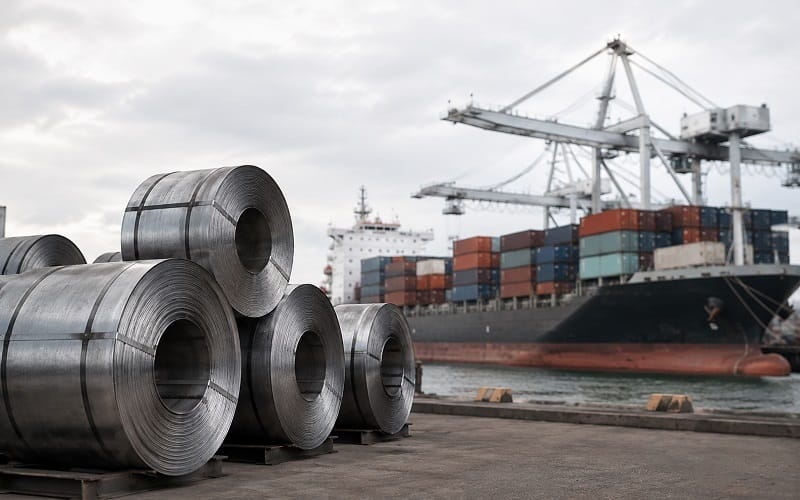
One year after the United States raised steel tariffs to 50%, the damage to European steel trade is now quantified. On June 4, 2026 — exactly one year after the tariffs took effect — the European Steel Association (EUROFER) published the first full anniversary report. The headline number: EU steel exports to the US fell 34% year-on-year in the three quarters following the tariff hike, dropping from 2.93 million tonnes to 1.94 million tonnes. For context, EU mills supplied 3.4 million tonnes to the American market in all of 2025, down from 4.1 million tonnes in 2024 and 4.7 million tonnes in 2017.
For global steel market participants, this is not just a bilateral trade story. A 34% collapse in one of the world’s largest steel trade flows has consequences that ripple through scrap markets, finished steel pricing, and the broader reshaping of global trade patterns.
What the Tariffs Actually Did
The US Section 232 tariffs on steel imports were first imposed at 25% in 2018. In June 2025, the Trump administration doubled them to 50% — the highest level in the modern era of US trade policy. Steel and aluminium remain the only major sectors still subject to the full 50% tariff rate, even as the US has reduced rates on other goods for the EU under the Turnberry trade deal struck in July 2025.
The Turnberry agreement set out a broad 15% US tariff on EU exports in return for the EU removing duties on most US goods. But steel was carved out of that deal. Talks to ease steel duties remain stalled.
The situation became more complicated when Trump extended the tariffs to “derivative products” — steel-intensive manufactured goods including washing machines, refrigerators, motorcycles, lawn mowers, and rail components. This extension hit European manufacturers twice: once on the steel input and again on the finished product containing that steel. The tariff on derivative products has since been partially reduced to 15% for some categories, but fridges, lawn mowers, and rail parts still face a 25% rate.
EUROFER Director General Axel Eggert was direct: “The US needs to fulfil its commitment to work with the EU to find a solution. Steel and aluminium are the only sectors still facing 50% tariffs — that is not consistent with the spirit of the Turnberry agreement.”
The Threat on the Table
The EU is not watching passively. Under the terms of the Turnberry agreement, the European Commission has the authority to suspend parts of the deal if the United States continues applying tariffs above 15% on derivative steel and aluminium products beyond the end of 2026.
That deadline — December 31, 2026 — is now the key date for European steel trade policy. If the US does not lower derivative product tariffs to 15% by year-end, Brussels has a legal basis to pull concessions. EU governments approved legislation last week implementing the trade arrangement, signalling that the bloc is preparing its formal response framework.
What This Means for Global Steel Trade Flows
A 34% decline in EU steel exports to the US has not simply evaporated that steel — it has redirected it. European mills that can no longer competitively access the US market have been pushing more volume into other destinations, primarily within Europe itself and into markets in Africa and the Middle East.
This redirection has two consequences for global markets.
First, it increases competition in markets that were previously less exposed to European supply. North African and Middle Eastern buyers — who already face competition from Chinese exports — are now also receiving redirected European material. This adds downward pressure on regional steel prices outside the tariff-protected US market.
Second, it accelerates the structural divergence between the US market and the rest of the world. US HRC prices have remained well above global benchmarks throughout 2026, supported by the tariff wall. European HRC prices have faced greater pressure as mills compete more aggressively for non-US customers.
The US Market: Still Insulated, But at a Cost
Inside the US tariff wall, the picture looks very different. US raw steel production for the week ending May 30 totalled 1.872 million net tons — up 0.10% week-on-week and 8.80% year-on-year. Capacity utilisation stood at 81.1%, among the highest levels since 2018.
US scrap prices remained stable for the week ending June 4. HMS №1, Shredded Auto Scrap, HMS 80/20, and №1 Busheling all traded within established ranges with no significant movement. HRC steel held at approximately $0.36 per pound.
The tariff wall has achieved its stated objective of supporting domestic production. But as Argus Media noted, the same protection that sustains US mills is creating a scrap supply glut. North American ferrous scrap dealers and exporters have been flooding the US market because the tariff-protected US steel industry outcompetes international markets for scrap — keeping domestic scrap prices suppressed even as mill utilisation runs high.
For Iranian market participants monitoring domestic price implications, Ahan Online tracks real-time pricing from major Iranian steel producers including Mobarakeh Steel, Zob Ahan, and Oxin Ahvaz.
The OECD Warning: Overcapacity Crisis Is Deepening
The EUROFER data landed alongside a broader warning from the OECD. In its June 2026 Steel Outlook, the OECD stated that global steel demand recovery will remain weak and that the excess capacity crisis is deepening — not resolving.
The combination of weak demand recovery and persistent overcapacity creates a structurally challenged environment for steel pricing globally. Chinese mills are running above 86 million tonnes per month in domestic output while simultaneously facing a 9.7% decline in export volumes. European mills are losing their largest export market. Middle Eastern buyers are being flooded with redirected supply from multiple origins.
The one market insulated from this dynamic — the US — is also the market most dependent on maintaining its tariff wall to sustain current production and pricing levels. Any future reduction in Section 232 tariffs would expose US mills to global competition at a moment when global oversupply is at its most acute.
Key Data Points: June 8, 2026
Indicator Level Change EU Steel Exports to US (post-tariff) 1.94 million tonnes −34% YoY EU Steel Exports to US (2025 full year) 3.4 million tonnes vs 4.1Mt in 2024 US Raw Steel Production (May 30 week) 1.872 million NT +8.80% YoY US Capacity Utilisation 81.1% Near multi-year high US HRC Steel $0.36/lb Flat US Scrap (HMS, Shredded, Busheling) Stable No significant movement EU Derivative Tariff Deadline Dec 31, 2026 EU suspension threat
Key Takeaways
- EU steel exports to the US fell 34% in the year since 50% Section 232 tariffs took effect — from 2.93 million to 1.94 million tonnes
- Steel remains the only major sector still subject to the full 50% US tariff rate — carved out of the Turnberry trade deal
- The EU has the legal authority to suspend Turnberry concessions if derivative product tariffs do not fall to 15% by December 31, 2026
- Redirected European supply is adding competitive pressure in African and Middle Eastern steel markets
- US production runs near multi-year highs at 81.1% utilisation — but tariff protection is creating a domestic scrap supply glut
- OECD June 2026 outlook: global demand recovery remains weak, overcapacity crisis deepening
Sources: EUROFER · Reuters · EUROMETAL · GMK Center · ScrapMonster · Argus Media · SteelOnTheNet
메타데이터
- post_id
- 5e2bfaee5240
- slug
- eu-steel-exports-to-the-us-down-34-one-year-after-trumps-50-tariffs-5e2bfaee5240
- url
- https://medium.com/@r.alizadehfard.2026/eu-steel-exports-to-the-us-down-34-one-year-after-trumps-50-tariffs-5e2bfaee5240
- canonical_url
- https://medium.com/@r.alizadehfard.2026/eu-steel-exports-to-the-us-down-34-one-year-after-trumps-50-tariffs-5e2bfaee5240
- author_url
- https://medium.com/@r.alizadehfard.2026
- status
- ok
- fetched_at
- 2026-06-09 15:37:30