How Six Years of Collision Repair Data Helped Us Build Better Bumper Kits
When most people think about replacing a damaged bumper, they usually picture a single part.
How Six Years of Collision Repair Data Helped Us Build Better Bumper Kits
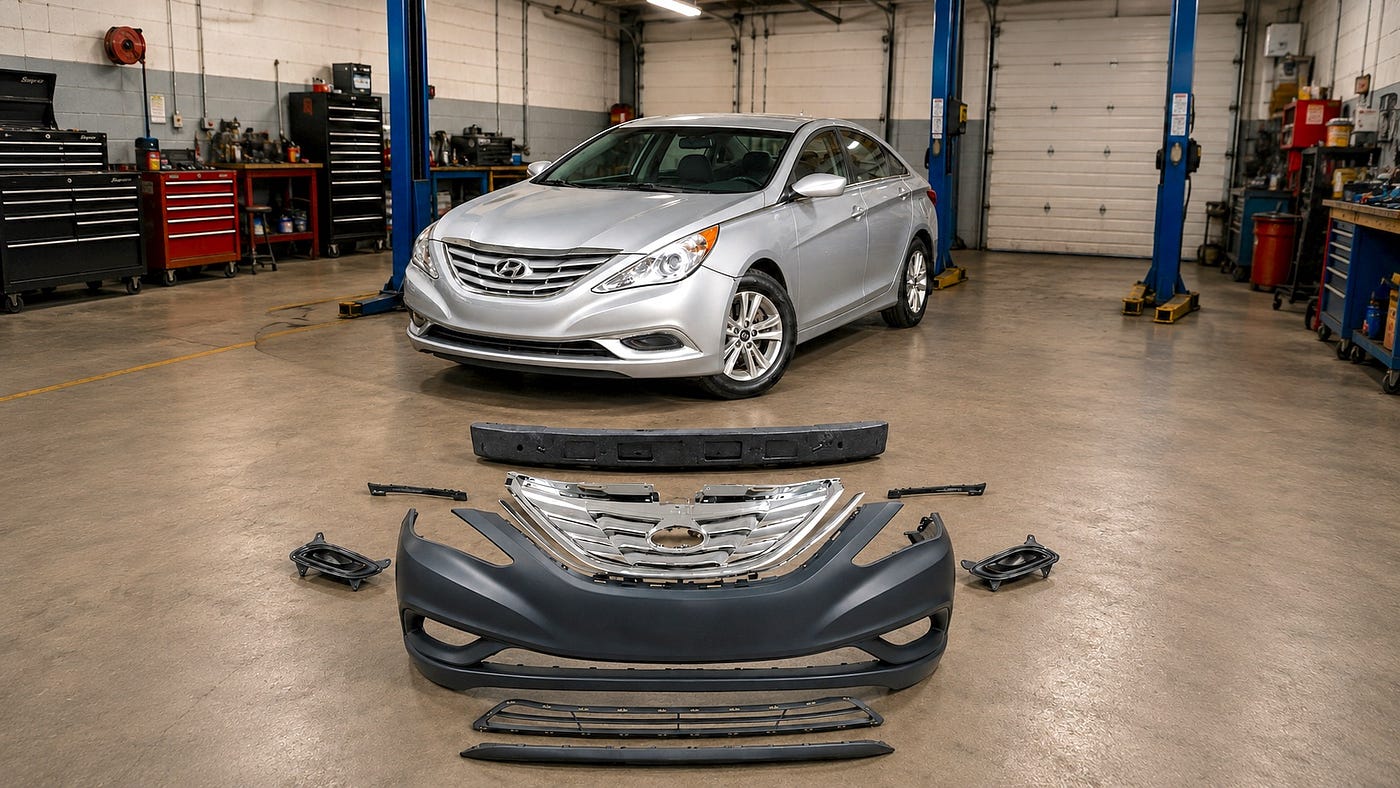
When most people think about replacing a damaged bumper, they usually picture a single part.
The bumper gets cracked, scraped, or torn off, so they order a replacement bumper cover and assume the repair is done.
Unfortunately, that’s rarely how modern collision repairs work.
After even a relatively minor accident, there’s often a surprising amount of hidden damage. A broken bracket here. A cracked absorber there. Maybe a damaged grille, a missing cover, or a bent lower valance.
Individually, none of these parts are particularly complicated. The challenge is figuring out which ones need to be replaced before you start the repair.
The problem with modern bumper systems
Vehicle manufacturers have spent decades making bumper systems more sophisticated. Today’s bumpers aren’t just cosmetic panels. They’re part of a larger assembly that may include:
- absorbers
- grilles
- air deflectors
- retainers
- mounting brackets
- lower valances
- fog light bezels
- trim pieces
This design improves safety, aerodynamics, and manufacturing efficiency.
But it also means that a seemingly simple bumper replacement can quickly turn into a hunt for half a dozen additional components.
Many vehicle owners don’t realize this until they begin taking the damaged bumper apart.
Looking at real-world repair patterns
A few years ago, we started asking a simple question:
If the same components are frequently damaged together, why are customers still forced to order them one by one?
To answer that question, we worked with one of our large collision-repair partners in California and reviewed thousands of repair records covering the last six years.
We analyzed repair estimates, parts lists, and replacement histories across dozens of the most common vehicles on American roads.
What emerged were clear patterns. Certain components appeared together again and again on repair invoices. Not occasionally. Consistently.
What actually breaks during minor accidents
One of the biggest surprises was how often the bumper cover itself was only part of the repair.
Low-speed impacts frequently damaged:
- bumper absorbers
- mounting brackets
- lower valances
- air deflectors
- grille assemblies
- trim inserts and covers
At the same time, many metal fasteners and factory bolts often survived and could be reused.
That distinction became important because it helped separate the parts customers genuinely needed from the parts they were unnecessarily replacing.
Why ordering everything separately doesn’t make much sense
Imagine replacing a front bumper after a parking-lot accident. You order the bumper cover. A few days later, you discover a broken absorber. Then you notice a damaged grille. After that, you realize one of the retainers snapped during the impact.
Now you’re placing multiple orders, paying shipping multiple times, and waiting for parts to arrive from different locations. It’s not difficult because the repair is complicated. It’s difficult because the process is fragmented.
Turning repair data into bumper kits
Once we identified the most common repair combinations, the solution became obvious.
Instead of forcing customers to build their own parts list from scratch, we started creating kits based on actual repair patterns.
These kits combine the components most frequently replaced together after minor collisions. The goal wasn’t to sell more parts.
The goal was to eliminate unnecessary research, reduce mistakes, and simplify the repair process.
The hidden benefit nobody talks about: shipping
There is another advantage that became obvious almost immediately.
Shipping
When parts are ordered individually, they often come from multiple locations and arrive in separate boxes. That increases costs and extends delivery times.
When commonly replaced components are bundled together, many of them can be shipped in a single package.
That means:
- fewer shipments
- lower shipping costs
- fewer tracking numbers
- less waiting
It sounds simple, but for customers trying to get their vehicle back on the road quickly, it makes a real difference.
Why we continue refining the kits
One thing we’ve learned from collision repair data is that repair patterns evolve. New vehicle generations introduce different bumper designs. Manufacturers change mounting systems. New trim levels create new combinations of parts.
Because of that, bumper kits aren’t something you build once and forget about. We continuously review customer feedback, repair trends, and replacement data to improve the combinations we offer.
The bigger lesson
What started as a simple review of repair records ended up changing the way we think about bumper replacements.
The lesson was surprisingly straightforward:
- Most people don’t need a bumper cover.
- They need a repair solution.
- And those are two very different things.
By studying how repairs actually happen in the real world, we found a way to make the process simpler, faster, and less frustrating for the people who have to deal with collision damage every day.
Sometimes the best innovations aren’t new products. They’re simply better ways of putting the right products together.
If You’re Curious About What These Kits Look Like
If you’ve never looked closely at a modern bumper repair, you might be surprised by how many individual components are involved.
What started as a simple bumper replacement often turns into a search for absorbers, brackets, grilles, air deflectors, valances, and various trim pieces that were damaged in the same impact.
That’s one of the reasons we started building repair kits based on actual collision repair data rather than assumptions.
If you’re interested in seeing how these kits are put together, or if you’re currently dealing with bumper damage yourself, you can browse the available options at FITPARTS:
Even if you’re not planning a repair today, it’s a useful way to see just how many components are involved in what most people still think of as “just a bumper.”
메타데이터
- post_id
- 5e460cef4de4
- slug
- how-six-years-of-collision-repair-data-helped-us-build-better-bumper-kits-5e460cef4de4
- url
- https://medium.com/@nikitin_88073/how-six-years-of-collision-repair-data-helped-us-build-better-bumper-kits-5e460cef4de4
- canonical_url
- https://medium.com/@nikitin_88073/how-six-years-of-collision-repair-data-helped-us-build-better-bumper-kits-5e460cef4de4
- author_url
- https://medium.com/@nikitin_88073
- status
- ok
- fetched_at
- 2026-06-14 11:28:49


