The Illusion of Reform in Post-Sanctions Syria
For more than a year now, the international community has experimented with optimism toward Syria’s new rulers. That optimism is…
The Illusion of Reform in Post-Sanctions Syria
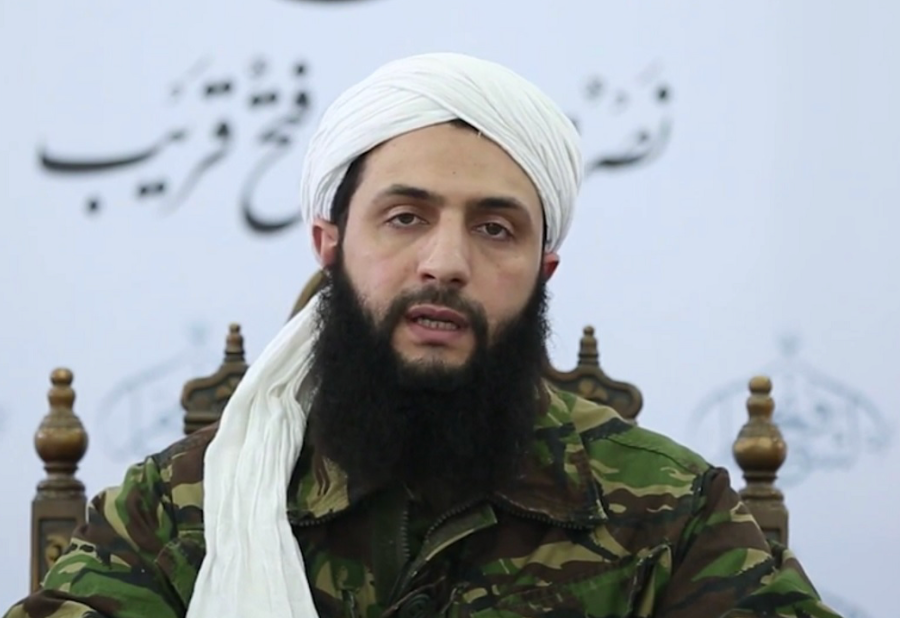
Syria’s temporary President, Ahmed al-Sharaa, formerly known as Abu Mohammad al-Joulani.
For more than a year now, the international community has experimented with optimism toward Syria’s new rulers. That optimism is increasingly difficult to justify. As violence against civilians continues and sectarian attacks recur with disturbing regularity, Washington has chosen to test whether Syria’s transitional leader, Ahmed al-Sharaa — formerly known as Abu Mohammad al-Joulani — can be a reliable partner. The decision to ease U.S. sanctions, signed into law this week by President Donald Trump through the National Defense Authorization Act, rests on the belief that Syria’s new Islamist leadership is capable of reform, restraint, and accountability. On the ground, the evidence points in the opposite direction.
Al-Sharaa, once designated by the United States as a terrorist with a $10 million bounty, now presides over a system that has not only failed to shield Syria’s most vulnerable populations but has increasingly been implicated in their abuse. Alawites, Christians, Druze, and other minority communities continue to face intimidation, enforced disappearances, and targeted killings carried out by actors operating under — or in coordination with — state authority. Reliable local and international sources have documented the abduction and sexual assault of women and girls in areas nominally under government control, crimes that unfold amid widespread impunity. For many Syrians, the law no longer represents protection; it has become indistinguishable from the machinery of fear itself.
This failure has now extended beyond Syria’s borders. Two American service members and a U.S. civilian interpreter were recently killed amid a convergence of lawlessness, poor command oversight, and reckless integration of radical fighters into Syria’s security forces. These deaths prompted U.S. retaliatory strikes against ISIS positions inside Syria, underscoring a dangerous contradiction: Washington is easing sanctions on an Islamist government that cannot prevent extremist infiltration of its own institutions.
The NDAA sets out conditions for sustained sanctions relief, including the dismantling of ISIS networks and the removal of foreign fighters. But the reality is grim. Individuals who once entered Syria as ISIS combatants have been absorbed into the General Security Forces. Their uniforms have changed; their ideologies have not. Even with rigorous monitoring — rarely applied — such fighters are difficult to identify and harder still to remove.
These are not abstract policy failures. They carry human consequences. The deaths of Sgt. William Nathaniel Howard, Sgt. Edgar Brian Torres-Tovar, and their civilian colleague were not inevitable. They were the foreseeable result of entrusting security to forces shaped by ideological extremism rather than institutional discipline.
Supporters of conditional engagement argue that the NDAA’s human-rights provisions provide sufficient safeguards. The law explicitly calls for the protection of religious freedom, minority representation, and equal citizenship. It mandates accountability for grave abuses committed since the political transition began one year ago. But mandates without enforcement are gestures, not guarantees.
More than one hundred members of Congress have already warned that the current framework lacks meaningful consequences. Reporting requirements are periodic; penalties are discretionary. In effect, Syria’s leadership is asked to report on its own behavior while civilians continue to bury their dead.
Left largely unmonitored, sanctions relief may create the appearance of investment and diplomatic normalization. Yet it also risks entrenching a system in which ideological conformity further erodes any remaining pretense of the rule of law, symbolism stands in for reform, and governance is sustained less by institutions than by fear. For Syrians abroad — especially those from minority backgrounds — the stakes are existential. Families inside Syria speak of retaliation carried out with impunity, of crimes committed by those wearing official insignia, of justice that never arrives.
Human-rights advocacy demands more than patience. It requires clarity about who bears responsibility. And responsibility lies squarely with the Islamist leadership that has chosen consolidation over protection.
Across Syria, the promises of reform have taken on a familiar shape — transactional, performative, hollow.
- A raise in wages offset by higher prices for electricity, bread, transport, and communication.
- Land surrendered in exchange for token gifts.
- Syrian officials are welcomed abroad, while ordinary Syrians face newly imposed entry bans.
- Names are removed from sanction lists while sovereignty is further compromised.
- Museums emptied, history erased, compensated by speeches and poems.
- Mothers stripped of legal guardianship, softened by symbolic appointments.
- Mass killings reframed as “digital distortions.”
- Security offered only in exchange for submission.
- Patriotism priced and sold.
- One authoritarian party replaced not by reform, but by a more rigid religious authority.
- One anthem silenced by another.
Through it all, one group remains constant: the poor. They do not leave. They do not profit. They grow poorer still. Meanwhile, most officials remain officials — only the slogans change.
As the United States reassesses its posture toward Syria, an uncomfortable reality comes into view: engagement without accountability risks becoming more akin to abdication than to diplomacy. Investment and reconstruction matter. Countering extremism matters. But neither can be sustained if civilian lives are treated as collateral or reduced to footnotes.
Many Syrians hope that engagement with Damascus, if it continues, will be approached with vigilance rather than indulgence. The conditions outlined in the NDAA are intended to serve as benchmarks, not talking points.
Until then, Syria remains suspended in a familiar nightmare — neither at war nor at peace, governed not by law but by leverage. Syrians continue to ask the same question they have asked for years: Is there light at the end of the tunnel — or only another illusion? For now, no answer is forthcoming.
메타데이터
- post_id
- 5e54a888145b
- slug
- the-illusion-of-reform-in-post-sanctions-syria-5e54a888145b
- url
- https://medium.com/@majansaa/the-illusion-of-reform-in-post-sanctions-syria-5e54a888145b
- canonical_url
- https://medium.com/@majansaa/the-illusion-of-reform-in-post-sanctions-syria-5e54a888145b
- author_url
- https://medium.com/@majansaa
- status
- ok
- fetched_at
- 2026-06-25 12:15:08