Carl Jung Kept This Terrifying Dream a Secret for 40 Years. The Meaning Will Unsettle You
It will change how you see reality.
Carl Jung Kept This Terrifying Dream a Secret for 40 Years. The Meaning Will Unsettle You
It will change how you see reality.

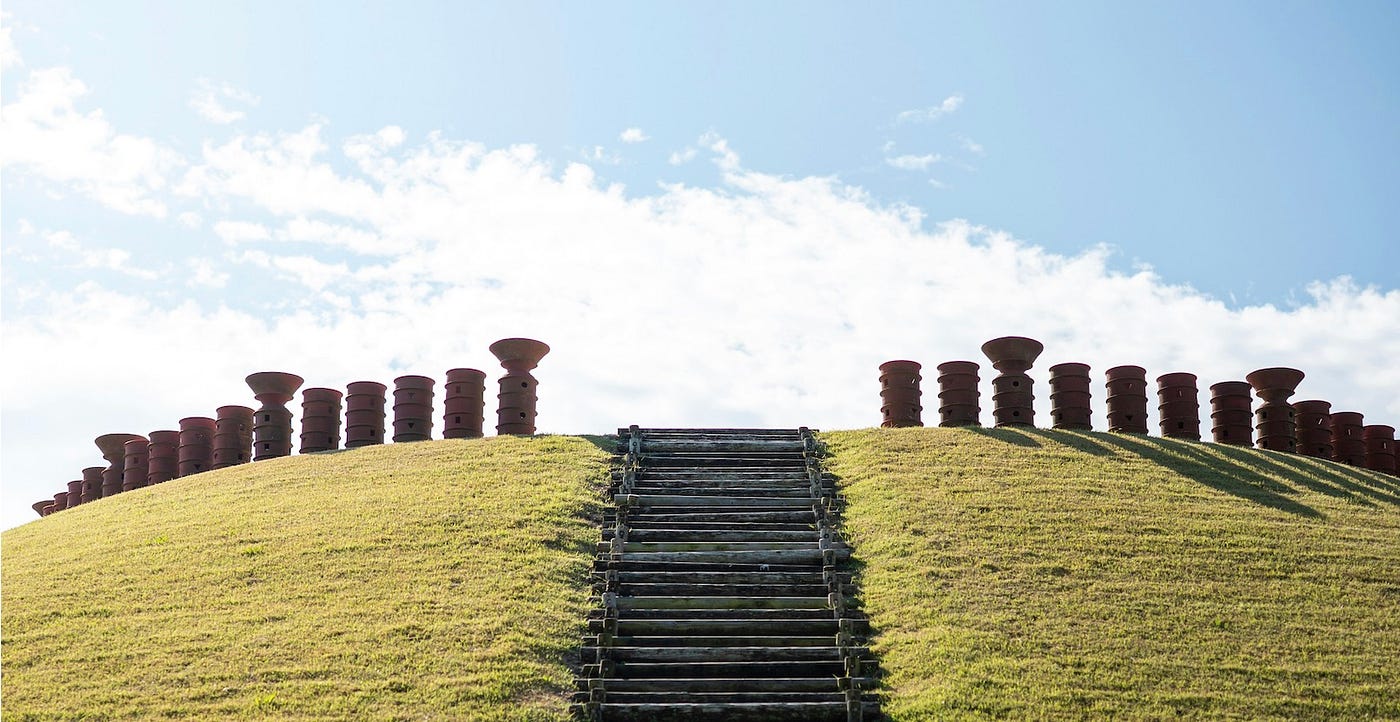
Photo by Oscar Gomez on Unsplash
For decades, psychiatrist and psychotherapist Carl Jung kept this experience locked away in his mind. A terrifying childhood nightmare that haunted him for the rest of his life. He later wrote in his autobiography, Memories, Dreams, Reflections, that it was “decades before I understood that it was a ritual phallus.” His first experience with what he would later call the collective unconscious. It pushed him toward one of the biggest discoveries of his career. The idea that your conscious mind is only a tiny part of who you are. He described the dream as something that would “preoccupy me all my life.”
Here is what he saw.
In the dream, as a little boy, Jung was standing on a grass field. And noticed a dark hole in the ground he’d never seen before. It had steps leading down. He was scared, but curious. His curiosity pulled him forward. At the bottom was a doorway with a curtain over it. He pushed the curtain aside and found a room with a dim light. With a carpet leading to a golden throne. On the throne sat something strange. A giant tree trunk of flesh and skin, with no face, just a single eye on top staring straight up. Jung was terrified it might start moving toward him.
Then his mother called from outside.
“Look at him. That is the man-eater!”
Young Jung woke in terror. For years, he thought he had seen something forbidden. Only decades later did he begin to understand what the dream represented. He carried it in silence for decades. But spent his entire career studying the unconscious mind. He believed our unconscious selves speak to us through symbols. Archetypes. And ancient patterns hardwired into us all. That dream became the foundation for everything he would later think and write.
He called it an initiation.
“Through this childhood dream I was initiated into the secrets of the earth,” he wrote. “It was an initiation into the realm of darkness. My intellectual life had its unconscious beginnings at that time.” For years, Jung didn’t fully understand the dream. He knew it was important. But the significance was still not clear. That changed in his fifties while he was reading about religious rituals. He came across a passage explaining that the ritual of catholic communion (the eucharist). “It was only then that it became clear to me how exceedingly unchildlike, how sophisticated and oversophisticated was the thought that had begun to break through into consciousness.”
But he had more questions than answers.
“Who spoke to me then? Who talked of problems far beyond my knowledge? Who brought the Above and Below together, and laid the foundation for everything that was to fill the second half of my life with stormiest passion? Who but that alien guest who came both from above and from below.”
This is where Jung’s secret becomes your lesson.
You think you make decisions based on logic. You gather facts. You weigh options. You choose rationally. Jung’s dream proves otherwise. A little boy with no knowledge of eastern religion. Or exposure to sophisticated theology dreamt of a throne in an underground temple.
Where did that image come from?
Jung believed it came from the collective unconscious. A shared inheritance of the human species. Ancient patterns and symbols that live in our rational minds. What if your “rational” decisions are also determined by forces you cannot see? Jung’s dream was a complex symbol of theological, sexual, and psychological themes far beyond a child’s experience. But it appeared to him with complete clarity. If that can happen to a child, what is happening in your mind right now? What ancient patterns are influencing your choices without your awareness?
We all like to think we are in total control of our lives.
But Jung figured later in his career that your conscious, rational mind is just a tiny boat floating on a massive unconscious ocean. Most of the time, the ocean decides where the boat goes. That’s why he said, “Until you make the unconscious conscious, it will direct your life and you will call it fate.”
Jung thought smart people make terrible choices in life because they trust their conscious mind too much. And pay the unexpected price. They believe their reasoning is objective. They ignore the unconscious forces pulling their strings. Jung warned about this. He described how rationality can become a “persona,” a mask we wear that suppresses other unconscious parts of ourselves. When you identify too completely with your rational mind, you lose touch with feeling. With intuition. With the symbolic wisdom of your unconscious. The result is an imbalance. You make decisions that seem logical but are driven by hidden fears, desires, and patterns you refuse to acknowledge.
Smart people have a specific vulnerability. They are very good at rationalising. If a highly intelligent person makes a decision based on fear, pride or an old childhood wound, they don’t see it as an emotional reaction. They use their powerful brains to build a flawless, logical argument to justify their bad choice. They trick themselves. And refuse or reject parts of themselves they would rather ignore.
It is a cognitive blind spot within the psyche.
Jung made a strong argument for the complete self as conscious and unconscious. Light and darkness. Both spirit and matter. You cannot become your best self by working with only half of what you are.
He thought the mind had a basement. You are more than your beliefs, opinions, decisions or goals. He believed your conscious mind is only the small room upstairs. Below it is a massive basement. A place filled with forgotten memories, fears, instincts, desires and symbols accumulated over a lifetime. You don’t see this hidden world directly. You experience it through dreams. Emotions. Unexpected reactions. Sudden attractions. Unexplained fears. And the choices that surprise you.
Intelligence doesn’t protect you.
The greatest danger, according to Jung, is your unconsciousness.
He identified a few hidden forces at play in our lives.
The shadow. All the parts of yourself you reject, hide, or dislike. Your jealousy, selfishness, hunger for recognition, need to feed your ego. Your resentment. And desires you would rather not tell anyone. Most people try to hide these traits. Not only from others. From themselves. Jung warned that this doesn’t make them disappear. It makes them stronger. If you pride yourself on being rational, your irrationality doesn’t disappear; it just goes into the shadow. When you ignore it, it grows. And sabotages you in ways you don’t even know. The shadow follows you everywhere.
If you think your office is full of impossible people. Every boss is unfair. Or every disagreement is someone else’s fault. You have to start getting back within for answers. Is the problem really everyone else? What annoys or irritates you most in others is a clue to something unresolved in yourself.
Jung said your mind protects itself through projection. It doesn’t like to admit your uncomfortable qualities. It unconsciously assigns them to someone else. You’re angry, but you think everyone else is hostile. You’re insecure. But you accuse others of being arrogant. You want attention. But you complain about people seeking attention. Projection feels convincing because you genuinely experience it as reality. That’s why it’s difficult to notice. Your mind edits reality to protect your self-image.
“One who looks inside, awakens,” Jung said.
Then there are complexes. These are emotional hotspots in your psyche, developed in childhood. Let’s say you grew up feeling helpless. Today, you might be a brilliant investor. But if a market dip triggers that old “helplessness” complex, you will panic-sell. Because a four-year-old version of you has suddenly taken the wheel.
To take back some of the control, Jung recommends shadow work. Becoming aware of the behaviours of your unconscious mind. If a coworker’s minor mistake makes you furiously angry, get back within for answers. The intensity of your reaction can direct you to a hidden complex. Track your patterns. Do you always quit things right before a big commitment? Do you fall into the same argument with different people? These are not coincidences. It is the unconscious running your life.
Acknowledge what’s going on.
Pull them into the light to build a better relationship with your unconscious self. Pay attention to your dreams. Notice what they reveal. They have knowledge your conscious mind cannot access. Dreams, Jung thought, compensate for what consciousness ignores. If you’re pretending everything is fine while secretly falling apart, your dreams might show the collapse before you’re willing to admit it while awake. Every dream may not have meaning. But paying attention to recurring emotional patterns can reveal things your conscious mind overlooks.
Jung’s secret was that he had to understand the terrifying darkness. You have to integrate your own shadows. The parts of yourself you would rather ignore. Ignoring half of yourself doesn’t make you whole. “One does not become enlightened by imagining figures of light, but by making the darkness conscious,” he said. You cannot solve problems you refuse to acknowledge. Awareness comes first.
Change comes later.
Jung’s strange childhood was about the hidden parts of being human. He spent the rest of his life looking for answers. He figured your greatest strengths and dangers both coexist. The mind is stranger than it appears. It hides truths to protect your ego. Sometimes it even deceives you. That’s why intelligence alone is not enough. You also need self-awareness. Without it, you can spend years solving complicated problems while remaining a mystery to yourself. Jung’s greatest secret was what the dream taught him. The forces controlling your life are the things you cannot see.
The unconscious is not a mystery.
It’s just the part of you that’s been making decisions longer than your reasoning brain has been around to explain them. Ignore it, and it runs your life from the basement. The unconscious self has more power over your life than you think. Get back within to integrate it. Accept this. Work with it. Make it conscious. Or ignore it and pay the costly price.
메타데이터
- post_id
- 5e67aebd2fe3
- slug
- carl-jung-kept-this-terrifying-dream-a-secret-for-40-years-the-meaning-will-unsettle-you-5e67aebd2fe3
- url
- https://medium.com/personal-growth/carl-jung-kept-this-terrifying-dream-a-secret-for-40-years-the-meaning-will-unsettle-you-5e67aebd2fe3
- canonical_url
- https://medium.com/personal-growth/carl-jung-kept-this-terrifying-dream-a-secret-for-40-years-the-meaning-will-unsettle-you-5e67aebd2fe3
- author_url
- https://medium.com/@thomas-oppong
- status
- ok
- fetched_at
- 2026-07-09 03:40:04