Re-Purposing Cold War Junk
Is it worth it, or does Ukraine’s approach make more sense?
Future Warfare
Re-Purposing Cold War Junk
Is it worth it, or does Ukraine’s approach make more sense?
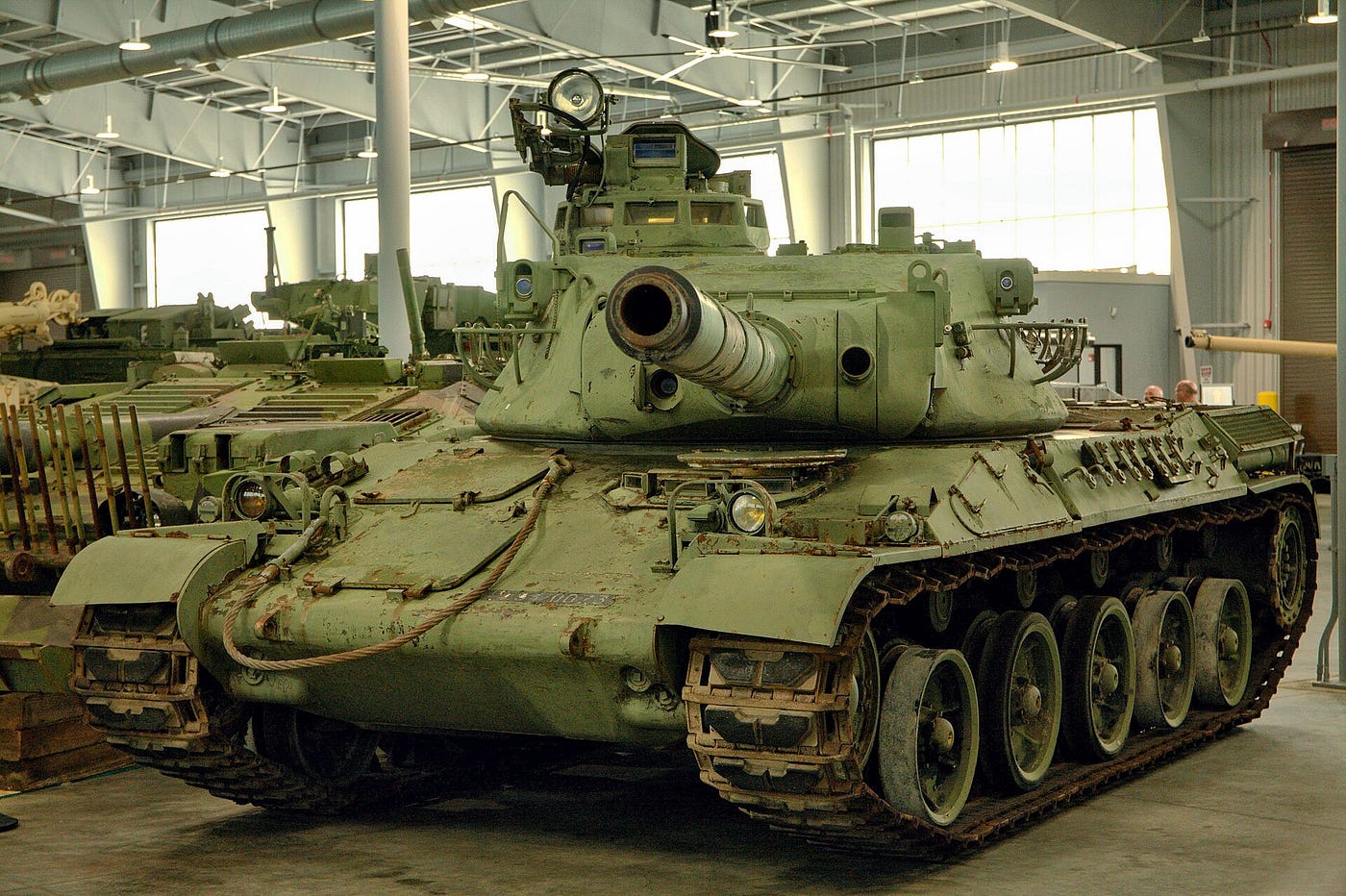
French AMX-30B at the U.S. Army Armor & Cavalry Collection. By Schierbecker — Own work, CC BY-SA 4.0
France is exploring a low-cost way to rebuild battlefield mass: converting retired AMX-30 tanks into heavy unmanned ground vehicles (UGVs). The “Refurbot” concept turns Cold War-era armour into crewless combat drones, reducing risks for soldiers while giving old platforms a second life.
I’m going to look at the idea and try to assess whether it makes sense in 21st Century warfare which has been redefined by Ukraine.
AMX-30 platform — background
The development of the AMX-30 tank was a pivotal era in French military engineering during the Cold War. Conceived to address the requirements of the European theatre and defend against thousands of Soviet tanks pushing into Free Europe, this vehicle prioritised mobility, firepower, and a low silhouette.
It did not carry the heavy, complex armour schemes favoured by some contemporaries in favour of a more balanced design philosophy. As military technology evolved and the operational environment shifted, the platform eventually became outdated, leading to its systematic withdrawal from active front-line service.
However, rather than simply disposing of these assets, the French military placed large numbers of these units into long-term storage facilities, most notably the subterranean galleries at the Saint-Astier base.
© Jean-Francois Brillant
These facilities have preserved a significant stockpile of chassis, particularly the sophisticated AMX-30B2H variants, which were previously upgraded with superior fire control systems and fitted with Brenus explosive reactive armour.
These MBTs provides a unique opportunity for modern defence planners who seek to increase battlefield mass without the prohibitive expense of manufacturing new, high-cost manned platforms. The structural integrity of the chassis remains high, and the heavy steel hulls offer substantial protection against the diverse range of threats found on a modern, contested battlefield.
By carefully evaluating the mechanical condition of these stored assets, engineers can determine the feasibility of integrating current electronic suites, sensor arrays, and autonomous control modules into the existing architecture.
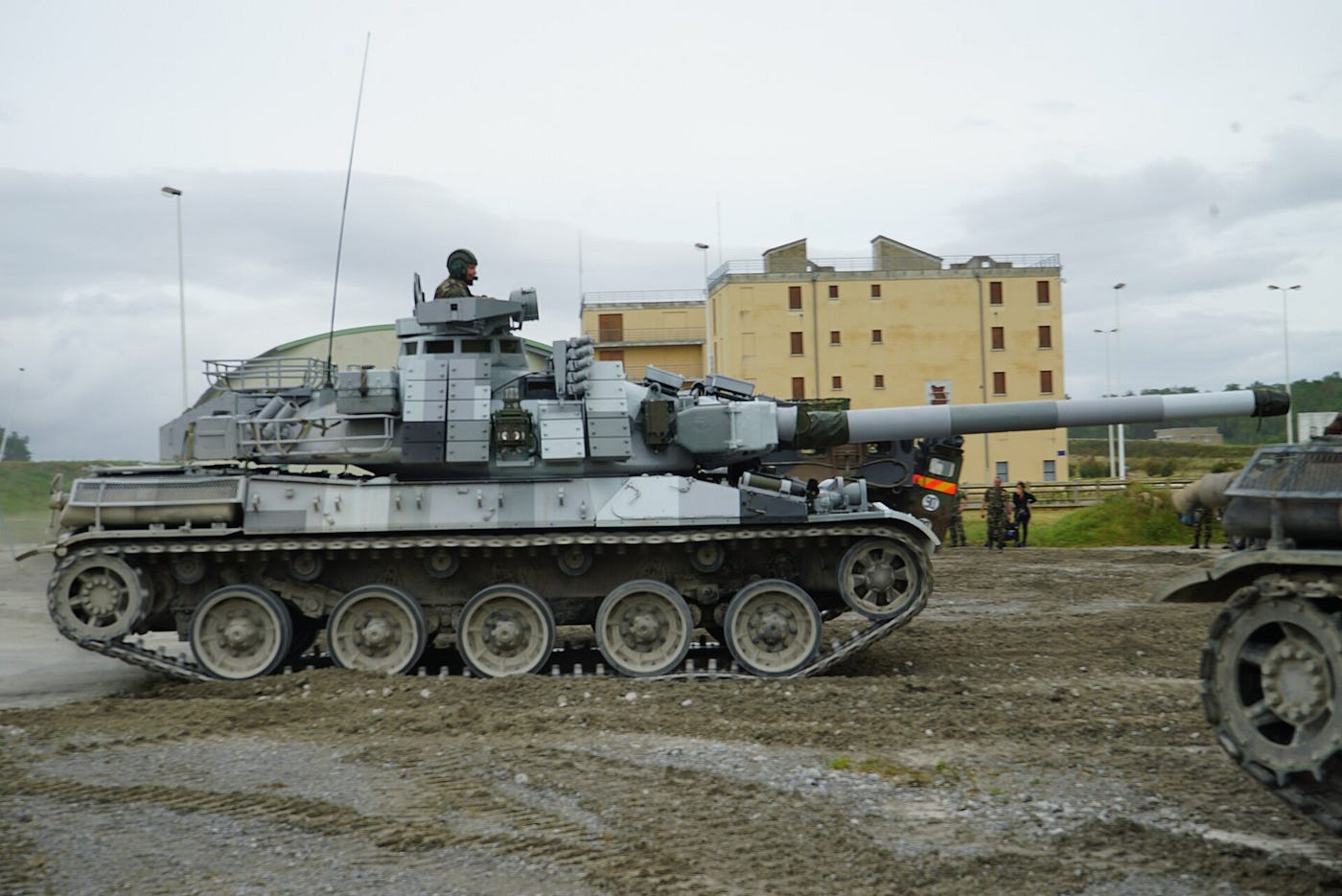
French AMX-30B with Brenus reactive armour in urban camouflage in 2016. Credit: By G.Garitan — Own work, CC BY-SA 4.0
This approach would transform a relic of the twentieth century into a viable, modern combat asset, demonstrating that the value of military hardware does not necessarily expire with the cessation of its primary design lifecycle.
The engineering challenge of conversion
Transforming a crewed main battle tank into a fully capable unmanned ground vehicle is a task of significant technical complexity, yet one that offers substantial tactical rewards. The process begins with the strip-out of the turret and all internal crew stations, which clears space for the necessary suite of sensors, navigation arrays, and communication equipment required for reliable remote operation.
Image: LePointe
The most demanding aspect of this conversion is the implementation of a drive-by-wire system, wherein the vehicle’s manual steering, braking, and throttle controls must be adapted to respond accurately to digital signals transmitted from a remote command station. Fortunately, the mechanical nature of cold-war era vehicles simplifies this integration compared to the highly integrated digital architectures found in contemporary combat platforms.
Engineers must ensure that the legacy transmission and steering linkages are sufficiently robust to handle the automated commands without manual feedback. This often involves replacing traditional hydraulic or mechanical linkages with modern actuators and encoders that provide precise control over the vehicle’s movement.
Obviously, the integration of autonomous obstacle avoidance software is critical for navigating the unpredictable terrain of the battlefield. The goal is to produce a platform capable of traversing rough ground, crossing obstacles, and maintaining operational readiness without continuous human intervention.
The relative simplicity of the AMX-30 design serves as a distinct advantage, allowing for a more straightforward retrofitting process that avoids the software-locked architecture of modern, proprietary systems.
Tactical utility of refurbished platforms
The primary advantage of repurposing these vehicles lies in the creation of battlefield mass at a fraction of the cost of developing or purchasing new armoured assets.
In the high-intensity conflicts of the current era, the loss of expensive, sophisticated equipment places a significant strain on military logistics and budget cycles.
By deploying unmanned platforms as a vanguard or a primary wave, commanders can force the enemy to reveal positions, expend limited anti-tank munitions, and react to threats without risking the lives of human personnel.
These autonomous units can serve a multitude of roles, including functioning as mobile decoy units to distract enemy fire, executing dangerous obstacle clearance tasks, or acting as robust platforms for short-range reconnaissance and electronic warfare assets.
The inclusion of explosive reactive armour on the AMX variants increases the survivability of these platforms against contemporary anti-tank guided missiles and high-explosive ordnance. This provides a cost-effective solution for saturating the combat zone and complicating the tactical calculations of an adversary.
Such assets can sustain levels of damage that would be regarded as a significant loss for a modern main battle tank, thereby preserving the more advanced, limited fleet for decisive manoeuvres.
This strategic use of legacy equipment allows the French army to maintain a persistent, heavy presence on the field while managing the associated risks and economic burdens of modern attrition warfare.
It’s an interesting idea, but modern armoured warfare has changed darmatically and drones now rule. That has led to outlandish but often effective anti-drone defences.
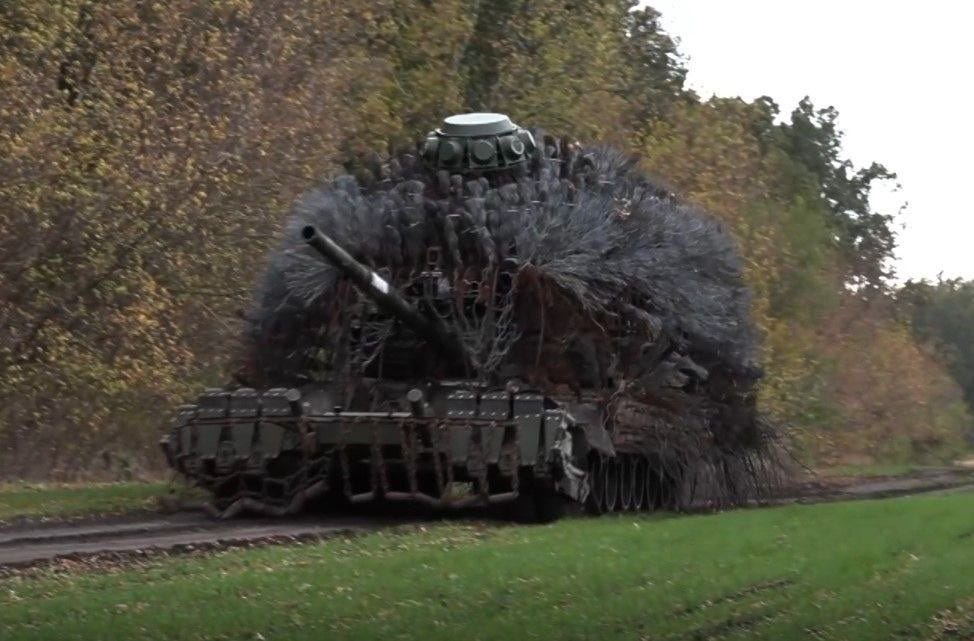
Russian tank with anti-drone defence
Comparative analysis of regional approaches
But despite defence screens, having seen the way that drones have decimated Russian armour in Ukraine over the last five years, you have to wonder whether this is a sensibly way forward. The situation in Ukraine offers a stark contrast to the structured and industrialised approach currently being explored in France.
While France possesses a formalised inventory of well-maintained cold-war chassis stored in controlled environments, the context in Ukraine is driven by the immediate, often desperate, necessity of field-level improvisation.
Ukraine currently possesses a large number of captured and damaged Russian armoured hulls; however, a high percentage of these are in a state that precludes the type of systemic conversions envisioned for the AMX-30 fleet. Many of these hulls suffer from catastrophic mechanical failure or battle damage that renders them better suited for salvage rather than re-armament.
Consequently, the focus within the Ukrainian theatre has shifted toward the development of smaller, cheaper, and more agile ground drone solutions that can be produced in large quantities by local, decentralised workshops.
Credit: Ukraine MoD
These systems often utilise commercial off-the-shelf components, such as electric motors, remote-control transmitters, and simple camera systems to provide tactical utility for tasks like logistics, casualty evacuation, or remote mining operations.
The heavy fire-power is delivered by 40 km Bohdana howitzers with smart munitions following targeting data provided within seconds by surveillance drones.
This is a bottom-up approach to autonomy, contrasting with the top-down, industrial-scale repurposing of heavy armour seen in the French model. Each approach effectively reflects the differing industrial capacity, strategic requirements, and operational philosophies of the respective nations involved in these defence initiatives.
Implications for ground warfare
The integration of repurposed cold-war armour into modern formations signifies a major shift in how military organisations conceptualise the lifecycle and utility of legacy hardware.
Rather than treating retired vehicles as simple scrap metal destined for the furnace, defence sectors are increasingly recognising them as modular, reliable foundations for future technology. The Soviets/Russia stored all their armour, even including WWII-era equipment, but most of that has now been lost to Ukraine’s armed forces.
This evolution suggests that the service life of a military platform could be extended significantly through iterative upgrades and the replacement of outdated human-centric systems with autonomous alternatives.
As autonomous robotics and remote sensing technologies continue to mature, the capacity to deploy large numbers of inexpensive, expendable vehicles could become a cornerstone of military doctrine for states seeking to maintain operational dominance.
This trend points toward a future where the rigid distinction between heavy, main combat platforms and secondary support drones begins to diminish.

The successful implementation of these concepts will necessitate sustained investment in robotics, data links, and artificial intelligence, ensuring that the legacy of the cold war continues to influence the tactics of the current century.
By viewing these existing assets as a strategic resource rather than a liability, nations can maintain a high degree of flexibility and operational readiness in an increasingly complex and dangerous security environment. This move toward circular defence economies, where hardware is continuously upgraded and repurposed, offers a pragmatic pathway for maintaining military strength in an era of constrained resources and rapid technological change.
But it all comes back to budget. Surely it will be very expensive to convert old hulls which, if ever used, are likely to have a very short life expectancy in action?
And the idea of using them as decoys seems an expensive option compared with the blow-up dolls that Russia is using.
[embed]
In summary, the idea of converting the AMX-30 tanks does not convince me. Using them as-is with suitable equipment for mine clearance would make more sense.
https://www.defense.gouv.fr/terre
https://www.armyrecognition.com/
https://www.iiss.org/publications/the-military-balance/
Ukraine now has plenty of Russian armoured hulls for re-purposing:
[embed]
메타데이터
- post_id
- 5ea2c5ef32f7
- slug
- re-purposing-cold-war-junk-5ea2c5ef32f7
- url
- https://medium.com/the-dock-on-the-bay/re-purposing-cold-war-junk-5ea2c5ef32f7
- canonical_url
- https://medium.com/the-dock-on-the-bay/re-purposing-cold-war-junk-5ea2c5ef32f7
- author_url
- https://medium.com/@james-marinero
- status
- ok
- fetched_at
- 2026-07-09 20:10:33