Civilisation Eventually Got Back on the Bike…
June 12, 1817 — Karl Drais’s Laufmaschine, and the strange historical detour by which humanity invented the ancestor of the bicycle, then…
Civilisation Eventually Got Back on the Bike…
June 12, 1817 — Karl Drais’s Laufmaschine, and the strange historical detour by which humanity invented the ancestor of the bicycle, then spent two centuries fleeing back to it from traffic jams
On June 12, 1817, Karl Drais demonstrated his Laufmaschine near Mannheim — a strange wooden ancestor of the bicycle, with no pedals, little braking, and a heroic amount of faith in balance.
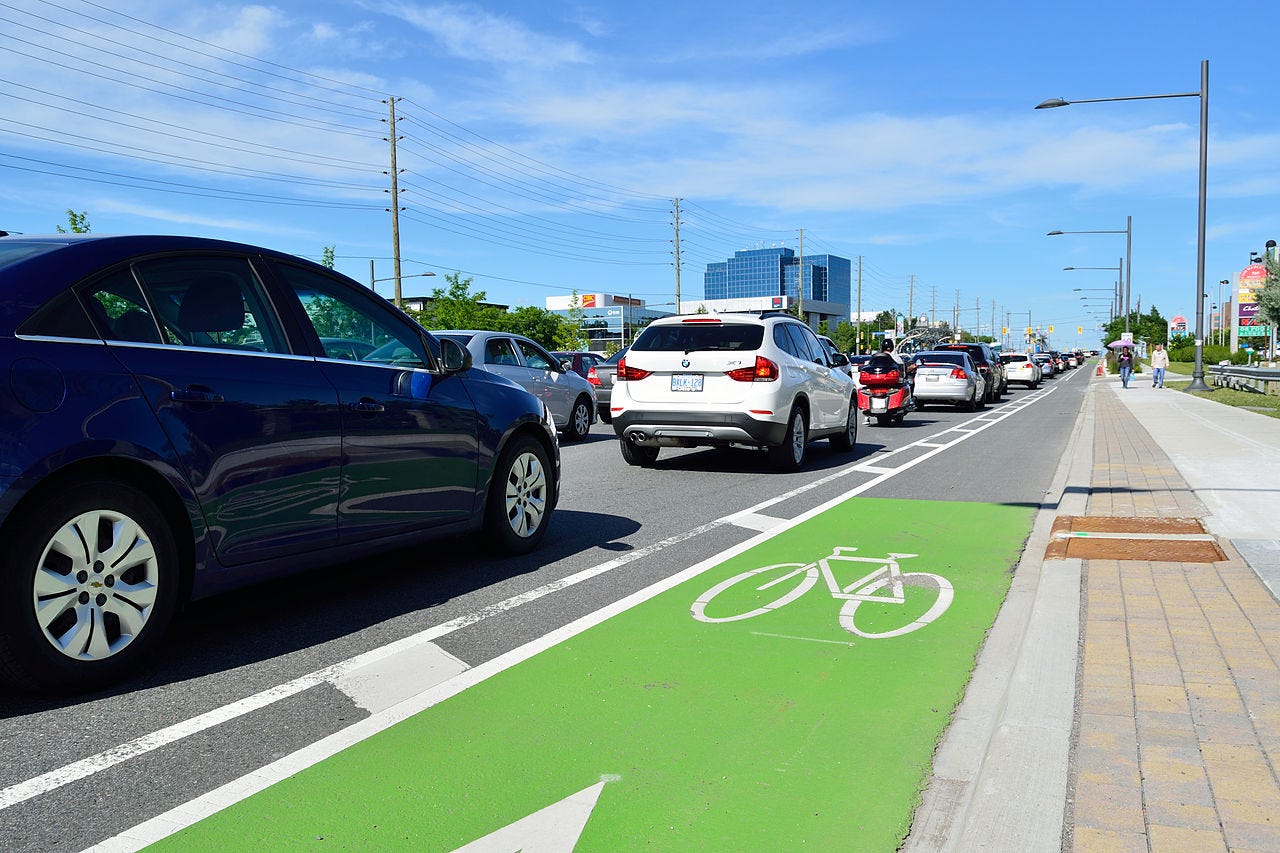
Two centuries later, after motorways, fuel prices, parking zones, commuter misery, climate conferences, and luxury cars quietly turning into leather-seated waiting rooms, the circle has closed.
The bicycle did not return because humanity became wiser. It returned because the city ran out of patience.
There is something rather beautiful in the fact that one of modern transport’s most sensible inventions did not arrive with a roar.
It did not smoke. It did not explode. It did not ask for oil fields. It did not require motorways, garages, insurance, leasing arrangements, multi-storey car parks, geopolitical doctrines, or Sunday afternoon family arguments about who scratched the bumper and why civilisation has no respect for paintwork.
It had two wheels.
And a man who sat on it and pushed himself along with his feet.
In June 1817, near Mannheim, Karl Drais demonstrated his Laufmaschine, one of the ancestors of the bicycle. It had no pedals yet, not much in the way of brakes, and safety was probably more a state of mind than a technical feature. A person sat on the wooden frame, steered, and pushed himself forward with his feet. To modern eyes, it stood somewhere between a bicycle, a scooter, a child’s balance bike, and aristocratic self-confidence on poor road surfaces.
Some of his contemporaries, naturally, laughed at it.
This is reassuring. In history, truly good ideas are often first mocked by the very people who later queue for the improved version. Humanity is a peculiar species: first it finds something ridiculous, then standardises it, gives it tax incentives, turns it into fashion, and finally paints a separate lane for it on the road — whereupon everyone not currently using it regards civilisation as having gone too far.
Drais’s invention originally offered a practical answer to a very concrete problem. Horses were expensive, vulnerable, required feeding, and in times of crisis were not always available in the quantities transport demanded. Humanity therefore tried to move without a horse.
That, in itself, was already a civilisational turning point.
Then, as usual, humanity mistook a good idea for an invitation to build a civilisation around it.
From the two wheels came pedals, chains, pneumatic tyres, dynamos, gears, racing bikes, city bikes, mountain bikes, child seats, courier boxes, helmet cameras, carbon frames, electric assistance, and retail prices at which one briefly begins to wonder whether a modest horse might still be the more economical option.
Meanwhile, the other branch of transport was developing too. The car appeared, and at first it also promised freedom. Because every age needs a machine that whispers into the human ear: from now on, you can go anywhere.
For a long time, the car really was the great promise of movement. The chrome-plated ornament of private freedom. The secular chapel of the family outing. A four-wheeled mixture of masculinity, status, escape, and weekend shopping. Modern man did not simply buy a car; he bought a moving autobiography: look, this is what I look like when I believe I am making progress.
Then freedom slowly began waiting at the red light.
Then at the next one.
Then on the motorway approach road.
Then in the shopping centre car park, where a person no longer wants to arrive at the place he set out for, but merely to find somewhere to stop beside his own civilisation before it starts charging him by the hour.
Large cities and their exhausted commuter belts have since taught humanity an uncomfortable truth: transport is not modern because it is bigger, faster, and louder, but because it works. And a luxury car sitting in traffic, however elegant it may be, is ultimately only an expensive waiting room with leather seats.
This is where the circle closes.
Because after two centuries of technical development, internal combustion, diesel debates, fuel prices, parking zones, smog alerts, urban nervous breakdowns, climate conferences, and those morning commuter crawls in which everyone is technically moving, but spiritually already defeated, modern society is beginning to return to that suspiciously simple recognition that two wheels are sometimes enough.
Indeed: often more than enough.
Today, the bicycle has become one of the most reliable forms of transport in the big city. Not everywhere, not always, not in every life situation — because in rain, wind, and with three shopping bags, a person is still inclined to think more nuanced thoughts about progress. But wherever roads are full, parking spaces have disappeared, the air has grown tired, and the car no longer means movement but congestion, the bicycle returns with peculiar dignity.
Not out of nostalgia.
Because it works.
That is the uncomfortable part.
The bicycle did not win an ideological victory. It has not returned because humanity suddenly became wiser, breathed more deeply, and stroked Planet Earth tenderly every morning. Something far more prosaic happened: the city ran out of patience. There were too many cars. The distance remained shorter than the irritation. And suddenly it turned out that what we once considered simple is sometimes more efficient than all the expensive detours we called modernity.
The modern urban citizen, having meanwhile made everything around himself smart — the phone, the watch, the fridge, the doorbell, the light bulb, the coffee machine, and occasionally even his own loneliness, provided it comes with notifications — is slowly discovering that one of the smartest forms of transport still requires no more than two wheels, a little muscle, some sense of balance, and preferably not an entirely suicidal approach to urban planning.
This, of course, does not prevent the age from overcomplicating the bicycle as well. There are now apps, premium helmets, smart locks, carbon forks, performance meters, urban identity, cycling activism, workplace shower programmes, and clothing in which a person manages to look simultaneously like a commuting citizen and the late-arriving reserve member of a minor space mission.
Yet the essence has remained the same.
A person gets on.
Sets off.
And for a moment, no oil is required. No algorithm. No diplomatic explanation. No parking permit. Only road. Body. Direction. Balance.
The original, slightly more modest, but surprisingly intelligent form of movement.
Drais probably did not suspect that his invention would one day become not only the ancestor of the bicycle, but also the patient critic of a later civilisation. A two-wheeled reminder that progress does not always travel in a straight line. Sometimes it comes full circle. Sometimes it returns to where it began. It merely misplaces a few centuries along the way, several million parking spaces, many tonnes of exhaust fumes, and a respectable portion of humanity’s nervous system.
History, in the end, did not become faster.
It merely learned, rather late, that sometimes the smartest route is the one that refuses to join the queue.
메타데이터
- post_id
- 5ea8613774fb
- slug
- civilisation-eventually-got-back-on-the-bike-5ea8613774fb
- url
- https://medium.com/illusions-not-included/civilisation-eventually-got-back-on-the-bike-5ea8613774fb
- canonical_url
- https://medium.com/illusions-not-included/civilisation-eventually-got-back-on-the-bike-5ea8613774fb
- author_url
- https://medium.com/@alex.buday
- status
- ok
- fetched_at
- 2026-06-21 19:25:17