How to Survive AP Computer Science Principles: The Ultimate Guide for High School Students
Maybe you chose AP Computer Science Principles because you're a tech geek, your counselor nudged you into it, or it just perfectly filled…
How to Survive AP Computer Science Principles: The Ultimate Guide for High School Students
Maybe you chose AP Computer Science Principles because you're a tech geek, your counselor nudged you into it, or it just perfectly filled an empty period. Either way, you’re here now, and the question on everyone’s mind is: is AP CSP hard? The short answer is it’s totally manageable, but only if you know what to actually focus on and are willing to put in a good amount of work on your projects. This guide breaks it all down.

image generated by Canva AI (Magic Media)
What Even Is AP CSP?
AP Computer Science Principles (AP CSP) is an introductory college-level computer science course designed to be accessible to every student (no prior coding experience required). Unlike AP Computer Science A (which is Java-heavy and more intense), AP CSP focuses on the big ideas in computing: how the internet works, how data is used and misused, algorithms, programming concepts, and the societal impact of technology.
It’s widely considered one of the more beginner-friendly AP courses, which is exactly why so many freshmen take it. However, “beginner-friendly” doesn’t mean “zero effort.” At the end of the day, it’s still an AP course with college-level concepts. Here’s exactly what you’re signing up for:
Your final AP score comes from two things:
- Create Performance Task (PT), 40% of your score. A program you build yourself, plus written responses explaining your code.
- End-of-Course Exam, 60% of your score. Multiple-choice and written questions on CS concepts.
The Create PT is submitted digitally before your exam day. You work on it throughout the school year, so procrastination is your biggest enemy here.
The Big Ideas You’ll Actually Be Tested On
AP CSP is organized around five Big Ideas. These are the major themes the College Board wants you to understand. Every exam question traces back to one of these core concepts:
- Creative Development
- Data
- Algorithms & Programming
- Computer Systems & Networks
- Impact of Computing
Most students find Algorithms & Programming the hardest, especially if they’ve never coded before. But don’t panic, the course doesn’t require you to memorize a specific language. You’ll work with a simplified pseudocode on the exam, and your teacher will likely use Scratch, Python, or a block-based language in class. Impact of Computing (topics like privacy, cybersecurity, and the digital divide) is usually the easiest to score points on because it focuses on real-world concepts and memorization rather than complex programming logic.
Surviving the Create Performance Task
The Create Performance Task is where students either do amazing on or seriously stress out. It counts for 40% of your score, so it deserves your attention and time. You have to build a program with certain requirements, then write responses answering specific College Board prompts about your code.
Don’t wait until spring to start! The Create PT is due in late April, but students who start thinking about their program idea in January have way less stress and way better results. Start early.
What makes a good Create PT project?
Your program needs to include all of the following:
- A loop (iteration): Required. Your program must repeat something.
- A conditional (if/else): Required. A selection statement that actually affects how the program runs.
- A list: Your program should store data in a list and do something meaningful with it.
- A procedure you wrote yourself: At least one function with a parameter that impacts its output.
Tips for the written responses:
- Answer exactly what the prompt asks, don’t over-explain or go off-topic
- Use the College Board scoring guidelines (free on their website) as a checklist while you write
- Be specific: reference actual variable names, function names, and what your code does step by step
- Explain why your algorithm is needed, not just what it does
- Have a classmate read your responses. If they’re confused, a scorer will be too
How to Study for the AP CSP Exam
The end-of-course exam is 2 hours long: 70 multiple-choice questions and 4 written-response questions.
For multiple choice:
- Use the College Board Reference Sheet. You get this during the exam. Practice reading it beforehand so you’re fast on test day or at least know where everything is.
- Do past practice tests. College Board releases official practice exams. Do at least one full timed practice test before the real exam.
- Use flashcard for the vocabulary. Terms like bandwidth, lossless compression, metadata, and boolean are guaranteed to appear. Know their definitions and make sure to understand at least one example of each term.
- Trace code carefully. When pseudocode appears, slow down. Track variable values step by step on scratch paper. Don’t guess.
For written responses:
The written section asks you to respond to scenarios about computing impacts, data analysis, and algorithms. Use precise vocabulary and always connect your answer back to the specific scenario given.
Pro tip: A clear, organized 3-sentence answer often beats a rambling paragraph. Write like you’re explaining to a smart friend, not trying to impress a teacher.
Common Mistakes That Kill Your Score
These come up over and over from students who’ve taken AP CSP:
- Ignoring the Create PT rubric entirely
- Waiting until April to start the Create PT
- Skipping the Impact of Computing units because they seem “easy”
- Not reading the exam question fully before answering
- Forgetting the Reference Sheet exists during the exam
- Writing vague responses without specific details
The #1 mistake: being vague in written responses.
“My program uses a loop to repeat things” scores nothing. “My program iterates through each element in the userScores list and calls the calculateAverage procedure to determine the result” is what earns points.
The Best Free Resources for AP CSP
You don’t need to spend money on prep books. These free resources are great sites to practice:
- Khan Academy AP CSP Course: Free, well-organized, covers every unit with practice questions
- College Board AP Classroom: Official videos, progress checks, and past exam questions (your teacher gives you access)
- Code.org CS Principles: Great for beginner programming concepts and the internet unit
- Fiveable AP CSP: Study guides, live streams, and a helpful student community
- r/APStudents on Reddit: Real talk from students who just took the exam
- Quizlet: Search “AP CSP vocabulary” for pre-made flashcard sets
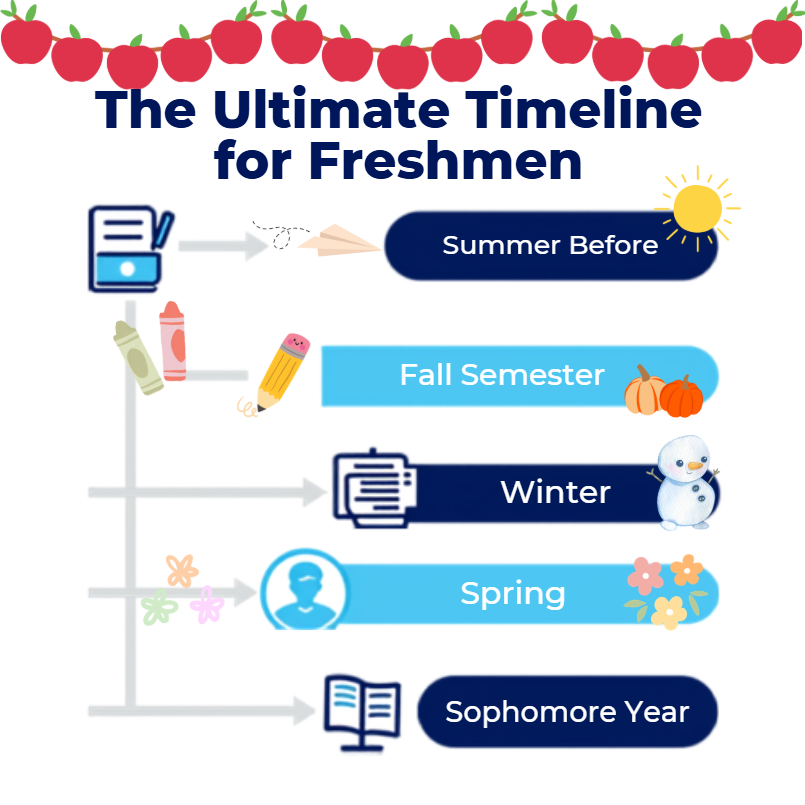
A Realistic Timeline for the Year
Fall (Aug-Nov): Focus on understanding the Big Ideas. Start learning your programming environment. Don’t stress about the PT yet, just learn to use pseudocode.
Winter (Dec-Jan): Start brainstorming your Create PT idea. Try to create something for a problem or field you are genuinely interested in. Now think, what problem will your program solve? Don’t code yet, just plan.
Early Spring (Feb-Mar): Build and refine your PT program. Get feedback from your teacher. Start your written responses early: draft, revise, repeat.
Late Spring (Apr-May): Submit your Create PT. Shift focus fully to exam prep: review all Big Ideas, do practice tests, and get a good amount of sleep before exam day.
Special Advice for Freshmen Taking AP CSP
If you’re a freshman taking AP CSP, great job taking an AP class your first year of high school. Here’s what you specifically need to know:
AP CSP is a great first AP. It’s more conceptual than purely mathematical, which makes it more approachable if your math skills are still developing. You’ll learn how to think systematically and analytically, skills that pay off in every subject.
Don’t compare yourself to upperclassmen. Some juniors and seniors in your class have been coding since middle school. That doesn’t matter. The exam is the same for everyone, and plenty of freshmen outscore seniors by working smart and consistently.
Office hours are underrated. Your teacher is literally there to help you. If you’re confused about pseudocode or the Create PT requirements, just ask. Most students never go, and the ones who tend to go and ask for help do better.
A 3 or higher on the AP CSP exam can earn you college credit at many universities, potentially saving you thousands of dollars. That alone makes it worth putting in the work. Also, AP classes are worth a full 1.0 point extra compared to regular classes (e.g., an A is worth (5.0) instead of (4.0)), helping you boost your GPA.
You’ve Got This
AP CSP is truly an interesting AP course; however, that only applies if you engage with the content and show genuine interest in learning. Show up consistently, don’t sleep on the Create PT, and actually engage with the material. Getting a 4 or 5 on the test is absolutely within reach. Good luck!
Found this helpful? Share it with a friend who’s also taking AP CSP this year.
메타데이터
- post_id
- 5ea884146a70
- slug
- how-to-survive-ap-computer-science-principles-the-ultimate-guide-for-high-school-students-5ea884146a70
- url
- https://medium.com/@medmindset/how-to-survive-ap-computer-science-principles-the-ultimate-guide-for-high-school-students-5ea884146a70
- canonical_url
- https://medium.com/@medmindset/how-to-survive-ap-computer-science-principles-the-ultimate-guide-for-high-school-students-5ea884146a70
- author_url
- https://medium.com/@medmindset
- status
- ok
- fetched_at
- 2026-06-23 03:48:11