Contemporary Japan captured in a song
A monomaniac analysis of Wednesday Campanella — Momotaro
The New Version of the Old Song that Captures Contemporary Japan
A monomaniacal analysis of Momotaro by Wednesday Campanella

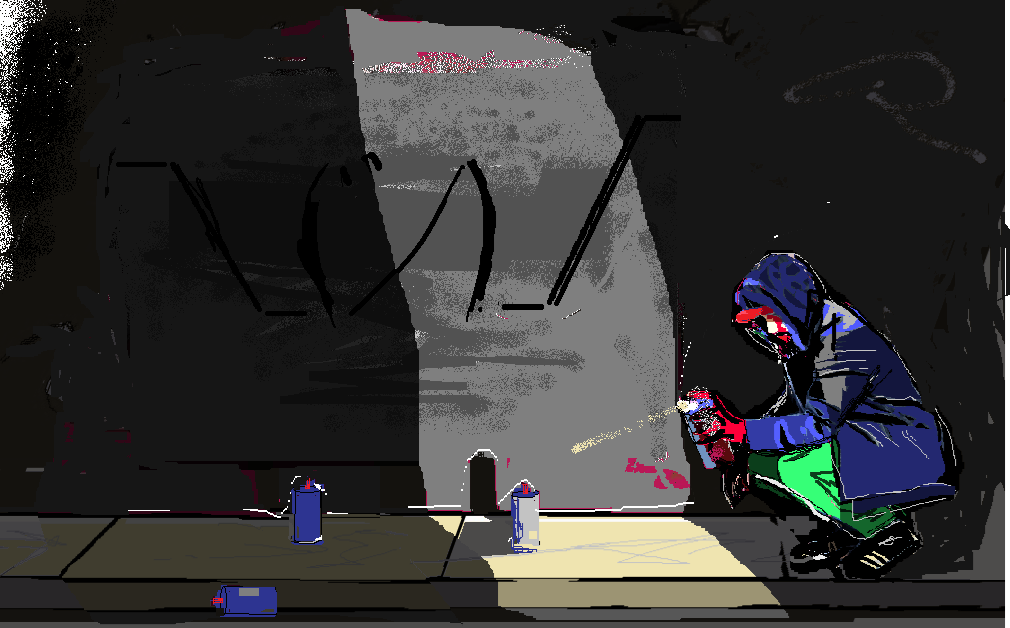
Modern version of Momotaro. Generated by ChatGPT from a script by the author.
The first time I listened to Momotaro by Wednesday Campanella, I did not understand anything — I just thought it was fun.
A few years later though, I think of it as the song that best managed to depict the atmosphere of contemporary Japan; you can find it through the multi-layered, hilarious, irreverent use they make of an old classical Japanese tale.
The song teems with references to Japanese pop culture, and it seems to me that without these keys someone could read the translation of the song (available here) and still not understand anything.
Another way to put it is that you may significantly increase your knowledge of contemporary Japan by focusing on this one song! My impossible mission in this article is to explain this song to someone who does not know much about Japanese culture. Do not get intimidated by a few kanjis (Japanese characters), English follows.
If you have never seen the official video of the song, I added a link to the end of this article.
#0 — Momotaro in four sentences
A childless old couple finds a boy named Momotaro born from a giant peach, who grows up and learns of a demon problem on a distant island inhabited by Oni (demons).
He decides to defeat the Oni and bring happiness to the land, and asks the old couple to make kibidango (sweet millet dumplings) for his journey.
He befriends a dog, a monkey, and a pheasant as his animal companions, and together, they reach the island of the Oni, defeat their leaders, and rescue captive people while retrieving stolen treasures.
Returning home victorious, Momotaro shares the treasures with the old couple and his animal friends, teaching values of courage, friendship, and the rewards of defeating evil.
#1 — Old and New
The two first verses set the backbone of the song:
じーちゃん マウンテン芝をカット ばーちゃん リバーでウォッシュ はっ!
This is a cheeky, shortened version of the beginning of the tale of Momotaro that every Japanese has heard many times:
むかしむかし、あるところに、おじいさんとおばあさんが住んでいました。 おじいさんは山へ芝刈りに、おばあさんは川へ洗濯に行きました
How to explain in English? Not only did Wednesday Campanella turn “A long long time ago there lived an old man and an old woman. One day the old man went to the mountains to cut grass, and the old woman went to the river to wash clothes” into a rapped “Grandpa cuts grass in the mountain; Grandma washes clothes in the river Yeah”, they also changed all complex, Chinese characters into their phonetic, Anglicized version (山へ芝刈りに becomes マウンテン芝をカット).
I find Japan remarkable for the way traditional culture maintains its appeal to the young generation; it is not just about a song. My wife learned Japanese archery Kyudo, a university friend did Japanese flower arrangement ikebana, another friend did Yosakoi dance… Village festivals are considered somewhat lame in my country, while people of all ages gather for matsuri here. If you are not convinced, have a look at the below video of 2023 Yosakoi Matsuri in the small city of Kochi and ask yourself: does it look like a dying tradition?
[embed]The 70th Yosakoi Matsuri — Youtube video
Japanese mythology or Japanese old tales are famously used in manga, but not only there. One of the country’s main mobile phone operators, Au, chose to launch a heavy series of commercials in 2015 that continues to this day after… more than 160 videos (1).
[embed]au commercial featuring Momotaro, Kintaro, and Urashimataro — Official Youtube video
It is trivial to say that contemporary Japan is fond of mixing old and new, traditional and novel; any tourist who reaches Meiji Jingu after a stroll on Takeshita Street notices it. Momotaro by Wednesday Campanella managed to capture this beautifully.
Last but not least, this song is a rap on a Hirajoshi scale (Japanese tone scale traditionally used for shamisen).
#2 — A new generation of Japanese young men
While in the original tale, Momotaro is a hero, today’s Momotaro appears to be a hikikomori.

A young Japanese man living as a hikikomori in 2004 - Wikimedia Commons
This term has been used, especially since the late nineties, to describe young adults (mostly males: in epidemiological data, males outnumber females 3 to 1 or more) who withdraw from society and live confined at home.
The phenomenon is not limited to Japan, but it was first described there in 1990 by the Japanese psychiatrist T. Saito in his publication Hikikomori — Adolescence Without End (2). In 2016, a survey from the Japan Cabinet Office found that persons socially withdrawn for more than six months numbered 540,000! (3)
Hikikomori is a multifaceted condition that cannot be attributed to a single factor, but the shift from outdoor games to video games is emphasized as one of the reasons for the increased prevalence of social withdrawals amongst adolescents (4).
It seems to me that this phenomenon is also typical of a new generation of Japanese young men who hear their parents and bosses talk of the crazy times of the economic bubble in the late eighties but face a much grimmer reality, and sometimes question the salaryman model of life that society proposes to them.
#3 — Miscellaneous
- The song is packed with references to former gaming consoles (PC engine by Hudson, Famicom, MegaDrive, NeoGeo, Game Boy Advance…), to old games (Bungeling Bay, Tengai Makio II…) and more broadly to gaming culture.
- In this version of the tale, Momotaro is not born from a peach — he builds a drone-like peach.
- The silhouette of the pheasant holding the order to go to the demons’ island looks like a *Gashadokuro*, a skeleton-like Japanese monster of massive dimensions.
- In the refrain, Wednesday Campanella makes fun of the commercial culture of Meibutsu, regional specialities that are must-buy when you tour in Japan, through the example of Okayama Kibidango (millet dumplings). Instead of giving him Kibidangos for his journey, Momotaro’s grandma throws these sweets at him to force him to leave for the demons’ island.
- Towards the end, Momotaro is going to a demon club. Above the door, one can read www. Is it for the Japanese equivalent of lol (explanation below), or does it imply that Momotaro is not fighting In Real Life, but rather just playing some video game? I would love to ask the singer Utaha…
- I mentioned www is an equivalent of lol, so let us explain it here. The Japanese character for to laugh is 笑う, is transcribed in romaji as warau. Warau becomes w when abbreviated, and www would be equivalent to loooool. In addition, some youngsters found that wwwwww looks like grass, and started using the corresponding character 草 (grass) to imply wwwwwww and convey wild amusement. The next level was the expression 草を超えて森, which translates as more than grass, forest. You may want to be born in the twenty-first century to use this expression, though.
Let us stop here! I hope you enjoyed the tour of contemporary Japan in this obsessive, monomaniac analysis of a great song. If you have found something I did not mention, add it in the comments!
[embed]水曜日のカンパネラー桃太郎
(1) https://ja.wikipedia.org/wiki/Auのイメージキャラクター
(2) Saito T. Shakaiteki Hikikomori-Owaranai Shishunki [Social Withdrawal: A Never-ending Adolescence]. PHP Shinsho, Tokyo, 1998 (in Japanese).
(3)Japan Cabinet Office. Wakamono no Seikatsu ni Kansuru Chousa- Houkokusho [Investigation on life of youth]. 2016. [Cited 1 May 2019.] Available from URL: https://www8.cao.go.jp/youth/kenkyu/ hikikomori/h27/pdf/teigi.pdf (in Japanese).
(4) https://onlinelibrary.wiley.com/share/8UWUEIIMAVSBDNJ5PUIE?target=10.1111/pcn.12895
메타데이터
- post_id
- 5edfc5c0ba6d
- slug
- contemporary-japan-captured-in-a-song-5edfc5c0ba6d
- url
- https://medium.com/japonica-publication/contemporary-japan-captured-in-a-song-5edfc5c0ba6d
- canonical_url
- https://medium.com/japonica-publication/contemporary-japan-captured-in-a-song-5edfc5c0ba6d
- author_url
- https://medium.com/@ainjapan
- status
- ok
- fetched_at
- 2026-08-12 10:37:11