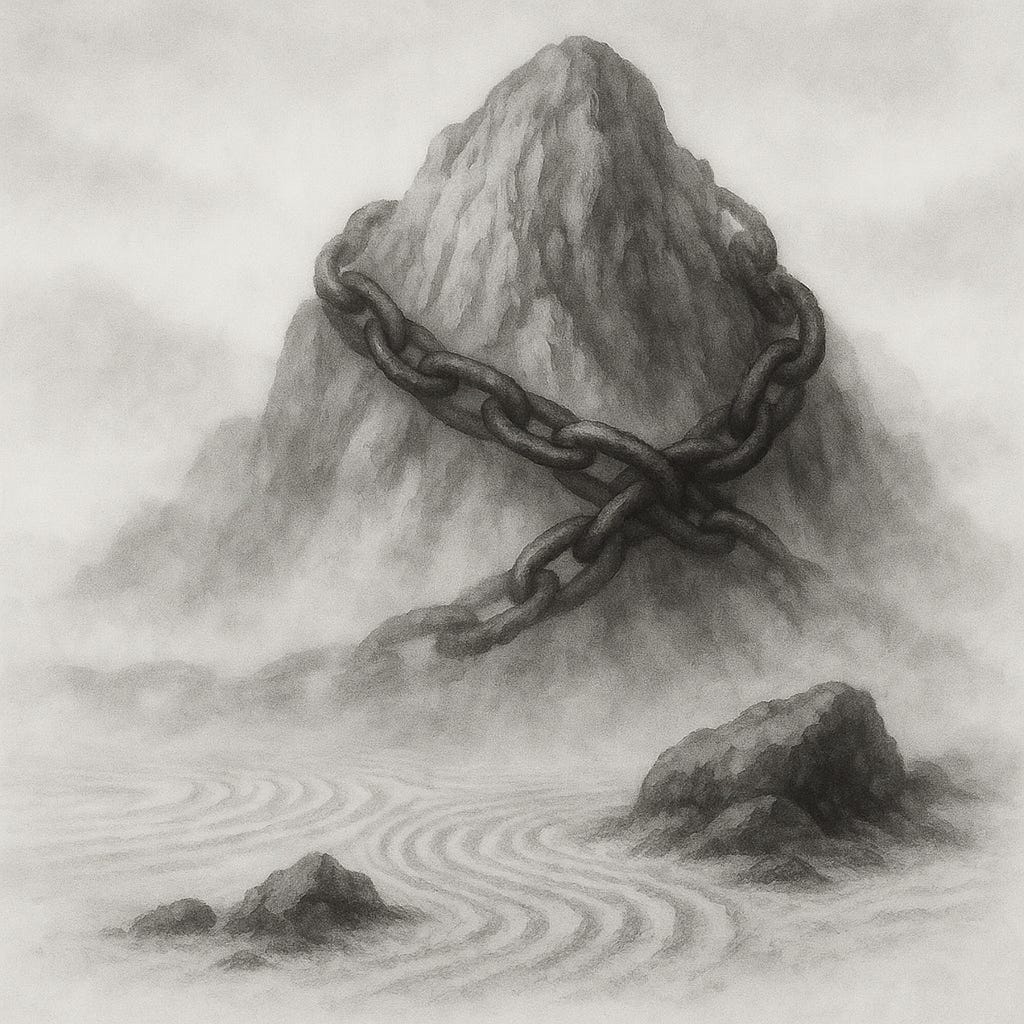
Myanmar’s Human Harvest
The junta’s conscription drive is not national service. It is a coercive machinery for turning civilians into expendable fuel for…
Myanmar’s Human Harvest
The junta’s conscription drive is not national service. It is a coercive machinery for turning civilians into expendable fuel for authoritarian war.
Myanmar’s generals are no longer merely ruling through fear. They are now trying to feed fear back into the system as manpower.

What began as a draft announcement has grown into something much larger and darker: a nationwide machinery of human extraction. It reaches into homes, schools, workplaces, migration routes, hospitals, and entire families. It widens the net when people flee. It punishes those who hide. It recruits the poor, the displaced, the undocumented, the sick, the young, and even children. It blackmails parents, traps migrant workers, builds pipelines through classrooms, revives reserves, arms local auxiliaries, and sends many of the captured into brutal training and high-casualty battlefields.
The junta calls this national defense. It is not.
It is a regime-preservation project born from military weakness, battlefield losses, shrinking ranks, defections, and collapsing legitimacy. The point is not to defend the public. The point is to keep an abusive military machine alive by forcing society to supply it with bodies.
That distinction matters. A state can ask citizens to defend a legitimate political community. But what Myanmar’s military is doing now is forcing civilians to sustain the power of the institution that destroyed that community.
Not a draft, but extraction
The most important mistake is to treat this as ordinary conscription. Ordinary conscription, however contested, at least claims a civic compact: the state asks for service in return for protection, citizenship, and equal membership in a political community.
The junta offers none of those things.

Soldiers stand next to military vehicles as people gather to protest against the military coup, in Yangon, Myanmar on Feb 15, 2021 via VOA News
It seized power by force in 2021, turned the country into a nationwide war zone, and then activated conscription in 2024 as its military position worsened. The move was understood for what it was: not confidence, but desperation. It was the act of a regime that could no longer find enough willing men to fight for it.
That is why the policy has expanded so aggressively. It does not rely on persuasion because it cannot. It relies on pressure, fear, punishment, surveillance, and capture. The law is only the shell. The real system is coercion.
This is why the language of “service” is misleading. The junta is not inviting citizens into a shared national duty. It is extracting human material from a population that overwhelmingly does not consent to the war it is being told to serve.
The widening net
At first glance, the draft appears to target a defined age range. In practice, the net is much wider.

The official announcement of enactment of Reserve laws on Feb 13, 2024
Young men remain the core target, but the machinery has expanded into multiple channels at once. Reserve laws have been activated to pull former servicemen back into the system. “Public security” and related militia-style structures have widened the recruitment pool further, including older men drafted into local security formations.

Students are seen at a military-run aviation training school in 2023 via MOI
The regime has also been building new pipelines into education. High-school and university-linked channels are being used to normalize military training and prepare future intake. That matters because it shows where the junta thinks the war will be won or lost: not only on current front lines, but in the capture of the next generation before it can leave, resist, or imagine another future.
Even serious illness has ceased to be a meaningful barrier. Additional material shows that people suffering from HIV and tuberculosis have been swept into recruitment efforts rather than exempted on humane or medical grounds. That tells us something brutal about the regime’s priorities. It is no longer selecting for fitness or building a professional force. It is scraping the bottom of the social barrel for any body that can fill a quota.
Then there are migrant workers. Tens of thousands who had already secured overseas work have found themselves trapped by new rules and document suspensions, turning legal labour migration into another funnel toward forced service. In effect, even leaving the country for work has been transformed into a conscription risk.
This is not a narrow manpower policy. It is a totalizing social dragnet.
Families under siege
The junta is not conscripting individuals alone. It is conscripting households.

Conscripts from the 11th batch via The Irrawaddy
Parents are summoned and forced to sign declarations promising to produce sons or daughters when called. If the target has fled, officials demand substitutes from within the family. Some families are threatened with prison, fines, property consequences, or retaliation if they do not cooperate. In some areas, relatives have reportedly been detained or blackmailed to force compliance.
This changes the moral structure of everyday life. A young person is no longer simply deciding whether to stay or flee. Every decision now carries consequences for parents, siblings, spouses, and extended kin. Fear moves through the family unit and turns love itself into leverage.
The result is a society forced into impossible calculations. Do you run and leave your parents exposed? Do you stay and risk being taken? Do you borrow money to bribe your way out? Do you sell land, jewellery, or the family’s future so your child does not become cannon fodder?
This is why the social damage goes far beyond the battlefield. Forced conscription is destroying trust, security, and moral stability inside the home. It makes families feel watched, trapped, and collectively punishable.
Lotteries, raids, and street capture
The junta has built an enforcement system that blends bureaucracy with predation.
In some places, authorities use lotteries and ward-level lists to select conscripts. In others, they rely on raids, household registration checks, street grabs, and checkpoint detentions. Night-time “guest registration” visits become opportunities to inspect phones, verify names, and seize those considered eligible. The law gives the process an administrative surface. The actual experience is one of kidnapping under official cover.

A homeless child on the street via The Irrawaddy
The burden is not distributed equally. Poorer neighbourhoods, displaced people, undocumented people, and minorities are hit hardest because they have the weakest protection and the fewest escape options. Wealthier families can sometimes buy time, buy exemptions, or buy substitutes. Poor families cannot. So even within coercion, there is class hierarchy.
That is one of the clearest signs that this is not a public-interest defense system. A genuine civic obligation is shared. This burden is selectively dumped on those least able to resist it.
Children, students, and the theft of the future
One of the most disturbing features of the junta’s manpower strategy is how directly it reaches into childhood and youth.

A military officer talks to students about conscription at the Technological University in Mandalay’s Kyaukse Township on Monday via MOI
Underage recruitment has increased since the 2024 conscription drive. Children have been abducted or opportunistically recruited when unaccompanied, displaced, or working. Their ages are concealed or ignored. Some are then used as porters, guides, and even human shields. That is not incidental leakage in a chaotic system. It is what happens when a military under pressure rewards recruiters for bodies and stops caring whose bodies they are.
At the same time, students are being drawn into a military pipeline through schools and university-linked structures. The message is clear: your life is not your own. Your education, your labour, your migration plan, your adulthood, even your teenage years can all be redirected into service for the men who broke the country.
This is not only a human-rights violation. It is an assault on Myanmar’s future.
A country that turns students into recruits and children into battlefield assets is not protecting its next generation. It is consuming it.
Cannon fodder by design
The junta’s need is not just for manpower in the abstract. It needs bodies willing or unwilling to absorb danger.

Junta soldiers provide military equipment to new conscripts via pro-junta Telegram Channel
Accounts from defectors and conscripts show how many recruits are actually used: rushed through abbreviated training, brutalized by officers, and then pushed into front-line assault roles with minimal preparation. Some describe conscripts placed in the front while more experienced troops stay behind. Others describe punishment for attempted escape so severe that it amounts to torture. One of the clearest patterns is expendability.
That expendability is not an accident. It is built into the logic of the system.
A military suffering losses, defections, and territorial setbacks has two choices: reform itself or replace its dead and disloyal with bodies it can coerce. The junta has chosen the second path. This is why the phrase “cannon fodder” is not rhetorical excess. It is an analytical description of a military model that values immediate replacement over training, consent, or survivability.
And the uses are not purely defensive. Conscripts have been deployed in offensives aimed at reclaiming lost territory. In other words, civilians are not only being forced to hold collapsing lines. They are being forced into campaigns meant to extend the war and restore junta control.
Trafficking, corruption, and the conscription economy
Forced conscription does not operate alone. It generates entire secondary economies of fear and exploitation.
One is corruption. Bribes, substitutes, delays, and exemptions become survival tools. Families sell assets or go into debt to keep loved ones out of uniform. This creates a grim marketplace where money buys safety and poverty buys exposure.

Myanmar migrants arrested by Thai police in Kanchanaburi, Thailand on May 27, 2024 via Kanchanaburi Regional News
Another is trafficking. As people try to escape the draft, brokers and smuggling routes proliferate. Fear of recruitment pushes young people into unsafe migration channels, where they face forced labour, scam compounds, exploitation, or further coercion. The junta’s manpower strategy thus does more than fill barracks. It helps fill trafficking pipelines.
This matters because it reveals the broader social logic of the policy. Forced conscription does not just militarize society. It criminalizes survival. It pushes ordinary people into illegal routes and dangerous actors simply because lawful life has been turned into a trap.
Propaganda and moral laundering
No extraction system can survive on force alone. It needs language.

An official from the junta’s General Administration Department gives a talk about the conscription law to residents of Mandalay Region’s Ma Hlaing Township via MOI
The junta’s propaganda frames conscription as patriotic duty, national responsibility, and defense of sovereignty. But this rhetoric is a form of moral laundering. It tries to convert coercion into honor and desperation into purpose.
What it conceals is simple: the regime is not defending Myanmar from an outside invader. It is defending itself from the people it tried to subdue and from the consequences of its own coup. The phrase “national defense” therefore performs a trick. It tries to erase the distinction between the country and the armed institution that captured it.
This same pattern has appeared elsewhere in Myanmar’s crisis: rename abuse as security, rename victims as threats, rename coercion as duty, and rename regime survival as national survival. Conscription propaganda belongs to that same political grammar.
But once the language is stripped away, the moral question becomes unavoidable.
Why this conscription is morally rotten
Let us be clear about what Myanmar’s conscription really is. It is not duty. It is not patriotism. It is not national service. It is a frightened regime seizing the bodies of the people it has already brutalized and ordering them to die for their own oppression.
No moral society asks its citizens to defend the machinery that crushes them. No ethical state blackmails parents, takes relatives hostage, sweeps children into war, and then calls that civic responsibility. What the junta is demanding is not sacrifice for the common good. It is submission to organized predation.
The junta has no ethical claim to military service because it has no ethical claim to rule. It did not inherit legitimate authority and then ask citizens to defend a shared political community. It seized power in a coup, destroyed the public mandate, and turned the country into a battlefield of prisons, airstrikes, torture sites, burned villages, displaced families, and collective punishment. A regime that wages war on its own population forfeits the moral right to demand that population fight for it.
That is why this conscription is not merely harsh. It is morally obscene. It takes the victims of state violence and tries to turn them into instruments of more state violence. It tells young people whose futures were already stolen by coup, collapse, and war that they now owe their captors their blood as well. That is not governance. It is political cannibalism.

Rohingya men sit on the floor after being recruited under the Conscription Law in Rakhine State recently by CJ
It is also unjust in the most basic sense: the burden is dumped downward. The poor are trapped. The undocumented are exposed. The displaced are easy to seize. Parents are blackmailed. Families sell what they have to buy time or buy substitutes while the connected often find ways out. This is not equal civic duty shared across a political community. It is class-biased, fear-driven extraction from those least able to resist.
And the cause itself is poisoned. A person is not being forced to defend homes, rights, or a free society. They are being forced into the service of a military widely accused of war crimes and crimes against humanity, a military tied to torture, rape, child recruitment, attacks on civilians, collective punishment, and scorched-earth campaigns. To conscript people into such a system is not simply to compel military labour. It is to conscript conscience. It is to drag human beings into complicity with an institution soaked in the suffering of their own people.
That is why refusal is not cowardice. In moral terms, refusal can be the last defense of human dignity. The right to conscientious objection rests on freedom of thought and conscience, and that principle matters most when a regime tries to erase the line between obedience and wrongdoing. No one should be forced to kill for a cause they know to be unjust. No one should be forced to die so their oppressor can rule longer.
The junta wants conscription to look like duty. It is not duty. It is body theft under legal cover. It is the conversion of fear into manpower. It is the state announcing that your life belongs to it because it has failed to win your loyalty.
So the argument against this conscription should be made without hesitation: it is unethical because it serves oppression, unjust because it targets the vulnerable, and wrong because it forces the victims of a criminal order to become its fuel. When a regime destroys the country and then demands that the country die for it, the answer is not moral duty. The answer is moral indictment.
And once that is understood, the rest of the system comes into focus more clearly.
Ethical refusal
A Myanmar citizen under this conscription drive does not face a normal moral choice between serving the country and avoiding duty. They face a coercive demand to help sustain an institution widely tied to atrocities, child recruitment, attacks on civilians, torture, and large-scale rights abuses. That is why there is no meaningful ethical obligation to comply.

Youths call on people to oppose junta conscription during a flash mob protest in Yangon on Sunday via Yangon Revolution Force
There is, instead, a strong ethical case for refusal where refusal is possible.
That does not mean people trapped by force are to blame. Many are not choosing freely. They are acting under fear, blackmail, detention risk, or threats against family. Under those conditions, the moral burden lies first on the regime that created the coercion. But the broader ethical judgment remains: fighting and dying for the junta is not a just cause. It is participation, voluntary or forced, in the preservation of a violent order that has turned its weapons on its own society.
A country being mined for bodies
What Myanmar’s generals have built is not merely a draft. It is a system for mining society for human material.

An artist’s impression of a young man’s abduction in Yangon via The Irrawaddy
It draws from shrinking pools of youth, from displaced families, from frightened parents, from school corridors, from hospital wards, from migration queues, from minority communities, from the poor, and from those too vulnerable to disappear in time. It is expansive because the military is weakened. It is cruel because cruelty is cheaper than legitimacy. And it is dangerous because every month it embeds the idea that the citizen exists not as a rights-bearing person, but as a reserve stock of flesh for the state’s war machine.
This is why the issue should not be understood as manpower alone. It is about the kind of political order the junta is trying to impose on Myanmar.
That order says your body can be taken, your child can be listed, your parents can be threatened, your escape can be blocked, your schooling can be militarized, your illness can be ignored, your labour can be trapped, and your life can be spent to prolong the rule of men who no longer know how to govern except through force.
Myanmar is not being defended.
It is being harvested.
메타데이터
- post_id
- 5eeb42b401fb
- slug
- myanmars-human-harvest-5eeb42b401fb
- url
- https://medium.com/@steinmyint/myanmars-human-harvest-5eeb42b401fb
- canonical_url
- https://medium.com/@steinmyint/myanmars-human-harvest-5eeb42b401fb
- author_url
- https://medium.com/@steinmyint
- status
- ok
- fetched_at
- 2026-07-11 08:28:37