AI Regulation and Ethics
The AI Mistake That Changed My Mind About Trusting Technology
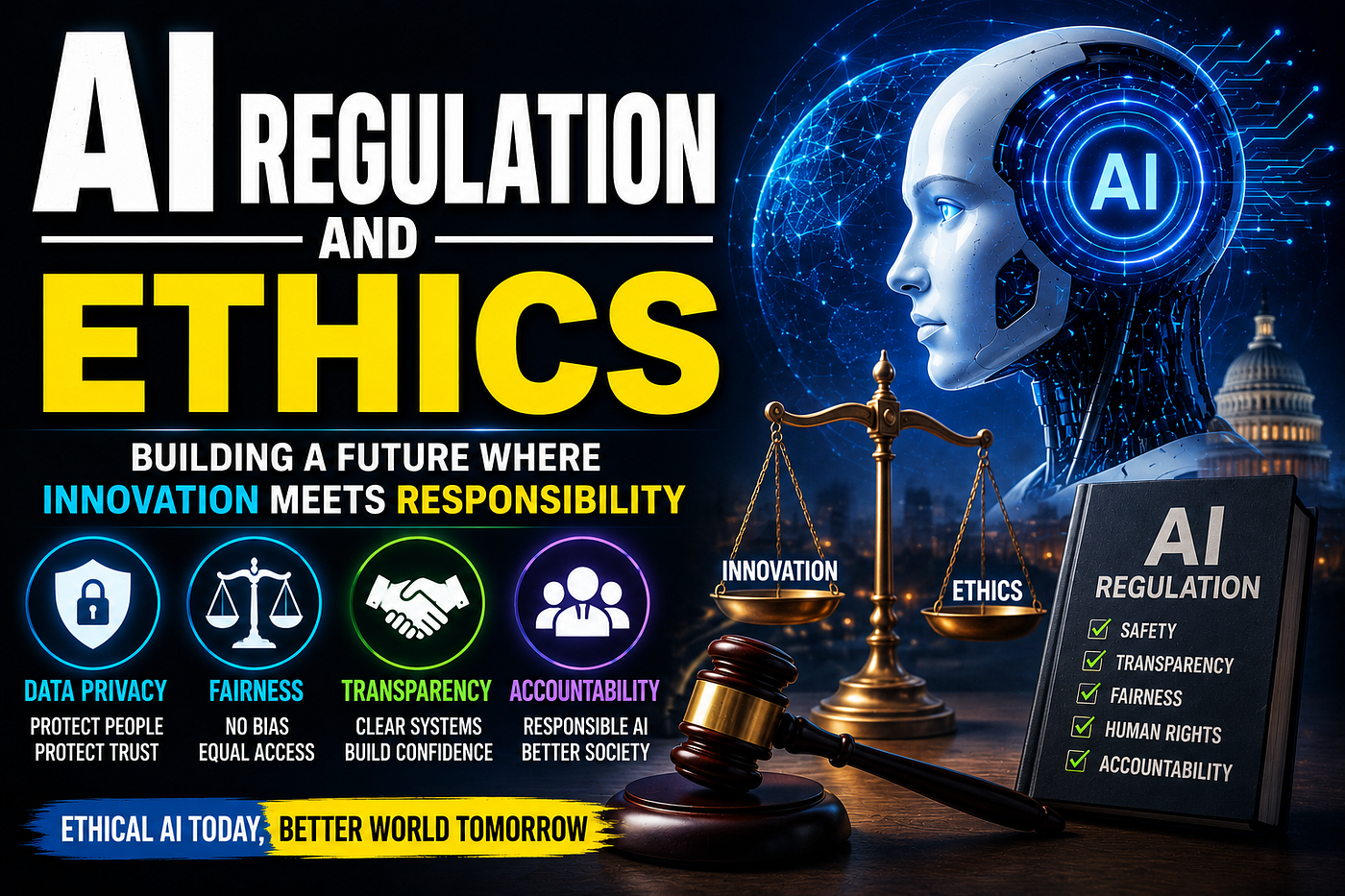
AI Regulation and Ethics
The AI Mistake That Changed My Mind About Trusting Technology
A months ago I asked an artificial intelligence assistant to summarize a research paper I did not have time to read.
The summary looked good. It was well written and confident.
There was one problem.
One of the points did not exist in the paper.
The artificial intelligence did not copy information from else. It just generated an answer that sounded believable.
That small mistake made me think.
Until then I was amazed by what artificial intelligence could do. Artificial intelligence could write articles generate images, answer questions and even help with programming.
For the time I realized something important.
As artificial intelligence gets more powerful intelligence alone is not enough.
We also need responsibility.
That is where artificial intelligence regulation and ethics come in.
Whenever people hear the word "regulation" they often think of laws that slow down innovation.
I used to think that way.
Then I started comparing intelligence to something we use every day. Cars.
Cars gave people freedom to travel farther and faster than before.
At the time they introduced risks.
Governments did not ban cars because accidents happened.
Instead they introduced speed limits drivers licenses, traffic signals, seat belts and safety standards.
Those rules did not stop innovation.
They made driving safer for everyone.
Artificial intelligence is on a path.
The technology is advancing fast. Society is still learning how to use it
Ethics and regulation are not about preventing progress.
They are about making sure progress benefits people not harming them.
- A hospital using intelligence to help doctors analyze scans.
If the system correctly identifies a disease earlier than a human doctor could it could save lives.
What happens if it makes a mistake?
Who is responsible?
The hospital?
The software company?
The doctor?
The patient deserves an answer long before that situation happens.
That is why governments and healthcare organizations are developing rules for intelligence in medicine.
- A teacher using intelligence to help grade assignments.
The system might save hours of work every week.
If it accidentally gives scores to certain students because of biased training data those students could lose opportunities they deserve.
The teacher may never realize the problem unless someone checks the results carefully.
Bias is a challenge facing artificial intelligence today.
Artificial intelligence learns from data created by humans.
If that data contains patterns artificial intelligence can unintentionally repeat them.
Imagine teaching a child using one history book.
Their understanding of the world would be limited.
Artificial intelligence faces a problem when its training data lacks diversity or contains biases.
That does not mean artificial intelligence is intentionally unfair.
It means humans must design, test and monitor these systems carefully.
Privacy is another issue that affects everyone.
Every day people share photos, conversations, shopping habits, locations and personal preferences online.
Artificial intelligence systems can analyze amounts of this information to provide recommendations and useful services.
That convenience is valuable.
It also raises a question.
How personal information are we sharing?
In countries privacy laws are becoming stricter because people want control over their own data.
Businesses that use intelligence are discovering that earning customer trust is just as important as building technology.
- Small businesses face these questions too.
Imagine someone opening a clothing store.
In countries like Pakistan entrepreneurs often rely on mobile payment services such as JazzCash and Easypaisa.
Meanwhile businesses in North America or Europe may use Stripe or PayPal for transactions.
Regardless of the platform customers expect one thing.
Their personal information should remain secure.
As artificial intelligence becomes part of shopping businesses everywhere will need policies explaining how customer data is collected, stored and used.
Another topic that often appears in discussions about intelligence ethics is deepfakes.
A years ago, editing a convincing fake video required advanced technical skills.
Today artificial intelligence can generate videos, voices and images more easily.
This creates opportunities for filmmaking, education and entertainment.
It also creates opportunities for misinformation.
Imagine receiving a video of a figure saying something
How do you know it is real?
How do you verify its authenticity before sharing it?
Learning to question content may become one of the important skills of the artificial intelligence era.
Employment is another concern that sparks emotions.
People often ask whether artificial intelligence will replace workers.
History suggests technology usually changes jobs often than it eliminates them completely.
When computers entered offices many routine tasks became automated.
At the time new careers appeared.
The same pattern is already emerging with intelligence.
Prompt engineers, intelligence safety researchers, artificial intelligence auditors and machine learning specialists barely existed a few years ago.
As technology evolves more new roles will appear.
Preparing people through education and training will matter more than resisting change.
One lesson I have learned while using intelligence is surprisingly simple.
Never assume artificial intelligence is always right.
Treat it the way you would treat advice from an intelligent colleague.
Listen carefully.
Ask questions.
Verify information.
Use your judgment.
This habit protects you from mistakes while allowing you to benefit from everything intelligence offers.
Governments around the world are also trying to find the balance.
If regulations become too strict innovation may slow down.
If there are no safeguards people could lose trust in intelligence altogether.
Finding the ground will not be easy.
Technology changes faster than laws.
That is why experts from universities, technology companies, legal systems and civil society are increasingly working together to shape intelligence policies.
The goal is not to stop intelligence.
It is to guide its development in ways that respect rights, privacy, fairness and accountability.
As individuals we also have responsibilities.
Before sharing intelligence-generated content verify it.
Before trusting an intelligence recommendation think critically.
Before uploading personal information understand how it may be used.
Responsible artificial intelligence begins with users.
Looking ahead artificial intelligence will almost certainly become part of every profession.
Doctors will use intelligence.
Teachers will use intelligence.
Engineers, journalists, artists, business owners and students will all work alongside systems.
The question is not whether artificial intelligence will influence our lives.
It already does.
The real question is whether we will build systems that people can trust.
When I think back, to that research summary I do not remember it as a failure.
I remember it as a reminder.
Technology does not have to be perfect to be useful.
But the more powerful it becomes, the important honesty, transparency and accountability become.
Artificial intelligence may shape the future.
Ethics will determine whether that future works for everyone.
That decision is not being made by machines.
It is being made by us.
메타데이터
- post_id
- 5ef0e4e234e6
- slug
- ai-regulation-and-ethics-5ef0e4e234e6
- url
- https://medium.com/@hirarasool007/ai-regulation-and-ethics-5ef0e4e234e6
- canonical_url
- https://medium.com/@hirarasool007/ai-regulation-and-ethics-5ef0e4e234e6
- author_url
- https://medium.com/@hirarasool007
- status
- ok
- fetched_at
- 2026-07-14 19:14:01






