Suggested “Financial Bazooka” for the new TN CM to reduce Revenue Deficit
Based on the 2026–27 interim budget projections and industry benchmarks for fiscal reforms, the streamlining of these sectors could provide…
Suggested “Financial Bazooka” for the new TN CM to reduce Revenue Deficit
Based on the 2026–27 interim budget projections and industry benchmarks for fiscal reforms, the streamlining of these sectors could provide a significant boost to the state treasury. However, while these measures can drastically reduce the revenue deficit, they are unlikely to wipe it out in a single fiscal year due to the sheer scale of the state’s committed expenditures.
Here is a breakdown of the expected impact:
1. Estimated Annual Revenue Gains
Based on current fiscal data and the “leakage” typically associated with non-transparent systems, here is the projected additional annual revenue:
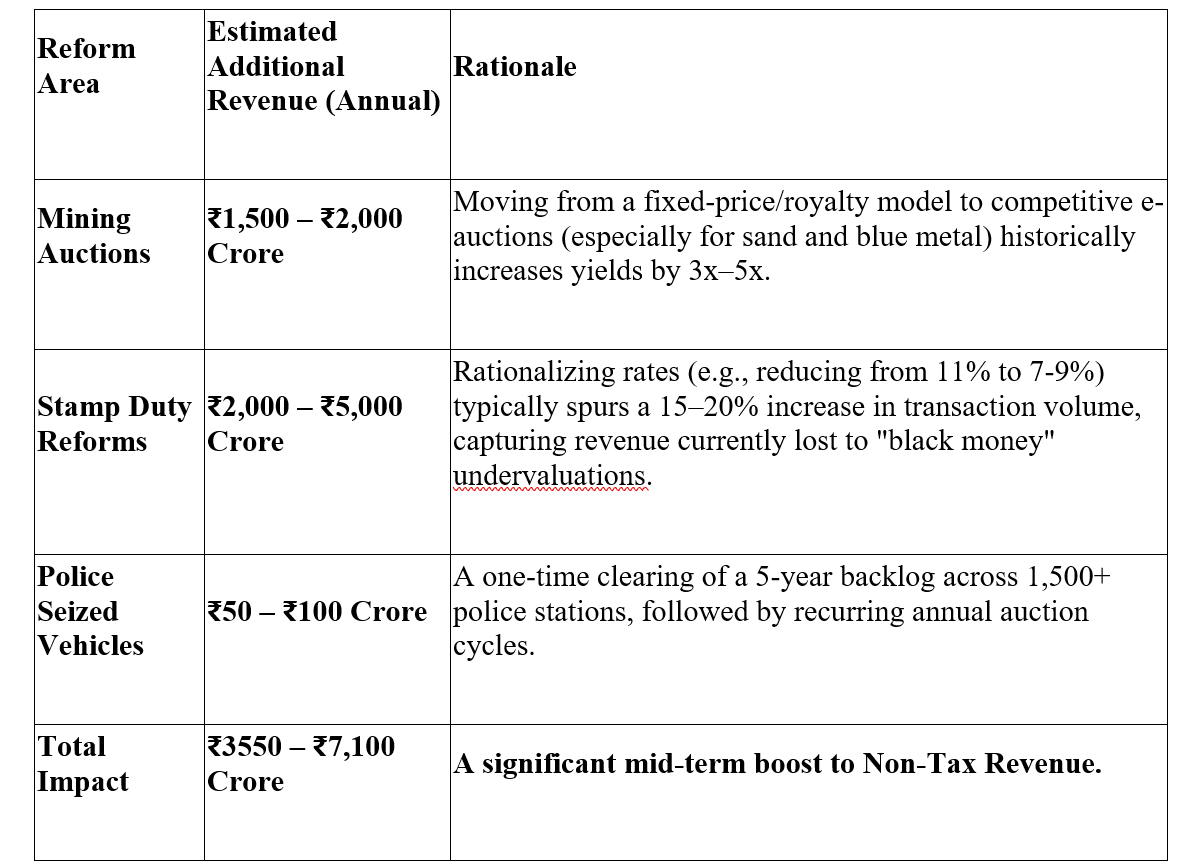
2. Impact on the Revenue Deficit
The Tamil Nadu Interim Budget 2026–27 projects:
- Revenue Deficit: ₹48,696 Crore
- Total Debt: ~₹10.71 Lakh Crore
Will it wipe out the deficit?
- No, not immediately. Even with an optimistic ₹8,000 crore gain from these reforms, a deficit of over ₹40,000 crore would still remain.
- Why? Over 65% of Tamil Nadu’s revenue receipts are currently consumed by “committed expenditure” — salaries, pensions, and interest payments on past debt.
- Broader policy discussion in Maharashtra also points to increasing taxes on items such as tobacco products, luxury vehicles, premium real estate-related activity, and fuel as ways to support deficit reduction
Will it reduce it significantly?
- Yes. These reforms could effectively reduce the revenue deficit in the first full year of implementation.
- More importantly, it shifts the state from “Borrowing to Consume” (paying interest with loans) to “Borrowing to Build” (using loans for capital infrastructure that generates future growth).
3. The “Multiplier Effect”
Beyond the direct cash flow, these reforms provide secondary financial benefits:
- Lower Borrowing Costs: A reduced revenue deficit improves the state’s credit rating, allowing it to borrow at lower interest rates in the market.
- Investor Confidence: Streamlined mining and land registration attract large-scale industrial investments (FDI), which boost State GST (SGST) collections over a 3–5 year horizon.
- Asset Recovery: Clearing police yards will release lands for police use which can also be monetised by leasing them out to other Government agencies also on rentals and government land via auctions reduces maintenance costs and frees up valuable real estate for productive use.
메타데이터
- post_id
- 5ef8433265bc
- slug
- suggested-financial-bazooka-for-the-new-tn-cm-to-reduce-revenue-deficit-5ef8433265bc
- url
- https://medium.com/@veeeyaaar/suggested-financial-bazooka-for-the-new-tn-cm-to-reduce-revenue-deficit-5ef8433265bc
- canonical_url
- https://medium.com/@veeeyaaar/suggested-financial-bazooka-for-the-new-tn-cm-to-reduce-revenue-deficit-5ef8433265bc
- author_url
- https://medium.com/@veeeyaaar
- status
- ok
- fetched_at
- 2026-07-11 19:30:18



