We Need Care As Much As We Give It
Why the “Strongest” People are Drowning in Plain Sight
We Need Care As Much As We Give It
Why the “Strongest” People are Drowning in Plain Sight
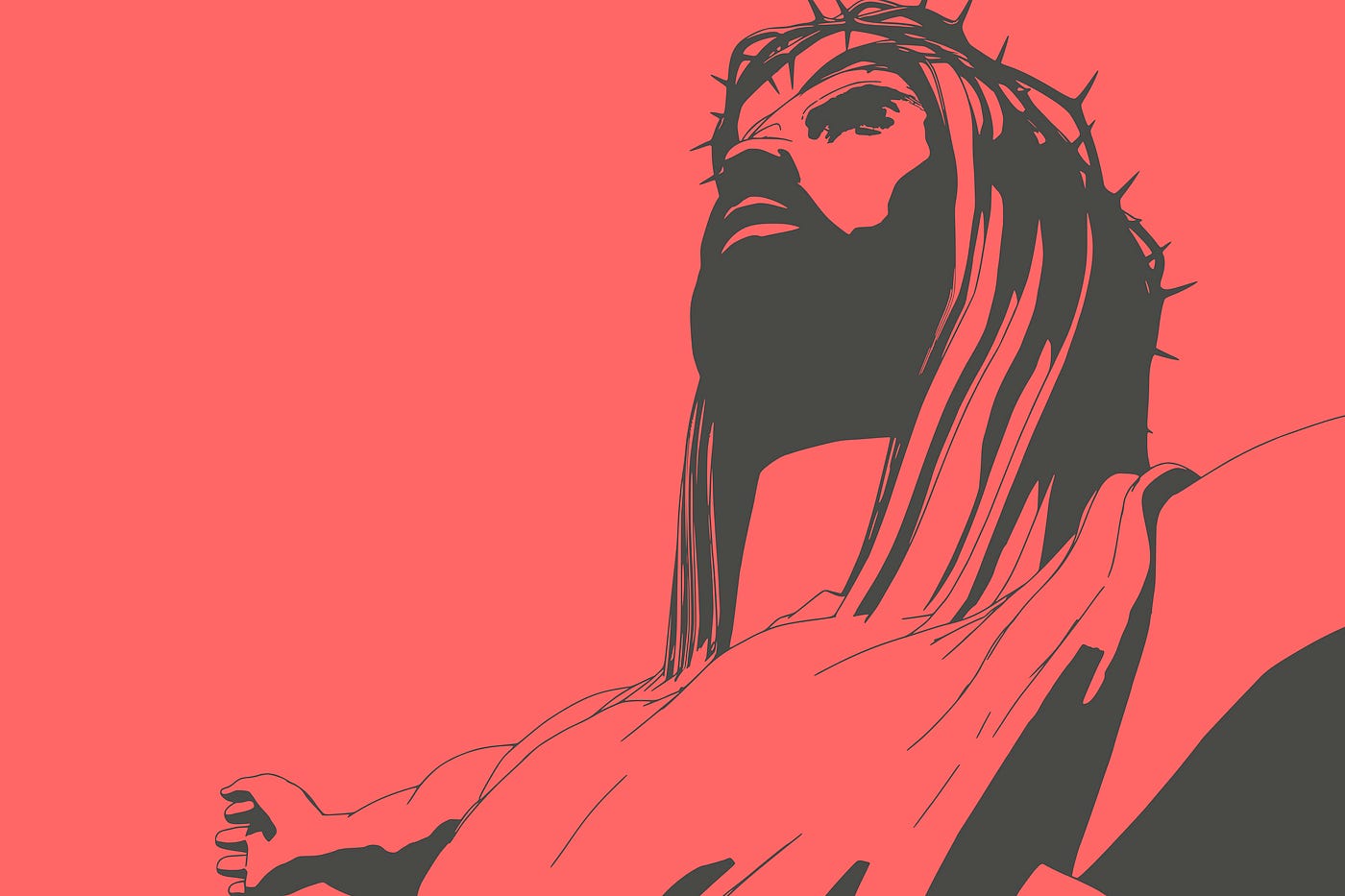
Photo by Marco Bianchetti on Unsplash
There is a popular saying that goes along the lines of, “The most interesting people are those who are interested people.” It’s a beautiful principle. It teaches us that if we want to build a meaningful life, we must step out of our own heads, drop our egos, and become genuinely invested in the individuals around us.
But if we are being completely honest, we live in a world that is profoundly obsessed with itself. Most people are so locked inside their own worlds that if you are someone who genuinely cares, it becomes a long and lonely road.
You can spend your days pouring out genuine care, only to look around and realize you are quietly drowning in an abyss created by the self-centered crowd.
We easily forget a fundamental law of human design: we are built to give care, but we are also built to receive it. Without balanced reciprocity, even the most joyful wellspring will eventually run completely dry.
Sometimes a parable gets to the heart of the issue.
Parable of the Golden Thread of Life
Imagine a world where every human being was composed of a beautifully woven, vibrant golden thread. This fiber formed the very fabric of their vital energy, their capacity for deep empathy, and their ability to sustain others.
Some individuals walked through life keeping their garments tightly buttoned, fiercely protective of their own framework, terrified of losing a single strand to the needs of a neighbor.
Others, however, were born with the hearts of weavers. When a weaver encountered someone shivering in the cold or broken by the side of the path, he did not offer a passing word of sympathy. He reached into his own chest, found a loose end of his golden thread, and began to pull.
He handed the strand to the broken individual, who eagerly took it to mend her own tattered, fraying frame. Strand by strand, the weaver uncoiled his own substance to build up the other.
The tragic reality, however, was that the golden thread was not infinite. After years of allowing a multitude to pull at his strands without a single gesture of return, the weaver’s fabric thinned dangerously. He grew faint, his golden glow dimming, down to his very last structural thread. Dropping to his knees on the path, unable to offer another stitch, he braced for the final unraveling.
But the story did not end there.
As the weaver sat broken, a shadow fell across the path. Another passerby knelt beside him. She did not come with an outstretched hand to take, nor did she come with a request for aid. Instead, she looked directly into his fading eyes with deep, unconditional interest.
She reached into her own chest, pulled loose a vibrant strand of her own golden thread, and began to weave it directly into his unraveled and quivering edges. She asked him his name, listened to his exhaustion, and shared her own thread until his frame became whole and strong again. He endured because he was finally met by someone willing to give exactly what he had spent his life pouring out.
The ghost in the room
For a long time, people have seen me as the weaver — approachable, joyful, and giving— and I sincerely am. I genuinely love people, and I love discovering who they are as individuals. But lately, the reality of the one-way, unreciprocated relationships has caught up to me.
Recently, a recurring dream brought this all to life. In it, my closest childhood friend — the boy who lived next door, whom I had known since kindergarten — is suddenly alive.
In real life, five years ago, at the age of 25, he passed away from a sudden brain aneurysm.
But in the dream, his death was just a mistake. He was merely in a temporary, deep sleep and had woken from it. I embraced him and felt an overwhelming, shattering wave of relief, and we sat down and talked just like we used to.
He asked me how I was doing. He listened. He was sincerely interested in my life, my thoughts, and my heart, just as I was in his.
Then, I woke up.
I opened my eyes to the cold, stark reality that he was gone. And the ache that followed is heavy, because I realized I don’t have anyone like that anymore.
Most people I interact with are there to receive what I can give. They talk endlessly about themselves, and because I care about them, I listen attentively and sincerely.
But almost no one ever thinks to ask how I am doing. They assume that because I am not actively screaming in a crisis, I am completely invulnerable. They think, “Desmond is fine. He doesn’t need our time or energy.”
It is an exhausting irony: you can be surrounded by a hundred “friends,” yet feel like you are dead on the inside, quietly suffocating because no one dares to reach a hand into the depths to pull you out. Even the strongest weavers need a hand to hold.
Re-writing the script
In the past few years, I began to look at my relationships through a different lens. I noticed this profound, transactional distance most clearly in how we treat our mentors — the leaders, supervisors, and elders who have guided us.
Too often, we treat our mentors like static institutions. We assume they are in such a secure, elevated place that they don’t need anything from us. We think all we can offer them is our gratitude and appreciation for what they’ve done for us. But that keeps the relationship entirely focused on us.
So I decided to change the script. I reached out to my mentors — not to ask for advice, and not just to say thank you, but because I wanted to genuinely know them. I wanted to hear their personal stories, their struggles, and the unseen paths that made them who they are today.
The shift was incredible. The moment the focus moved from what they could do for me to who they were as human beings, I watched life literally be breathed back into them. Their eyes lit up. The relationship transformed from a transactional hierarchy into an authentic, shared circle.
I realized that the people at the top are often just as unraveled and lonely as the people at the bottom. They, too, are waiting for someone to care about their soul, rather than just their utility.
Even Jesus — the ultimate weaver — knew when to ask for help
The weight of the call
When we look at the life of Jesus, we see a man who was constantly being pulled apart by the crowds. Thousands followed Him, reaching out to touch the hem of His garment, demanding healing, bread, and miracles. He was the ultimate weaver, giving away His life to mend a broken world.
Yet, even Jesus fiercely guarded His boundaries. He routinely left the demanding crowds behind, slipped away into the wilderness, and went up the mountain alone to be replenished by the Father. He knew that to steward His mission on earth, He had to protect His capacity to care.
And on the night before His execution, in the darkness of the Garden of Gethsemane, the ultimate caregiver did something profoundly vulnerable. He didn’t hide His agony. He turned to His closest friends, Peter, James, and John, and made a direct, human request:
“My soul is overwhelmed with sorrow to the point of death. Stay here and keep watch with me.” (Matthew 26:38, NIV)
Jesus — our bedrock of strength — explicitly asked His community to hold His hand in the dark. He asked them to invest their energy into Him when He was in the depths. The tragedy of that night is that they fell asleep. They missed the call.
Where are you standing?
As you read this today, I want to encourage and ask: Where are you right now in the fabric of your life?
Are you the one who has been consuming the golden thread of others? Have you been receiving while assuming the people giving it are too strong to ever need you? If that is you, it is time to look outwards.
Reach out to the mentors, the friends, and the quiet leaders in your life today. Don’t ask them for a favor. Just check in on their hearts, ask them how they are doing, and listen to their story.
Or are you the weaver who is currently down to your very last thread? Are you the one who is smiling through the exhaustion, secretly drowning while the world applauds your strength?
If you are in the depths, hear this clearly: drawing a boundary is not a failure of your character, but a respect for our human limitations. Stop letting people who don’t care about your soul dictate your schedule.
Shake the dust off your shoes, step back into a safe space of self-respect, and save your remaining threads for the rare, beautiful people who are willing to knit them back into you.
메타데이터
- post_id
- 5efe2915121f
- slug
- we-need-care-as-much-as-we-give-it-5efe2915121f
- url
- https://medium.com/backyard-theology/we-need-care-as-much-as-we-give-it-5efe2915121f
- canonical_url
- https://medium.com/backyard-theology/we-need-care-as-much-as-we-give-it-5efe2915121f
- author_url
- https://medium.com/@desmond.y01
- status
- ok
- fetched_at
- 2026-06-28 14:26:31