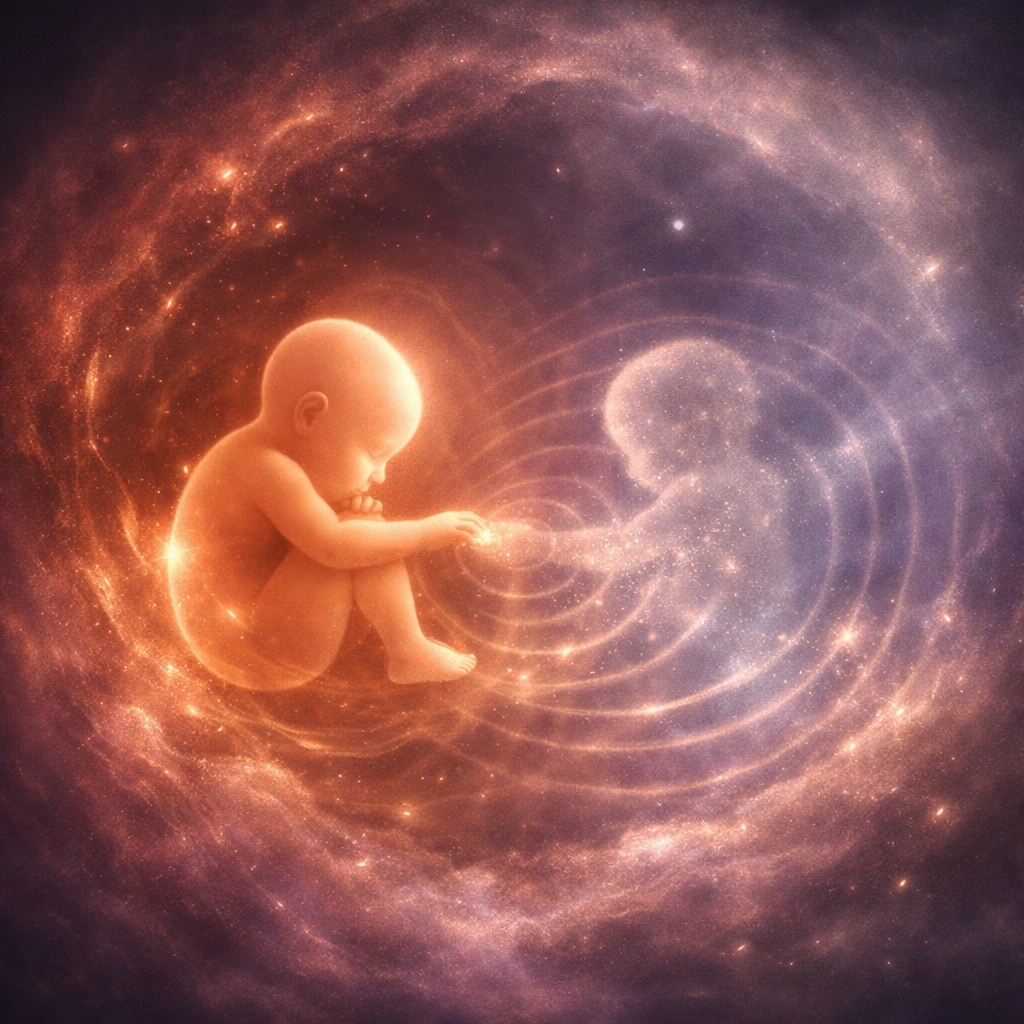
What The Heck is Visionary thinking? —
The ability to imagine beyond the current frame.
What The Heck is Visionary thinking? —
The ability to imagine beyond the current frame.
One example of utopian dreams made true: In Singapore, there are trees that aren’t trees. They look organic, but they are engineered structures designed to do what nature does — and more. They collect sunlight, convert it into electricity, and feed it back into the city’s energy system. Photo by Victor on Unsplash
Utopia sounds like a dream word. Something nice, something soft, something that will never happen.
But the word carries two very different meanings, and mixing them up changes everything.
Two Words, One Sound
In German, the word is Utopie.
It means an idea, a direction, a space of possibility. Not a place. Not a plan. Just a pull toward something better.
In English, the word Utopia usually points to one specific thing: a book written in 1516 by Thomas More, an English lawyer and writer. In that book, More described a perfect, fully planned society on an imaginary island. Everything in it was fixed. Nothing was allowed to change.
Utopie is open. Utopia is closed.
Utopie is a direction. Utopia is a finished blueprint.
Utopie moves. Utopia stands still, like a statue.
Places That Tried
Some people didn’t just write about Utopia. They tried to build a version of Utopie — not perfect, just honest.
Christiania,
in Copenhagen, Denmark, is a small, self-run neighbourhood founded in 1971. No central boss. Shared decisions. Messy, creative, still standing after more than fifty years.
Auroville,
In southern India, it was founded in 1968 as a “city of the future". People from many countries live there together, without private ownership of land, testing new ways to build, grow food, and live side by side.
There are other communities
ZEEG (Zentrumfor Experimentale Gesellschaftsgestaltung near Berlin, Parimal near Kassel Germany, Damanhur Northern Italy, Findhorn (Scotland),
Neither place is perfect. Neither claims to be finished. All are Utopie in action: an experiment, not a doctrine.
Why “Experiment” Is the Safer Word
Ulrike Guérot, a German political scientist who writes about the future of Europe, uses this same trick. She doesn’t say Europe must become one thing. She says, 'Let's think it as an experiment.'
That one word choice matters. “Experiment” invites people in. Nobody feels threatened by a test. People disgusted by rules handed down from above.
I once heard the same suggestion about a certain way of nutrition (instincto): "If you visit somewhere new, don’t preach. Call it an experiment," said Guy-Claude Burger: “People stay curious instead of becoming defensive — and if they get curious enough, you can tell them more.”
This is Utopie used as a bridge, not a wall.
The Land That Disappears Without Imagination
Michael Ende, a German author, went to a Waldorf school as a child — a type of school built around creativity and imagination rather than fixed answers. He later wrote The Neverending Story, a novel where a magical land called Fantasia slowly disappears. The reason: people stopped imagining. Without new dreams feeding it, the land had nothing left to stand on.
That’s not just a children’s story. It’s a warning — and it matters more now, in the age of AI, than it ever did before.
Every house standing today started as a drawing on paper. Every city started as a rough sketch. Every seed carries, built into itself, the pattern of the plant it can become.
If we stop imagining better futures,
we lose the blueprint before we even start building.
AI can help draft, calculate, and organise.
It cannot dream the future for us. That part stays human.
Is There a Utopia?
Not in the finished, perfect, closed sense. That version was always fiction, and probably always will be.
But Utopie — the open kind, the direction, the pull — is real. You can find it in a conversation that shifts something. In a neighbourhood that tries a different way. In a person who simply says, 'We could do better than this.'
Utopie isn’t the destination. It’s the pull toward one.
What perfect future can you dream of?
What future are you quietly building blueprints for?
What seed are you carrying, even if it hasn’t sprouted yet? Do you know any of the utopian projects mentioned above?
Do you know another one? Feel free to add to the list; let us know about it.
Share it in the comments. Let’s make Utopie real, one small experiment at a time.
— -
If you like unconventional ways of looking at big ideas, follow me for more.
메타데이터
- post_id
- 5f04f6e6f70e
- slug
- what-the-heck-is-utopian-thinking-5f04f6e6f70e
- url
- https://medium.com/activated-thinker/what-the-heck-is-utopian-thinking-5f04f6e6f70e
- canonical_url
- https://medium.com/activated-thinker/what-the-heck-is-utopian-thinking-5f04f6e6f70e
- author_url
- https://medium.com/@up_89997
- status
- ok
- fetched_at
- 2026-07-10 11:40:45