How do you get your money after 36 years of pension savings?
Nederlandse versie | Version française | Deutsche Version
How do you get your money after 36 years of pension savings?
Nederlandse versie | Version française | Deutsche Version
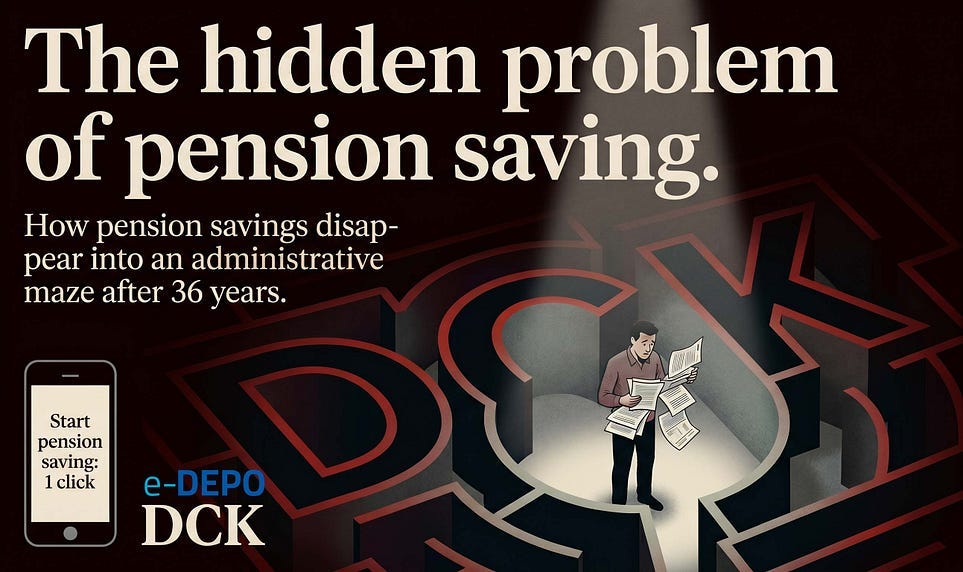
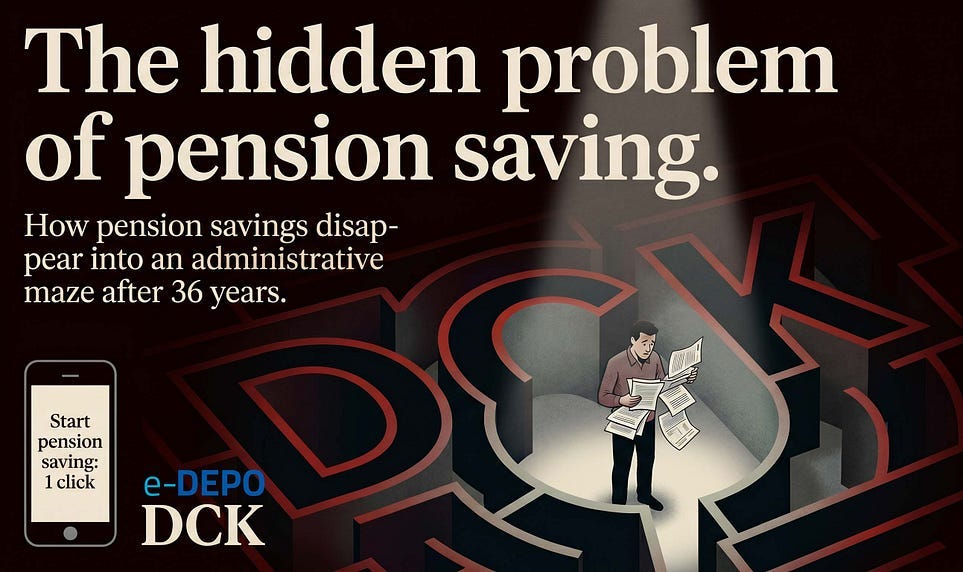
65+ Collecting pension savings in Belgium turns out to be difficult.
In Belgium, pension saving has been promoted for decades as one of the best ways to secure your future. Banks, government and media repeat the same message:
“Start early, save regularly, and you will be reassured for your retirement…”
… But no one tells you what happens when you finally reach retirement age and you want to withdraw your own money.
My experience — after 36 years of pension savings — shows that the system today does not work as citizens think. And that this is not an individual problem, but a structural failure, or perhaps even a planned failure.
How easy it is to get started
Anyone who wants to start saving for their pension can do so literally in one click.
Argenta explains it themselves on their website:
Open the Argenta app → Products → Investing → Pension Saving Source: Argenta, “How to start saving for your pension?”
No paperwork. No office visits. No complexity. Getting started is easy, fast and completely digital. Simply with the Argenta App or on the website, with 1 click.
But what, once you retire? Of course, you want to withdraw your money after 30–40 years of saving. But HOW?
That’s another story.
How hard it is to get your money back
When I retired, I went abroad. I received an e-mail from the bank that my pension savings had ended at the age of 65 and they asked me to visit the bank branch to sign a document. I replied: “Send the document by post or e-mail (I have a printer), I will sign it and send it back by registered mail, so that the bank can deposit the money into my current account.” No, impossible, I have to come by physically. When I wanted to check the account balance of my pension savings a few months later, the following had already happened:
- One of my two pension savings accounts had disappeared from my online Argenta account, and was set to ZERO.
- Only after inquiry did it turn out that Argenta had forwarded the money to the Deposit and Consignment Office (DCK) or e-DEPO without notifying me.
- The second bill would soon suffer the same fate.
- After contacting the DCK, my money could not be found. I was advised to contact my bank and request my file. I also did this and I’m still waiting for that.
- I live abroad, but Argenta requires me to come to Belgium in person to sign a document. This in 2026? To withdraw my money on the New-York Stock Exchange or Wall Street, I don’t have to fly to New-York. I can do that online.
- Digital signatures — itsme, eID, eIDAS, biometrics — are not accepted for the withdrawal of my pension savings.
- The banking app does not provide anything for transferring pension savings to your current account — but to get started.
I have been trying to locate my own savings for six months now.
Why is this a structural problem?
1. Banks send pension savings to the DCK or e-DEPO without warning
Upon your retirement, you will receive a letter inviting you to visit your bank branch in person to sign a document. From that date, you have six months to claim your pension. If you do not do so within this period, your bank will transfer your pension to the Deposit and Consignment Office (DCK) or to e-DEPO without prior notice. Many people are unaware that their money has been transferred. This carries the risk of ‘money dormido’ or ‘sleeping money,’ that are never claimed, forgotten, and are ultimately lost to the Treasury. This is beneficial to the state, which borrows my savings; it is also beneficial to the bank, which receives interest at the applicable OLO-rate (see explanation below).
2. The procedure at the DCK is complex and little known
The Deposit and Consignment Office (DCK) or e-DEPO is an unknown institution to many people. Files are difficult to trace, because my transferred savings are in the name of the bank and not in my name.
3. Digital signature is rejected
In 2026, that is incomprehensible. Fintechs such as Revolut (an online Lithuanian bank) prove that KYC, identity verification and digital signatures can be perfectly secure and simple and are safer than a written signature, which can be easily forged. See my article on Handwritten Signature vs Electronic Signature
4. Vulnerable groups are hit hardest
- 65+, so the elderly
- sick people, people with dementia or Alzheimer’s disease
- people with reduced mobility
- expats
- people without digital skills
Their retirement savings will disappear into this maze.
5. There is a risk that savings will never be withdrawn
Unclaimed assets eventually end up with the state.
6. What is the DCK or e-DEPO?
The Deposit and Consignment Fund DCK or e-DEPO is a financial service provided by the Belgian government where all citizens, private and public institutions (such as banks) can deposit and manage their money.
The management of funds through the Caisse des Dépôts et Consignations has a number of advantages for its users:
- Simple and secure deposit and refund of a consignment
- interest rate on the funds deposited for at least one year is equal to the yield of the OLOs with a remaining maturity of one year with a minimum of 0%
- secure permanent access guaranteed by means of a digital key (e.g. electronic identity card, itsme, e-gov, TOTP, ForREG)
- Advantage for the state: it gets a cheap loan from its citizens or banks.
Why am I publishing this?
I am not writing this article to target one bank. I write this because the system is not adapted to today’s reality.
Everyone talks about “making pension savings more attractive”. But no one talks about how difficult it is to get your money back when you retire and will really need it, to be able to pay for all the ailments that old age brings, such as new teeth, hospital costs…
My story is no exception — it’s a symptom.
What needs to change?
- Mandatory digital signature for all pension savings transactions from the pension savings account to the current account
- Mandatory prior communication when transferring to the DCK/e-DEPO
- A central digital counter for withdrawing pension savings
- Transparency about dormant assets
- An audit of transfers to the DCK / e-DEPO
- Modernization of banking processes, programmed in the banking App or website, as fintechs have been doing for years
Fewer bank visits desired
On the other hand, people are now prevented from visiting a bank branch. When my father (88 years old) wanted to withdraw 5,000 € from his current account in a bank branch, he was shown the door because the bank did not have 5,000 € in the house. This had to be ordered in advance. When he refused to leave the bank without his money, they threatened to call the police. If you bring in an invoice or a paper transfer form, or if you want to withdraw money at the counter, you will have to pay 2 euros per transaction. This is a big contradiction to the fact that you have to physically come and subscribe to a document in person to take out your pension savings at 65+.
Is it useful to save for your pension?
In a next article I will write what it has brought me after 36 years of saving, how much I have put in, weigh against inflation and what can be improved.
Can the banks still be trusted?
What are alternatives? To follow…
Something to think about!
If you start saving for your pension today, will you actually be able to access your money after (let’s say) 40 years of saving, when you retire at 65, 67, or 70 by then?
Links and explanations:
- https://financien.belgium.be/nl/E-services/e-depo
- https://medium.com/@djgent/handgeschreven-handtekening-versus-elektronische-handtekening-9956c90aa601
- https://nieuws.vooruit.org/jeroen_soete_pensioensparen_te_duur
- https://www.hln.be/mijn-geld/je-betaalt-ruim-300-euro-minder-belastingen-als-je-aan-pensioensparen-doet-zo-geef-je-alles-correct-aan~a8932dab/
- https://www.argenta.be/nl/doe-het-zelf/item/hoe-starten-met-pensioensparen.html
- Caisse des Dépôts et Consignations (DCK) or e-DEPO +32 2 572 57 57
- OLO: Obligations Linear Bonds: Belgian Government bonds issued several times a year by the Belgian State in order to meet its debt obligations. These are aimed at institutional investors and are often bought by banks and credit institutions as a safe investment. Example: Current Performance OLO 22/06/2033 = 3.00%
Why should ministers and journalists read this?
This article may be freely copied, shared and cited. The more people recognize this problem, the faster the system can improve. I hope that policymakers can change something.
This article is in the public domain and free of copyright restrictions.
메타데이터
- post_id
- 5f0bc07bf1ef
- slug
- how-do-you-get-your-money-after-36-years-of-pension-savings-5f0bc07bf1ef
- url
- https://medium.com/@djgent/how-do-you-get-your-money-after-36-years-of-pension-savings-5f0bc07bf1ef
- canonical_url
- https://medium.com/@djgent/how-do-you-get-your-money-after-36-years-of-pension-savings-5f0bc07bf1ef
- author_url
- https://medium.com/@djgent
- status
- ok
- fetched_at
- 2026-06-17 08:20:12