The Artist Who Travels
Why international music careers are built long before the flight is booked.
The Artist Who Travels
Why international music careers are built long before the flight is booked.

The flight is the last step. Everything before it is the work.
The first time I understood what it actually took to move an artist across a border professionally, I was not at an airport.
I was sitting with someone going through a box of documents that should have existed years earlier and didn’t.
Contracts that were never saved.
Press coverage that was never collected.
Performances that happened but left no traceable record.
A career that was real and substantial in the room where it was lived, and almost invisible on paper.
That is the gap.
And it is wider than most artists realize until they are standing directly in front of it.
The Geography of Opportunity
Electronic music has always been a global culture.
The genres that define the dancefloor — house, techno, drum and bass, afrobeats, amapiano, baile funk, cumbia digital, and dozens of others — were built by communities that were, in most cases, geographically specific and culturally particular, and then traveled.
The music traveled.
The artists followed.
Or tried to.
What determines whether an artist can actually make that journey — not just the flight, but the professional journey from a regional scene into international territory — is rarely a question of talent.
The talent is usually there.
It is a question of whether the systems around the talent are strong enough to support the journey.
International music careers are not improvised. They are built slowly, deliberately, through a set of practices that compound over time.
The artists who are playing international festivals and touring across borders today are, in most cases, doing so because of decisions they made about documentation, visibility, and professional credibility long before any specific opportunity presented itself.
The artist who travels prepared to travel.
What Crossing Borders Actually Requires
There is a version of this conversation that goes straight to visa categories, legal requirements, and application procedures.
That is not this essay, and it is not a conversation that belongs here.
What belongs here is the layer underneath that conversation: the career infrastructure layer that determines whether an artist has what it takes to be considered, evaluated, and supported in the first place.
Because the honest reality is this:
Before any legal or administrative process becomes relevant, an artist needs to be professionally legible.
They need to have built a record of their work that can be read by people who have never seen them play, never heard their name, and are evaluating them against a standard that does not assume familiarity with their scene.
That legibility is built over time.
It is the aggregate result of how an artist has documented their career, cultivated their public presence, maintained professional relationships, and made themselves visible beyond their local or regional context.
None of this is a bureaucratic formality.
It is the substance of a career, made visible.
The Documentation That Decides
Let me be concrete about what I mean.
When an artist is being considered for serious international opportunity — by a booking agency, a festival programmer, a manager in a different territory, or any professional evaluating them from a distance — that person is looking for evidence.
Not potential.
Not hype.
Evidence.
They are looking for documented performance history: not just a list of gigs you remember playing, but verifiable records of where you performed, in what context, and in front of what kind of audience.
They are looking for press coverage: reviews, features, interviews, and third-party documentation that situates you as a figure of credibility in your field.
They are looking for recorded work: sets, releases, and productions that demonstrate your artistic level to someone who cannot be in the room with you.
And in contexts where formal work authorization processes become relevant — which vary by country, by circumstance, and by the type of work being performed — this same body of evidence becomes the foundation of what licensed attorneys and qualified professionals work with.
The documentation is not separate from the career. It is the career, translated into a language that travels.
Important: nothing in this essay constitutes legal advice. Every country’s work authorization and visa requirements are specific, legally complex, and governed by regulations that change. If you are pursuing international work as a performing artist, the correct resource is a licensed immigration attorney who specializes in the performing arts. What I am describing here is career documentation and preparation strategy — not a guide to any specific legal process.
What the Internationally Mobile Artist Looks Like
There is a pattern among artists who successfully make the transition to international work.
Not a guarantee.
Not a formula.
A pattern.
And it is worth naming clearly.
They documented early.
Before they had a reason to, before anyone was asking for it, they were keeping records of their work: performance logs, saved press, archived recordings, organized contracts, and booking confirmations.
They built public presence intentionally.
Not necessarily large social media followings, but consistent, findable, credible presence. A SoundCloud or Mixcloud archive that tells a coherent story of artistic development. A website that works. A bio that is current and written in the language of the markets they are trying to reach.
They maintained relationships across borders.
They knew promoters, artists, and industry people in multiple territories — not as abstract connections on a platform, but as people they had communicated with, performed alongside, or been introduced to through trusted networks.
They understood that international opportunities often come through relationships before they come through applications.
They operated with professional legibility.
They answered emails. They had a press kit. They were easy to evaluate, easy to route, and easy to support.
They had made themselves, in the most practical sense, easy to say yes to.
Artist Mobility Readiness Checklist
Identity & Presence
- A consistent, searchable artist name used uniformly across all platforms, booking materials, and professional communications.
- A functional artist website — even minimal — that presents your bio, press assets, and contact information in a single accessible place.
- A current bio in clean professional English: short version around 150 words, long version around 400 words.
- At least one high-resolution press photo that is professional, current, and genuinely reflects your artistic identity.
Performance Documentation
- A running performance log: date, venue, city, country, billing context, and approximate attendance — updated after every booking.
- A complete archive of recorded sets, properly labeled with date, venue, and city, uploaded to a public or shareable platform.
- Saved copies of all event flyers, posters, and promotional materials that feature your name.
- Previous international bookings documented with the same rigor as domestic ones.
Press & Third-Party Credibility
- A saved archive of all press coverage: reviews, features, interviews, podcast appearances, and online mentions.
- Any notable critical recognition, award nominations, or platform features — documented and filed, not just liked and forgotten.
- Letters of support or professional references from established figures in your scene who can speak to your artistic credibility, when appropriate.
Releases & Recorded Work
- A documented discography: releases, labels, release dates, and catalog numbers — organized and current.
- A representative selection of your best recorded work that is publicly accessible to someone evaluating you for the first time.
- Any music licensing, sync placements, or notable broadcast appearances — documented and saved.
Professional Infrastructure
- A valid passport with at least twelve months of validity beyond any intended travel period.
- Organized copies of booking contracts and confirmation correspondence.
- An EPK, or Electronic Press Kit, that compiles your bio, photo, press clips, recorded work, and contact information into a single professional document or link.
- A professional contact email and a clear booking inquiry pathway.
- A basic understanding of the general difference between tourist, business, and work authorization categories in your primary target markets — not for legal guidance, but for informed conversation with the professionals who handle those processes.
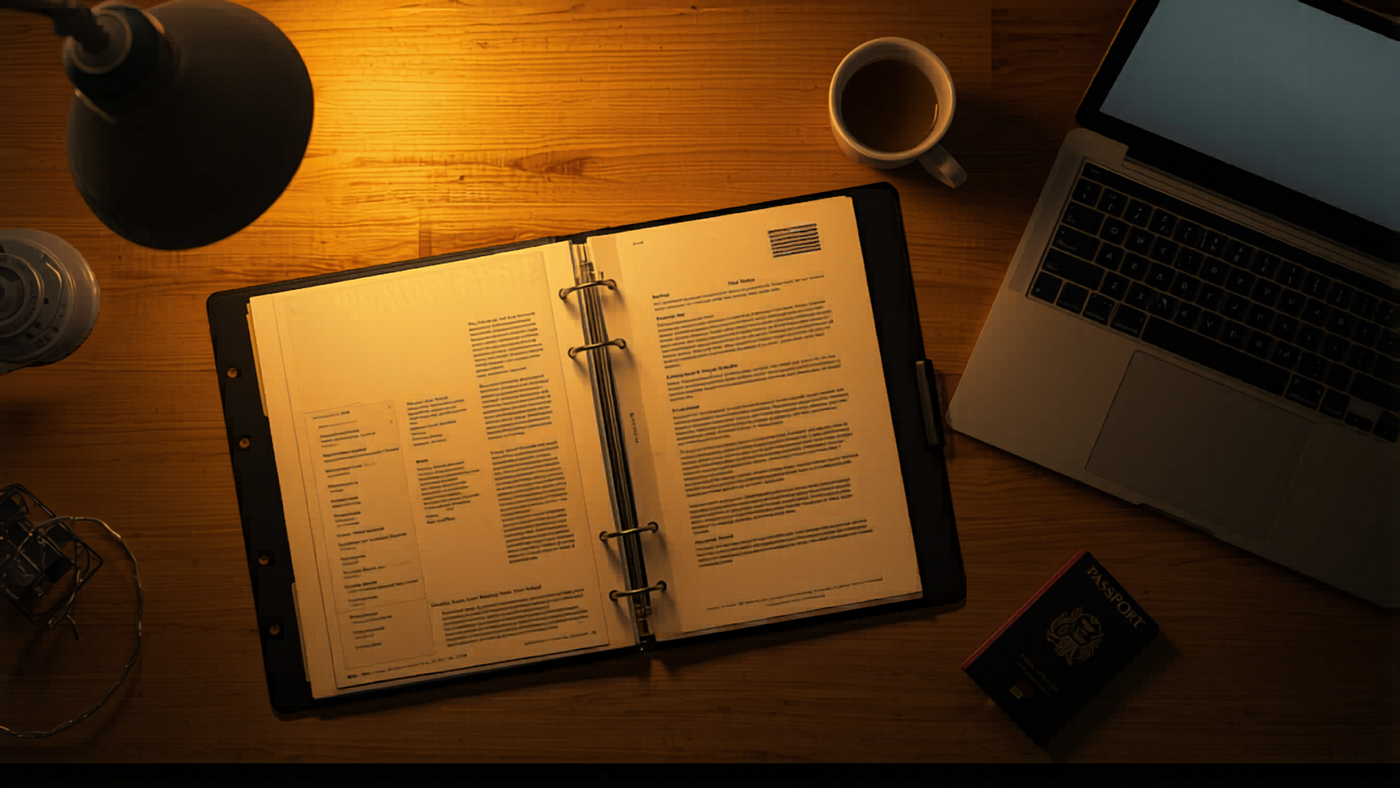
The documentation is not separate from the career. It is the career, translated into a language that travels.
The Years That Precede the Opportunity
There is a time problem in how most artists think about international mobility.
They think about it when an opportunity presents itself.
When someone asks if they can come to Berlin.
When a festival in Australia reaches out.
When a booking agent in a new territory expresses interest.
And then they discover that the preparation required to support that opportunity was supposed to happen years ago.
The press archive takes years to build.
The performance history takes years to accumulate.
The professional relationships take years to develop.
The documented discography takes years to create.
None of these things can be rushed effectively. They are the slow work of a career taken seriously, applied consistently over time.
The artists who are ready when the opportunity comes are the artists who started preparing before the opportunity existed.
Not because they were more optimistic.
Because they understood that international mobility is not a reward for talent.
It is a result of preparation.
Why the Scene Needs This
There is something bigger than individual careers at stake here.
Electronic music is a genuinely global culture, and it is also a culture with a deep history of geographic inequality in how its artists are able to move.
Artists from certain cities, certain countries, and certain cultural backgrounds have faced significantly higher barriers to international touring than their peers — not because of the music, but because of the systems around the music.
Preparation does not erase those barriers.
But it does change what is possible within them.
It changes what a qualified attorney can work with.
It changes how a booking agent can advocate.
It changes the conversation between an artist and the infrastructure designed to support them.
The artist who has built the documentation has more options.
Not guarantees.
Options.
And in a field where the barriers are real and the margins are often thin, more options matter.

The scene has always been global. What determines who gets to move through it is preparation.
Go Deeper
Everything in this essay is the surface layer of a more complete framework.
My ebook Gig Ready is built for DJs, artists, and creative teams who want to think seriously about visibility, preparation, documentation, and the systems that make international careers possible.
It covers the full infrastructure framework in practical, actionable terms — built for working artists, not hypothetical ones.
The artist who travels prepared.
Gig Ready is where that preparation starts.
Get Gig Ready here:
The Question Worth Sitting With
If someone who had never heard of you needed to evaluate your career from scratch — no context, no introductions, no personal knowledge of your scene — what would they find?
What does your documented career actually look like to a stranger?
That answer is the gap between where you are and where you want to go.
And it is entirely buildable, if you start now.
Author Note
Richard Saxe Coulson is the author of Agents of The Universe and the founder of Nuclear Fusion Events and Enroot PR. He writes about music culture, artist mobility, and the infrastructure that serious creative careers are built on.
Get Gig Ready on Amazon:
Subscribe on Substack for the uncut version.
메타데이터
- post_id
- 5f0cdeb78d5f
- slug
- the-artist-who-travels-5f0cdeb78d5f
- url
- https://medium.com/@saxe-coulson/the-artist-who-travels-5f0cdeb78d5f
- canonical_url
- https://medium.com/@saxe-coulson/the-artist-who-travels-5f0cdeb78d5f
- author_url
- https://medium.com/@saxe-coulson
- status
- ok
- fetched_at
- 2026-06-09 15:37:30