A Brief History of Trends in American Art: Portraits, Genre Paintings, and Beyond
by Caroline Canty
A Brief History of Trends in American Art: Portraits, Genre Paintings, and Beyond
by Caroline Canty
This essay explores key trends in American art over a 370-year period, analyzing the rise and fall of popular genres like portraiture, genre painting, Realism, and Modernism. Written as part of my art history studies, it reflects my research skills and ability to critically interpret art movements and cultural contexts.
Looking at American art over a 370-year span, much of the art tends to be similar to one another, with the exception of American Modernism, the Aestheticism period, and Realism. When looking at it as a whole, there tends to be a repeated pattern of portrait paintings and genre paintings, starting at just the beginning of the colonies. Throughout these portraits and genre paintings, there seems to break into new types of art, most of that is often questioned by the American people as to why it is relevant. Over the years many American artists decided to be experimental with their paintings, even if the audience wasn’t as accepting of the work.
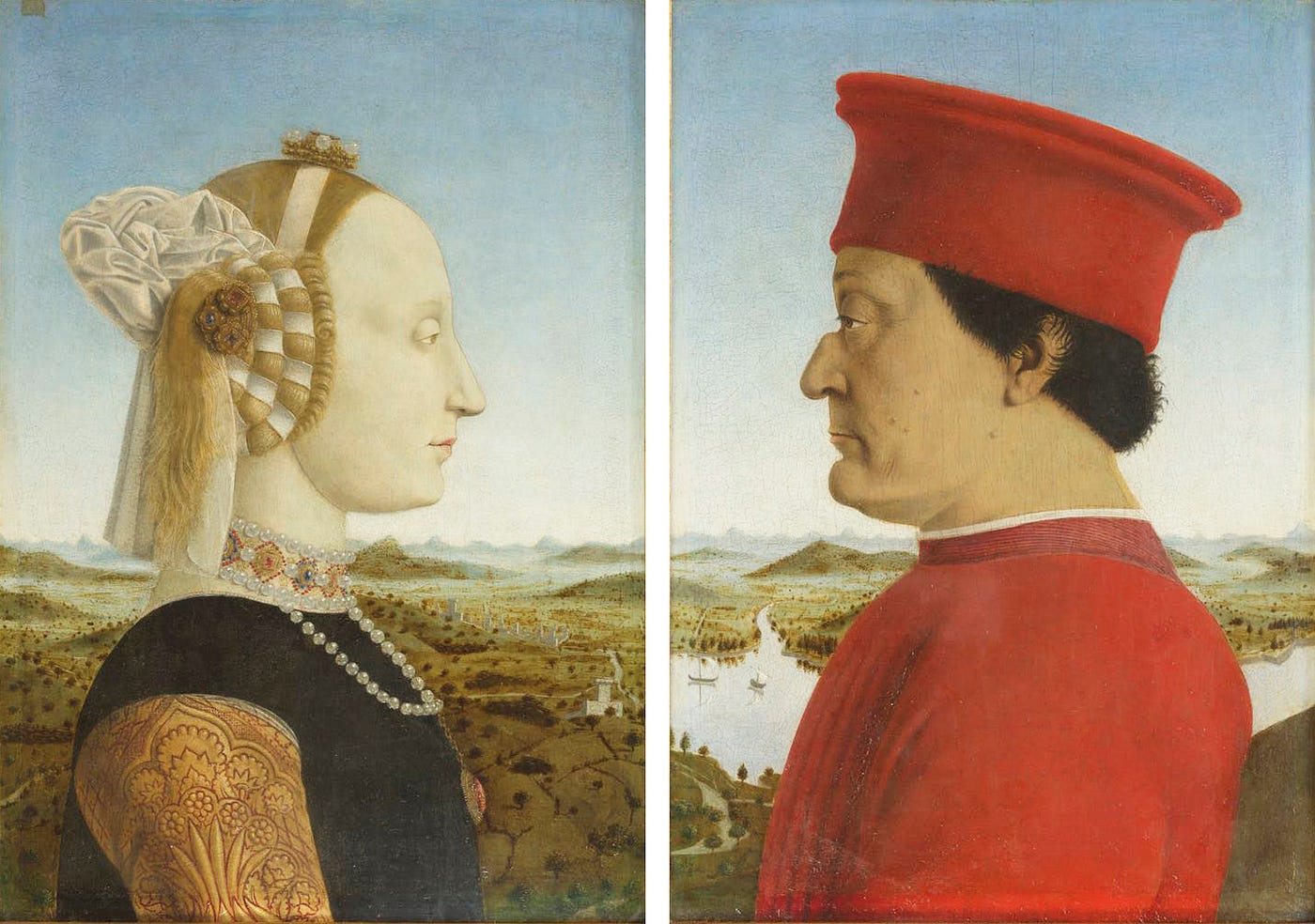
At the beginning of American history, portrait paintings were one of the only types of popular painting that the public wanted. Portrait paintings had been popular with family members, like children, and married couples. This trend in art stayed through the 1700s to the 1800s with occasional changes here and there but eventually reappears again and again. Although during these times solo portraits were popular, portraits containing numerous people like, “The Death of General Joseph Warren, Battle of Bunker Hill” (1786) were given positive reviews. John Trumbull (the artist) was able to sell a lot of prints in the beginning but later it began to die out and people no longer wanted it. American art was simple art.
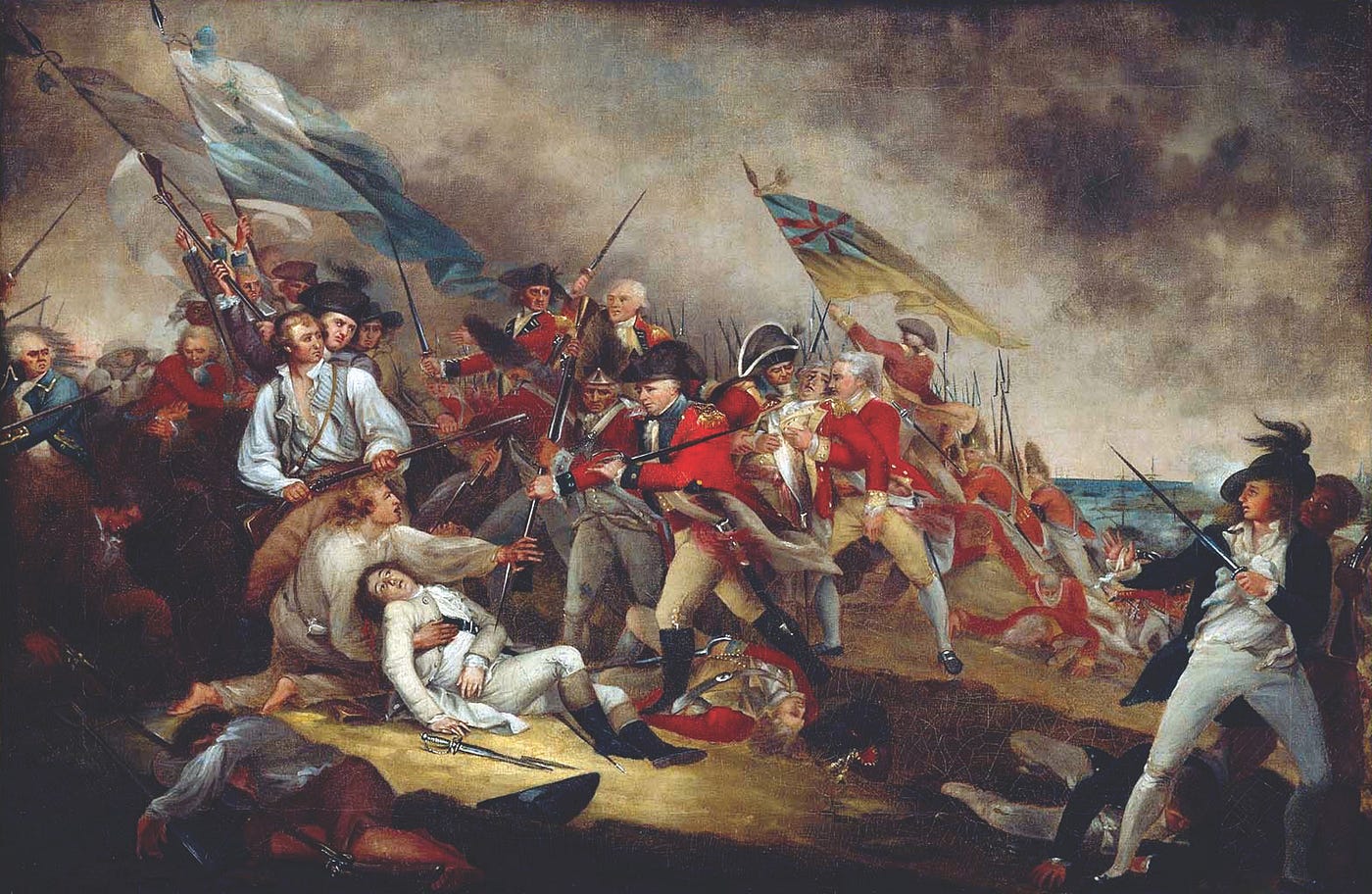
“The Death of General Joseph Warren, Battle of Bunker Hill” (1786)
From here landscape paintings shoot off and take the place of the portrait paintings. An artist named John William Hill decides to take off into nature and paint the landscape of known tourist areas. This action caused people to want to buy his prints, as well as an easier way for the American people to travel in their own way and see the sights without actually being there. His landscapes brought a sense of nostalgia, which gave Americans a refreshing feel.
As the call for landscape painting began to wither away, genre paintings took their place. Genre Paintings show scenes of everyday life and can be humorous. William Sidney Mount was a famous genre painter during this time. His most known painting, “Bargaining for a Horse” (1835) shows a scene of two men talking in front of a barn with a horse facing the other way. While at first glance, this may seem like a normal painting, but as you investigate the painting more you find humorous details added in. The barn is old and rotten, the horse stands facing the field instead of the front, and there are two pigeons located on the back roof (meaning someone is being scammed).

“Bargaining for a Horse” (1835)
Another notable portrait painter at the time was Nathaniel Jocelyn. He is most notable for “Portrait of Joseph Cinqué” (1839). Joseph Cinqué had held an uprising at a sugar plantation and escaped on a boat, hence why a black abolitionist commissioned Jocelyn to create this piece. Jocelyn was a very skilled painter, he was able to paint facial features, backgrounds, realistic hands, a strong figure, and posture. Some have even compared the positioning to that of Moses (holding a staff wearing a toga). Unfortunately, this painting was rejected by museums because of race, since there was nothing technically wrong. Instead, it was used as an abolitionist print.
From here we return to genre paintings, as they return to the public. Winslow Homer, a known painter, created a scene called “Prisoners from the Front” (1866), which showed Confederate war soldiers being captured and arrested by Union Soldiers. But since this is a true genre painting we see an underlining sense of humor. Each man represents a different social type of the South. The man on the right has a hip pose representing power, he is in a standoff position with the Union soldier but does not look prepared for battle, and is represented as slow and Irish (discrimination). The man in the middle is very old, possibly drafted into the war, he is reserved and his posture is closed off, he also has a worried expression. The man on the left is younger, reserved closed off, slightly worried, and holding his pack on his back. This piece is what made Homer a notable artist, based on the number of people who enjoyed this scene.

“Prisoners from the Front” (1866)
The 1870s brings us to a new style of art, Realism. Thomas Eakins, a Realism artist was an underappreciated artist, mainly because the painting he chose to create, was not in favor of the public. His painting “Matt Schmitt in a single scull” (1871), shows everyday people enjoying the new wonders of everyday life. The main man is learning how to canoe on the water, creating a familiar everyday sight for people in the area. This painting had a more positive review compared to some of his other works. Another one of his paintings, “Portrait of Doctor Samuel D. Gross” (1875), shows procedure occurring, although this was not what the American people wanted to see. To them, it looked gruesome and gross. Despite that, doctors liked it, it was not made for the public eye.
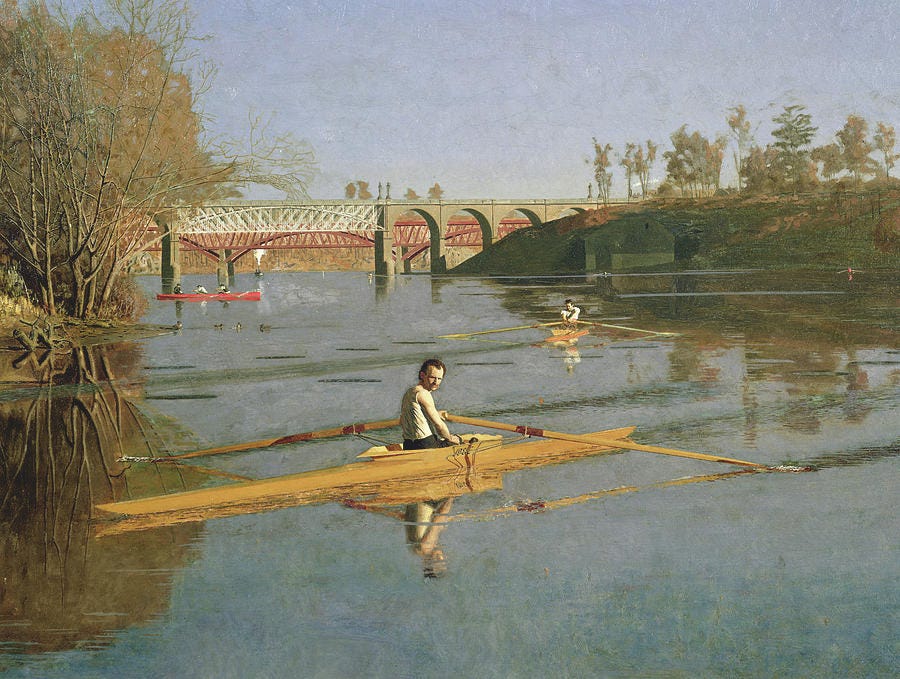
“Matt Schmitt in a single scull” (1871)
After realism simmers down, a newer form of art is pushed into the lives of Americans. Aestheticism is meant to be free and show that art does not have to be representative, it can just be art. An artist named Thomas Wilner Dewer painted a simple scene called “Summer” (1980), which was a scene of two women in greenery. The two women are wearing much nicer and fancier dresses than women outside would have. Looking closer, the woman in the front is holding a fishing pole, and fishing in the pond in from of her while the other watches. The painting consists of very free movements of paint strokes that are blended into each other. This piece was supposed to show that not every piece of art has to have a deep meaning it can just be art, and it can also just be Aesthetically pleasing.
During the Great Depression, artists began to return to figuration and accessibility. John Steward Curry, a Genre painter is one of the painters that returns us to this genre. In, “Baptism in Kansas” (1928), We see a baptism occurring in Kansas. A Dove is flying above representing the holy spirit, while the crow contradicts it. The minister has an evil stare, but the congregation is devout. Although they are not in the middle of nowhere there are cars, telephone cables, a sense of connection, and accessibility to outhouses. Curry is celebrating the baptism but also poking fun at it in his own way.

“Baptism in Kansas” (1928)
While genre painting again didn’t stay too long, we are introduced to a new period of art called American Modernism. American Modernism is an expression of feelings and emotions, as well as more abstract than years prior. A Modernism painter, Marsden Hartley, painted, “Mount Katahdin, Autumn” (1939–1940). In the past landscape paintings were detailed and semi-realistic. Fredric Edwin Church’s “The Heart of Andes” (1859) was a good representation of what landscape painting was supposed to be or look like but when comparing this piece to it most would say it is not done well. The painting is very expressive and uniquely colored but looks messy and unskilled. Although this simple style was intentional, it was believed that this style is more effective in showing the main idea of a painting. It’s not based on talent or skill, it’s just simply showing what the artist sees.

“Mount Katahdin, Autumn” (1939–1940)
Over a 370-year span, American art contains a continuation of the portrait paintings genre paintings. Although new styles of art are introduced, like Aestheticism, American modernism, and Realism, American art returns to portraits and genre scenes again and again. This repetition throughout art history is what makes this type of art, American art.
All cultures and societies experienced different trends and styles of art throughout history. Although American art may not be perceived the same way as European art. Instead, it results in revealing the history that America experienced through the multitude of art styles, and the changes that were gone through to not only what society wanted but what artists needed.
메타데이터
- post_id
- 5f2abd7f2a8b
- slug
- a-brief-history-of-trends-in-american-art-portraits-genre-paintings-and-beyond-5f2abd7f2a8b
- url
- https://medium.com/@Canty.Art/a-brief-history-of-trends-in-american-art-portraits-genre-paintings-and-beyond-5f2abd7f2a8b
- canonical_url
- https://medium.com/@Canty.Art/a-brief-history-of-trends-in-american-art-portraits-genre-paintings-and-beyond-5f2abd7f2a8b
- author_url
- https://medium.com/@Canty.Art
- status
- ok
- fetched_at
- 2026-07-19 10:50:14