UI/UX Case Study:An AI-Powered Travel Companion for Solo Travelers
Overview
UI/UX Case Study:An AI-Powered Travel Companion for Solo Travelers
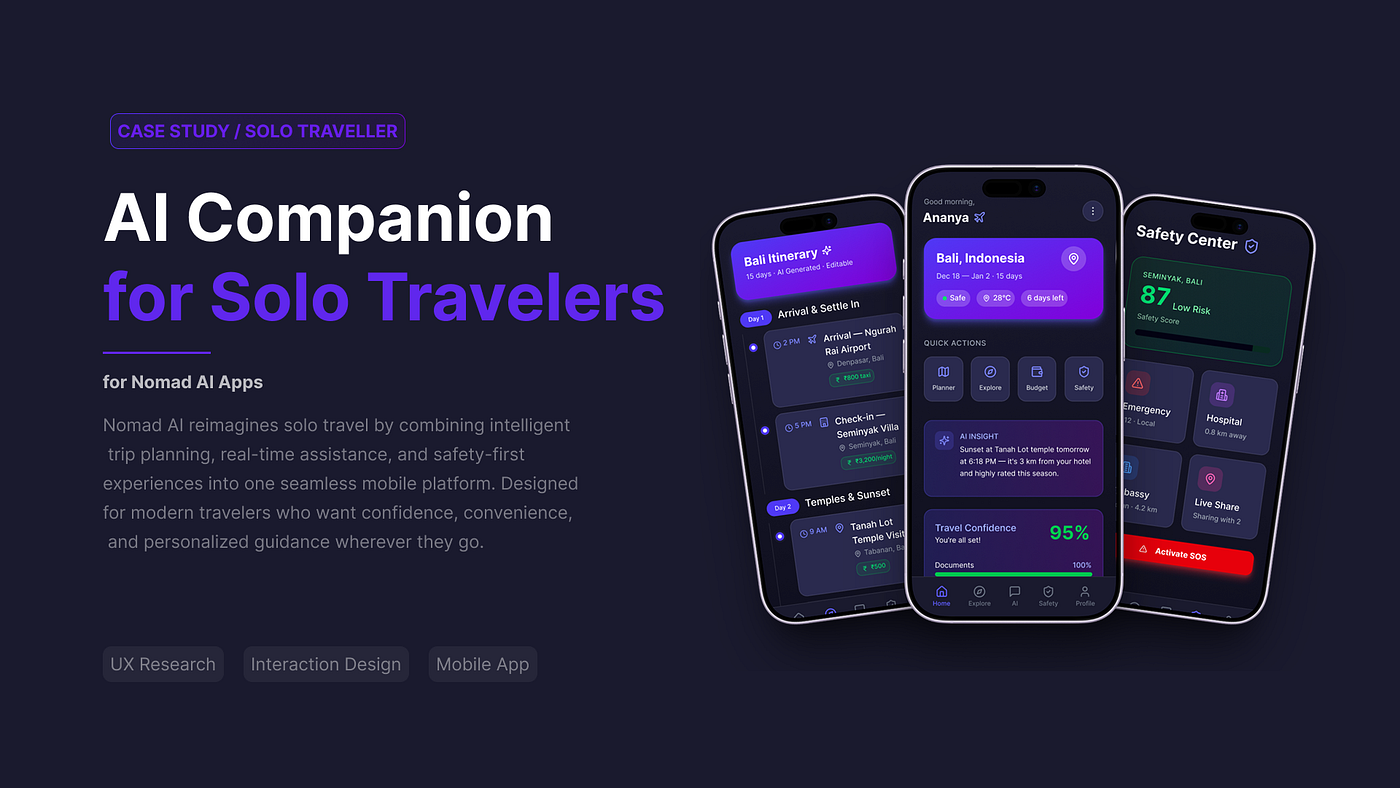
Overview
Solo travel has become increasingly popular among young professionals and adventure seekers. While traveling alone offers freedom and flexibility, it also introduces uncertainty, safety concerns, and decision fatigue — especially for first-time solo travelers.
Most travel applications help users book flights, hotels, or discover attractions. However, very few support travelers throughout their entire journey.
This project explores how AI can act as a trusted travel companion, helping solo travelers plan trips, stay safe, manage budgets, and make informed decisions with confidence.
My Role
Product Designer
Responsibilities
- User Research
- UX Strategy
- Information Architecture
- User Flows
- Wireframing
- UI Design
- Prototyping
Duration
6 Weeks
Why This Project?
Traveling alone can be one of the most rewarding experiences, but it often comes with unique challenges.
Solo travelers must independently make decisions, manage unexpected situations, stay safe, and navigate unfamiliar environments.
While many travel apps help users book flights and hotels, very few support travelers throughout their entire journey.
This created an opportunity to design a product that acts as a trusted travel companion rather than just another travel tool.
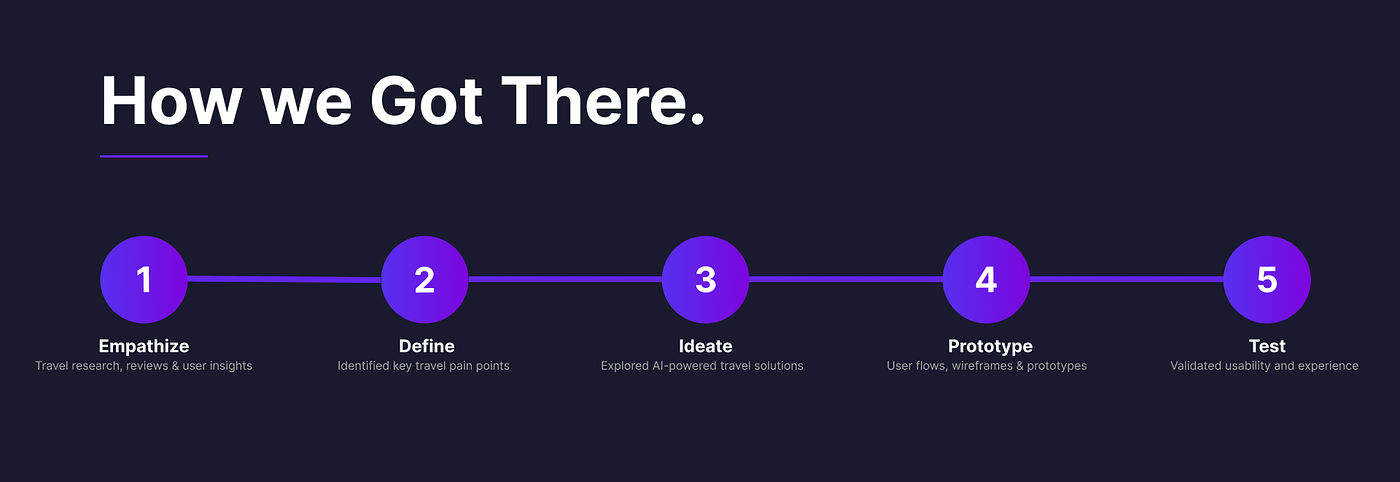
Design Thinking Process
To ensure the solution addressed real user needs, I followed a human-centered design process.
Research
To validate assumptions, I reviewed existing travel platforms, user reviews, and solo travel discussions.
Key Finding 1
Trip planning requires significant time and research.
Opportunity
Use AI to reduce planning effort.
Key Finding 2
Travel information is spread across multiple apps.
Opportunity
Centralize planning, safety, budgeting, and recommendations.
Key Finding 3
Safety concerns influence travel decisions.
Opportunity
Make safety a core product feature.
Key Finding 4
Travelers often struggle with budgeting.
Opportunity
Provide real-time expense tracking and budget visibility.
User Persona
Sarah Wilson
Age: 28
Occupation: Marketing Consultant
Travel Style: Solo Explorer
Goals
- Discover authentic experiences
- Travel confidently
- Stay within budget
- Feel safe while traveling
Pain Points
- Too much research
- Safety concerns
- Difficulty organizing trip information
- Budget uncertainty
Quote
“I want someone to guide me through my trip without taking away the adventure.”
User Journey
StageChallengeTrip PlanningToo much researchBooking & PreparationInformation overloadTravelingUncertainty and navigationExploringDecision fatigueEmergenciesSafety concerns
Opportunity
Provide AI guidance at every stage of the journey.
Competitor Analysis
Products Reviewed:
- Google Travel
- TripIt
- Wanderlog
- Airbnb Experiences
What Works Well
- Trip planning
- Destination discovery
- Activity recommendations
What Is Missing
- AI-first assistance
- Solo traveler focus
- Emergency support
- Safety-first experience
- Unified travel management
Opportunity
Build a product designed specifically for solo travelers
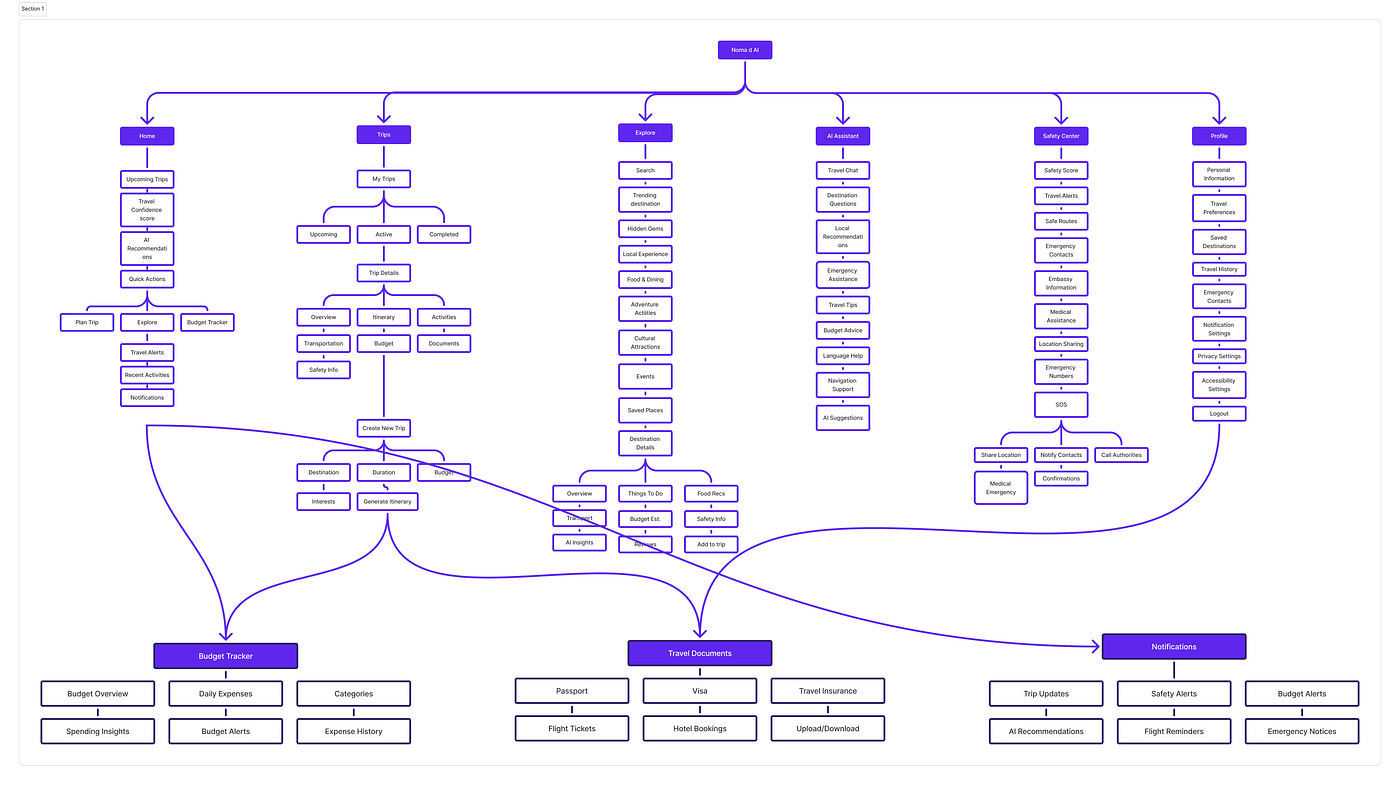
Information Architecture
Solution
Nomad AI
Nomad AI is an AI-powered travel companion designed specifically for solo travelers.
The platform combines:
- AI Trip Planning
- Personalized Itineraries
- Travel Assistant
- Budget Tracking
- Safety Tools
- Travel Documents
- Local Recommendations
into one connected experience.
Key Features
AI Trip Planner
Generate personalized travel plans based on destination, budget, and interests.
AI Travel Assistant
Receive real-time travel guidance and recommendations.
Safety Center
Access emergency contacts, alerts, safe routes, and SOS support.
Budget Tracker
Monitor spending and manage travel expenses.
Explore
Discover destinations, local experiences, and hidden gems.
Travel Vault
Store important travel documents securely.
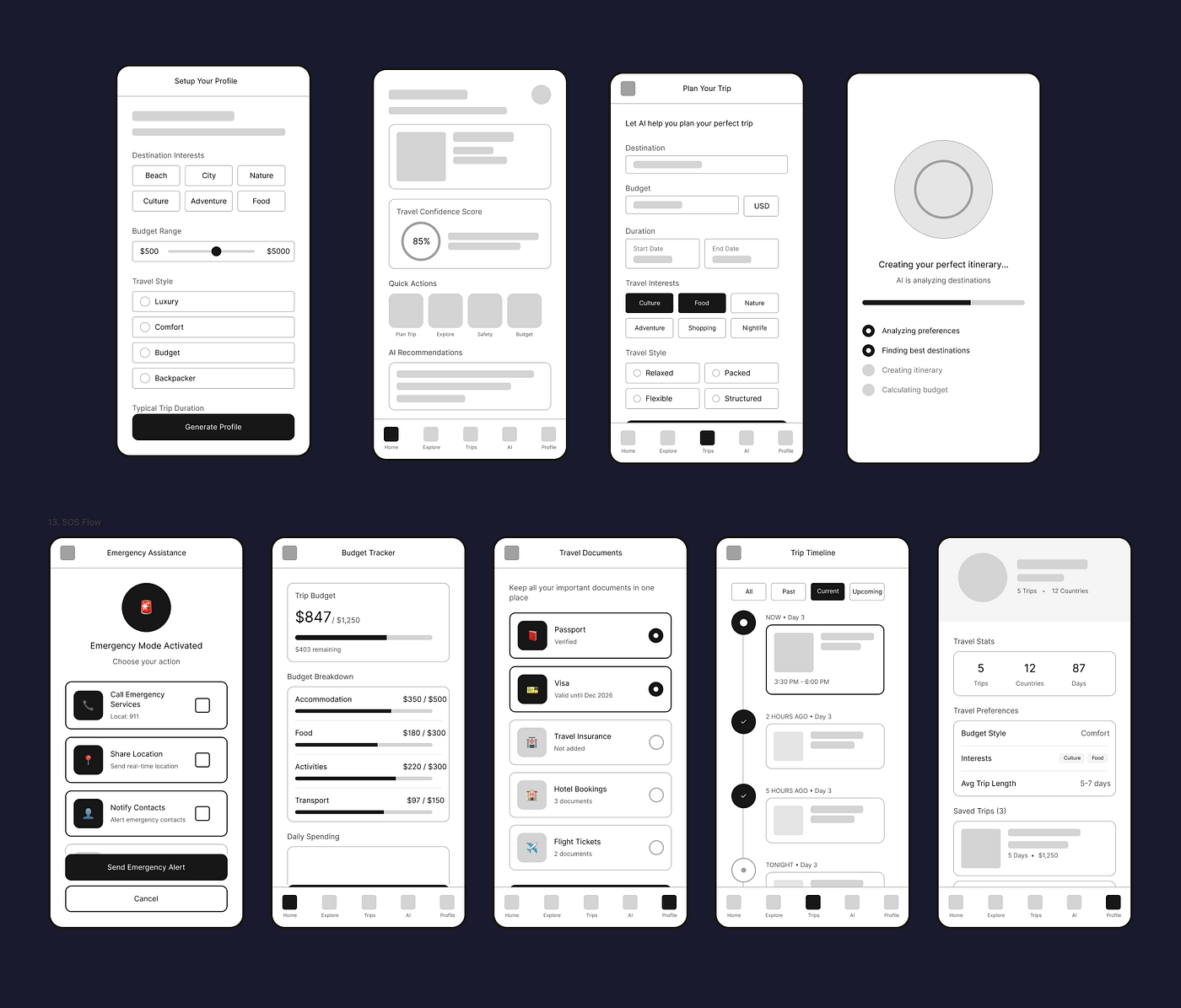
Wireframes
Low-fidelity wireframes were created to validate navigation, content hierarchy, and core travel flows before visual design.
Key Screens
- Home Dashboard
- AI Planner
- Itinerary
- Explore
- Safety Center
- AI Assistant
Design Decisions
Decision 1
Make AI the Primary Entry Point
Users frequently need guidance while traveling.
Positioning AI as a central feature improves discoverability and support.
Decision 2
Safety Accessible From Anywhere
Emergency support should never be buried inside menus.
A dedicated Safety Center and quick-access actions were introduced.
Decision 3
Consolidate Travel Tools
Users often switch between multiple travel apps.
Combining planning, safety, budgeting, and recommendations reduces friction.
Design System
Design Principles
- Confidence Through Guidance
- Safety First
- AI as a Companion
- Simplicity Over Complexity
Visual Style
- Modern AI Product
- Premium Glassmorphism
- Travel-Inspired Visuals
- High Accessibility
Final Design
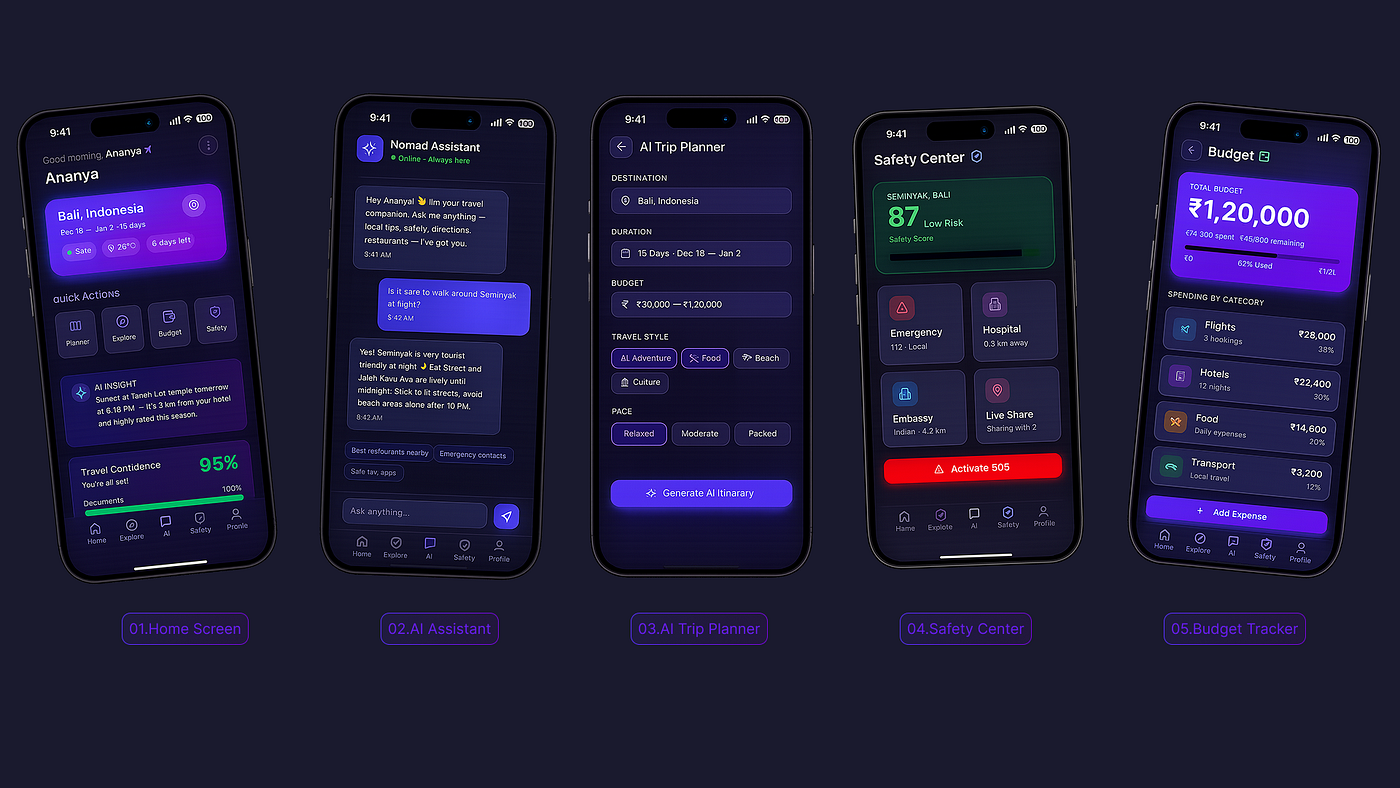
The final UI creates a premium travel experience that feels intelligent, supportive, and trustworthy.
Featured Screens
- Home Dashboard
- AI Planner
- AI Assistant
- Explore
- Safety Center
- Budget Tracker
Success Metrics
- Itinerary Completion Rate
- AI Assistant Usage
- Budget Tracker Engagement
- Safety Center Usage
- Trip Planning Completion Rate
- User Satisfaction Score
Expected Results
For Travelers
- Faster trip planning
- Reduced travel anxiety
- Better travel decisions
- Improved safety awareness
- More personalized experiences
For the Product
- Increased user engagement
- Higher itinerary completion
- Better feature adoption
- Stronger retention
Key Learnings
Initially, I believed trip planning was the primary challenge for solo travelers.
However, research revealed that confidence and safety play a much bigger role throughout the travel journey.
This insight shifted the product from being a planning tool to becoming a true travel companion.
Final Reflection
Nomad AI demonstrates how thoughtful product design can reduce travel anxiety and empower people to explore independently.
The project helped me strengthen my skills in product thinking, AI experience design, safety-first UX, and designing end-to-end experiences that support users throughout an entire journey rather than a single task.
메타데이터
- post_id
- 5f32bc64c40a
- slug
- ui-ux-case-study-an-ai-powered-travel-companion-for-solo-travelers-5f32bc64c40a
- url
- https://medium.com/@anjitharajanju/ui-ux-case-study-an-ai-powered-travel-companion-for-solo-travelers-5f32bc64c40a
- canonical_url
- https://medium.com/@anjitharajanju/ui-ux-case-study-an-ai-powered-travel-companion-for-solo-travelers-5f32bc64c40a
- author_url
- https://medium.com/@anjitharajanju
- status
- ok
- fetched_at
- 2026-06-20 20:29:01




