Some Scientists Are Hood AF
Exploring the intersections of afrofuturism, the hood, and disability
Some Scientists Are Hood AF
Exploring the intersections of afrofuturism, the hood, and disability
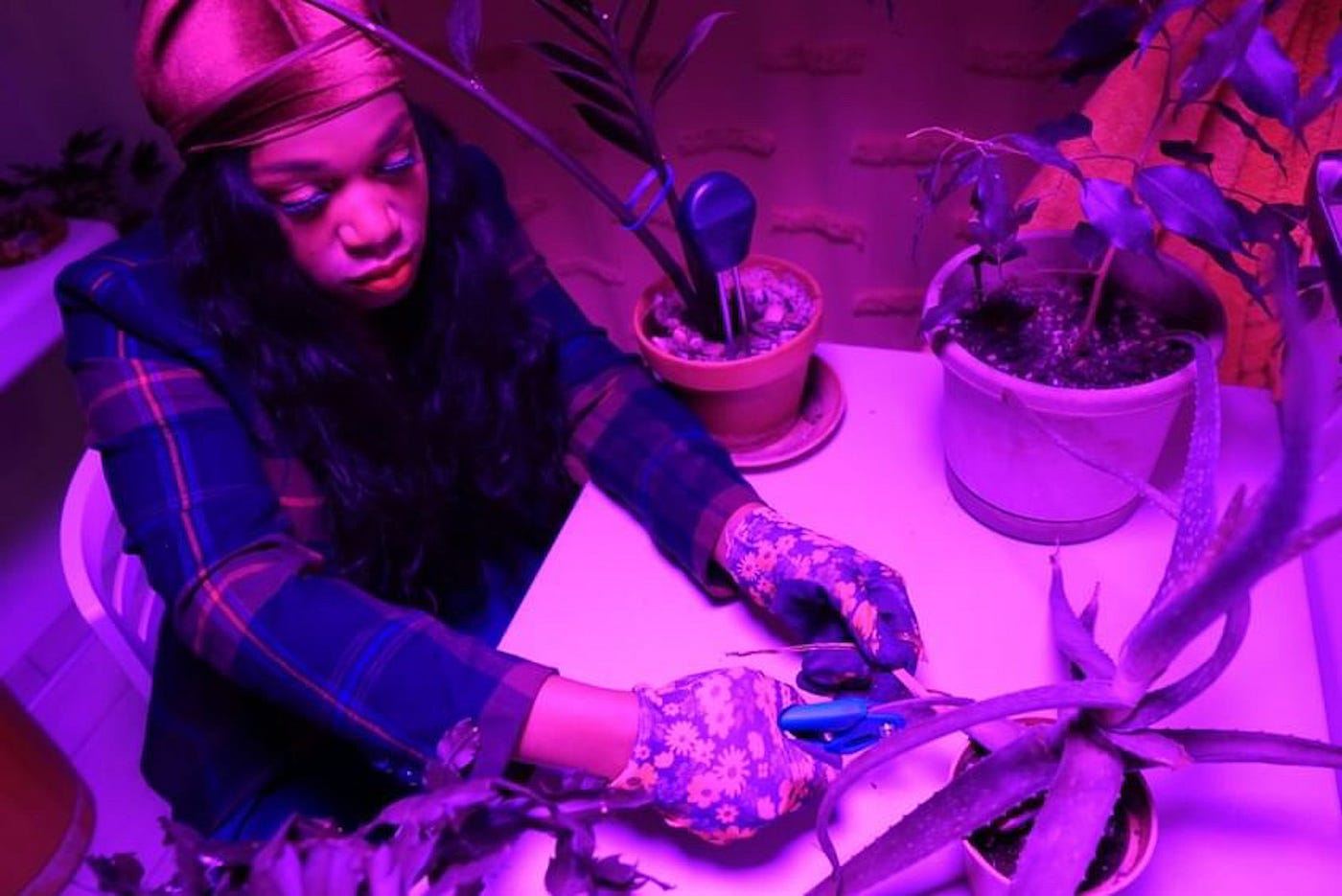
Rene trimming an aloe plant under a UV light. Photo by Grand Martell
My name is Rene and I come from preachers, gangsters, and steelworkers. So naturally, I am a biomedical engineer.
I grew up in the hoodburbs — an ecosystem most folks overlook, but one I’ve come to recognize as a site of relentless creativity. I won’t spend this article explaining why I have an Adverse Childhood Experience (ACE) score of 9, which mirrors the average of people fleeing war zones…point is I’ve seen some shit.
And because of the hood and my struggles, my childhood was full of invention. I fixed broken Christmas lights with refrigerator magnets and tape. I helped my grandma make smoothies to stabilize her bloodwork. Once, my neighbors and I even made a 6-foot igloo when we were snowed in. I didn’t know any engineers, but I was already solving design problems under real constraints.
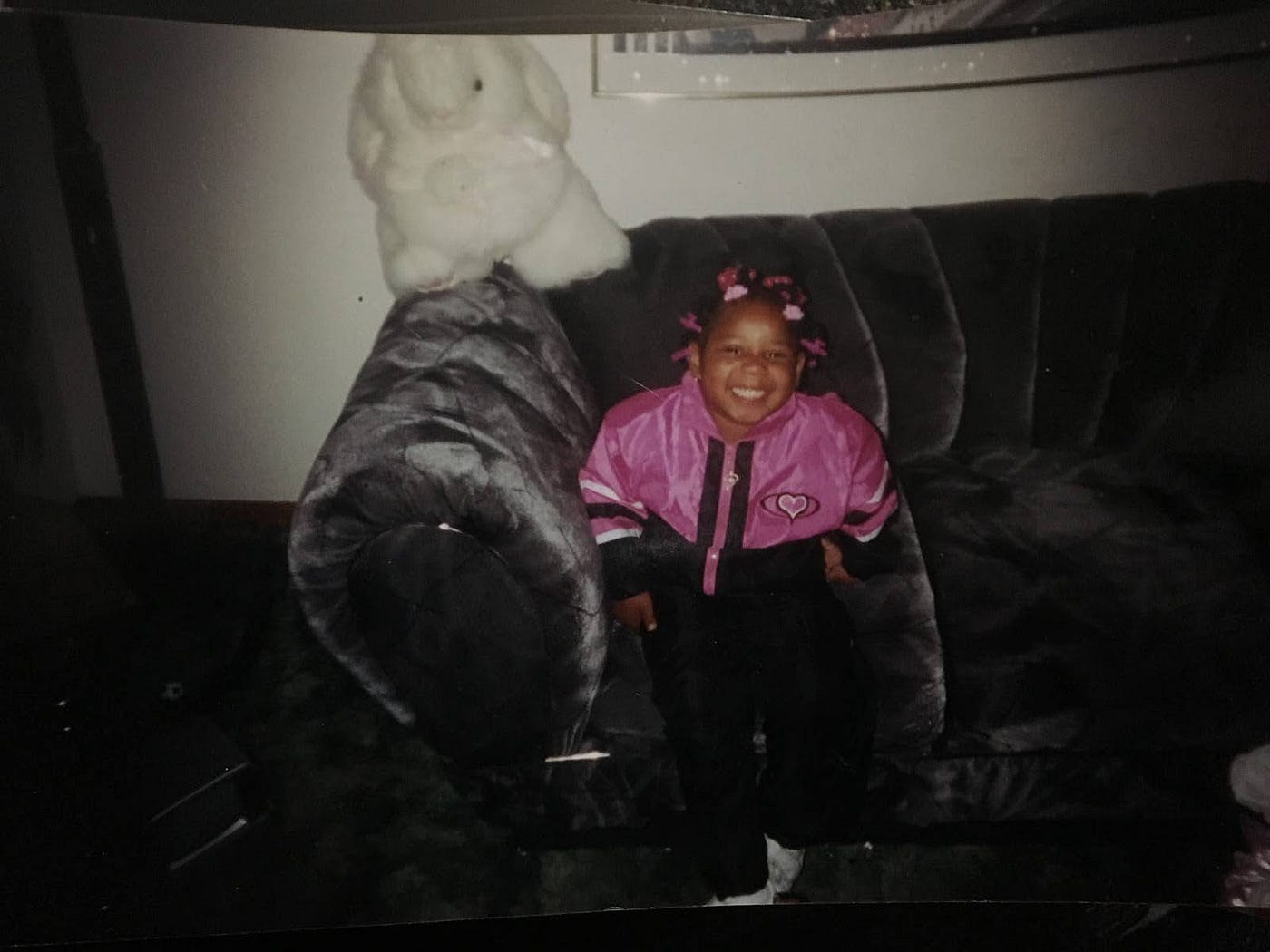
A childhood picture of Rene.
Along with my Barbie and Bratz collection, I was busy building treehouses, growing herbs, and exploring abandoned buildings. I was doing systems thinking and human-centered design before I had a name for it. The hood didn’t hold me back from STEM — instead, it crafted me into an innovator.
“I want every young person to know — if you grew up figuring out how to make things work when nothing did, you’re already a designer.”
The Struggle in Academia
Eventually, I Googled “who makes the surgeon’s tools?” and landed on biomedical engineering. College was my first time being around people who had actually met an engineer before enrolling. It wasn’t my first time doing design work, but it was my first time doing it inside institutions. I thrived in research. I got to work on real medical tech , including a device to help people with visual impairments “see” with their fingers. But my lived experiences and knowledge about health from the hood? (AKA “embodied observation”, a term coined by VanguardSTEM) That wasn’t always valued. Some of the professors didn’t minimize my ideas; they set me up to fail — berating me, docking my grades unfairly, creating illness through the stress. Nevertheless, I persisted. With support from my PI, who was quite reflective on how his own identity shaped his career, I was protected once from sabotage, listened to when I vented about my experiences, and supported through letters of recommendation and introductions to high status scientists. It was decolonized mentoring, even if he didn’t think to call it that.
[embed]For more in depth conversations on this topic, listen to this episode of “On the Vanguard” featuring a discussion on Decolonized Mentoring. Check out the YouTube video above and stay tuned for upcoming content.
My fascination for the social world of bioengineering, led me to a sociology PhD program, which deeply and (ironically) lacked a decolonized mentorship. The hood was to be studied, but not a source of knowledge production and leadership. Despite gaining a thorough understanding of Black feminism, class, gender, and political identities, I was subjected to oppressive tactics by the same folks who taught it. I was getting sick of the fight.
In the second year of my graduate program, I kept getting sick. My body knew I didn’t feel safe. I got a doctor’s note for accommodations, but I was too prideful and overwhelmed to submit it. It wasn’t imposter syndrome I was battling; it was literal flare-ups. Eventually, it became painfully clear that I had to leave. I listed “illness” as my reason for departing from the program. I should’ve written, “This institution made me sick.”
This frustration with institutional systems led me to what I do best — design something new. I entered spaces that my advisor warned me to stay out of so I wouldn’t be “distracted from the work.” But for me, this was the real work. I had spent time doing programming on an urban farm and supported the local chapter of Minorities for Marijuana, connecting with people who supported my healing with natural remedies and community. That led me to mentorship, where I was eager to pour back into the hood that had nurtured me when graduate school didn’t.
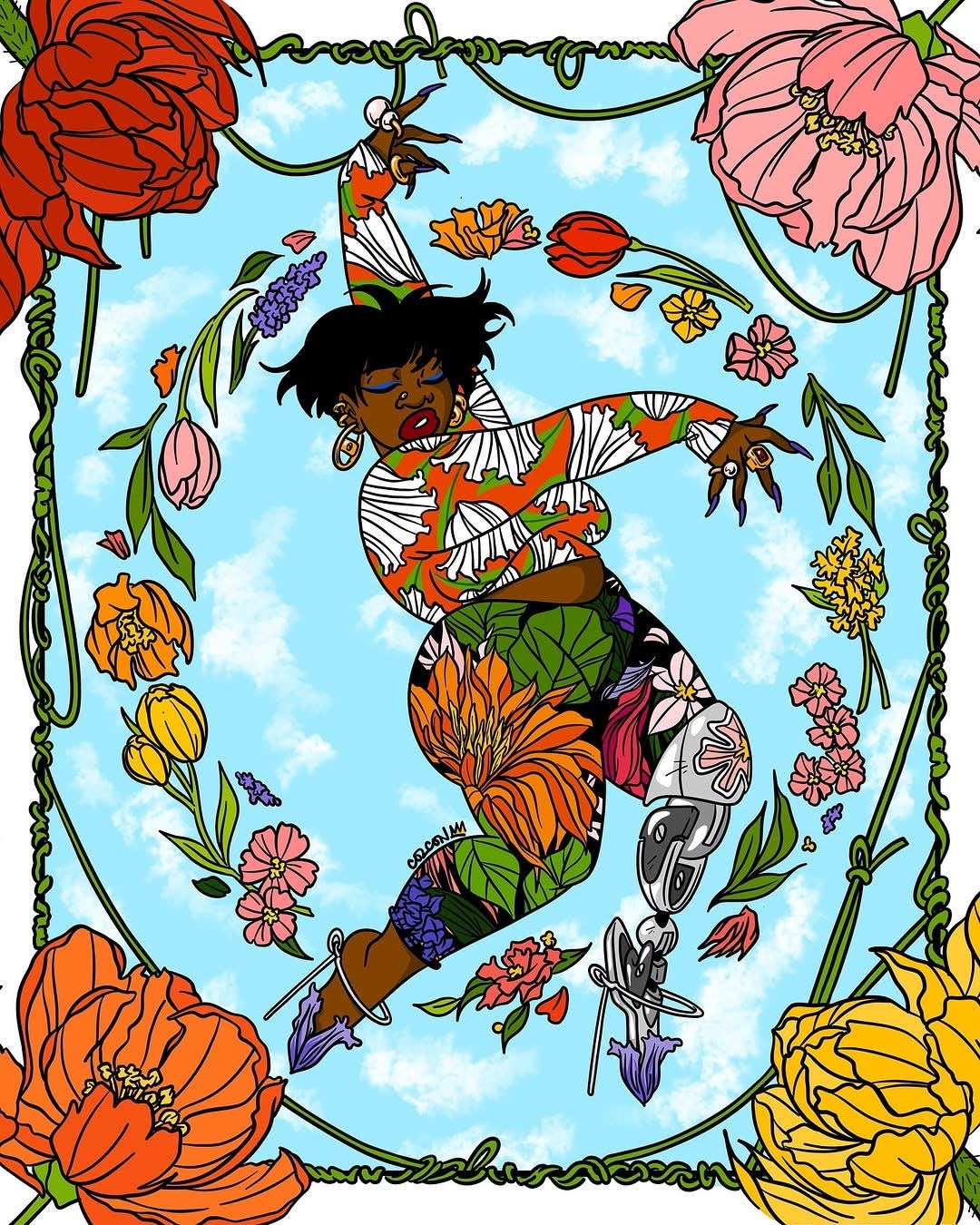
Illustration titled “Unfurl” by Cozcon
Disability and Design: From Hustle to Healing
My design lens sharpened when I started mentoring young people with disabilities — many of whom faced barriers I hadn’t previously thought to define. For example, when my mentees needed environments that weren’t overstimulating, I learned to always have a quiet place within reach. If a mentee was an intern with varying work schedules, it gave me the opportunity to take personal time off. Over time, I came to recognize my own disabilities. PTSD, compounded by grief and structural harm, wasn’t something I could mask forever. It paired disastrously with G.I. problems, creating a perfect storm in my body.
I learned to link my trauma, including the deaths of my mother and grandmother, to my health status. I could no longer unsee how important it was to honor my body when it stopped being productive. Dealing with these issues at the personal level made me understand how organizations that refuse to honor those who are disabled, lost out on meaningful work. When you deal with a lab member or employee as a whole person, you allow them to bring valuable knowledge into their work.
No field is in greater need of understanding disability and the hood than bioengineering.
Because of this, I started a consulting business that helps product development teams connect with the communities their devices are actually for. I still build, but now it’s infrastructure: trust, access, and systems of care.
Now, I’m building a career that honors my health, respects my boundaries, and allows me to be creative as hell. Recently, I joined **People’s Hub**, an organization hosting regular online spaces for disability community care. It’s one of the first spaces I’ve felt truly held in as both a practitioner and a person. It has made me bolder, yet softer, too.
Here in Pittsburgh, there’s also the **Human Engineering Research Laboratories (HERL)*, a disability tech center led by a veteran, Paralympic gold medalist, and renowned inventor, Rory Cooper, Ph.D. Their work on high-performance wheelchairs is amazing. But I always wonder: what if those same technologies were available to the veterans most neglected? What if we centered Black unhoused veterans in our mobility tech design? What would it mean to build those* chairs — with shocks and spinners, of course?
Colours custom Pediatric Wheelchair with leopard interior, gold frames, and spinners.
The Hood as Survival Technology
Some folks think of the hood as the opposite of the future. I see it as the blueprint. The hood is full of makers. We’ve been innovating under pressure forever — reworking tech, stretching resources, turning limitations into brilliance. It’s not a bug, it’s a feature. We’ve had to prototype joy, safety, and dignity from scratch.
Some of my favorite concept designs:
- Insulin Hair Pick — a discreet hair accessory that stores insulin
- Mood Jewelry — wearables that shift color with cortisol changes
- Diagnostic Grills — mouth bling that detects early gum disease
- Hormone Earrings — aromatherapy earrings that release calming scents based on hormone levels
- Smart Textiles — fabrics that detect mood or pain and respond in real time
These aren’t real prototypes — yet. They’re ideas I dream of building in a lab that doesn’t exist yet. But they come from a place just as real — the hood.
Here’s the thing — biomimicry is a respected way to design. Engineers study geckos to make adhesives. They study lotus leaves to make self-cleaning surfaces. We accept that nature is a valid design teacher. Similarly, I want the hood to be respected in the same way. Our environments are full of engineering cues, from hydraulics to harm reduction, and corner stores to chrome. If we can make a stereo bounce, we can make a wheelchair with spinners and shocks. If a fry plate can stretch EBT dollars and feed a family, it can also teach thermodynamics. By appreciating and learning from these overlooked urban innovations, we can revolutionize design to shapeshift into a more inclusive one.

Rene in a fur coat, looking smug. Photo by Grand Martell.
In conclusion, some scientists are hood as f*k. Not in spite* of being scientists — but because of how our hood-rooted brilliance taught us to build systems, survive chaos, and make that shit work.
We don’t just deserve to be in the future. We are the ones designing it.
If you are looking to design products, devices, or programming for those who need it most, please contact me and we can discuss a world that’s for us and by us.
Email: Rene@EquitySystemsConsulting.com
Resources, Inspiration, and One Good Link
If you want to keep exploring the intersection of design, hood culture, Afrofuturism, and disability, here are a few recs:
- 🎧 Joint Highpothesis — Season 2, Episode 3: “Psychedelics and Afrofuturism” Sci-fi author + psychedelic therapist Ayize Jama-Everett joins us to talk about Black futurism, healing tools, and the underground labs of the hood.
- 🎧 Joint Highpothesis — Season 2, Episode 5: “On the Run” Tea shares how they used plant medicine to survive after being targeted for their activism. We talk cannabis-infused chicken, journalist hustle, and what it means to be “We*d Rich.”
- 📚 Hood Feminism by Mikki Kendall One of my favorite books. A necessary reframe for anyone who thinks the hood doesn’t produce theory, vision, or care systems.
- 🎥 E-40: “Poor Man’s Hydraulics” A whole design manifesto in under two minutes.
- 📰 **Fun4Everyone: Newsletter[ ](https://youtu.be/cCG_CT7JM5I)** A multidiscplinary convening ran by an Fun4theDisabled, focused on disability and health equity, Black economic empowerment, and art as disruption.
This article was originally published on October 17th, 2025 on VanguardSTEM.com as part of our regular content.
If you enjoy our original content, consider donating to our parent not-for-profit, The SeRCH Foundation, Inc., to help support this work.
메타데이터
- post_id
- 5f67fa283e64
- slug
- some-scientists-are-hood-af-5f67fa283e64
- url
- https://medium.com/vanguardstem-conversations/some-scientists-are-hood-af-5f67fa283e64
- canonical_url
- https://medium.com/vanguardstem-conversations/some-scientists-are-hood-af-5f67fa283e64
- author_url
- https://medium.com/@rene_35262
- status
- ok
- fetched_at
- 2026-07-11 22:01:18