Infigo Eyecare Hospital compares clear vision and doubled vision, showing how strabismus affects…
You have noticed something. A photograph where one eye looked different. A moment at the dinner table when your child was tired. The eye…
Infigo Eyecare Hospital compares clear vision and doubled vision, showing how strabismus affects sight.Your Child’s Strabismus: A Parent’s Action Plan
You have noticed something. A photograph where one eye looked different. A moment at the dinner table when your child was tired. The eye turns. And now you are here. Take a breath. You are in the right place. The American Academy of Ophthalmology, or AAO, states clearly that constant strabismus does not resolve on its own. The window for the best visual outcomes is early childhood, when the brain’s visual pathways are still flexible and developing rapidly. Waiting is not neutral. It is a decision with consequences. You have already made the right decision by searching.

What to Do Before the Appointment?
You do not need to wait to start helping your child. Do these three things today.
-
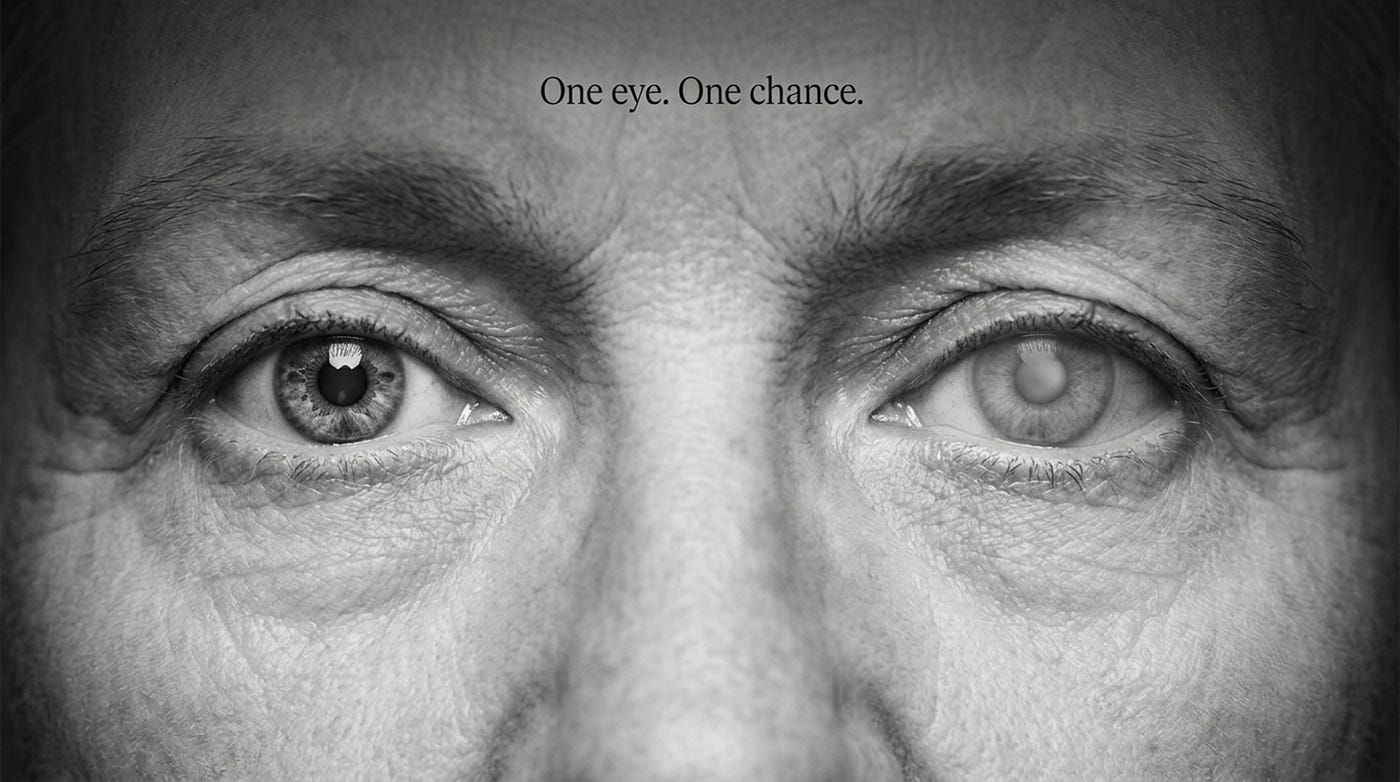
First, take a photograph. Place your child in bright, even light and make sure a window or light source reflects in their eyes. Look at the tiny white dots of reflected light in each pupil. This is called the corneal light reflex, and pediatric ophthalmologists use it as a quick and objective test for eye alignment. In a child with straight eyes, the light reflex falls symmetrically in the center of each pupil. If one reflex is displaced, that eye is misaligned. That single photograph tells a specialist more than a ten-minute verbal description ever could.
-
Second, observe and write it down. Which eye turns? Does it turn inward, outward, upward, or downward? Is it always the same eye, or does it switch? Does it happen more when your child is tired or focusing on something close, like homework or a screen? Is the turn constant or intermittent? Constant strabismus carries a higher risk of amblyopia, but intermittent turns can also affect the development of binocular vision. Write it all down. Memory fails under stress, and a doctor’s appointment can be overwhelming.
-
Third, find the right doctor. You need a pediatric ophthalmologist, not a general eye doctor or an optician. Pediatric ophthalmologists have completed years of additional fellowship training specifically in childhood eye alignment disorders and the complex brain-eye connection. They understand the nuances of strabismus and amblyopia in a developing visual system. The AAO has educational resources highlighting the critical role of pediatric ophthalmologists in diagnosing and treating strabismus and amblyopia. This is the specialist your child needs to see, and starting with the right expert can save months of uncertainty.
The Treatment Pathway
Many parents arrive at the first appointment bracing for one word: surgery. Here is what often surprises them. Surgery is rarely step one. The AAO Esotropia and Exotropia Preferred Practice Pattern outlines a clear, evidence-based sequence that begins with the least invasive options.
-
Step one is glasses. This may feel counterintuitive. You came because the eye turns. Why glasses? The answer lies in a common type of strabismus called accommodative esotropia. When a child is significantly farsighted, their eyes must exert excessive focusing effort, a process called accommodation, to see clearly. That intense focusing effort is neurologically linked to convergence, causing the eyes to turn inward. By prescribing the correct hyperopic spectacle correction, the focusing demand is reduced, and the eyes may straighten on their own without any further intervention. AAO research has shown that refractive correction alone, meaning glasses without patching or surgery, can resolve amblyopia in at least 25 percent of children between ages 3 and 6. One in four children may need nothing more than a proper pair of spectacles. The AAO explicitly recommends considering refractive correction as the sole initial treatment before initiating other therapies. This is why the first step is a cycloplegic refraction, where dilating drops are used to relax the eye’s focusing muscle and measure the true refractive error. It is painless, takes only a few minutes, and can change the entire course of treatment.
-
Step two, if needed, is amblyopia therapy. Sometimes glasses alone are not enough because the brain has already learned to suppress the image from the turned eye. This condition is called amblyopia, or lazy eye, and it is not a problem with the eye itself. The eye is structurally healthy. The problem is that the brain has stopped listening to it. To wake that neural connection back up, the doctor may recommend patching the stronger eye for a prescribed number of hours each day. This forces the brain to use the weaker eye actively, strengthening the visual pathway. An alternative is atropine eye drops, which temporarily blur the stronger eye and achieve a similar effect. This phase of treatment is about building vision. It is about giving the weaker eye a fighting chance at equal visual acuity before anyone considers surgical alignment.
-
Step three, if needed, is strabismus surgery. This is the step parents fear most, so let us demystify it completely. Modern strabismus surgery is a precise, outpatient procedure performed under general anesthesia. The surgeon works exclusively on the extraocular muscles, the tiny muscles attached to the outside of the eyeball, and does not cut into the eye itself. No lasers are used. The procedure involves either weakening or strengthening specific muscles, or a combination of both, to bring the eyes into proper alignment. The AAO notes that several well-established surgical approaches, including unilateral recess-resect procedures and bilateral lateral rectus recessions, are effective initial strategies depending on the type and angle of deviation. Most children go home the same day and return to school and normal activities within a week. Postoperative discomfort is typically mild and managed with simple pain relief.
The goal of surgery is not cosmetic, though improved appearance is a welcome outcome. The true goal is to give the brain a chance at binocular fusion, the ability to combine the images from both eyes into a single, three-dimensional picture. This is called stereopsis, and it is what allows a child to catch a ball, judge the depth of stairs, pour a glass of water without spilling, and read comfortably without losing their place on the page.
Beyond the Eyes: The Real Cost of Waiting
The medical pathway is clear. What parents lose sleep over is something else. Will my child be okay? Will other kids be cruel? Will this hold them back in life? These are not small questions. Research from the All India Ophthalmological Society, or AIOS, and other Indian studies reveals what parents carry silently.
Among parents, 76 percent view strabismus primarily as a cosmetic issue, and 54 percent believe it could affect their child’s marriage prospects later in life. Among adults living with uncorrected strabismus, 60 percent reported experiencing rejection specifically in the context of marriage proposals because of the appearance of their eyes. These numbers reflect a deeply held social concern that shapes how families think about eye alignment.
For the children themselves, the experience is equally serious. A 2023 study published in the Indian Journal of Ophthalmology found that children with strabismus had significantly higher emotional symptoms compared to their peers, as well as greater loneliness and social dissatisfaction. Their self-esteem scores were markedly lower. A separate study examining schoolchildren in India noted that those with strabismus may face functional challenges in reading and other educational activities, which could translate into a measurable decline in academic performance. Visibly misaligned eyes can invite staring, questions, teasing, and, in more severe cases, bullying and social exclusion. The emotional toll accumulates over time. Research comparing children and adults with strabismus confirms that the negative psychosocial effects intensify with age. What begins as a child’s discomfort on the playground can become an adult’s barrier to career opportunities, social confidence, and personal relationships.
This is what the research tells us, and it is not meant to frighten. It is meant to clarify what is truly at stake. Strabismus is not just an eye problem. It is a childhood problem with lifelong implications. It affects how your child sees, learns, feels about themselves, and how the world sees them. And here is the most important finding: all of these outcomes can be changed with timely care. The same body of research that documents the harm also demonstrates the effectiveness of early treatment in preventing it.
Your Next Step
For the millions of Indian children living with strabismus, the path forward is clear. The treatment works. The vision is salvageable. The social and emotional burden is preventable. The AAO Preferred Practice Pattern, the AIOS guidelines, and the growing body of Indian research all converge on a single message: early detection and treatment change everything.
If your child’s eye turns, even occasionally, even only when they are tired, book a comprehensive evaluation with a pediatric ophthalmologist at Infigo Eyecare Hospital or a trusted eye center near you. The first appointment is not a commitment to surgery. It is a commitment to knowing. It is an investment in your child’s future, and the returns are measured in confidence, academic success, healthy relationships, and the simple joy of seeing the world in its full, three-dimensional depth.
You have already taken the hardest step. You noticed. Now follow through.
메타데이터
- post_id
- 5f8d0940a563
- slug
- infigo-eyecare-hospital-compares-clear-vision-and-doubled-vision-showing-how-strabismus-affects-5f8d0940a563
- url
- https://medium.com/@aniketmmclayinc/infigo-eyecare-hospital-compares-clear-vision-and-doubled-vision-showing-how-strabismus-affects-5f8d0940a563
- canonical_url
- https://medium.com/@aniketmmclayinc/infigo-eyecare-hospital-compares-clear-vision-and-doubled-vision-showing-how-strabismus-affects-5f8d0940a563
- author_url
- https://medium.com/@aniketmmclayinc
- status
- ok
- fetched_at
- 2026-08-15 10:56:09