The Mirage of the “Green Light”: Lebanon Caught in the Gears of Regional War
By Elias Khlat | June 8, 2026
The Mirage of the “Green Light”: Lebanon Caught in the Gears of Regional War
By Elias Khlat | June 8, 2026
The fragile silence that settled over Beirut last week has vanished, replaced by a familiar, heavy anxiety. The June 3rd ceasefire extension, brokered in Washington, was supposed to buy time for pilot zones and structural sovereignty. Instead, it lasted less than four days. By Sunday, the relative quiet of the capital was shattered without warning. The subsequent direct, overnight missile crossfire between Israel and Iran has made one thing brutally clear: the localized conflict in Southern Lebanon has been fully absorbed into a terrifying, unvarnished regional confrontation.
Yet, beneath the sound of anti-aircraft fire and exploding ordnance, a parallel, quieter battle for Lebanon’s survival is being waged. The past 24 to 48 hours have revealed a stark duality: even as the state’s airspace risks becoming a regional free-fire zone, the institutional government is making its most aggressive moves in decades to break the logistical stranglehold on the country.
For months, diplomatic efforts have operated under the assumption that a Lebanon-Israel truce could be negotiated, maintained, and sustained independently of the broader regional conflict. The collapse of the June 3rd agreement exposes this as a dangerous fiction. When the Militia rejected the stringent terms of the Washington proposal, specifically the demands regarding comprehensive disarmament and the immediate, total withdrawal north of the Litani, the military dynamic shifted from a diplomatic pause back to a race for escalation dominance. On the ground, a ceasefire cannot survive when one major combatant is not a formal signatory and explicitly rejects its core premises. The moment the battlefield equilibrium was broken by a Sunday morning rocket salvo into the Upper Galilee, the political space for restraint dissolved.
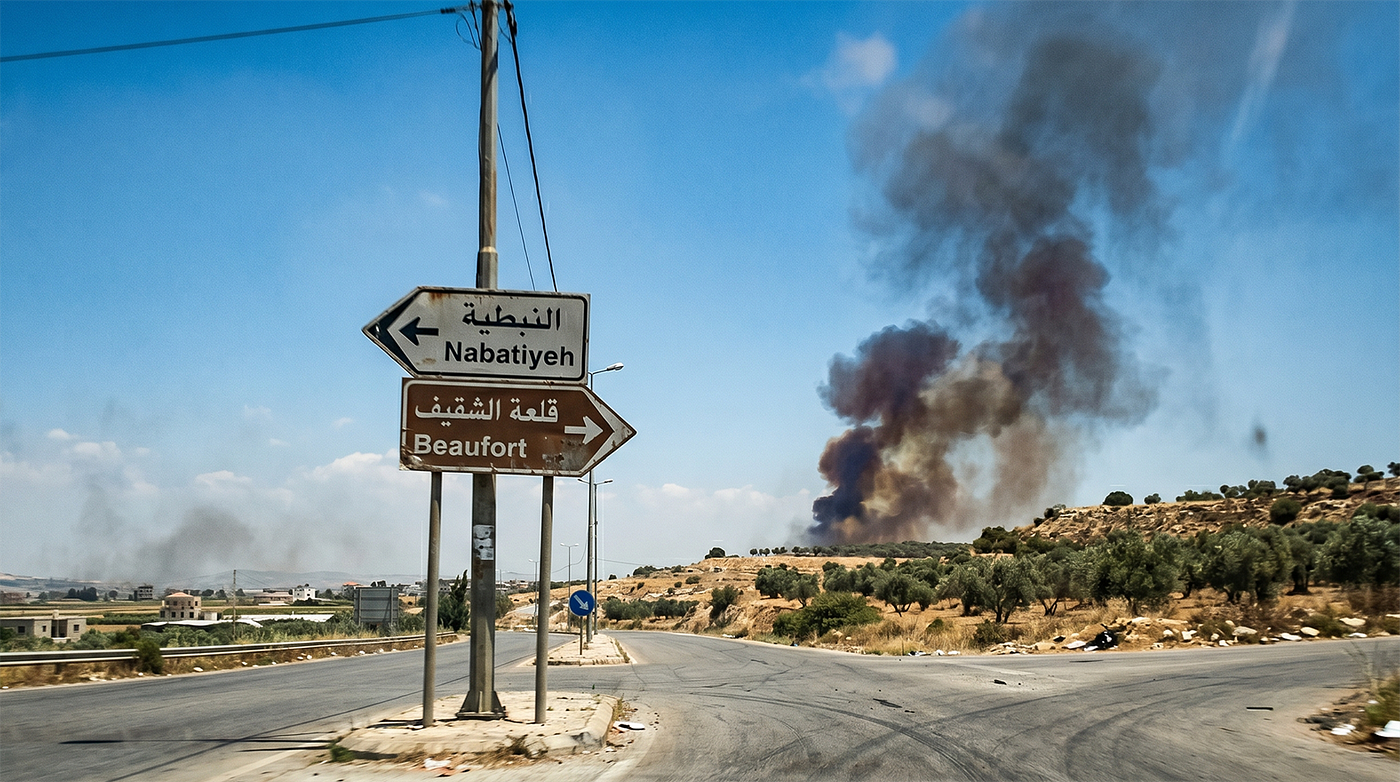
The most alarming development for Beirut is the rapid erosion of operational boundaries. For weeks, subtle diplomatic understandings managed via Washington kept the Lebanese capital off the immediate target list. Sunday’s unannounced airstrikes on two residential apartments in Beirut southern suburbs completely rewrote those unwritten rules. Reports that Israel informed Washington shortly before the strike point to a dangerous shift in the “green light” dynamic. The capital is no longer a protected zone under diplomatic quarantine; it has been reintegrated into the primary theater of deterrence. By striking the heart of Beirut in direct retaliation for border skirmishes, the Israeli leadership is attempting to enforce a punishing equation: any tactical action in the South will yield an immediate, asymmetric price in the capital.
Against this backdrop of kinetic pressure, the official steps taken over the weekend to diversify Lebanon’s borders feel less like routine infrastructure development and more like an act of desperate political defiance. The landing of Prime Minister Nawaf Salam’s jet at the René Moawad Airport in Qleiaat on Saturday; marking the official launch of rehabilitation works to bring the northern airbase back online for civil aviation, is a watershed moment. For decades, the political elite paralyzed the file of a second international airport. But with Rafic Hariri International Airport sitting directly adjacent to the heavily bombarded strongholds of Dahiyeh, the vulnerability of Lebanon’s sole link to the outside world became a strategic liability that could no longer be ignored.

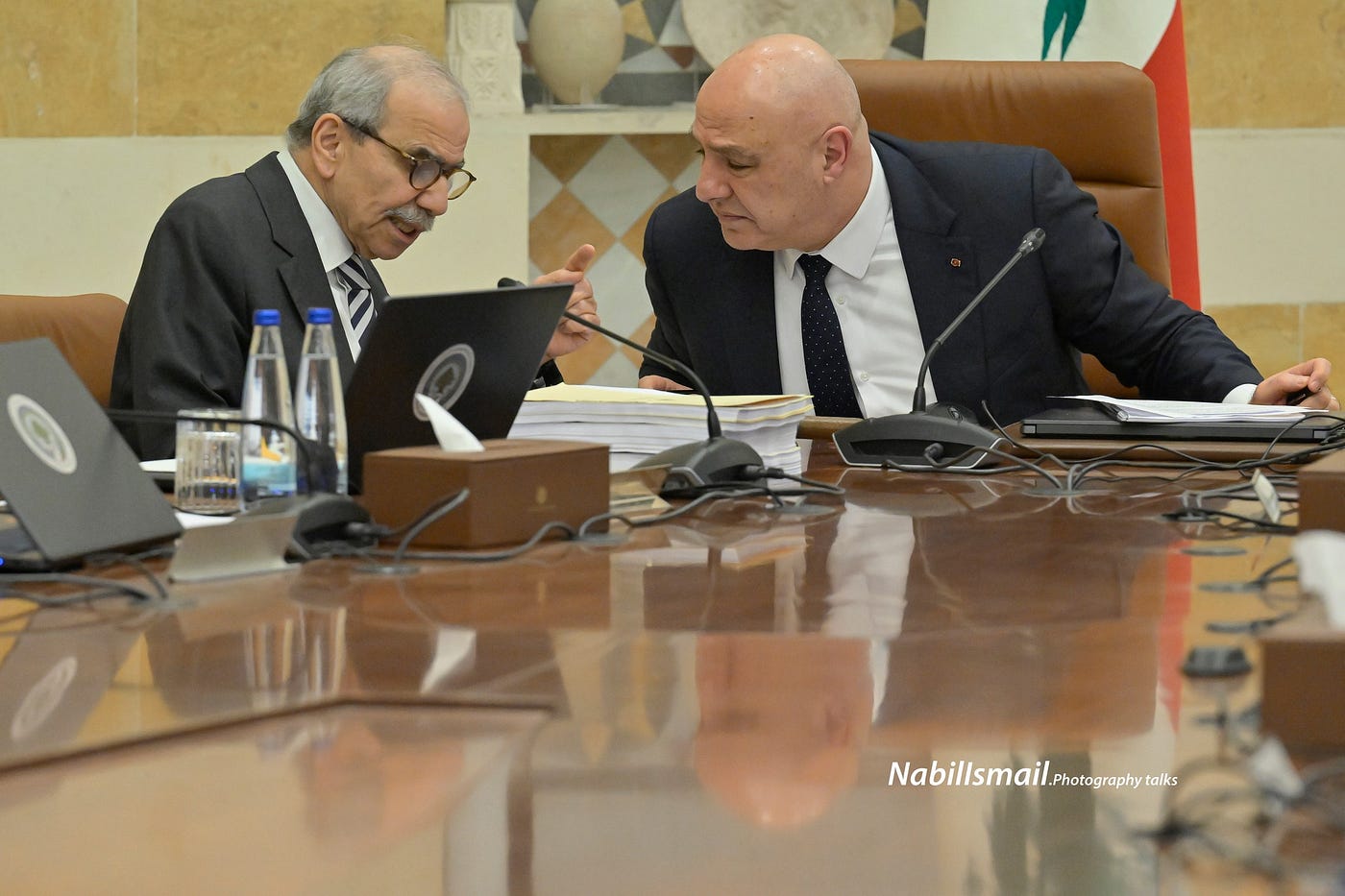
Photo, courtesy of Nabil Ismail
Coupled with the rapid operational activation of Jounieh harbor as a vital maritime civilian alternative, the state is attempting to build a logistical firewall. By shifting passenger and supply vectors to the North and Mount Lebanon, the Governement is telegraphing a vital message: the economic and physical connectivity of the Lebanese state cannot be allowed to remain hostage to the tactical vulnerabilities of a single geographic sector. In his speech at Qleiaat, PM Salam invoked the very memory of the Taif Agreement, explicitly asserting that the decision of war, peace, and territorial sovereignty must belong exclusively to the state.
However, the state’s race to secure its borders is competing with a runaway regional clock. What began as a localized cross-border escalation has now triggered a direct, dangerous loop between Tel Aviv and Tehran. The late-night involvement of Iran’s Revolutionary Guard; launching missile salvos toward northern Israel under the banner of “Operation Nasr”, was explicitly messaged as a counter-weight to the bombing of Beirut. This expands the theater exponentially. Lebanon is no longer merely dealing with a border war; it is the geographic and political canvas upon which two regional giants are testing the limits of their respective deterrence frameworks. When Iran retaliates directly for strikes in Beirut, it binds Lebanon’s immediate security fate directly to the deadlocked geopolitical negotiations occurring thousands of miles away.
As the dust settles on the overnight exchanges, the immediate perspectives for the next hours remain incredibly volatile. While both regional powers have calibrated their initial strikes to avoid a total, uncontainable regional explosion, the margins for error have narrowed to zero. For Lebanon, the institutional state remains trapped in a posture of helpless observation on the military front, even as it builds runways in the north. Speaker Nabih Berri and the caretaker government continue to keep communication channels open with the West, desperately attempting to salvage a diplomatic framework that the active combatants have already discarded on the battlefield.
But as long as the Beirut’s skies remain open to sudden, unannounced strikes, the diplomacy being conducted in grand hotel rooms feels entirely disconnected from the reality on the ground. Lebanon is not just caught in the crossfire; it is a nation trying to lay the tarmac for its sovereign future while the very ground beneath it is being compressed by the gears of a regional war.
메타데이터
- post_id
- 5f92423dc8ef
- slug
- the-mirage-of-the-green-light-lebanon-caught-in-the-gears-of-regional-war-5f92423dc8ef
- url
- https://medium.com/@khlatelias/the-mirage-of-the-green-light-lebanon-caught-in-the-gears-of-regional-war-5f92423dc8ef
- canonical_url
- https://medium.com/@khlatelias/the-mirage-of-the-green-light-lebanon-caught-in-the-gears-of-regional-war-5f92423dc8ef
- author_url
- https://medium.com/@khlatelias
- status
- ok
- fetched_at
- 2026-06-09 15:37:30