AI Is Not a Cheat Code: It’s the Next Step in a Long History of Automation
From pencils and film cameras to Photoshop, Blender, and AI, our tools have always pushed us toward more automation, not less.
AI Is Not a Cheat Code: It’s the Next Step in a Long History of Automation
From pencils and film cameras to Photoshop, Blender, and AI, our tools have always pushed us toward more automation, not less.

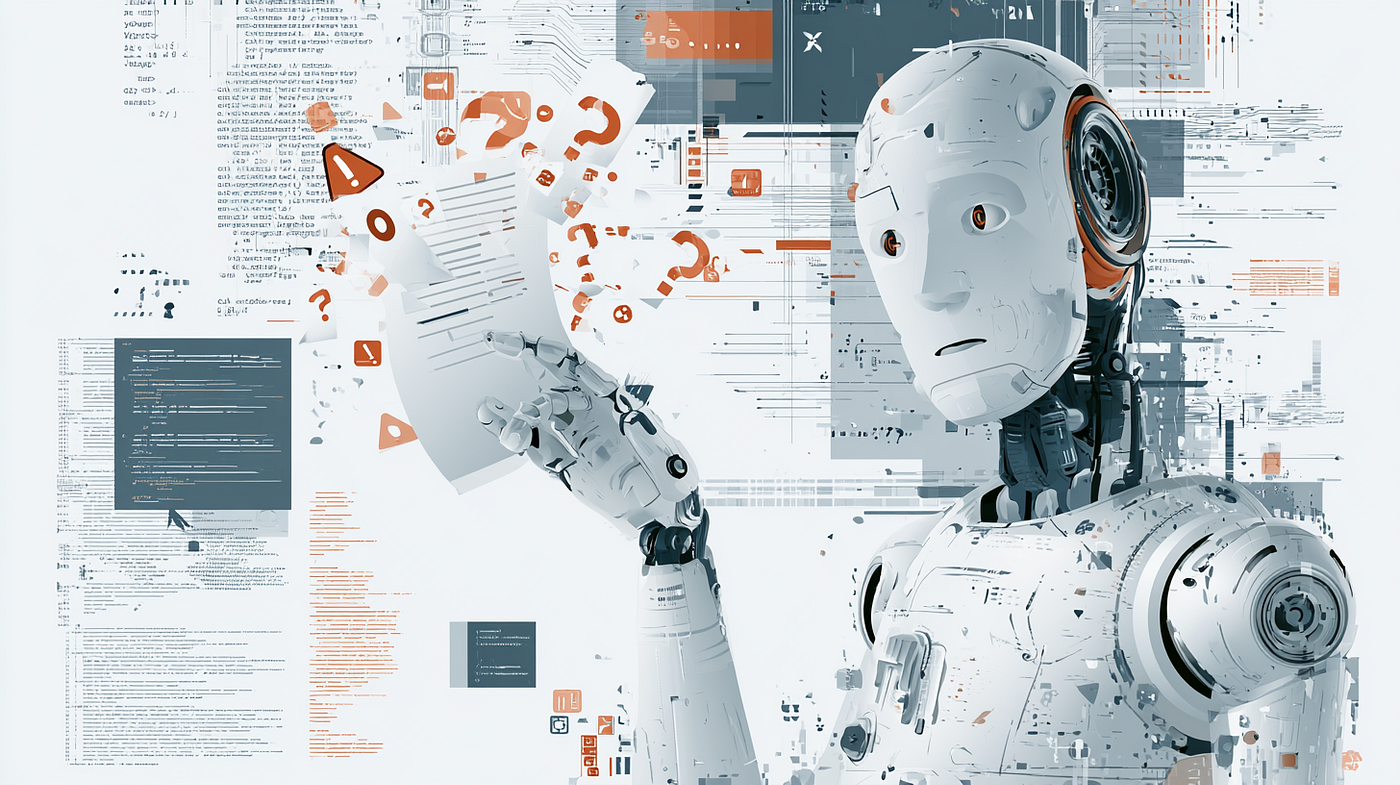
Image generated with Midjourney.
We like to talk about AI as if it suddenly appeared and broke all the rules. But if you look at how tools have evolved in writing, art, film, medicine, and even business, you start to see a different picture: AI is not a strange exception. It is just the latest step in a very long history of automation and efficiency. The real question is no longer “Is this pure and handmade enough?” It is “What does this result do for us, and how much are we willing to pay for it?” In this essay, I want to walk through several everyday examples and show how each field has moved from fully manual work to tool-assisted, automated, and now AI-supported workflows. Once you see that pattern, it becomes harder to treat AI as some special kind of cheating.
1. Writing: From Handwritten Pages to AI Drafts
Once, writing meant pencil and paper. Letters, diaries, and manuscripts were written by hand, edited by hand, and recopied by hand. Rewriting meant literally starting over on a fresh page. Then came typewriters, word processors, and personal computers. Copy-and-paste, spellcheck, search, and document templates turned many hours of manual work into a few clicks. Writing became faster, more flexible, and easier to revise. Today, AI can generate outlines, first drafts, and summaries in seconds. What used to be scratched out in notebooks over days can now appear on the screen almost instantly. Yet the key decisions remain with the human: what to write about, what to keep, what to delete, and what to publish. AI is not “writing the book for us” any more than a word processor did. It is just the newest tool for saving time and energy on the mechanical parts of writing so we can focus on judgment and intention.
2. Visual Art: From Pigments and Brushes to Digital and Generated Images
Traditional painting relied on pigments, solvents, brushes, canvases, and a lot of setup and cleanup. Mistakes were hard to correct. Every change had a cost in time and materials. New paints, new mediums, and printing technologies expanded what artists could do. Then digital painting arrived. Suddenly, layers, undo, custom brushes, filters, and infinite canvases became normal. A lot of what used to require physical skill and patience moved into software. Now, image generation lets you type a prompt and receive a detailed picture or concept sketch in moments. You can explore variations, styles, and compositions that you might never have thought to paint manually. But again, the core questions have not changed: What are you trying to express? How do you select, edit, and combine what the tool gives you? Where is your taste, your judgment, your voice?
3. Photography: From Film and Darkrooms to Instant Capture and Smart Editing
Film photography involved limited shots, careful metering, and the delay of development and printing. Mistakes were discovered later, sometimes too late. Digital cameras made it possible to review images immediately. Auto-exposure, autofocus, and image stabilization reduced technical failures. Photo editors allowed non-experts to adjust color, contrast, and composition. Today, phones do even more automatically: HDR, portrait mode, background blur, face smoothing, sky replacement, and AI-powered enhancements. The device quietly corrects, fixes, and beautifies images in the background. Is that cheating? Most people do not think so. They judge the photo by whether it works: Does it convey the moment? Does it look good? Does it serve its purpose? AI is simply another layer of that invisible assistance.
4. Film and Video: From Location Shoots to Green Screens and AI Video
Early film production meant physical sets, real locations, and all the cost and risk that came with them. Weather, travel, and logistics were constant obstacles. Studio production, miniatures, matte painting, and later computer graphics changed that. Green screens and compositing made it normal to place actors into worlds that do not exist in reality. Audiences know this and accept it. Now, AI is entering the pipeline: automated editing from long recordings, AI-generated backgrounds, synthetic crowds, and even fully generated short clips. In parallel, new AI video tools let individuals produce short, stylized videos that once required a full team. The result may still be judged by story, emotion, pacing, and style — but the path to get there is increasingly automated.
5. Animation: From Thousands of Cels to Digital Pipelines and Generative Motion
Traditional animation required drawing and painting thousands of cels by hand. Every movement meant another drawing. The workload was enormous, and production times were long. Digital workflows turned backgrounds, character rigs, and motion into assets managed in software. In-between frames and effects could be assisted or partially automated. Corrections were easier and reuse was common. Today, simple animations can be generated from still images and text prompts. Motion interpolation, style transfer, and generative tools can fill in many in-between steps that used to be entirely manual. The artistic challenge is shifting: less about drawing every frame yourself, more about designing characters, timing, visual language, and emotional impact.
6. Music: From Pure Performance to DAWs, Loops, and AI Composition
Music once required instruments, performers, and recording studios. Composing and capturing a piece of music was reserved for people with years of training and access to specialized equipment. MIDI, synthesizers, and digital audio workstations (DAWs) changed that. Loop libraries, virtual instruments, and effects made it possible for one person with a computer to produce full arrangements at home. Today, AI can suggest chord progressions, generate melodies, or create backing tracks. It can help with mastering, mixing, and sound design. Does that erase human creativity? Not really. It changes where the creativity sits: in selecting, editing, arranging, and directing the output of powerful tools.
7. Print and Layout: From Metal Type to DTP, Templates, and Smart Layouts
Typesetting used to be a craft of arranging metal type by hand. Layouts were planned on paper, with physical cut-and-paste for complex designs. Desktop publishing (DTP) made professional layout accessible to many more people. Software offered grids, styles, and automated flows. Templates and design systems spread across print and digital media. Now, tools can suggest layouts, align elements, and enforce consistent branding automatically. AI can even propose slide decks and document structures from a short brief. Readers mostly care about clarity, readability, and aesthetics — much more than whether every margin was placed manually.
8. Architecture and Design: From Hand-Drawn Plans to CAD, BIM, and AI-Assisted Concepts
Architects used to draft plans and elevations by hand. Revisions were laborious. Errors could be costly if discovered late. Computer-aided design (CAD) sped up drawing and modification. Building information modeling (BIM) integrated structure, systems, and materials into unified 3D models. Today, AI can help generate conceptual layouts, analyze energy performance, or explore structural options early in the process. The architect still chooses what fits the site, the budget, and the client — but some of the exploration can be offloaded. Here again, the value lies in the final building’s function, safety, and experience, not in whether every line was drawn by hand.
9. Medicine: From Intuition to Imaging, Devices, and AI Diagnosis
Medicine once depended heavily on touch, observation, and a doctor’s intuition. There were few ways to see inside the body safely. Modern imaging — X-ray, CT, MRI, ultrasound — changed that. We can now look inside the body with remarkable detail. Surgical tools, anesthesia, and vaccines have also transformed what is possible. Now, AI can help detect anomalies in scans, flag risks in patient data, and support diagnosis. Surgical robots assist with precision and safety. Doctors remain responsible for decisions, but they are no longer working with only their senses and memory. Here, almost no one argues we should go back to “purely manual” medicine. Automation and AI are accepted because they reduce risk and save lives.
10. Programming: From Writing Every Line to Libraries, Frameworks, and AI Code Assistants
Early programmers wrote everything from scratch. Even basic functions had to be implemented by hand. Over time, libraries, frameworks, and open-source components became standard. Most modern development is about assembling, configuring, and extending existing pieces rather than inventing everything anew. AI assistants now suggest code, detect bugs, and generate small modules on demand. Developers curate, refine, and integrate these suggestions into working systems. Again, the key measure is not “Did you write every line yourself?” It is “Does the system work, and does it solve the problem reliably and safely?”
11. Translation: From Paper Dictionaries to Instant AI Translation
Reading another language once meant moving line by line through paper dictionaries. Translation was time-consuming and often remained rough unless done by trained professionals. Electronic dictionaries and online tools accelerated lookup. Machine translation became good enough to understand the general meaning of texts. Now, AI translation and real-time interpretation make it possible to communicate across languages in video calls, chats, and live events. It is not perfect, but it is often good enough to remove communication barriers that used to be walls. The value is no longer in demonstrating that you can translate every word by hand. It is in achieving understanding quickly and correctly in real situations.
12. Education: From Chalkboards to Online Courses and AI Tutors
Education traditionally centered on a teacher, a classroom, and a textbook. Access to quality teaching depended heavily on where you lived. The internet and video platforms opened up lectures and courses from around the world. Online learning allowed flexible pacing and broader access. Today, AI can answer questions, adapt exercises to a learner’s level, and generate explanations on demand. It does not replace teachers, but it can extend them — especially for practice and repetition. Here, the key question is not “Did the student suffer enough to learn this?” but “Did the student actually understand and retain it?”
13. Customer Support: From Physical Desks to FAQs, Chatbots, and AI Agents
Customer support used to mean visiting a desk or calling during business hours. Wait times were long, and support capacity was limited. FAQs, email support, and live chat shifted some of the load. Simple questions could often be answered without speaking to a person. Now, AI-driven agents can handle many common issues, guide troubleshooting, and escalate complex cases to humans. For customers, what matters most is resolution: How fast was the problem solved, and how well? Whether a human or an AI typed the first reply is less important than the outcome.
14. Business Decisions: From Gut Feeling to Data and AI-Assisted Forecasts
Business decisions once depended heavily on experience, intuition, and limited reports. Spreadsheets, databases, and BI tools turned raw numbers into dashboards and charts. “Data-driven decision making” became a buzzword — and a necessity. AI now supports forecasting, risk detection, churn prediction, and scenario analysis. Leaders still make the final calls, but they do so with deeper, faster insights than before. In this context, refusing to use AI is less a moral stand and more a strategic handicap. The market does not slow down because someone prefers older tools.
So Where Does AI Really Fit?
Across all these examples, a pattern appears:
- Work moves from fully manual to tool‑assisted.
- Then from tool‑assisted to partially automated.
- And now from partially automated to AI‑supported.
At each stage, people worry that something “pure” is being lost. And sometimes, they are right — some crafts and skills do fade or become niche.
But at the same time, new possibilities, new roles, and new forms of value appear. We spend less time on repetitive mechanical steps and more time on choices: what to make, why it matters, who it is for, and how it will be used.
The Money Question: Value, Price, and Refusing to Use AI
There is another layer we cannot ignore: money. In film, design, marketing, software, and many other fields, AI is no longer a toy — it is a cost and speed advantage. Companies use it because it lets them produce more, faster, with the same or smaller budgets. Clients care about deadlines, budgets, and results. Saying “We will never use AI” is possible as a personal or artistic stance. But as a general business strategy, it is getting harder to sustain. If your competitors deliver acceptable quality in half the time and cost, many customers will quietly choose them. That does not mean everything should be automated. It means that the decision to use or avoid AI is also an investment choice: Where do we spend our limited time, labor, and money to get the impact we want? On the other side, buyers and audiences also make their own value judgments. Some will pay more for fully handmade work or fully human services. Others will be satisfied with AI-assisted or even AI-generated results if they solve the problem well enough. In the end, markets tend to answer the question “Is this worth paying for?” more clearly than debates on purity ever can.
Conclusion: AI as One More Tool in a Long Line of Tools
Seen in context, AI is not a magical enemy that suddenly broke the rules of creativity and work. It is one more powerful tool in a long line of tools that have always pushed us toward more automation and higher efficiency.
We have already accepted this logic in writing, art, photography, animation, medicine, software, education, and beyond. We moved from fully manual methods to tools, from tools to automation, and now from automation to AI.
So instead of asking only “Is AI good or bad?”, it may be more realistic to ask:
- What do we want to achieve?
- Which tools — AI included — help us get there?
- And how much are we willing to pay, or charge, for the results?
AI does not remove the need for judgment, taste, ethics, or responsibility. It simply gives us another way to trade time and effort for speed and possibility.
Whether that trade is worth it will always come back to the same place: the value we see in the result, and the price we are willing to pay.
메타데이터
- post_id
- 5faae41883e0
- slug
- ai-is-not-a-cheat-code-its-the-next-step-in-a-long-history-of-automation-5faae41883e0
- url
- https://medium.com/my-opinion-diaries/ai-is-not-a-cheat-code-its-the-next-step-in-a-long-history-of-automation-5faae41883e0
- canonical_url
- https://medium.com/my-opinion-diaries/ai-is-not-a-cheat-code-its-the-next-step-in-a-long-history-of-automation-5faae41883e0
- author_url
- https://medium.com/@tetsujikondo
- status
- ok
- fetched_at
- 2026-06-14 11:28:49