Next-Generation FHIR Analytics for Autonomous Clinical Insights
Abstract
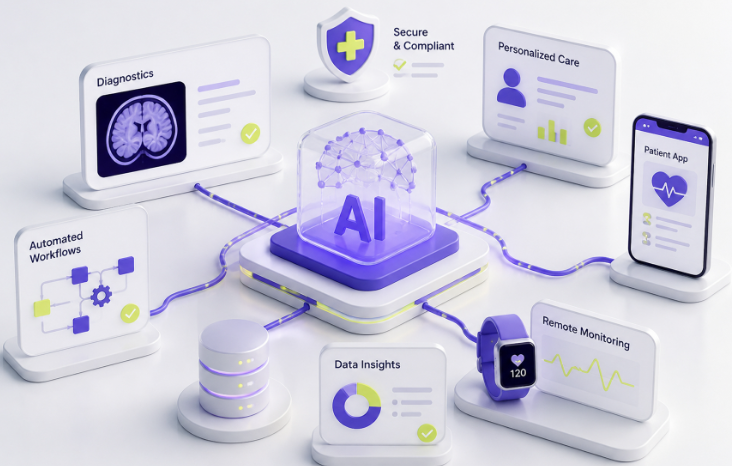
Next-Generation FHIR Analytics for Autonomous Clinical Insights
Abstract
Healthcare organizations are increasingly adopting digital health platforms that rely on interoperable standards for efficient data exchange and intelligent decision-making. Among these standards, Fast Healthcare Interoperability Resources (FHIR) has emerged as a foundation for integrating clinical, administrative, and operational healthcare information across diverse systems. However, conventional FHIR-based analytics primarily support retrospective reporting and rule-based decision support, limiting their ability to generate proactive clinical intelligence. Next-generation FHIR analytics introduces autonomous analytical capabilities by integrating artificial intelligence (AI), machine learning (ML), knowledge graphs, and event-driven architectures with standardized healthcare data. This research discusses an advanced analytical framework that transforms FHIR resources into real-time, context-aware clinical insights capable of supporting diagnosis, treatment planning, risk prediction, and healthcare operations. The proposed approach enables autonomous clinical reasoning while maintaining interoperability, scalability, and data governance. Such intelligent healthcare ecosystems improve patient outcomes, reduce clinician workload, and accelerate evidence-based medical decision-making.
Introduction
Modern healthcare generates enormous volumes of heterogeneous clinical information from electronic health records (EHRs), laboratory systems, wearable devices, imaging platforms, and telemedicine applications. Despite significant advances in digitization, much of this information remains fragmented across multiple platforms, preventing healthcare providers from obtaining comprehensive patient insights.
FHIR has become the preferred interoperability standard because it provides standardized APIs and structured healthcare resources that simplify information exchange among hospitals, laboratories, pharmacies, insurers, and public health agencies. Nevertheless, merely exchanging data does not automatically create actionable knowledge. Healthcare providers increasingly require intelligent systems capable of continuously analysing patient information and generating autonomous recommendations without extensive manual intervention.
Next-generation FHIR analytics addresses this challenge by combining standardized healthcare data with AI-driven analytical models. Instead of simply retrieving patient records, autonomous analytical systems continuously monitor incoming FHIR resources, detect abnormal clinical patterns, estimate future risks, recommend interventions, and support precision medicine. This evolution transforms healthcare information systems from passive repositories into intelligent clinical assistants capable of supporting physicians throughout the patient care lifecycle.

Architecture of Autonomous FHIR Analytics
The proposed architecture consists of multiple interconnected analytical layers.
The FHIR Integration Layer collects standardized healthcare resources including Patient, Observation, MedicationRequest, Encounter, Procedure, Condition, DiagnosticReport, AllergyIntolerance, and CarePlan resources from distributed healthcare systems.
The Data Engineering Layer validates resource quality, resolves semantic inconsistencies, removes duplicate records, and performs terminology normalization using standard clinical vocabularies such as SNOMED CT, ICD-10, and LOINC.
The Real-Time Analytics Layer continuously processes streaming clinical events using event-driven processing engines. AI models identify deteriorating patient conditions, predict disease progression, detect medication conflicts, and monitor hospital resource utilization.
The Autonomous Intelligence Layer employs deep learning, reinforcement learning, knowledge graphs, and large language models to generate personalized recommendations, summarize patient histories, prioritize critical alerts, and support evidence-based treatment planning.
Finally, the Clinical Decision Interface delivers explainable recommendations to physicians through dashboards, mobile applications, and electronic medical record systems while maintaining human oversight over clinical decisions.
EQ.1. Clinical Recommendation Confidence:

Autonomous Clinical Insight Generation
Autonomous clinical insight generation relies on continuous interpretation of patient information rather than isolated record analysis. As new FHIR resources become available, analytical engines dynamically update patient profiles and clinical risk scores.
For example, abnormal laboratory values combined with declining vital signs and medication history may indicate early sepsis risk. Rather than waiting for manual review, the analytical platform immediately identifies high-risk patients and recommends additional diagnostic procedures or specialist consultations.
Similarly, wearable devices continuously transmit physiological observations through FHIR Observation resources. AI models analyse these temporal patterns to detect cardiovascular abnormalities, diabetes progression, respiratory deterioration, or postoperative complications before symptoms become clinically significant.
The integration of longitudinal patient history further enables predictive population health management, allowing healthcare organizations to identify vulnerable patient groups and allocate medical resources more efficiently.
Intelligent Analytics Techniques
Several advanced analytical methods enhance autonomous FHIR intelligence.
Machine learning models perform disease classification, mortality prediction, hospital readmission estimation, and treatment outcome forecasting using structured FHIR resources.
Natural language processing extracts valuable clinical concepts from physician notes and converts unstructured narratives into standardized FHIR resources for downstream analytics.
Knowledge graphs represent relationships among diseases, medications, symptoms, laboratory findings, and clinical guidelines, enabling explainable reasoning across interconnected healthcare entities.
Generative AI assists clinicians by automatically producing discharge summaries, patient education documents, referral letters, and personalized treatment recommendations while preserving clinical context.
Federated learning enables multiple hospitals to collaboratively train predictive models without sharing sensitive patient information, strengthening privacy while improving analytical accuracy.

Benefits
Next-generation FHIR analytics provides several significant advantages.
Real-time interoperability ensures continuous integration of patient information across multiple healthcare providers.
Autonomous monitoring reduces clinician workload by automatically identifying clinically significant events.
Predictive analytics enables early intervention before disease progression becomes severe.
Personalized treatment recommendations improve precision medicine through patient-specific risk assessment.
Explainable AI increases physician confidence by providing transparent reasoning behind analytical recommendations.
Scalable cloud-native deployment supports national healthcare infrastructures while maintaining high availability and fault tolerance.
Improved healthcare data governance strengthens regulatory compliance, auditability, privacy protection, and standardized information exchange.
EQ.2. Population Health Risk:

Challenges
Despite its potential, autonomous FHIR analytics faces several challenges. Healthcare data often contains missing values, inconsistent coding practices, and variable clinical documentation quality that reduce analytical performance. Integrating legacy hospital systems with modern FHIR APIs requires substantial infrastructure modernization. Ensuring fairness, transparency, and explainability in AI-generated recommendations remains essential for clinical acceptance. Protecting sensitive patient information while enabling large-scale analytics demands advanced privacy-preserving technologies. Additionally, regulatory compliance and continuous validation of AI models are necessary before autonomous systems can be widely adopted in routine clinical practice.
Future Directions
Future research will focus on integrating multimodal healthcare information, including genomic data, medical imaging, wearable sensor streams, and social determinants of health into unified FHIR analytical platforms. Agentic AI systems capable of autonomous clinical workflow orchestration may further improve care coordination by scheduling follow-up appointments, monitoring treatment adherence, and dynamically adjusting care pathways. Digital twins of individual patients could simulate treatment responses before clinical interventions are implemented, enabling personalized therapeutic optimization. Edge AI, quantum computing, and explainable foundation models are also expected to enhance the scalability and intelligence of future healthcare ecosystems.

Conclusion
Next-generation FHIR analytics represents a transformative evolution in intelligent healthcare systems by combining interoperable healthcare standards with advanced AI-driven analytical capabilities. Unlike traditional reporting platforms, autonomous FHIR analytics continuously interprets clinical events, predicts patient risks, generates personalized recommendations, and supports evidence-based decision-making in real time. The integration of machine learning, knowledge graphs, generative AI, and event-driven architectures enables healthcare organizations to deliver more proactive, efficient, and patient-centred care. As interoperability standards mature and autonomous intelligence continues to advance, FHIR-based analytical platforms will become foundational components of future digital healthcare ecosystems, improving clinical outcomes while enhancing operational efficiency and healthcare quality.
메타데이터
- post_id
- 5fac941cc6f9
- slug
- next-generation-fhir-analytics-for-autonomous-clinical-insights-5fac941cc6f9
- url
- https://medium.com/@kolla.trivenii/next-generation-fhir-analytics-for-autonomous-clinical-insights-5fac941cc6f9
- canonical_url
- https://medium.com/@kolla.trivenii/next-generation-fhir-analytics-for-autonomous-clinical-insights-5fac941cc6f9
- author_url
- https://medium.com/@kolla.trivenii
- status
- ok
- fetched_at
- 2026-08-06 11:20:07




