Avoiding Delays: Common Mistakes in China Document Authentication
Whether you’re relocating to China for work, study, business or personal reasons, you will very likely need to authenticate or apostille…
Avoiding Delays: Common Mistakes in China Document Authentication
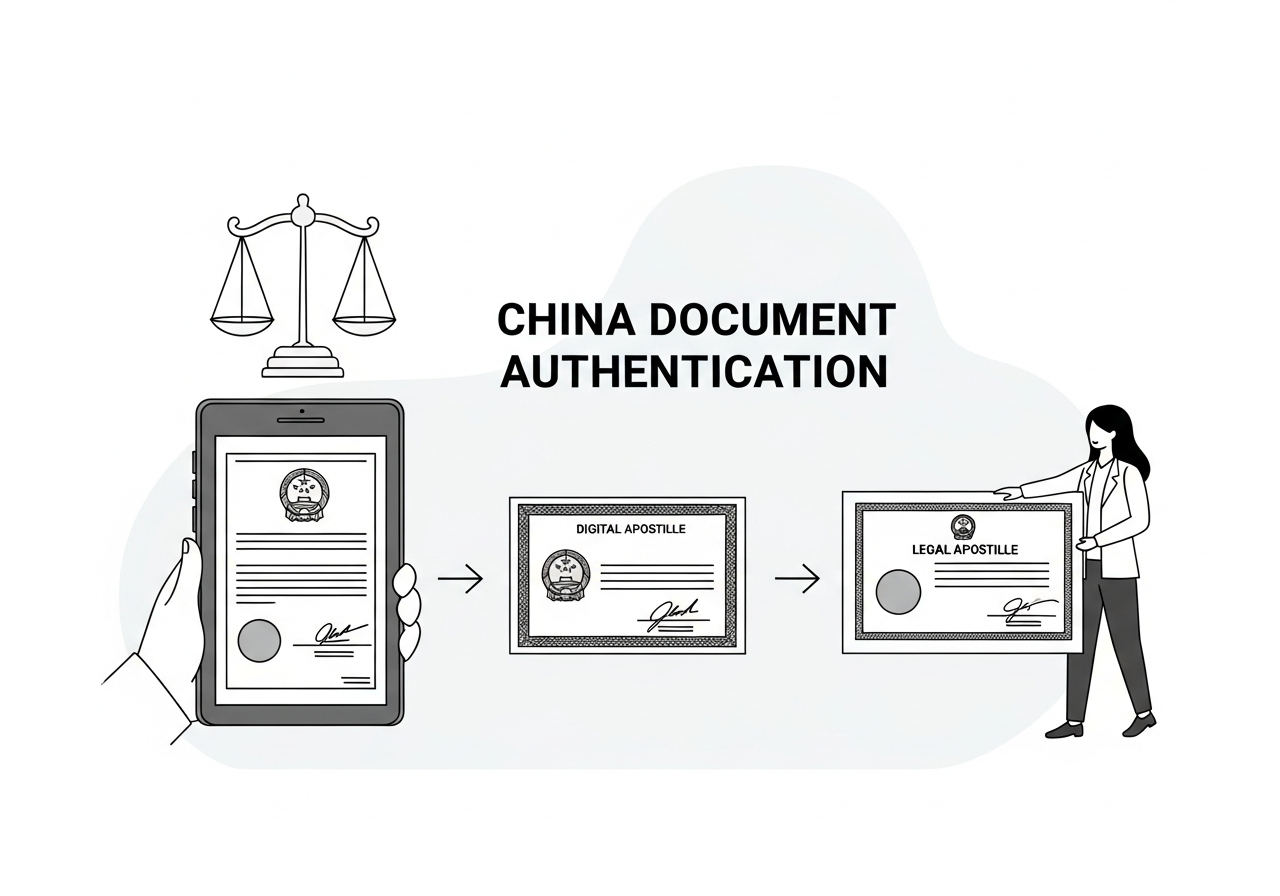
Whether you’re relocating to China for work, study, business or personal reasons, you will very likely need to authenticate or apostille documents issued abroad (or in China) so that authorities, employers or institutions accept them. The process can be complex and delays are common. In this blog we’ll explore the authentication process for China from multiple angles, highlight the most frequent mistakes that cause delays, and show how using a specialist provider like One Day Apostille can help simplify and speed things up.
Understanding the China document-authentication landscape
What is authentication / legalization and why it matters
Document authentication (also called legalization) refers to the process by which a document issued in one country is certified so that it can be recognized in another country. In the case of China, foreign-issued documents used in China (or Chinese-issued documents used abroad) often require authentication of signatures, seals, notarization, apostille or consular legalization.
China’s accession to the Hague Apostille Convention and what it means
On March 8 2023, China acceded to the Hague Apostille Convention; the change came into effect for China-U.S. document flows on November 7 2023. As a result, for many documents between China and other Convention states the traditional consular legalization step is no longer required — an apostille issued in the document’s country of origin may suffice.
Why delays happen in spite of the change
Even though the convention simplifies parts of the process, there are still many pitfalls: wrong jurisdiction, incorrect document type, translation issues, outdated certificates, missing notarization, mismatched names, shipping delays, and varying requirements depending on Chinese provinces or institutions. These mistakes cause the kinds of delays that frustrate applicants. The rest of this blog dives into the common mistakes and how to avoid them.
Common Mistakes That Cause Delays
Mistake #1 — Incorrect or missing notarization before apostille/authentication
Many documents (e.g., degrees, teaching certificates, powers of attorney) require notarization prior to apostille or legalization. If applicants skip the notarization step or use an uncertified “true copy” instead of what the destination requires, authentication may be rejected or delayed. For China-bound documents, some guides emphasize checking whether the document needs notarization first.
Mistake #2 — Using the wrong issuing jurisdiction or authority
Each state/country designates a specific authority for issuing apostilles or legalisations. For example, in China-U.S. flows, after November 7 2023, documents issued in the U.S. for use in China need only a U.S. apostille; Chinese consular authentication is no longer required.If an applicant mistakenly sends to a Chinese consulate for legalization, that leads to wasted time. Additionally, within China, certain provincial Foreign Affairs Offices (FAOs) or the national Ministry may handle documents depending on locality.
Mistake #3 — Documents dated too far in the past or validity concerns
Some Chinese institutions may insist that documents (particularly police certificates or no-criminal-record certificates) be issued recently (often within 6 months) rather than simply “apostilled.” If applicants assume once done it will always be valid and wait too long, the institution may reject the document. One guide flags this specifically for China
Mistake #4 — Missing or poor translation / language issues
Even when documents are correctly apostilled/authenticated, if the document or translation isn’t clear, the Chinese receiving authority may reject or ask for a new version. Documents in English (or another language) often must be accompanied by a certified translation. Many service providers emphasize this for China apostilles.
Mistake #5 — Name inconsistencies, seal/signature issues or missing originals
Small errors trigger big delays: mismatched names (passport vs certificate), missing signatures or seals, missing dates, or submission of copies when originals are required. The U.S. Dept of State emphasizes that the document must be “an original or certified copy” with legible signatures/seals.
Mistake #6 — Not checking destination-site or province-specific requirements
Even when you do everything “by the book,” the local Chinese authority you are submitting to may have its own interpretation or additional requirements (e.g., extra translations, local acceptance rules, or proof of authentication chain). For example, a law-firm article warns: “The completion of an apostille does not guarantee acceptance — check format, content, timing, translations before proceeding.”
Mistake #7 — Underestimating shipping, courier and processing time
Especially for applicants outside of China or issuing-country, delays often stem from mailing/courier times, waiting for return of original documents, and time taken by authorities to process requests. Many users don’t factor those in, and end up scrambling when the deadline is near.
How China’s System Works & Why Specific Checks Are Needed
Documents issued by foreign countries for use in China
According to the official website of the Ministry of Foreign Affairs of the People’s Republic of China (MFA), documents issued by countries that are members of the Apostille Convention may be used in China directly after being apostilled by the competent authority of the issuing country. Documents issued by non-member countries must first be notarized/verified in the issuing country, then legalized by the Chinese embassy/consulate in that country.
For example, for documents issued in the U.S. (a Hague Convention member) for use in China, after November 7 2023, an apostille is sufficient and Chinese consular authentication is no longer required.
Documents issued in China for use abroad (or used in China)
Documents issued by Chinese agencies intended for use abroad may also require apostille issued by the MFA or authorized local Foreign Affairs Offices (FAOs) in China. The reverse flow also matters when you apply for Chinese work visas and submit foreign-issued documents.
Provincial / local variation and the transition period
Although the national rules changed in November 2023, many local authorities in China (such as municipal labour bureaus, education bureaus, HR departments) may still apply older or local practices; for instance, certain local registration authorities may ask for both apostille and consular legalization during a transition phase. One law firm noted: “the completion of an apostille does not guarantee the acceptance of the foreign-produced document … check with the relevant authority in China in advance.”
This is why applicants often face delays: they follow the “national rule” but the local body expects the older legalization method or has extra steps.
The Role of One Day Apostille in Streamlining the Process
What One Day Apostille offers
One Day Apostille is a service provider specializing in document authentication, apostille, legalization, translation and courier shipping. With respect to China-bound documents, One Day Apostille can help you:
- Determine the correct path (apostille vs consular legalization) depending on issuing country and Chinese destination
- Provide guidance on notarization and translations required prior to apostille
- Expedite apostille submission and return shipping, helping avoid bureaucratic hold-ups
- Offer tracking, support and accountability (so you’re not flying blind)
Why using a specialist helps avoid the common mistakes
Because many delays stem from administrative errors (wrong authority, missing notarization, translation issues, courier bottlenecks), using a specialist like One Day Apostille means you’re more likely to avoid these pitfalls. One Day Apostille can act as a “checkpoint” ensuring your documents are consistent, correctly prepared and timed for your China destination.
Tips when working with One Day Apostille or similar services
- Provide the service with your full destination details (which Chinese province, which authority, purpose of use) so they tailor the path accordingly.
- Ask for a clear timeline and shipping expectations; inquire about expedited options if your job/visa has a fixed start date.
- Confirm what happens if documents are rejected or need correction — what is the contingency?
- Retain all proof of submission, tracking, communication — in case your Chinese authority requests additional documentation.
Final Thoughts
Delays in document authentication for China need not be inevitable. By understanding the key components — whether your document needs notarization, apostille or consular legalization; the issuing country’s jurisdiction; the Chinese destination’s rules; translation requirements; and shipping logistics — you can significantly reduce the risk of hold-ups. Using a specialist service like One Day Apostille adds a further layer of assurance and speed.
메타데이터
- post_id
- 5fb1debfdcb3
- slug
- avoiding-delays-common-mistakes-in-china-document-authentication-5fb1debfdcb3
- url
- https://medium.com/@soadivac/avoiding-delays-common-mistakes-in-china-document-authentication-5fb1debfdcb3
- canonical_url
- https://medium.com/@soadivac/avoiding-delays-common-mistakes-in-china-document-authentication-5fb1debfdcb3
- author_url
- https://medium.com/@soadivac
- status
- ok
- fetched_at
- 2026-06-09 15:37:30