The Semantic Layer in Data Modeling: Bridging the Gap Between Bits and Business Meaning
The Foundation for Self-Service Analytics and Data Governance
The Semantic Layer in Data Modeling: Bridging the Gap Between Bits and Business Meaning
The Foundation for Self-Service Analytics and Data Governance
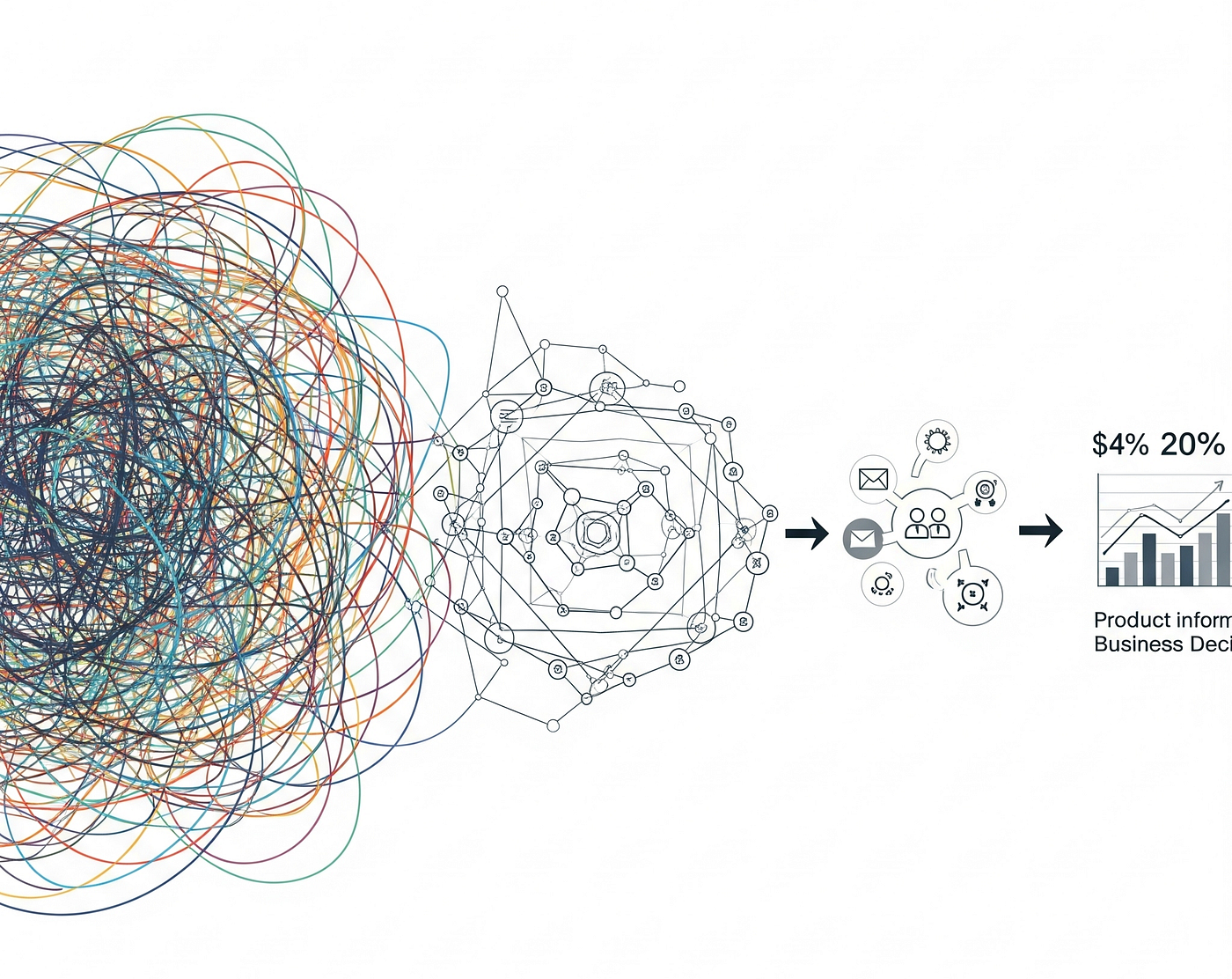
In the vast ocean of corporate data, raw facts and figures often resemble fragmented pieces of a puzzle. Database tables might be named cryptically, columns abbreviated, and relationships hidden in complex SQL joins. For data professionals, navigating this landscape is second nature. But for business users, decision-makers, and increasingly, Artificial Intelligence systems, this raw complexity is a significant barrier to deriving actionable insights.
The semantic layer, a pivotal concept in data modeling that acts as a translator, transforming technical data structures into intuitive, business-friendly terms. It’s the essential bridge that connects the highly technical world of databases with the everyday language of business, ensuring that everyone speaks the same data language.
What is a Semantic Layer?
At its core, a semantic layer is an abstraction layer that sits on top of your underlying data sources (data warehouses, data lakes, operational databases). Its primary purpose is to define and present data in terms of business concepts, metrics, and relationships that are meaningful and consistent across an organization.
Think of it this way:
- Below the Semantic Layer: You have physical tables, columns, data types, primary and foreign keys, complex ETL/ELT processes, and potentially denormalized structures optimized for performance. This is the realm of data engineers and database administrators.
- Within the Semantic Layer: You define “Customers,” “Products,” “Total Sales,” “Average Order Value,” “Customer Lifetime Value,” and how these entities relate to each other. You establish common calculations and aggregations.
- Above the Semantic Layer: Business users interact with these clear, unambiguous terms through BI tools, dashboards, reporting applications, and increasingly, natural language interfaces and AI models.
The semantic layer is not another copy of your data, it’s a metadata layer that provides a unified, consistent view of your data through defined business logic.

Key Components and Characteristics of a Semantic Layer
- Business Terminology: It replaces technical table and column names with intuitive business terms (e.g.,
cust_idbecomesCustomer ID,order_amtbecomesOrder Amount). - Metrics and Calculations: It centralizes the definitions of key performance indicators (KPIs) and complex calculations (e.g., how “Net Revenue” is calculated, or what constitutes an “Active User”). This ensures that everyone uses the same formula, eliminating “multiple versions of the truth.”
- Dimensional Modeling: Often, the semantic layer is built upon a dimensional model (star or snowflake schema concepts), organizing data into facts (measures) and dimensions (attributes) that make sense to business users.
- Relationships and Joins: It pre-defines how different business entities relate to each other, so users don’t need to understand complex SQL joins. When a user asks for “Sales by Product Category,” the semantic layer knows how to join
Sales OrderswithProductsandProduct Categories. - Hierarchies: It defines natural hierarchies within dimensions (e.g.,
Country > State > Cityfor geography, orYear > Quarter > Month > Dayfor time). - Security and Governance: It can enforce data access rules, ensuring users only see the data they are authorized for, down to row-level security. It also provides a single point for auditing data definitions.
- Performance Optimizations: It can incorporate caching strategies, pre-computed aggregates, or intelligent query routing to ensure fast response times for common queries, even over large datasets.
- Version Control: Modern semantic layers often integrate with version control systems (like Git) to manage changes to definitions collaboratively and provide an audit trail.
Why is a Semantic Layer So Crucial?
The absence of a robust semantic layer leads to a host of problems:
- Inconsistent Reporting: Different departments or even individuals within the same department might calculate the same metric differently, leading to conflicting reports and distrust in data.
- Data Swamps: Users get lost in the raw data, unable to find the information they need or correctly interpret it.
- Slow Time to Insight: Business users are dependent on data teams to write custom SQL queries for every ad-hoc question, creating bottlenecks.
- Increased Risk of Error: Manually writing complex SQL queries is prone to errors, especially when dealing with intricate business logic.
- Limited Data Democratization: Only highly technical users can truly leverage the data, hindering a data-driven culture.
- AI Hallucinations: AI models operating on raw, ambiguous data are prone to misinterpretations, leading to inaccurate and potentially harmful outputs.
By implementing a semantic layer, organizations can achieve:
- A Single Source of Truth: Unambiguous, consistent definitions for all key business metrics and dimensions.
- Empowered Business Users: Self-service analytics becomes truly feasible, allowing users to explore data confidently without deep technical skills.
- Faster Decision-Making: Reduced time from question to insight, fostering agility.
- Improved Data Governance: Centralized control over data definitions, access, and quality.
- Enhanced Collaboration: All teams speak the same data language, fostering better communication and alignment.
- AI-Ready Data: Provides AI models with the contextual understanding and consistent data they need to deliver reliable and accurate insights, minimizing “hallucinations” and accelerating AI development.
Semantic Layer in Practice: How it’s Implemented
Semantic layers are typically implemented using:
- Dedicated Semantic Layer Tools: Some platforms are specifically designed as standalone semantic layers.
- BI Tool Capabilities: Many modern Business Intelligence (BI) tools (like Looker, Tableau, Power BI, Qlik) have strong semantic modeling capabilities built directly into their platforms.
- Data Virtualization Tools: These tools can create a virtual data layer that acts as a semantic layer, abstracting underlying data sources.
Looker’s LookML is an excellent example of a powerful semantic modeling language. It allows data teams to define views, dimensions, measures, joins, and explores in a version-controlled code base. This code-based approach provides consistency, reusability, and strong governance, making it an ideal candidate for serving as a robust semantic layer, especially for AI applications.
The Semantic Layer and the Modern Data Stack
The semantic layer is becoming an increasingly important component of the modern data stack. It often sits logically between:
- Data Warehouses/Lakes: Where the raw and transformed data resides (e.g., BigQuery, Snowflake, Databricks).
- Data Transformation Tools: Tools like dbt (data build tool) which handle the initial cleaning and transformation of raw data into analytical-ready tables. The semantic layer then adds the business context on top of these dbt models.
- Consumption Tools: BI dashboards, ad-hoc query tools, data science notebooks, embedded analytics applications, and AI/ML platforms.
The Future: Natural Language and AI
The semantic layer is pivotal for the future of data interaction. With the rise of Generative AI and Large Language Models (LLMs), the ability to ask natural language questions (“Show me sales trends for Q1 in Europe”) and receive accurate, contextually relevant answers relies entirely on a robust semantic layer. Without it, the AI wouldn’t understand what “sales trends” means in your business context, or how to identify “Europe” within your geographical data.
The semantic layer is no longer just a nice-to-have, it’s a fundamental pillar of a data-driven organization. By providing a unified, business-centric view of data, it empowers every stakeholder, from the CEO to the customer service representative, and crucially, your advanced AI systems, to understand, trust, and act upon insights derived from your data. Investing in a well-defined and managed semantic layer is an investment in data literacy, consistency, and the future success of your AI initiatives.
메타데이터
- post_id
- 5feb67eb5af2
- slug
- the-semantic-layer-in-data-modeling-bridging-the-gap-between-bits-and-business-meaning-5feb67eb5af2
- url
- https://medium.com/@vishnutr/the-semantic-layer-in-data-modeling-bridging-the-gap-between-bits-and-business-meaning-5feb67eb5af2
- canonical_url
- https://medium.com/@vishnutr/the-semantic-layer-in-data-modeling-bridging-the-gap-between-bits-and-business-meaning-5feb67eb5af2
- author_url
- https://medium.com/@vishnutr
- status
- ok
- fetched_at
- 2026-07-27 13:21:04





