GRE vs IP-in-IP
I recently built a small lab to understand how GRE and IP-in-IP tunnels actually behave, not just from configuration but also from control…
GRE vs IP-in-IP
I recently built a small lab to understand how GRE and IP-in-IP tunnels actually behave, not just from configuration but also from control plane + packet level.
🧩 Initial State: Interfaces
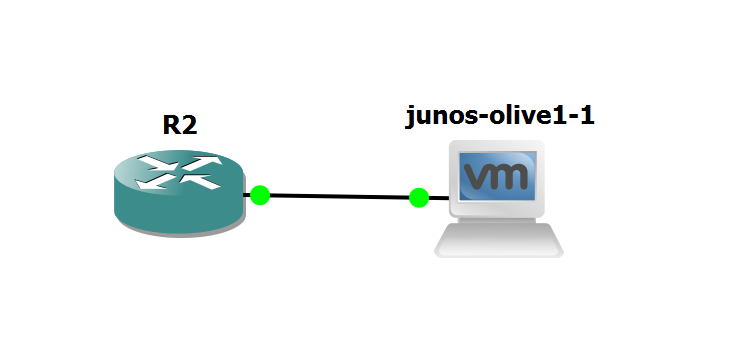
Here’s how the topology looked before bringing up the tunnel:
R3(config)#do sh ip int br
Interface              IP-Address      OK? Method Status                Protocol
FastEthernet0/0        10.0.23.3       YES manual up                    up
FastEthernet1/0        unassigned      YES unset  administratively down down
FastEthernet2/0        unassigned      YES unset  administratively down down
Loopback0              3.3.3.3         YES manual up                    up
Tunnel0                172.16.13.2     YES manual up                    down

R2(config)#do sh ip int br
Interface              IP-Address      OK? Method Status                Protocol
FastEthernet0/0        10.0.12.2       YES manual up                    up
FastEthernet1/0        10.0.23.2       YES manual up                    up
FastEthernet2/0        unassigned      YES unset  administratively down down

R1(config)#do sh ip int br
Interface              IP-Address      OK? Method Status                Protocol
FastEthernet0/0        10.0.12.1       YES manual up                    up
FastEthernet1/0        unassigned      YES unset  administratively down down
FastEthernet2/0        unassigned      YES unset  administratively down down
Loopback0              1.1.1.1         YES manual up                    up
Tunnel0                172.16.13.1     YES manual up                    down
🔧 GRE Tunnel Configuration
On R1:
do sh running-config | section Tunnel
interface Tunnel0
 ip address 172.16.13.1 255.255.255.252
 tunnel source 10.0.12.1
 tunnel destination 10.0.23.3
R1(config)#ip route 10.0.23.3 255.255.255.255 10.0.12.2
R1(config)#do wr
Building configuration...
[OK]
R1(config)#
*Apr 11 11:30:30.511: %LINEPROTO-5-UPDOWN: Line protocol on Interface Tunnel0, changed state to up
Tunnel comes UP even if remote side is not configured
This is because:
- GRE only checks underlay reachability
- It does NOT validate remote tunnel state
🔧 R3 Tunnel Config
R3(config)#do sh running-config | section Tunnel
interface Tunnel0
 ip address 172.16.13.2 255.255.255.252
 tunnel source 10.0.23.3
 tunnel destination 10.0.12.1
R3(config)#ip route 10.0.12.1 255.255.255.255 10.0.23.2
Running OSPF over GRE
R1(config-router)# network 172.16.13.0 0.0.0.3 area 0
R1(config-router)# network 1.1.1.0 0.0.0.255 area 0
R1(config-router)#do wr
Building configuration...
[OK]
R1(config-router)#
*Apr 11 11:43:34.343: %OSPF-5-ADJCHG: Process 1, Nbr 3.3.3.3 on Tunnel0 from LOADING to FULL, Loading Done
On R3:
R3(config)#router ospf 1
R3(config-router)# router-id 3.3.3.3
R3(config-router)# network 172.16.13.0 0.0.0.3 area 0
R3(config-router)# network 3.3.3.0 0.0.0.255 area 0
R3(config-router)#do wr
Building configuration...

*Apr 11 11:43:34.315: %OSPF-5-ADJCHG: Process 1, Nbr 1.1.1.1 on Tunnel0 from LOADI
Verification:
R1(config)#do ping 3.3.3.3
Type escape sequence to abort.
Sending 5, 100-byte ICMP Echos to 3.3.3.3, timeout is 2 seconds:
!!!!!
Success rate is 100 percent (5/5), round-trip min/avg/max = 20/34/52 ms
Failure Scenario
Shutting tunnel on R1:
R1(config)#int tunnel0
R1(config-if)#shut
R1(config-if)#
*Apr 11 11:53:53.187: %OSPF-5-ADJCHG: Process 1, Nbr 3.3.3.3 on Tunnel0 from FULL to DOWN, Neighbor Down: Interface down or detached
*Apr 11 11:53:55.171: %LINEPROTO-5-UPDOWN: Line protocol on Interface Tunnel0, changed state to down
*Apr 11 11:53:55.175: %LINK-5-CHANGED: Interface Tunnel0, changed state to administratively down
But on R3:
R3(config)#do sh ip int br
Interface              IP-Address      OK? Method Status                Protocol
FastEthernet0/0        10.0.23.3       YES manual up                    up
FastEthernet1/0        unassigned      YES unset  administratively down down
FastEthernet2/0        unassigned      YES unset  administratively down down
Loopback0              3.3.3.3         YES manual up                    up
Tunnel0                172.16.13.2     YES manual up                    up
👉 Key Learning:
GRE tunnel is unidirectional state-aware
- One side down ❌
- Other side still shows up ✅
Use BFD for fast + symmetric failure detection
🔁 IP-in-IP Configuration Difference
Only change:
R1(config)# do show running-config | section int
interface Loopback0
 ip address 1.1.1.1 255.255.255.0
interface Tunnel0
 ip address 192.168.13.1 255.255.255.252
 tunnel source 10.0.12.1
 tunnel mode ipip
 tunnel destination 10.0.23.3
👉 Just one line:
tunnel mode ipip🔬 Packet-Level Understanding
🔹 IP-in-IP Packet
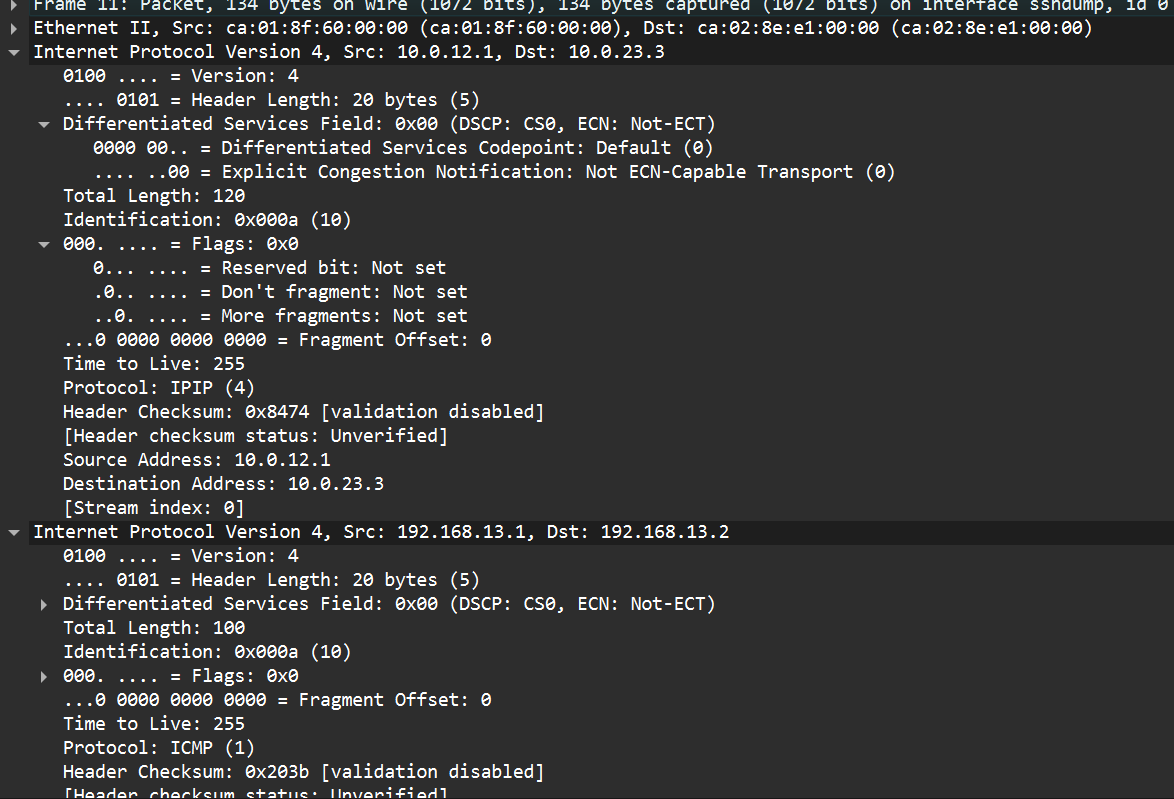
Src: 10.0.12.1
Dst: 10.0.23.3
Protocol: IPIP (4)
TTL: 255
👉 Meaning:
- Outer = underlay
- Inner = tunnel packet
- No extra header
🔹 GRE Packet (Key Differences)

- Protocol = 47
- GRE header present
- Payload type defined (IPv4)
GRE vs IP-in-IP
- Protocol Number
GRE → 47
IPIP → 4
- Encapsulation
GRE → Outer IP + GRE header + Inner IP
IPIP → Outer IP + Inner IP (no extra header)
- Header Presence
GRE → Has GRE header (defines payload type)
IPIP → No additional header
- Overhead
GRE → ~24 bytes
IPIP → ~20 bytes
- Multicast Support
GRE → Supported
IPIP → Not supported
- Flexibility
GRE → Can carry multiple protocols
IPIP → Only IP (unicast)
메타데이터
- post_id
- 5feed6fec0a3
- slug
- gre-vs-ip-in-ip-5feed6fec0a3
- url
- https://medium.com/@aks001235/gre-vs-ip-in-ip-5feed6fec0a3
- canonical_url
- https://medium.com/@aks001235/gre-vs-ip-in-ip-5feed6fec0a3
- author_url
- https://medium.com/@aks001235
- status
- ok
- fetched_at
- 2026-06-20 20:29:01