Inflation Target Reset: The Fed’s 2.9% Move No One Reported
Explore the untold global consequences of America’s monetary pivot and why the media missed the story.
Inflation Target Reset: The Fed’s 2.9% Move No One Reported
Explore the untold global consequences of America’s monetary pivot and why the media missed the story.

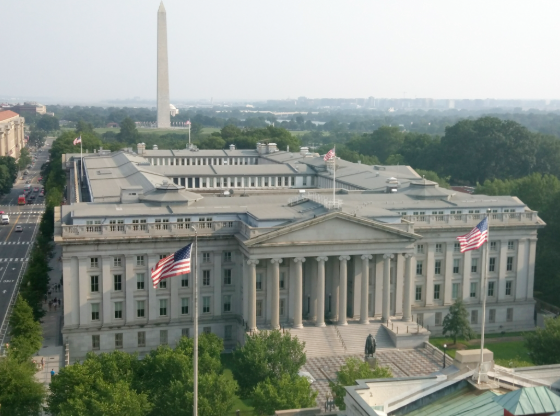
Image used from sah-archipedia.org
If you watched the Federal Reserve’s FOMC press conference on June 17th, 2026, you probably walked away with a very different picture from what most mainstream news outlets reported. And honestly? That gap is exactly what I want to talk about today because something significant happened at that meeting, and it’s been almost completely buried.
Let me be direct with you: the Federal Reserve, under new chair Kevin Warsh, has effectively shifted its inflation target from 2.0% to 2.9%. That is not a minor adjustment. That is not “to the right of the decimal point.” That is a meaningful change in what the Fed considers acceptable inflation — and I believe it has real consequences for your money, your mortgage, and your cost of living.
So let’s break this down properly, starting from the official source and working our way through the press conference. No media spin. Just what was actually said.
What the official FOMC press release actually said
Fed funds rate held at
3.75%
No cut, no hike unanimous hold
Original inflation target
2.0%
Held for years now effectively abandoned
Warsh’s implied new target
2.9%
“Things to the right of the decimal don’t matter”
Market-implied hike probability (July)
34.2%
CME FedWatch as of June 2026
The Fed’s press release from Wednesday confirmed that interest rates were kept exactly where they’ve been at 3.75%. All 18 voting members agreed. No dissents, no close calls. The decision was unanimous. Now, media outlets immediately labeled this as a “hawkish hold,” which is a bit of a contradiction in terms if you ask me. Hawkish means you’re tightening raising rates, draining money from the system. None of that happened here.
In fact, the press release specifically states the Fed will print money and expand its balance sheet when appropriate. Read that again. The official document says they are open to expanding the balance sheet. If your definition of hawkish includes “willing to print more money,” then we have very different dictionaries.
The 2.9% bombshell and why it matters
Here’s the moment that should have been front-page news. During the press conference, a reporter pressed Warsh directly: “Does this inflation framework review include revisiting the 2% target itself? Should 2% be reconsidered as too strict?” Warsh’s response was revealing. He said, and I’m paraphrasing closely here, that he focuses on the left of the decimal point and that “the two is the left of the decimal point. Zero is to the right.”
So 2.0% and 2.9% are, in his view, essentially the same thing. “Things to the right of the decimal don’t matter.” That single statement functionally moves the Fed’s inflation goalpost from 2.0% to somewhere approaching 3.0%. For years, the Fed has been failing to hit 2.0% and taking criticism for it. Now, rather than redouble efforts, the strategy appears to be: change what “success” looks like.
“The two is the left of the decimal point. Zero is to the right. I see no reason until we have reestablished our commitment to revisit that.”
— Kevin Warsh, Fed Chair, June 17 FOMC Press Conference
Think about what this means practically. If inflation runs at 2.7% or 2.8% and the Fed is comfortable calling that “close enough to 2,” then they have a much easier path to start cutting interest rates. The political pressure to cut from the White House, from markets, from mortgage holders is enormous.
A higher de facto inflation tolerance gives the Fed cover to act sooner. Whether that’s good policy or just convenient policy is a question worth sitting with.
Was Kevin Warsh actually hawkish? The reporters didn’t think so

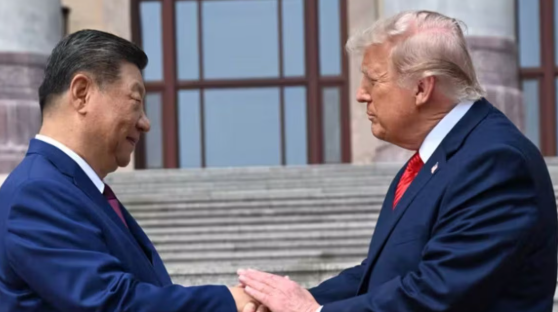
Image used from pbs
Multiple reporters at the press conference pushed Warsh on why he didn’t even threaten to raise interest rates, let alone actually do it. One reporter said directly: “If credibility requires delivering, the move would be to tighten or at least to threaten to. You didn’t do that today. Why not?” Warsh’s response was short almost dismissive. He said that sentiment “was not expressed by any of the 19 people around the table” and that they’d take the issue up again in six weeks.
Not one Federal Reserve member voted to raise rates. Not one suggested it in a public statement. And yet the dominant media narrative the next morning was that Warsh is some kind of inflation hawk reshaping the Fed. I genuinely don’t know what press conference they were watching.
Another reporter asked why the Fed hadn’t raised rates given the inflation risks Warsh himself described. His answer, verbatim, was: “I’ve got nothing more to say than the statement itself.” That’s not hawkish posturing. That’s a chair who clearly doesn’t want to raise rates and isn’t interested in explaining why in a public forum.
The data task force improving the numbers, or massaging them?
Warsh also announced the creation of several internal task forces at the Fed, one of which focuses specifically on how inflation is measured. He said the current methods rely heavily on outdated surveys, poor response rates, and questions that “might have been quite applicable a generation ago” but are less relevant today.
On the surface, that sounds reasonable. Better data is better policy. But here’s where I get a little skeptical and I think you should too. When a reporter asked what the task force would specifically look at, Warsh admitted he still had “a phone call or two to make” before he’d even hired the people running it. So the task force doesn’t fully exist yet, the methodology is unspecified, and the outcome is “open-minded.” That’s not a policy overhaul. That’s a placeholder.
The concern I’d raise is this: when governments and central banks “improve” the way they calculate inflation, the result historically tends to make inflation look lower than it is. That may sound cynical, but if you look at the history of CPI methodology changes in the US over the past 30 years substitution effects, hedonics, seasonal adjustments — each change has generally nudged the reported number downward. A methodological change that conveniently brings reported inflation closer to a 2% target without prices actually falling isn’t an improvement. It’s a redefinition.
Household finances worsen amid inflation squeeze
While the Fed deliberates in Washington, ordinary Americans are already feeling the pressure. The New York Fed’s May Survey of Consumer Expectations found that 43.7% of households felt financially worse off than a year ago the highest reading since January 2023. That’s nearly half of all American households. And the outlook isn’t improving: the share of people expecting their finances to get better over the next year is at its lowest since October 2022.
Year-ahead inflation expectations remained elevated at 3.5%, while home price expectations continued climbing. Labor market confidence sent mixed signals more people said they’d be willing to quit their jobs, but fewer felt confident they’d find a new one quickly. That’s a combination that tends to signal stress, not strength.
Ways households can manage inflation pressure
· Move emergency cash into high-yield savings accounts to stop it losing value in a standard account
· Audit every recurring subscription and bill you’d be surprised how much is quietly draining out each month
· Diversify investments beyond equities inflation erodes real returns in stock-heavy portfolios
· Consider inflation-resistant assets like real estate or gold IRAs as part of a longer-term hedge
· If you have a variable-rate mortgage, shop around now locking in a fixed rate before any hike in July could matter
Markets pivot from cuts to possible hikes
Here’s where the market story gets a bit strange. After stronger-than-expected May jobs data, traders shifted their bets dramatically. The CME FedWatch tool now shows a 34.2% probability of a rate hike at the next meeting on July 29th, and a 0% chance of a cut. Meanwhile, Goldman Sachs pushed back its forecast for the first rate cuts to mid-to-late 2027, and doubled its estimate of the probability of a hike to 20%.
My honest reaction to that 34.2% hike probability? It seems wildly high given what we just saw at the June meeting. Not a single Fed member advocated for a hike. Not one. Warsh refused to even threaten one when directly challenged. And yet markets have priced in a one-in-three chance of one in July? That seems like the market running ahead of reality to me. I’d be surprised genuinely surprised if the Fed raises rates at the next meeting.
Geopolitical shocks fuel inflation outlook shift
There’s a broader macro backdrop here that’s pushing inflation expectations higher regardless of what the Fed does. The recent closure of the Strait of Hormuz following the Iran conflict sent oil and fuel prices sharply higher, feeding directly into goods inflation.
The San Francisco Fed noted that elevated commodity costs could delay a return to even the old 2% target until 2028. The Fed’s own March projections quietly raised 2026 inflation forecasts from 2.4% to 2.7%.
Even with a peace deal now in place and Trump has signaled he’s comfortable letting Warsh hold rates given easing energy prices analysts warn that supply chain disruptions triggered by the conflict won’t simply unwind overnight. Shipping rerouting, insurance costs, refinery adjustments these take months to filter through to consumer prices. So even if the political situation stabilises, the inflation impact may run longer than anyone is projecting right now.
This also explains, I think, why Trump isn’t likely to push for a hike in July despite the market pricing it in. Falling energy prices give the White House political room to tolerate a “hawkish hold” without actually needing the Fed to deliver one. It’s a convenient equilibrium for now.
Reference
메타데이터
- post_id
- 601cd84bf7ea
- slug
- inflation-target-reset-the-feds-2-9-move-no-one-reported-601cd84bf7ea
- url
- https://medium.com/geopolitics-beyond/inflation-target-reset-the-feds-2-9-move-no-one-reported-601cd84bf7ea
- canonical_url
- https://medium.com/geopolitics-beyond/inflation-target-reset-the-feds-2-9-move-no-one-reported-601cd84bf7ea
- author_url
- https://medium.com/@nairsahil08
- status
- ok
- fetched_at
- 2026-06-29 22:44:20