The Irony of the Black American MAGA Agenda
There was a time when the phrase “Make America Great Again” sounded simple to many people. To supporters, it represented patriotism…
The Irony of the Black American MAGA Agenda
Photo by Kelly Sikkema on Unsplash
There was a time when the phrase “Make America Great Again” sounded simple to many people. To supporters, it represented patriotism, economic revival, stronger borders, traditional values, and a return to what they believed was a better America. But for many Black Americans, the slogan creates a difficult question that cannot easily be ignored:
Great again for who?
That question sits at the center of the irony surrounding the rise of Black American support for the MAGA movement. It is not ironic because Black Americans are incapable of being conservative. Black Americans have always represented a wide range of political, religious, and social beliefs. The irony comes from the historical tension between the America being romanticized and the America Black people actually experienced during many of those same “great” periods.
For some Black MAGA supporters, the movement is about economics, entrepreneurship, Christianity, masculinity, distrust of Democrats, or frustration with progressive politics. For others, it is about rejecting the idea that Black Americans must vote or think as a political monolith. That frustration is real and understandable. No community likes feeling politically taken for granted. But the contradiction appears when the MAGA message leans heavily on nostalgia for eras where Black Americans were excluded from full participation in the very American dream being celebrated.
When people talk about America being “great” in the 1950s, for example, many imagine booming suburbs, strong manufacturing jobs, affordable homes, and traditional family values. Yet the 1950s were also a period of legalized segregation, racial terror, voter suppression, housing discrimination, and widespread exclusion of Black Americans from wealth-building opportunities. Many Black families could not buy homes in certain neighborhoods because of redlining. Black veterans returning from war were denied benefits that white veterans received. Black children attended underfunded schools while segregation was defended as normal.
So when a Black American embraces a slogan built around returning to that era, critics see a painful contradiction. It feels similar to celebrating a party while forgetting you were never invited into the building.
The irony deepens when considering modern political rhetoric. Some MAGA-aligned voices openly criticize discussions about systemic racism, diversity initiatives, or civil rights activism. Yet those same civil rights battles are precisely why many Black Americans today have the freedoms and opportunities they now enjoy. The ability to vote freely, attend integrated schools, work in previously restricted industries, and challenge discrimination in court did not appear naturally. Those rights came through generations of protest, sacrifice, arrests, beatings, and deaths.
Still, the situation is more complicated than social media arguments make it seem.
Not every Black MAGA supporter is motivated by historical nostalgia. Some are motivated by disappointment. Many Black voters have supported Democratic candidates for decades, yet still see struggling neighborhoods, underperforming schools, rising crime, economic inequality, and political promises that never seem to fully materialize. To those voters, supporting MAGA can feel less like embracing history and more like rebelling against a system they believe has failed them.
In that sense, Black MAGA supporters are often making a statement about political independence. They are saying they do not want their vote automatically assumed. They may admire aggressive business language, conservative Christian messaging, or promises about jobs and economic nationalism. Some are drawn to the image of strength and disruption that became central to Donald Trump’s political identity.
The MAGA movement also frequently intersects with policies, rhetoric, and historical revisionism that many civil rights advocates argue directly undermine Black political power. One major example can be found in the long history of gerrymandering battles. In Virginia, redistricting controversies over the past decade exposed how political maps could be manipulated in ways that diluted Black voting strength while still technically appearing legal. Courts eventually ruled that several districts had been racially gerrymandered. The entire situation revealed how political engineering can shape representation long before a single vote is cast. For many Black Americans, that debacle became symbolic of a broader issue within modern conservative politics: the simultaneous outreach to Black voters while supporting systems accused of weakening Black electoral influence.
The recent Tennessee redistricting fallout added even more fuel to those concerns. After aggressive redrawing of congressional districts, critics argued that heavily Black and Democratic communities were strategically divided to reduce their collective political influence. Nashville has became one of the most discussed examples this past week. To many observers, the message feels contradictory. Republicans sought Black support publicly while supporting political strategies that critics believed weakened urban Black voting power institutionally.
There is also a cultural element involved. Modern American politics increasingly revolves around identity, and some Black conservatives reject what they see as pressure to think a certain way because of race. They argue that freedom includes the freedom to disagree with the political majority within their own community. Whether people agree with them or not, that perspective is rooted in individuality and frustration with political tribalism.
But even with those motivations understood, the irony remains difficult to ignore.
A movement that often minimizes conversations about racism still seeks support from descendants of people who endured slavery, segregation, lynching, and institutional discrimination. A political slogan built on nostalgia asks Black Americans to celebrate periods where their ancestors were denied equal humanity. Some MAGA supporters praise “law and order” without acknowledging the long history of unequal policing and criminal justice disparities affecting Black communities. Others criticize affirmative action while benefiting from generational advantages created during eras when Black Americans were intentionally excluded from opportunities.
For many observers, this creates the appearance of historical amnesia.
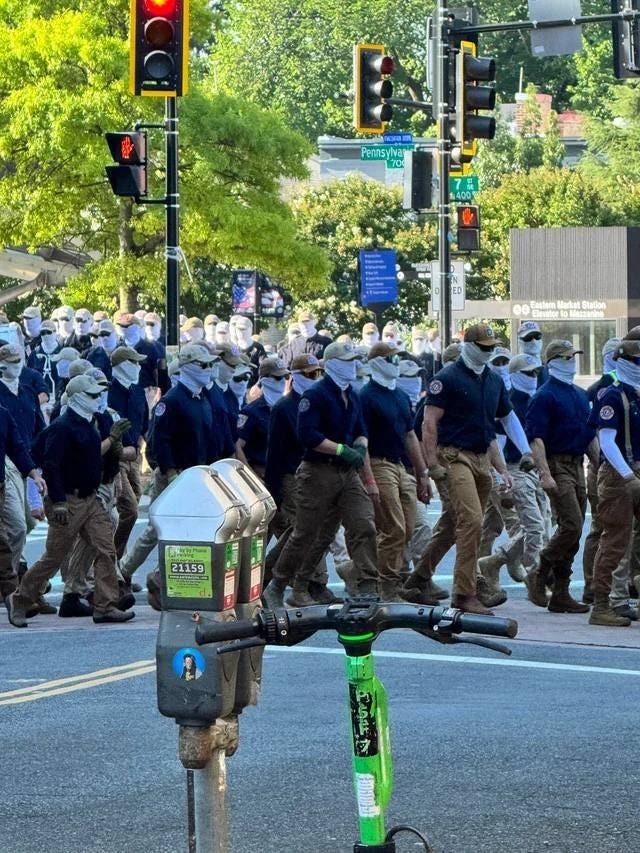
The irony becomes even sharper when Confederate symbols enter the conversation. While not all MAGA supporters embrace Confederate imagery, there have been visible overlaps between certain nationalist movements and symbols historically tied to white supremacy. For Black Americans supporting those movements, critics often ask how one reconciles racial pride with participation in spaces where such symbols are tolerated or defended under the banner of heritage.
Yet reducing Black MAGA supporters to stereotypes is also intellectually lazy.
Some media portray Black conservatives as confused, manipulated, or self-hating, which ignores the complexity of political identity. Black Americans are not obligated to belong to one ideology forever. Political diversity exists in every racial group. Assuming otherwise can become its own form of condescension. Genuine political dialogue requires understanding why people make the choices they do, even when those choices seem contradictory.
What makes the conversation emotionally charged is that both sides believe they are defending freedom.
Critics of the Black MAGA movement believe they are defending historical truth and protecting civil rights progress from regression. Black MAGA supporters often believe they are defending independent thought, economic opportunity, traditional values, and freedom from political dependency. Both perspectives are shaped by lived experiences, fears, hopes, and frustrations with America itself.
In many ways, the entire debate reflects a larger American contradiction.
America has always promoted ideals of liberty and equality while simultaneously struggling with racism, exclusion, and unequal treatment. Black Americans have historically loved a country that did not always love them back equally. That paradox has existed since the founding of the nation. Frederick Douglass exposed it. Martin Luther King Jr. challenged it. Malcolm X criticized it. Modern political movements are simply newer chapters in the same ongoing story.
Perhaps the biggest irony of all is this: Black Americans have often been among the most patriotic people in the country despite centuries of injustice. From military service to civil rights activism to entrepreneurship and cultural influence, Black Americans have continuously fought to improve a nation that repeatedly failed them. That loyalty came not from blindness to America’s flaws, but from belief in what America could become.
So when Black Americans join a movement centered on restoring an older America, the question naturally arises whether they are embracing possibility, protest, frustration, or nostalgia for a version of America that never fully included them in the first place.
That tension is why the subject remains so controversial. It is not just about party politics. It is about memory, identity, history, belonging, and the meaning of patriotism itself.
And in today’s America, those conversations are far from over.
메타데이터
- post_id
- 6020ff3d3170
- slug
- the-irony-of-the-black-american-maga-agenda-6020ff3d3170
- url
- https://medium.com/@tenillegalloway/the-irony-of-the-black-american-maga-agenda-6020ff3d3170
- canonical_url
- https://medium.com/@tenillegalloway/the-irony-of-the-black-american-maga-agenda-6020ff3d3170
- author_url
- https://medium.com/@tenillegalloway
- status
- ok
- fetched_at
- 2026-07-29 15:50:12