Part1 — Why the World Needs SMRs Right Now
The perfect storm of AI power hunger and climate pressure is creating a once-in-a-generation opening for small modular reactors.
Part1 — Why the World Needs SMRs Right Now
The perfect storm of AI power hunger and climate pressure is creating a once-in-a-generation opening for small modular reactors.
The Electricity Crisis Nobody Is Talking About Loudly Enough
Let me start with a number that genuinely shocked me when I first saw it.
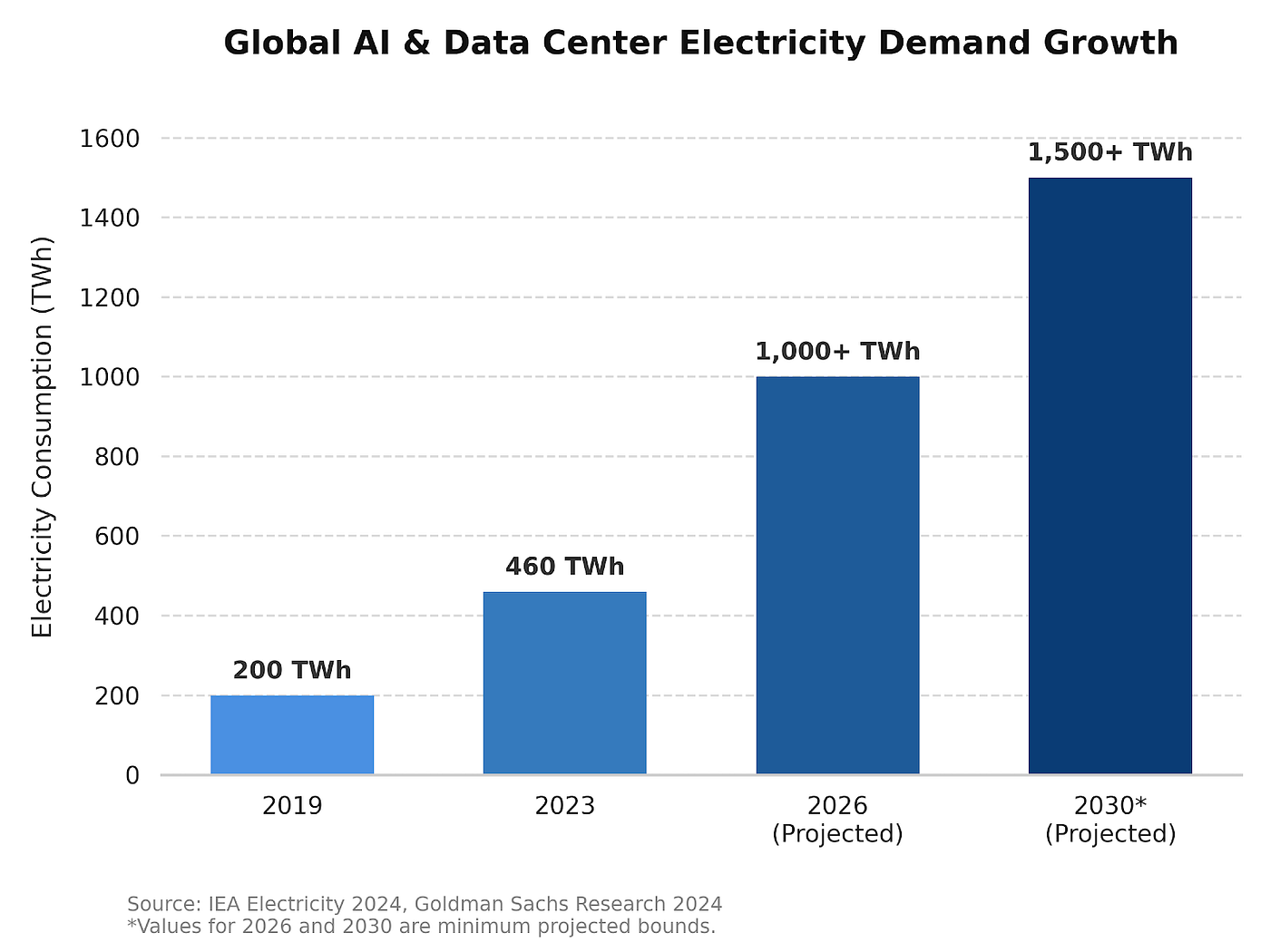
[ Fig. 1 — AI & Data Center Global Electricity Demand Bar Chart ]
Global DC consumption: 200 TWh (2019) → 460 TWh (2023) → projected 1,000+ TWh (2026) → 1,500+ TWh (2030). Source: IEA Electricity 2024, Goldman Sachs Research 2024*
In 2023, data centers around the world consumed about 460 terawatt-hours (TWh) of electricity. To put that in perspective: that’s roughly equivalent to the entire annual electricity consumption of South Korea — consumed purely by servers, cooling systems, and network equipment running 24/7.
Now here’s the problem: that number is about to explode. The International Energy Agency projects data center consumption could exceed 1,000 TWh by 2026. Goldman Sachs estimates AI alone will drive a 160% increase in data center power demand by 2030. These aren’t wild speculations — they’re mainstream institutional forecasts from some of the most conservative analytical organizations in the world.
The companies building this AI infrastructure — Microsoft, Google, Amazon, Meta — are already scrambling for power. And here’s what I think is the most underappreciated story in tech right now: they cannot solve this with solar panels and wind turbines alone.
⚡ Why Renewables Alone Won’t Cut It
Solar and wind are intermittent — they produce electricity when the sun shines and the wind blows, not necessarily on demand. AI inference workloads run 24 hours a day, 7 days a week, and are completely intolerant of power interruptions. A language model data center cannot wait for clouds to pass.
The Climate Pressure That Was Already There
Even before AI came along, the energy world was already under enormous pressure. The Paris Agreement goal — limiting global warming to 1.5°C — requires eliminating around 36 billion tons of CO₂ emissions per year. The power sector is responsible for roughly 40% of global emissions.
Renewable energy has made incredible progress. Solar costs dropped over 90% in the past decade. Wind is now among the cheapest sources of new electricity in many countries. But renewables have a fundamental physics problem: they’re intermittent and low-density. You simply cannot run a steel mill, a hospital, or a hyperscale data center on ‘it depends on the weather’ power.
This is where the climate story and the AI story converge on exactly the same answer.
Why Traditional Nuclear Isn’t the Solution Either
Nuclear power already generates roughly 10% of global electricity with almost zero carbon emissions — so why not just build more big nuclear plants? The honest answer is that conventional large reactors have become nearly impossible to build in the 21st century:
• The UK’s Hinkley Point C started construction in 2017 and may not finish until 2031–14+ years for one plant
• Capital costs exceed $10,000 per kilowatt of capacity — among the most expensive structures humans build
• They need coastal or river locations for cooling water — you can’t site one next to a data center in Arizona
• After Fukushima (2011), public trust in large nuclear plants collapsed in many countries
You can’t build a Hinkley Point C fast enough, cheaply enough, or flexibly enough to solve the AI power crisis. The energy industry needed something fundamentally new.
Enter the Small Modular Reactor
A Small Modular Reactor (SMR) is a nuclear reactor producing up to 300 megawatts of electricity (MWe) — roughly one-third the size of a conventional plant. But the ‘small’ part is almost a distraction. The real revolution is the word ‘modular.’
Modular means factory-built. Instead of constructing a one-of-a-kind mega-structure on-site over fifteen years, SMR components are manufactured in standardized factories — like building with very sophisticated LEGO — then shipped to the site and assembled. This changes everything about the economics, the timeline, and where nuclear power can be deployed.
“The question isn’t whether SMRs can work. The question is whether they can scale fast enough — and cheap enough — to actually matter.”
Three Forces Converging Right Now
-
AI infrastructure demanding reliable, carbon-free power at unprecedented speed and scale
-
Corporate ESG commitments requiring tech companies to match energy use with clean generation
-
Government energy security goals pushing nations to diversify away from fossil fuel dependence
This is why Microsoft has signed nuclear power deals, why Google contracted with Kairos Power, why Amazon backed X-energy. The most interesting bet of all belongs to a company co-founded by someone who made his name in software. His name is Bill Gates, and his company is called TerraPower.
In Part 2, I’ll break down exactly how SMR technology works — including the key design differences that make some reactor types far safer and more versatile than others.
메타데이터
- post_id
- 6033c3b5a60b
- slug
- why-the-world-needs-smrs-right-now-6033c3b5a60b
- url
- https://medium.com/@kgr01228/why-the-world-needs-smrs-right-now-6033c3b5a60b
- canonical_url
- https://medium.com/@kgr01228/why-the-world-needs-smrs-right-now-6033c3b5a60b
- author_url
- https://medium.com/@kgr01228
- status
- ok
- fetched_at
- 2026-06-09 15:37:30