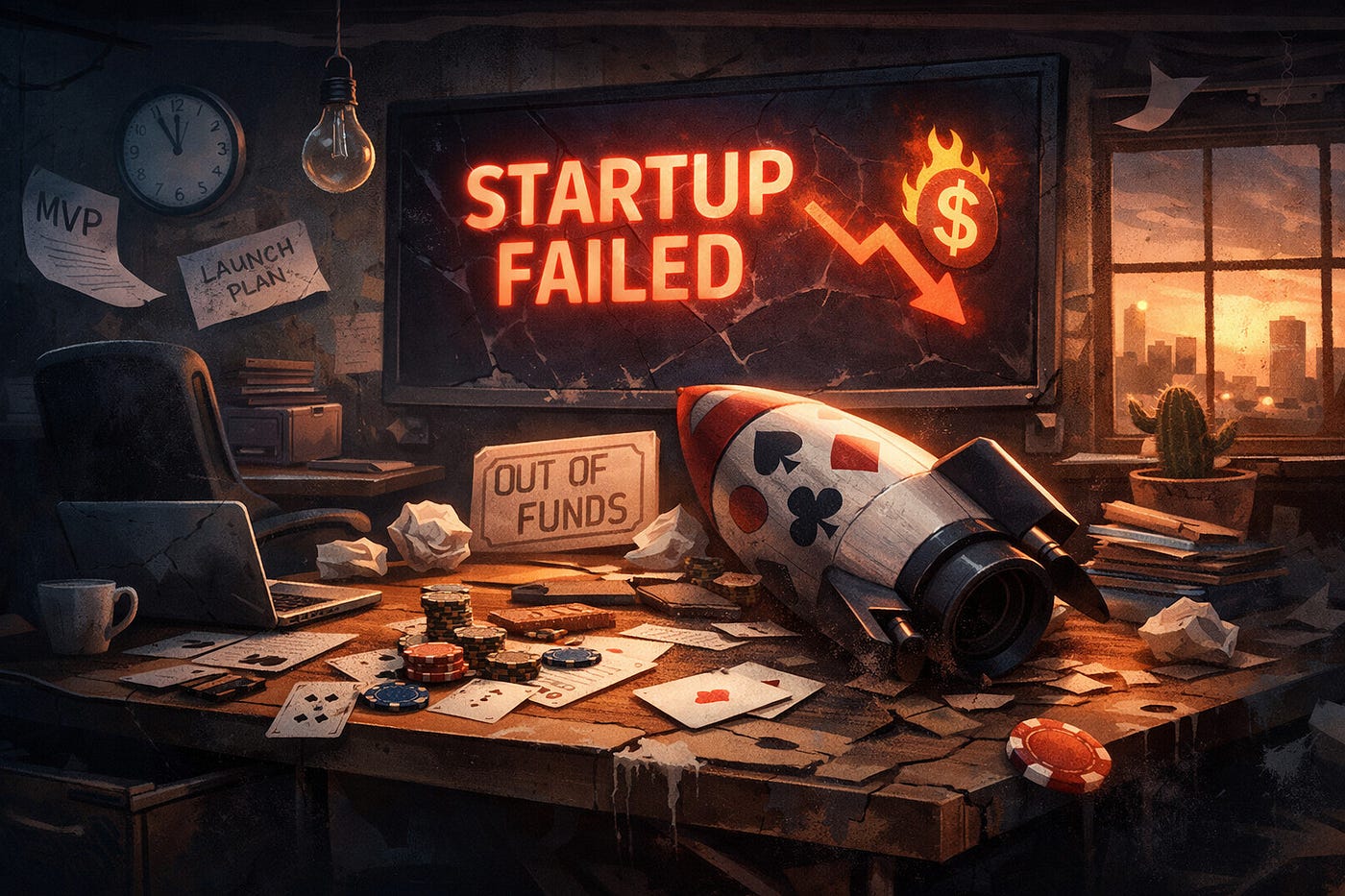
Why Your Solo Startup Is 2x Harder (and 5 Other Hard Truths About Co-Founders)
March 31, 2026

Why Your Solo Startup Is 2x Harder (and 5 Other Hard Truths About Co-Founders)
March 31, 2026
The myth of the “solo genius”, the lone visionary toiling in a garage to build a billion dollar empire, is one of the most persistent and dangerous fictions in Silicon Valley. We love the narrative of the singular hero, but the data tells a different story.According to Catheryn Li, Startup School Online ol Lead at Y Combinator inator, and Divya Bhat, a YC Visiting Partner and seasoned founder, starting a company alone isn’t just difficult; it is “more than twice as hard.” In the high-stakes world of early-stage ventures, the co-founder relationship isn’t just a detail of your cap table, it is the most critical factor in whether you survive the “Trough of Sorrow” or vanish into the graveyard of “what-ifs.”
1. The “1 in 25” Rule: Why Solo Founders Face Impossible Odds
While YC does fund solo founders, the quantitative reality is sobering. Out of YC’s top 100 most successful companies, only four were founded by a solo founder.When YC looks at a solo founder, they are looking for someone truly “exceptional.” Why? Because making progress alone, building the MVP, acquiring the first users, and sustaining momentum without a peer, proves a level of raw will that is rare. Most people need a team to survive the four essential pillars of startup life:
Productivity: You move two to three times as fast.
Brainstorming: A partner helps you see around corners and prevents you from getting stuck in a “rut” with a bad idea.
Accountability: It’s easy to lie to yourself; it’s much harder to face a partner during a daily stand-up when you haven’t delivered.
Moral Support: This is the psychological bedrock of the company.”A startup has a lot of ups and downs. There’s moments of optimism, there’s moments of despair. Having someone that can both empathize with you but also balance you out can be just so helpful to keep moving.” , Divya Bhat Even the “solo” icons were part of a pack. Bill Gates es had @Paul Allen for a decade; @Steve Jobs had @Wozniak; Mark Zuckerberg ckerberg had four co-founders at the start of Meta. If the titans of industry didn’t go it alone, why are you trying to?
2. The Marriage Analogy: “Attack vs. Retreat” and the Science of Vibe
A co-founder relationship is a marriage where you spend more time with your partner than a legal spouse. This is why “complementary skills” are often a distraction. You can learn sales, marketing, or fundraising. You cannot “learn” alignment on values or stress management.The most human-centric challenge in a partnership is the “Attack vs. Retreat” dynamic. Divya Bhat notes that when things get tense, founders usually fall into two camps:
The Attacker: Cravings engagement, wants to solve the problem now , and gets highly communicative under stress.
The Retreater: Needs space to cool down and withdraws to process.If you don’t recognize these styles, you enter a “vicious cycle.” The Attacker perceives the Retreater as not caring, while the Retreater perceives the Attacker as “being crazy.”To de-risk this, follow the lead of Kiwi Biosciences . Founders Angie and David used a 50-question questionnaire and a trial month to test their “vibe.” Crucially, they implemented a “No Interrupting” rule : when one person gives constructive feedback, the other is not allowed to argue or defend themselves. It allows for venting and honesty without the immediate friction of defensiveness.
3. Why Your Million-Dollar Idea is Worth Exactly $0
One of the quickest ways to poison a partnership is an unequal equity split. Founders often argue for more because “I had the idea first” or “I built the MVP.”This is a strategic failure. In the YC universe, if you try to “get a good deal” from your co-founder, you’ve already lost. You are starting the relationship on a foundation of resentment.”Ideas are cheap… the idea is very likely to change over time as you listen to your users.”You aren’t rewarding someone for a one-month head start; you are incentivizing a 7-to-10-year journey. If the outcomes are bimodal (either zero or billions), jeopardizing the partnership over a few percentage points is irrational. You need your partner to be as “hungry and motivated” as you are on year seven, not just month one.
4. The Dev Shop Trap: Why You Can’t Outsource Your Soul
Non-technical founders often try to bypass the co-founder search by hiring a “Dev Shop.” In the YC universe, this is the equivalent of a slow-motion car crash.Early-stage startups are about “feeling around in the dark.” You don’t have a clear deliverable because your requirements change daily based on user feedback. Dev shops are built for fixed deliverables; they don’t care about your users, they care about your hourly rate.The hard truth: if you cannot find a technical co-founder to join you, pick up the keyboard and learn to code yourself. You cannot outsource the “heart” of your product to a third party that isn’t marching in the same direction.
5. The Consensus Curse: Why Every Team Needs a Tie-Breaker
A major “yellow flag” for YC partners is a team that refuses to name a CEO or use titles, opting instead for “Co-CEOs” or “Total Equality.” This usually masks an inability to have hard conversations.Making decisions by consensus is disastrous. It leads to gridlock and “spinning.” You need:
Clear Areas of Ownership: Who has the final say on engineering? Who owns sales?
A Named CEO: One person must be the ultimate tie-breaker.
Psychological Safety: Without trust, “feedback” becomes a personal attack.Divya Bhat recalls a cautionary tale of a CEO who berated his co-founder at a bar at midnight in front of friends. The co-founder resigned the next morning. When you lack trust, you micromanage and “jump in” before projects have time to work. You must “Trust by Default.” Trust your partner to fail, and when they do, avoid the “I told you so.”
Conclusion: The Leap of Faith
At the end of the day, no questionnaire or trial project can fully eliminate risk. You can use YC’s Co-Founder Matching platform to find the “perfect match on paper”, like Sequin’s Vrinda and Mark, who vibed instantly over gender equity and fintech, but eventually, you have to jump.Starting a company is an act of defiance against the odds. You are choosing to march in the same direction as another human being through “moments of despair” and unexpected pivots.As you vet potential partners, ask yourself: “Are you looking for a set of skills to fill a gap, or are you looking for a person you can trust when everything starts to go wrong?” In the end, it’s the trust, not the transcript, that builds the empire.
Shafqat Ameen Mir
product@lms || Gen AI@2024 || stock investing @2019 || Entrepreneur || Lessons from my journey || Lean Startup || content creation || business || personal development ||
Shafqat Ameen Mir Sheik Abdul Rahuman SYED ANWAR BroskiesHub Harish Raja ACIC KIF Kalasalingam TBI Kalasalingam University Atal Innovation Mission Official StartupTN StartupIndia Y Combinator
메타데이터
- post_id
- 603b6ea64527
- slug
- why-your-solo-startup-is-2x-harder-and-5-other-hard-truths-about-co-founders-603b6ea64527
- url
- https://medium.com/@shafqatameen316/why-your-solo-startup-is-2x-harder-and-5-other-hard-truths-about-co-founders-603b6ea64527
- canonical_url
- https://medium.com/@shafqatameen316/why-your-solo-startup-is-2x-harder-and-5-other-hard-truths-about-co-founders-603b6ea64527
- author_url
- https://medium.com/@shafqatameen316
- status
- ok
- fetched_at
- 2026-06-09 15:37:30