I Watched a Developer Stop Typing — and It Changed How I Think About Software Teams
The shift from typing speed to decision quality in AI-native software teams
We’ve Been Optimizing Developers for Typing Speed — and That Was the Wrong Problem

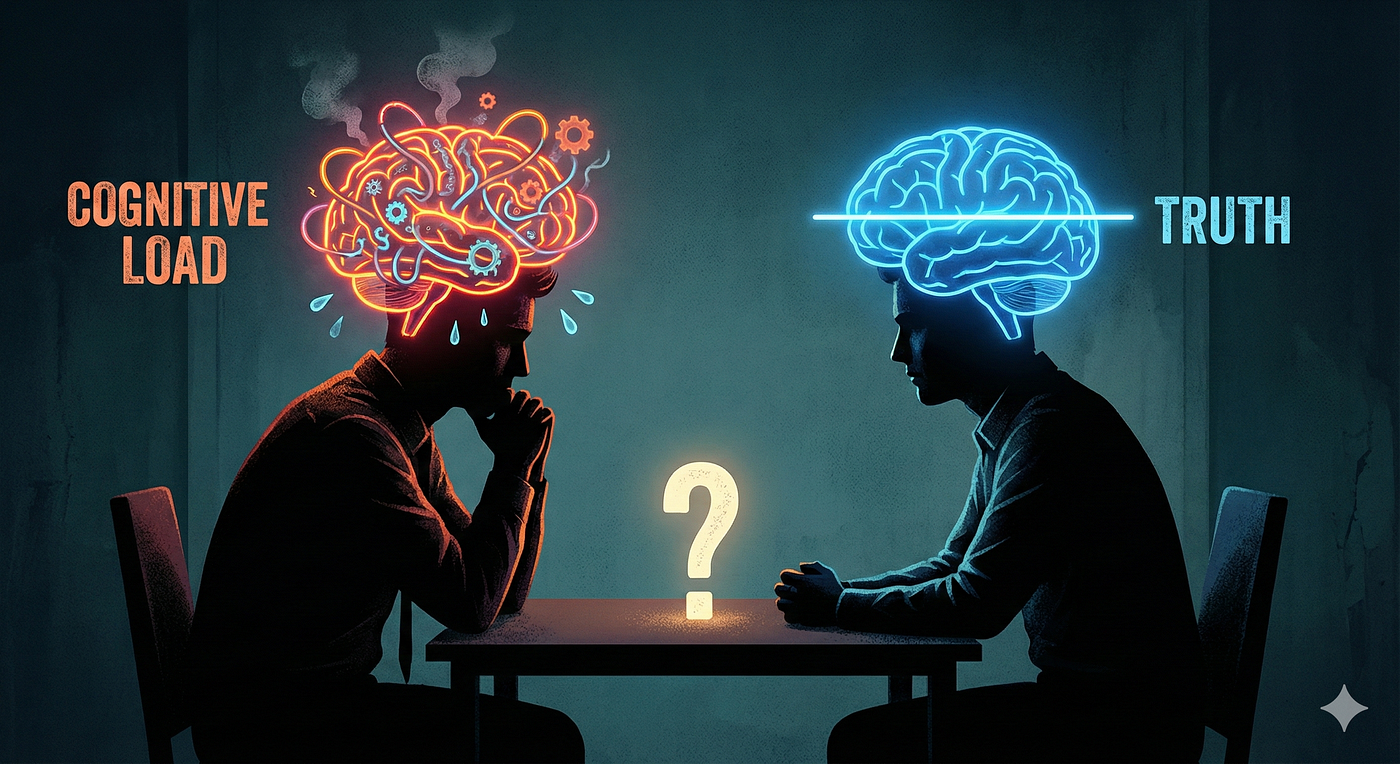
Empowered via Voice Command: The shift from coder to technical integrator. (Generated by Gemini AI)
A few months ago, I watched a video that quietly broke one of my longest-held assumptions about software development.
A developer was working across multiple AI-powered CLI sessions, issuing commands almost entirely by voice. There was no frantic typing, no constant window switching, no obsessive focus on the IDE. In fact, he barely touched the keyboard at all.
At first, I dismissed it as performance art.
But then I noticed what he was actually building. Not a demo. Not a toy. An enterprise-grade product, with real constraints, real deployment, real consequences.
That was the moment something clicked for me.
For years, we’ve optimized developers around speed of interaction: faster typing, better shortcuts, smarter editors. We’ve treated productivity as a mechanical problem. But what if we’ve been optimizing the wrong thing?
So I did what any skeptical engineer would do. I tried it myself.
I rebuilt my workflow around the same idea: voice-driven instructions, AI-assisted execution, and a deliberate shift away from tool-first thinking toward process-first design. The goal wasn’t to avoid IDEs, but to stop letting them dictate how I think.
What surprised me wasn’t that things moved faster. It was that they moved cleaner.
When the workflow is well-defined, staring at an IDE becomes optional. Requirements, performance constraints, security considerations, component testing, and cloud deployment stop feeling like separate phases. They collapse into a single continuous thread of reasoning.
The real bottleneck was never execution. It was cognitive fragmentation.
There was, of course, a downside. AI at this level isn’t cheap. You feel the cost immediately. But the tradeoff was unmistakable: thinking stayed intact from idea to deployment.
As I kept experimenting, a broader picture started to emerge — almost like a montage playing in my head.
Developers. Product managers. Designers. QA engineers. Cloud operations. Security teams. Red teams. Blue teams. SEO and digital marketing — a role many engineers still underestimate, yet one that determines whether a product is ever discovered at all.
A modern software project is no longer “someone finishes a feature.” It’s an end-to-end delivery system.
And that realization forced me to confront another belief I’d carried for years.
We’ve been taught to worship vertical expertise. Go deep. Specialize. Become irreplaceable at one thing. That advice made sense in a world where roles were cleanly separated and systems were simpler.
But today, vertical expertise alone no longer completes the job.
If engineers don’t understand how product managers talk to customers, requirements remain abstract and misaligned. If they don’t understand design or testing, systems fail under real-world use. If they don’t understand operations, security, or SEO, even excellent products quietly disappear.
Roles aren’t disappearing — they’re overlapping.
The modern engineer isn’t becoming a “jack of all trades.” They’re becoming something more specific and more valuable: a technical integrator.
Someone who can translate intent into execution. Someone who understands constraints well enough to make tradeoffs. Someone who can move from vague problem to working system without losing coherence along the way.
In many ways, this role looks closer to customer success than traditional implementation. The output isn’t code — it’s outcomes.
At this point, I usually hear the objections.
Isn’t this too much responsibility for one role? Doesn’t this dilute craftsmanship? Doesn’t heavy AI usage create dependency rather than expertise?
These are fair concerns — if boundaries disappear.
But that’s not what’s happening.
The real shift isn’t humans versus AI. It’s judgment versus execution.
Architecture decisions still require human reasoning. Security models still demand accountability. Identity and access control still need careful design. Business risk, legal exposure, financial responsibility — these don’t get delegated to machines.
AI doesn’t replace judgment. It reallocates it.
It removes friction between decisions and outcomes, allowing humans to stay where they’re strongest: reasoning, prioritization, responsibility.
Once a product goes live, this separation becomes even clearer.
Testing. Cloud operations. Security monitoring. Access management. Database administration. SEO and growth — because a product that can’t be found might as well not exist.
If we compress what a future software team actually looks like, it’s surprisingly small:
Generalist or full-stack engineers. Product or project managers. Designers. Security and access specialists. Database administrators. SEO and digital marketing. Finance and legal oversight.
Everything else — repetitive, procedural, standardizable — is increasingly handled by AI agents.
A small human core, supported by intelligent systems, can run multiple projects in parallel without collapsing under coordination overhead.
And that leads to the real conclusion.
The competitive advantage of the future won’t be company size. It won’t be headcount. It won’t even be raw technical talent.
It will be whether AI is treated as a foundational layer, not a productivity plug-in.
For startups — especially small teams — scaling doesn’t start with hiring. It starts with designing systems where humans focus on judgment, and AI scales execution.
We don’t need faster typing.
We need clearer thinking — and workflows that don’t get in its way.
메타데이터
- post_id
- 60a0e34d8cd7
- slug
- i-watched-a-developer-stop-typing-and-it-changed-how-i-think-about-software-teams-60a0e34d8cd7
- url
- https://medium.com/@tanghoong/i-watched-a-developer-stop-typing-and-it-changed-how-i-think-about-software-teams-60a0e34d8cd7
- canonical_url
- https://medium.com/@tanghoong/i-watched-a-developer-stop-typing-and-it-changed-how-i-think-about-software-teams-60a0e34d8cd7
- author_url
- https://medium.com/@tanghoong
- status
- ok
- fetched_at
- 2026-08-07 12:39:35