Lo Shu Grid and Mulank: Understanding Personality Through Two Systems
A date of birth can be interpreted in several ways within numerology. Two of the most popular methods are the Lo Shu Grid and Mulank, also…
Lo Shu Grid and Mulank: Understanding Personality Through Two Systems
A date of birth can be interpreted in several ways within numerology. Two of the most popular methods are the Lo Shu Grid and Mulank, also known as the birth number.
Both systems use numbers from the date of birth, but they analyse personality from different perspectives. Mulank reduces the day of birth to a single number and offers a focused interpretation of natural behaviour, instincts, strengths, and personal tendencies. The Lo Shu Grid uses every digit in the complete date of birth to create a broader pattern of present, repeated, and missing numbers.
For example, Mulank may suggest whether someone is independent, sensitive, creative, disciplined, adventurous, responsible, analytical, ambitious, or compassionate. The Lo Shu Grid may then show whether that main personality quality is supported by communication, emotional awareness, planning, adaptability, responsibility, or other characteristics.
Used together, these systems can provide a more detailed framework for self-reflection.
However, neither method should be treated as a scientific diagnosis or an unchangeable prediction. Numerology is a traditional interpretive system. Its greatest value lies in helping people examine their habits, strengths, challenges, and personal-development needs.
Your numbers may suggest a pattern, but your upbringing, education, environment, experiences, and choices determine how that pattern is expressed.
What Is Mulank in Numerology?
Mulank is calculated from the day of the month on which a person was born. Only the birth day is used, not the complete date.
If someone is born on the 1st, 10th, 19th, or 28th, their Mulank is 1. The digits in a double-digit date are added together until they produce a number from 1 to 9.
Someone born on the 14th has Mulank 5 because 1 plus 4 equals 5. A person born on the 26th has Mulank 8 because 2 plus 6 equals 8.
Mulank is traditionally associated with natural personality, instinctive reactions, self-expression, and the qualities that become visible in everyday behaviour.
It may describe how someone approaches decisions, relationships, work, leadership, emotions, and personal challenges.
Because Mulank uses only the day of birth, it offers a concentrated interpretation. It does not reveal every detail of the personality, but it provides a useful starting point.
What Is the Lo Shu Grid?
The Lo Shu Grid is created using all the digits in a person’s complete date of birth.
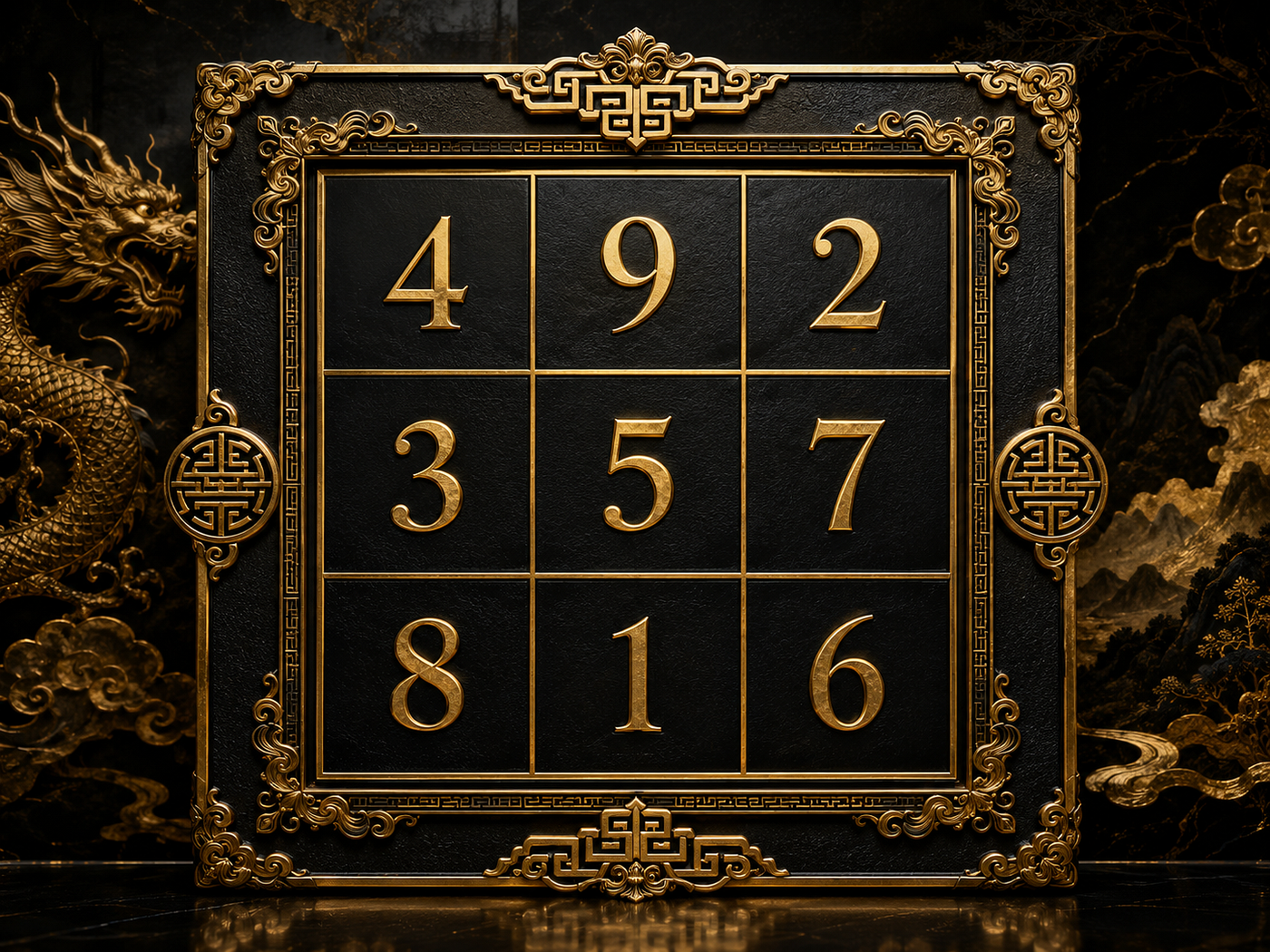
The numbers 1 to 9 are arranged in a fixed three-by-three pattern. Traditionally, Numbers 4, 9, and 2 form the upper row. Numbers 3, 5, and 7 occupy the middle row, while Numbers 8, 1, and 6 form the lower row.
Each digit from the date of birth is placed in its corresponding position. Zero is generally not included.
If a number appears more than once, it is repeated in the grid. If it does not appear in the date of birth, its position remains empty.
Numerologists study the numbers that are present, repeated, and missing. They may also examine complete lines or planes within the grid.
A present number may represent a naturally available quality. A repeated number may strengthen or intensify that quality. A missing number may indicate an area requiring more conscious development.
The Lo Shu Grid therefore provides a wider personality map than Mulank alone.
The Main Difference Between Lo Shu Grid and Mulank
The main difference is the amount of information used.
Mulank is calculated only from the day of birth. It identifies one primary number that represents central personality tendencies.
The Lo Shu Grid uses the complete date of birth. It shows several personality qualities at the same time and reveals how strongly or weakly they may appear.
Mulank may tell you that someone has a naturally independent or ambitious personality. The Lo Shu Grid may show whether that independence is supported by discipline, communication, emotional sensitivity, and practical planning.
For example, two people may both have Mulank 1. Both may show confidence and initiative. However, their Lo Shu Grids may be very different.
One person may have strong Number 4 and Number 8 energy, creating a structured and financially organised personality. The other may have repeated Number 3 and Number 5, creating a more creative, expressive, and adaptable style.
Their Mulank is the same, but the complete personalities are not identical.
Mulank 1: Leadership and Independence
Mulank 1 is traditionally associated with confidence, initiative, leadership, ambition, and personal independence.
People with this birth number may prefer making their own decisions. They often dislike excessive control and may feel motivated by opportunities to lead.
They can be determined and capable of beginning new projects. However, they may also become impatient, dominant, or unwilling to accept advice.
The Lo Shu Grid helps reveal how this leadership quality is expressed.
If Number 1 is repeated in the grid, confidence and self-expression may become stronger. If Number 2 is missing, the person may need to develop greater emotional sensitivity.
Strong Number 4 may add discipline, while missing Number 4 may make it difficult to convert ambition into organised action.
Mulank provides the main leadership theme, while the grid reveals the supporting qualities.
Mulank 2: Sensitivity and Cooperation
Mulank 2 is connected with emotional awareness, cooperation, intuition, diplomacy, and relationships.
These individuals may be attentive to other people’s feelings and naturally prefer harmony over conflict.
They can become supportive partners and thoughtful team members. However, they may also depend heavily on reassurance or take criticism personally.
The Lo Shu Grid can show whether this sensitivity is balanced.
Repeated Number 2 may intensify intuition and emotional awareness, but it may also increase insecurity. Strong Number 1 may help the person express needs more confidently.
Missing Number 1 may make them hesitant to state personal opinions. Number 4 may provide stability, while Number 5 can increase adaptability.
The combined interpretation helps distinguish healthy empathy from emotional dependence.
Mulank 3: Creativity and Expression
Mulank 3 is traditionally associated with creativity, optimism, communication, knowledge, and social expression.
These individuals may enjoy speaking, writing, teaching, performing, or sharing ideas.
They often bring humour and enthusiasm into social situations. However, they may become distracted, inconsistent, or overly concerned with recognition.
The Lo Shu Grid shows whether creative ability is supported by discipline.
Repeated Number 3 may strengthen communication and imagination. Strong Number 4 may help organise creative projects, while missing Number 4 may lead to unfinished work.
Number 8 may support ambition and business organisation. Number 7 may add analysis and depth.
Mulank 3 provides creative potential, while the grid shows whether that creativity is likely to become focused or scattered.
Mulank 4: Discipline and Original Thinking
Mulank 4 is often associated with structure, practicality, discipline, persistence, and unconventional thinking.
These individuals may approach problems differently and prefer creating their own systems.
They can be dependable and capable of working patiently. However, they may become rigid, stubborn, or resistant to sudden change.
The Lo Shu Grid reveals how this structured quality interacts with other traits.
Repeated Number 4 may increase organisation but also perfectionism. Number 5 may bring necessary flexibility.
Strong Number 3 can improve communication, while missing Number 2 may reduce emotional sensitivity.
Number 8 may strengthen professional ambition and long-term planning.
The combination shows whether discipline becomes a productive strength or excessive control.
Mulank 5: Freedom and Adaptability
Mulank 5 is traditionally connected with communication, freedom, curiosity, movement, adaptability, and change.
These individuals may learn quickly and enjoy variety. They often perform well in environments involving sales, travel, communication, business, or fast decision-making.
However, they may become restless, impulsive, or inconsistent.
The Lo Shu Grid shows whether freedom is balanced by responsibility.
Repeated Number 5 may intensify adaptability but make stability difficult. Number 4 can add routine and planning, while Number 6 may strengthen responsibility.
Strong Number 1 may support entrepreneurship, whereas missing Number 8 may indicate a need for better long-term financial organisation.
Mulank 5 describes the desire for movement. The grid shows whether that movement has direction.
Mulank 6: Love and Responsibility
Mulank 6 is associated with care, family, harmony, beauty, responsibility, and emotional warmth.
These individuals may value relationships and enjoy supporting the people they love.
They often seek comfort, stability, and meaningful companionship. However, they may become possessive, controlling, or overly responsible for other people.
The Lo Shu Grid adds important context.
Repeated Number 6 may strengthen family commitment but also increase interference. Number 2 can enhance emotional understanding, while strong Number 1 may help maintain personal boundaries.
Number 8 may support financial responsibility. Missing Number 5 may make adjustment difficult when family circumstances change.
The combined reading helps reveal whether care is balanced or excessive.
Mulank 7: Analysis and Inner Depth
Mulank 7 is traditionally connected with introspection, analysis, spirituality, intuition, research, and privacy.
These individuals may prefer meaningful conversations and require time to trust others.
They often enjoy studying complex subjects or understanding the deeper meaning behind experiences.
However, they may become withdrawn, overanalytical, or emotionally difficult to understand.
The Lo Shu Grid reveals whether their inner depth is supported by communication and action.
Repeated Number 7 may intensify analysis but increase isolation. Number 3 can improve expression, while Number 1 may support confidence.
Number 4 may help turn knowledge into structured work. Missing Number 2 may create difficulty recognising emotional signals.
Mulank 7 identifies the reflective personality, while the grid shows how effectively that reflection is shared and applied.
Mulank 8: Ambition and Material Responsibility
Mulank 8 is traditionally associated with authority, ambition, discipline, resilience, organisation, and material responsibility.
These individuals may take career, finances, and long-term security seriously.
They can be hardworking and capable of managing significant responsibilities. However, they may become overly focused on achievement, status, or control.
The Lo Shu Grid helps reveal how their ambition functions.
Repeated Number 8 may strengthen management ability but increase work pressure. Number 2 or Number 6 may add emotional and family awareness.
Strong Number 4 can support organisation, while missing Number 5 may reduce adaptability.
Number 9 may connect ambition with a broader purpose.
Mulank 8 provides the drive for achievement. The grid shows whether that drive is balanced with flexibility and emotional presence.
Mulank 9: Courage and Compassion
Mulank 9 is traditionally connected with courage, intensity, generosity, compassion, idealism, and a desire to make an impact.
These individuals may feel strongly about their beliefs and become deeply committed to people or causes.
They can inspire others, but they may also become impatient, emotional, or unrealistic.
The Lo Shu Grid shows whether their vision is grounded.
Repeated Number 9 may strengthen idealism and influence but increase emotional intensity. Number 4 may provide discipline, while Number 2 can deepen empathy.
Strong Number 8 may support leadership and practical execution. Missing Number 5 may make it difficult to adjust when reality does not match expectations.
Mulank 9 provides the emotional and visionary force. The grid reveals how that force is directed.
Present Numbers in the Lo Shu Grid
Present numbers show qualities that may be naturally available to the individual.
A person with Number 1 may find it easier to express opinions. Number 2 may support sensitivity, while Number 3 can encourage communication and creativity.
Number 4 may provide discipline. Number 5 can support flexibility, and Number 6 may strengthen responsibility.
Number 7 may add reflection, Number 8 organisation, and Number 9 broader vision.
These qualities can support or modify the Mulank.
For example, a Mulank 5 person with strong Number 4 energy may be more disciplined than the usual flexible Number 5 interpretation suggests.
A Mulank 8 person with strong Number 2 may be more emotionally aware and cooperative than a general Number 8 description.
This is why combined interpretation is more useful than relying on Mulank alone.
Repeated Numbers and Personality Intensity
Repeated numbers amplify particular qualities.
Double Number 1 may strengthen confidence and self-expression. Double Number 2 can increase emotional sensitivity, while double Number 3 may intensify creativity.
Double Number 4 can create strong discipline but also rigidity. Double Number 5 may strengthen adaptability while increasing restlessness.
Double Number 6 can intensify responsibility, and double Number 7 may deepen analysis.
Double Number 8 can increase ambition, while double Number 9 may strengthen idealism and emotional intensity.
Repeated numbers can either support or complicate the Mulank.
A Mulank 1 person with repeated Number 1 may become highly independent and dominant. A Mulank 2 person with repeated Number 2 may become extremely sensitive.
The goal is balance rather than maximum intensity.
Missing Numbers and Personal Development
Missing numbers may identify qualities that require conscious effort.
Missing Number 1 may create difficulty expressing opinions. Missing Number 2 may reduce emotional awareness, while missing Number 3 can affect creative communication.
Missing Number 4 may weaken discipline. Missing Number 5 can make adaptation difficult, and missing Number 6 may influence responsibility.
Missing Number 7 may reduce reflection, while missing Number 8 can affect long-term material planning. Missing Number 9 may limit broader vision.
A missing number does not cancel the Mulank.
For example, someone may have Mulank 1 but Number 1 missing from the full grid because the birth day reduces to 1 without containing the digit 1. Such a person may have an inner desire for independence but still struggle to express confidence consistently.
This apparent contradiction can produce a more nuanced personality interpretation.
Lo Shu Grid and Mulank in Relationships
Mulank may reveal the person’s natural relationship style, while the Lo Shu Grid shows how they communicate, manage emotions, and handle responsibility.
A Mulank 2 individual may seek emotional closeness. If Number 1 is strong in the grid, they may also express needs confidently.
A Mulank 5 person may value freedom. Strong Number 6 may still create significant family responsibility and commitment.
A Mulank 7 individual may require privacy. Strong Number 3 can help them communicate more openly than expected.
For compatibility, both Mulank and complete grids may be compared.
However, no numerical combination guarantees romantic success. Trust, honesty, emotional maturity, and shared values remain essential.
Lo Shu Grid and Mulank in Career
Mulank may indicate the style through which a person approaches work.
Mulank 1 may prefer leadership, Mulank 3 creative expression, and Mulank 5 communication or variety. Mulank 8 may focus on management and achievement.
The Lo Shu Grid shows whether supporting qualities are present.
A Mulank 3 person may have excellent creative potential, but missing Number 4 may create inconsistency. A Mulank 8 individual may be ambitious, but missing Number 2 may make partnerships more difficult.
A Mulank 7 person may possess analytical depth, while strong Number 1 and Number 3 help communicate expertise professionally.
Career decisions should still consider skills, education, interests, market demand, and practical opportunities.
Numerology may provide self-awareness, not a guaranteed profession.
Lo Shu Grid and Mulank for Financial Behaviour
Mulank may reveal broad attitudes toward money and ambition.
Mulank 1 may seek financial independence. Mulank 5 may enjoy opportunity and risk, while Mulank 6 may spend heavily on family or comfort.
Mulank 8 may focus on long-term material success, and Mulank 9 may connect wealth with purpose.
The Lo Shu Grid shows whether discipline, planning, flexibility, or financial responsibility support these tendencies.
Strong Number 4 can help with budgeting, while Number 8 supports organisation. Number 5 may encourage adaptability but also impulsive choices.
The combination can help people identify useful financial habits, but it should never replace qualified financial advice.
Which System Is More Accurate?
Neither system can be described as scientifically proven or perfectly accurate.
Mulank offers a simple and focused interpretation. It is easy to calculate and useful for understanding central personality traits.
The Lo Shu Grid provides greater detail because it uses the complete date of birth and shows several qualities at once.
The grid may therefore offer a broader personality picture, while Mulank provides a clear central theme.
The best interpretation often comes from using both systems together and comparing the result with real behaviour.
If the interpretation does not match a person’s lived experience, it should not be forced.
Numerology should encourage reflection, not create rigid labels.
Can Mulank and Lo Shu Grid Give Different Results?
Yes, and those differences may be useful.
A person may have Mulank 1, suggesting leadership and independence, but a grid missing Number 1 may reveal difficulty expressing those qualities.
Someone may have Mulank 5, traditionally associated with freedom, but repeated Number 4 in the grid may create a highly structured personality.
A Mulank 8 person may appear ambitious, while strong Number 2 and Number 6 reveal significant emotional and family sensitivity.
These results are not necessarily contradictory.
Mulank may represent an underlying drive, while the Lo Shu Grid shows how that drive is supported, blocked, or modified by other qualities.
How to Use Both Systems Together
Begin by calculating the Mulank from the day of birth.
Identify the central personality qualities traditionally associated with that number.
Next, create the Lo Shu Grid using the complete date of birth. Examine present, repeated, and missing numbers.
Consider which grid numbers support the Mulank. Then identify qualities that may create tension or imbalance.
For example, a creative Mulank 3 person with strong Number 4 may have the discipline to complete projects. If Number 4 is missing, developing routines may become essential.
A sensitive Mulank 2 person with repeated Number 1 may be both emotionally aware and assertive. If Number 1 is missing, expressing boundaries may require greater effort.
The purpose is to create a layered interpretation rather than a simple label.
Common Mistakes When Comparing the Two Systems
One common mistake is analysing Mulank without considering the complete date of birth.
Another is focusing on one missing or repeated Lo Shu number and ignoring the broader grid.
People may also interpret every number only positively or negatively.
Every quality has a balanced and unbalanced expression. Independence can become isolation, sensitivity can become insecurity, and discipline can become rigidity.
Another mistake is assuming that numerology removes personal responsibility.
A difficult number pattern does not excuse dishonesty, laziness, aggression, or controlling behaviour.
Numbers may describe tendencies. People remain responsible for their actions.
Can Personality Patterns Change?
The numbers derived from the birth date remain the same, but personality can develop significantly.
A person with missing Number 1 can learn confident communication. Someone with excessive Number 4 can become more flexible.
A sensitive Mulank 2 person can develop emotional boundaries, while a restless Mulank 5 individual can strengthen discipline.
A private Mulank 7 person can learn to express feelings more clearly.
Numerology may describe a starting tendency, but experience and conscious effort influence how it develops.
Personal growth often involves balancing natural strengths and deliberately building missing qualities.
Practical Questions to Ask
After comparing your Mulank and Lo Shu Grid, ask whether the interpretation matches your real behaviour.
Which qualities appear naturally? Which tendencies create repeated challenges?
Do you express the positive side of your Mulank, or does it often become excessive?
Which missing numbers may be affecting your communication, work, relationships, or financial habits?
How can you create practical routines that strengthen weaker areas?
These questions make numerology useful for personal development rather than passive prediction.
Final Thoughts
The comparison of the Lo Shu Grid and Mulank offers a broader way to understand personality through two traditional numerology systems.
Mulank is calculated from the day of birth and reveals a central personality theme. It may describe natural instincts, motivation, emotional style, independence, creativity, discipline, adaptability, responsibility, analysis, ambition, or compassion.
The Lo Shu Grid uses the complete date of birth. It reveals present, repeated, and missing numbers that may strengthen, modify, or challenge the Mulank interpretation.
Mulank may show the main direction of the personality, while the Lo Shu Grid provides the supporting structure.
Together, they can offer useful insights into communication, relationships, career behaviour, financial habits, personal strengths, and areas for growth.
However, numbers should never become limiting labels.
Your date of birth may describe symbolic tendencies, but your decisions, habits, education, environment, and life experiences determine how those tendencies develop.
Use both systems to understand yourself more deeply, recognise imbalances, and create practical improvement.
Explore your present, repeated, and missing numbers with the AstroDunia Lo Shu Grid Calculator and gain deeper insights into your personality, strengths, challenges, and personal-development patterns.
메타데이터
- post_id
- 6133cdcbd35d
- slug
- lo-shu-grid-and-mulank-understanding-personality-through-two-systems-6133cdcbd35d
- url
- https://medium.com/@astro.techit/lo-shu-grid-and-mulank-understanding-personality-through-two-systems-6133cdcbd35d
- canonical_url
- https://medium.com/@astro.techit/lo-shu-grid-and-mulank-understanding-personality-through-two-systems-6133cdcbd35d
- author_url
- https://medium.com/@astro.techit
- status
- ok
- fetched_at
- 2026-08-03 03:05:58