Why Iran Should Have the Nuclear Weapons
A critical examination of deterrence theory, historical experience, CIA involvement, and global nuclear politics
Politics
Why Iran Should Have the Nuclear Weapons
A critical examination of deterrence theory, historical experience, CIA involvement, and global nuclear politics
Concerns surrounding Iran’s nuclear programs have increased following the U.N’s international Atomic Energy’s announcement last week. (Atomic Energy Organization of Iran via AP, File)
Back in 2012, Kenneth Waltz, a neo-realist, wrote an article titled “Why Iran Should Get the Bomb.”
The key concern of Israel and the USA regarding Iran, for which this whole conflict is started, is that Iran never gets a nuclear weapon under any circumstances. If Iran obtains nuclear power, it would be a terrible disaster that would eventually lead to endless wars and chaos.
To prevent Iran from getting a nuclear weapon, Israel, from time to time, killed its scientists, bombed its nuclear sites, and conducted endless secret operations.
In this article, we counter this assumption and explore why Iran should have a nuclear weapon. By bringing Iran’s historical experience, the evolution of the global non-proliferation regime, and comparative cases like India and Pakistan, the article tries to move beyond simple narratives of “threat” and “security.” Instead, it explores how nuclear politics is shaped by perception, power, and interests, and why Iran’s case cannot be understood without looking at this larger picture.
The History, Independence, CIA, and National Pride
First, to understand why nuclear weapons are so important to Iran, we must first look at the country’s history. For Iran, having a highly advanced nuclear program is not just about making electricity or building bombs; it is a powerful symbol of its national identity, independence, and pride.
Iran considers itself as an ancient civilization that existed long before the origin of Western civilization
It has suffered deeply because foreign empires tried to control it. In the 19th century, the country was constantly squeezed between the British and Russian empires, and in the 20th century, British companies heavily exploited Iran’s massive oil resources for their own profit.
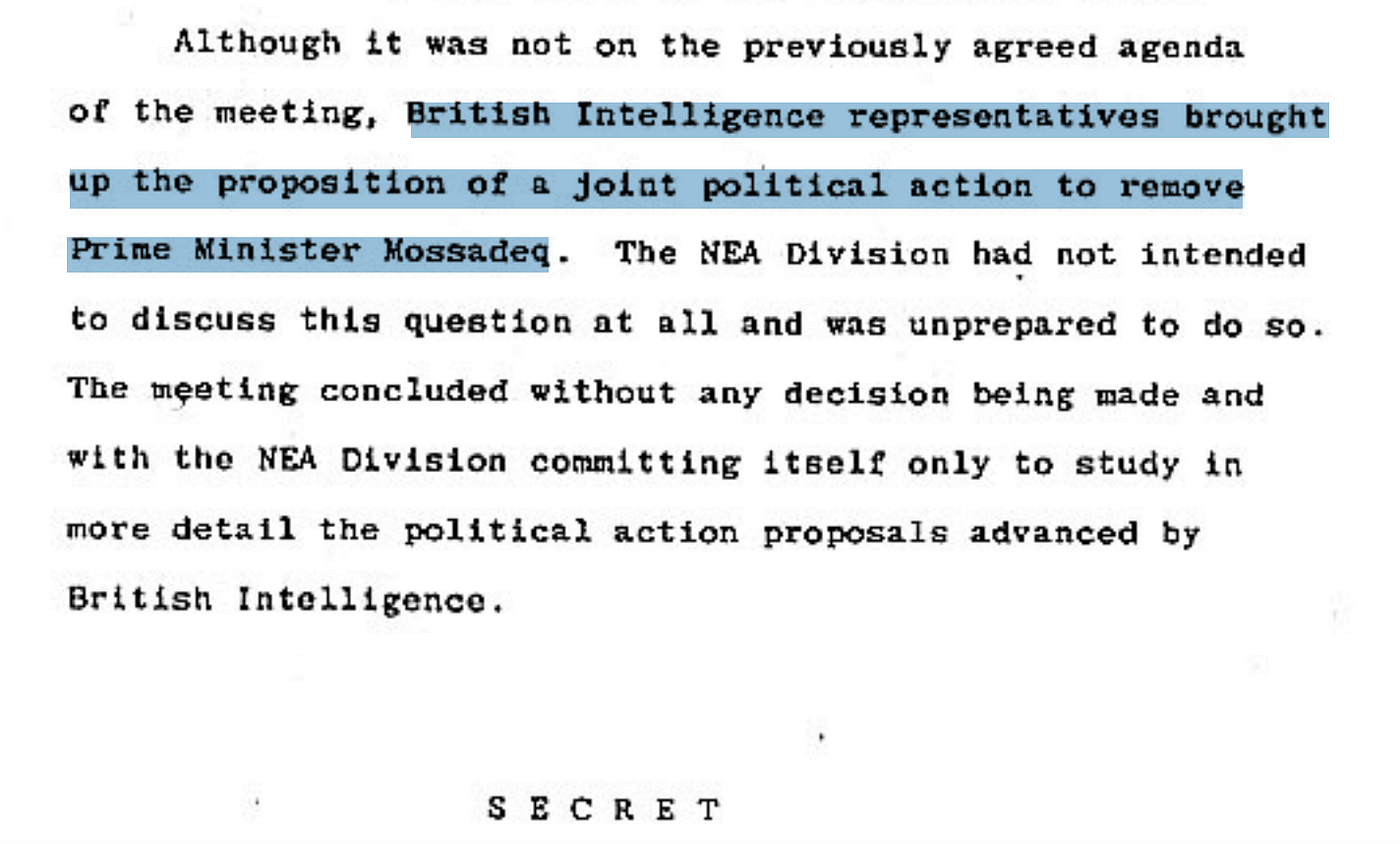
CIA Records, CIA Internal Histories Document 1 (Cover Sheet, Summary, I, II, III, IV, V, VI, VII, VIII, IX, X, Appendix A, Appendix B, Appendix C, Appendix D, Appendix E): CIA, Clandestine Services History, Overthrow of Premier Mossadeq of Iran: November 1952 — August 1953, Dr. Donald N. Wilber, March 1954
The most painful memory for the Iranian people happened in 1953. At that time, when the Iran had a highly popular prime minister named Mohammad Mosaddegh, who wanted Iran to have control over its own oil.
Because of this, the American CIA and the British government secretly worked together to remove him from power.
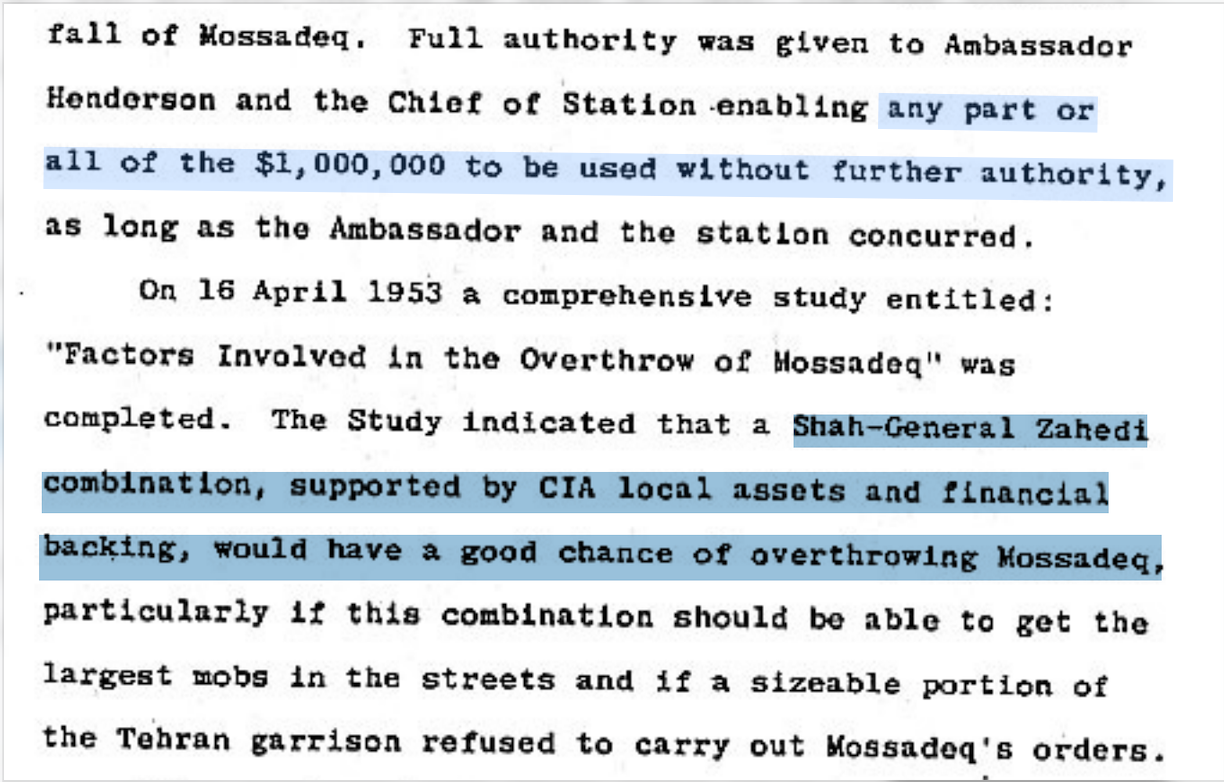
CIA Records, CIA Internal Histories Document 1 (Cover Sheet, Summary, I, II, III, IV, V, VI, VII, VIII, IX, X, Appendix A, Appendix B, Appendix C, Appendix D, Appendix E): CIA, Clandestine Services History, Overthrow of Premier Mossadeq of Iran: November 1952 — August 1953, Dr. Donald N. Wilber, March 1954
When the Iranian Revolution happened in 1979, the leaders wanted to make sure this would never happen again.
The top leader of the revolution, Ayatollah Ruhollah Khomeini, personally wrote down that “independence” was one of the primary goals of their new government.
The former supreme leader of Iran, Ali Khamenei, who was killed in the first few strikes at the beginning of the current conflict, believes that independence from foreign influence is just as important as the religious principles of the state. When asked what the greatest benefit of the 1979 revolution was,
Khamenei simply replied,
There was a deep desire to never be controlled again, and mastering nuclear technology became a way for Iran to prove it is a strong, modern, and self-reliant nation.
US helps Iran run its nuclear program, and Betrayal
Ironically, it was the United States that actually helped Iran to start the nuclear program back in the 1950s and 1970s under the **“Atoms for Peace”** program, when Iran was ruled by a king (the Shah) who was friendly to America.
But after the revolution, Iran had to build its program on its own, with US support.
Iran feels it must protect its right to this technology because relying on Western countries has proven to be dangerous and untrustworthy.
For example, Iran signed a major peace agreement in 2015 called the Joint Comprehensive Plan of Action (JCPOA).

IAEA Director General Yukiya Amano and Vice President of the Islamic Republic of Iran Ali Akhbar Salehi at the signing of a roadmap for the clarification of past and present issues regarding Iran’s nuclear program in Vienna. Coburg Palace, Vienna, Austria, 14 July 2015. Dean Calma / IAEA
Now the turning point came when
Under this deal, Iran agreed to limit its nuclear program, and in return, the West promised to lift severe economic punishments (sanctions).
But in 2018, the reality is that it was Trump who initially broke the promise and pulled out of the deal, crashing Iran’s economy.
For Iran, this proved that playing by the rules of the West does not bring safety.
Therefore, taking full control of its own nuclear destiny — even up to building a weapon — is seen as the only way to truly guarantee its independence and national dignity.
Constructivist Lens: Why Iran a Threat to Humankind? But not others
When we say that a nuclear Iran would be a disaster for humankind, not only for the Middle East but for the whole world. Then why is the nuclear weapon of Pakistan not a threat? Why are the nuclear weapons of the US, Russia, China, India, the UK, and France a threat to humankind?
So clearly, the issue is not just about the nuclear weapon; it is something else.
To understand this, we can use the idea of Constructivism, especially from **Alexander Wendt.**
He said very clearly that
The international system has no supreme authority; it is anarchic, but that does not automatically make everything dangerous.
The real issue is perception. How one state sees another state decides whether something becomes a threat or not.
For example, the United States does not fear nuclear weapons of the United Kingdom or France; in fact, it sees them as protection for Europe.
But the same nuclear weapons in the hands of North Korea or Iran are seen as a major global threat.
Why?- Because of how the state perceives them, as Alxneder Wendth said about it
So the fear of Iran is not just about nuclear weapons — it is about how the West perceives Iran.
Now comes the second argument, which is often used against Iran — that it supports proxy groups and militant organizations.
It is said that Iran backs Hezbollah in Lebanon, Houthis in Yemen, and Hamas in Gaza, all of which oppose Israel.
Because of this, many argue that Iran cannot be trusted with nuclear weapons.
But if this is the case, then the same argument should apply to Pakistan as well.
Pakistan is also a nuclear state, and there is strong evidence and a long history of supporting terrorist organizations and groups like Lashkar-e-Taiba, Jaish-e-Mohammed, and Hizbul Mujahideen, which have carried out major attacks not only in India but in the United States itself.
It was not just India that was targeted; even the mastermind behind the historic 9/11 terrorist attacks on the USA was eventually found in the homeland of Pakistan.
But again, Pakistan’s nuclear weapons are not treated as a global disaster by the West.
Why? Because these actions mainly affect India, not Western countries.
So again, perception and interest decide what is called a “threat.”
This is where the argument of Kenneth Waltz becomes important.
Waltz said that nuclear weapons actually create stability, not chaos. When countries like India and Pakistan both got nuclear weapons, they did not go into a full-scale war after that.
Why? Because nuclear weapons create fear of total destruction. So clearly the nuclear weapons brings the deterrence, it forces peace through fear.
Now comes the most controversial and surprising part: why some scholars argue that Iran should get nuclear weapons.
According to Neo Realist Kenneth Waltz, the biggest problem in the Middle East is the imbalance of power. For decades, Israel has been the only nuclear-armed state in the region.
This gives them an advantage. When one country has overwhelming power, it creates fear and instability in the system. As Waltz says, power naturally seeks balance.
So if Iran gets nuclear weapons, it would balance Israel’s dominance. And history shows that when this balance is achieved, direct war becomes less likely, not more.
The fear that a nuclear Iran would automatically lead to catastrophic war ignores how deterrence actually works.
Waltz said that India and Pakistan. Despite deep rivalry and repeated short conflicts, they have avoided full-scale war after becoming nuclear powers.
The reason is simple: both sides know that war could mean total destruction. This same logic could apply between Iran and Israel.
He also argues that once a country acquires nuclear weapons, it becomes more cautious because it understands its own vulnerability.
Even China, after becoming nuclear under Mao Zedong, showed more restraint over time. So there is no strong reason to assume that Iran would behave differently.
Finally, the fear that Iran would give nuclear weapons to non-state actors is highly unrealistic. Nuclear weapons are extremely valuable, complex, and tightly controlled.
No state would hand over such a powerful asset to groups it cannot fully control. A nuclear-armed Iran would secure its arsenal for its own survival, not risk losing control over it.
In the end, the issue is not only about nuclear weapons — it is about politics, perception, and power.
Who is seen as a friend, and who is seen as an enemy?
The same weapon can be called security in one case and disaster in another. That is the real contradiction at the heart of the global nuclear debate.
Indian Nuclear program, CIA, and the Politics of Nuclear Control: Who Gets the and Who Doesn’t?
To address the proliferation of nuclear weapons during the era of deterrence, just after the Cuban Missile Crisis, the United States and the Soviet Union began limiting nuclear testing through the Limited Test Ban Treaty (LTBT) in 1963. In 1968, the Eighteen-Nation Committee on Disarmament (ENCD) in Geneva introduced a historic treaty, backed by the efforts of the USA and the USSR, which was officially commended by the United Nations General Assembly. It stated that only those countries that had tested a device before January 1, 1967 — specifically the P5 countries (USA, USSR, UK, France, and China) — could possess nuclear weapons, while all other countries were forbidden from ever acquiring them.
As a result, India, Pakistan, and Israel never signed this treaty. India labeled the agreement “nuclear apartheid” and refused to sign it because of this perceived discrimination. Pakistan followed India’s lead and also did not sign the treaty. Similarly, Israel officially declined to sign and has since maintained a policy of “nuclear ambiguity,” neither confirming nor denying that it possesses nuclear weapons.
There is a long history of how India has been targeted by the CIA. The former Director of Clandestine Operations of the CIA, Robert Trumbull Crowley, in his book, “Conversations with the Crow” by Gregory Douglas, claims that the CIA assassinated Homi J. Bhabha, as well as Indian Prime Minister Lal Bahadur Shastri.
Homi Jehangir Bhabha was the father of the Indian nuclear program, and Lal Bahadur Shastri was the second Prime Minister of India. who supported the Indian nuclear program drastically.
Their deaths remain a subject of deep suspicion, as both were killed or died under mysterious circumstances, one after another
In January 1966, Prime Minister Shastri died by heart attack, according to so-called reports in Tashkent, just one day after signing a peace treaty to end the Indo-Pakistani War.
Just after two weeks, Dr. Bhabha was killed when his plane crashed over the Alps in Switzerland.
Many believe that it was not an accident, but rather a coordinated effort to thwart India’s nuclear ambitions.
According to Gregory Douglas, former CIA official Robert T. Crowley stated that India was very close to building a nuclear weapon in the 1960s.
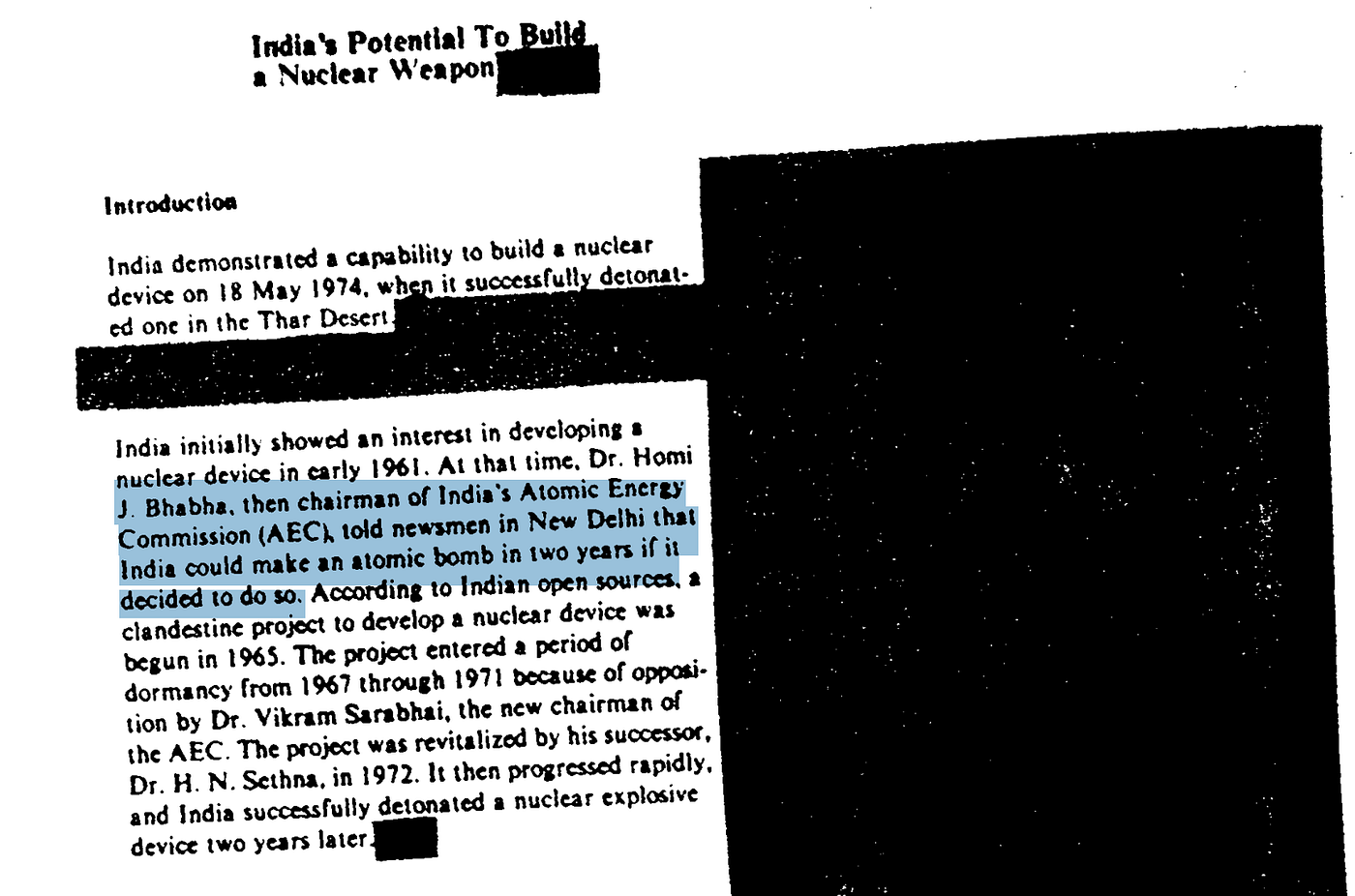
Image Source: CIA Directorate of Intelligence, “India’s Potential to Build a Nuclear Weapon,” Intelligence Assessment, July 1988. (Declassified/Approved for Release 2011).
The CIA reportedly viewed the program’s leader, Dr. Homi Jehangir Bhabha, as a major threat and planned his assassination by planting a bomb in the cargo hold of a commercial Air India 707 flight when he was traveling to Vienna.
Crowley detailed how the CIA deliberately timed the explosion to occur over when the plane is in high-altitude Alps rather than a city like Vienna, to ensuring the plane’s wreckage would fall in an isolated, inaccessible area.
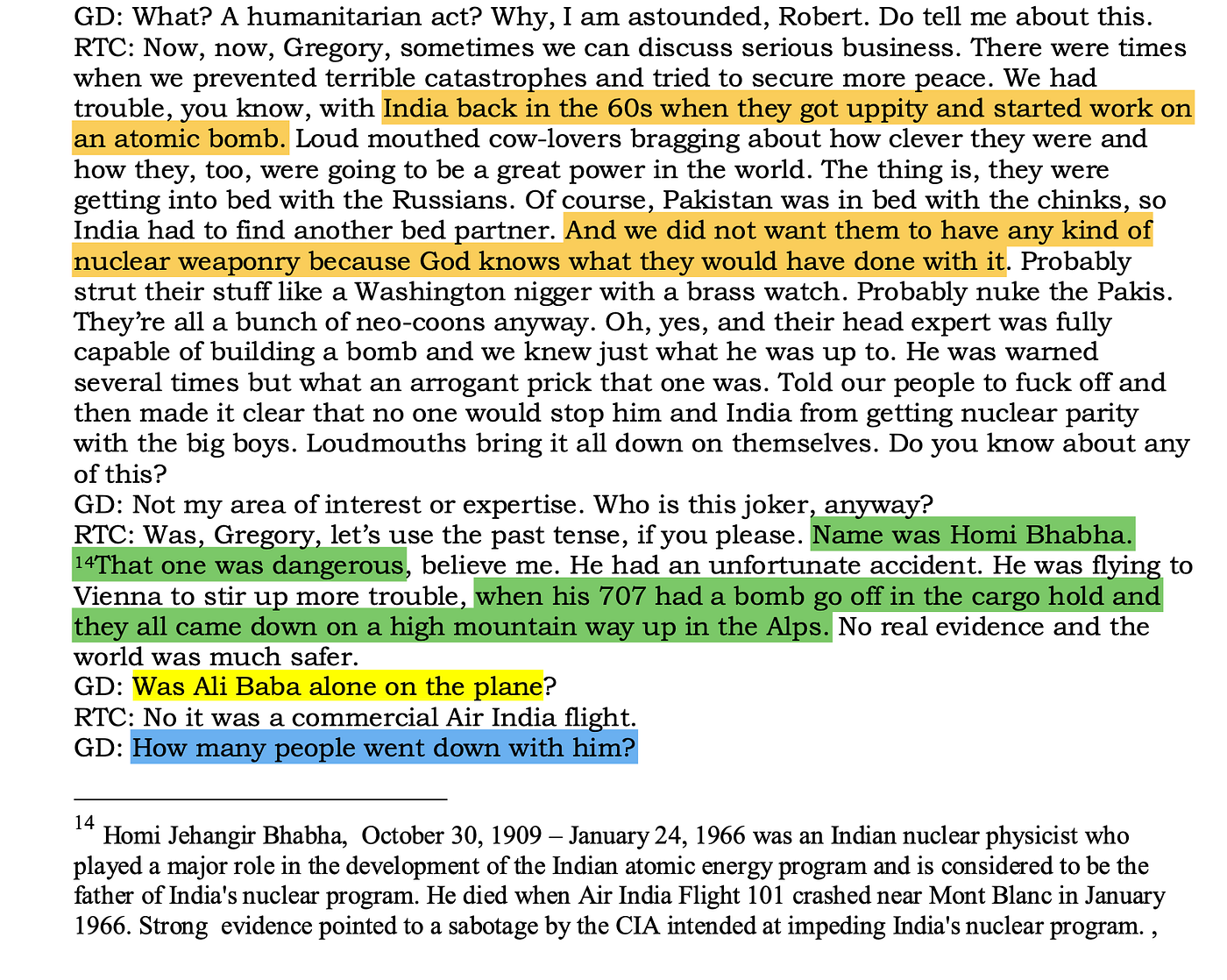
Image from: Douglas, Gregory. Conversations with the Crow: The Final Conversations of Robert Trumbull Crowley. 2013. Conversation 22, July 5, 1996.
Following the removal of Bhabha, the CIA also targeted Lal Bahadur Shastri, the Prime Minister who provided the critical political leadership and support for India’s nuclear ambitions.

Image from: Douglas, Gregory. Conversations with the Crow: The Final Conversations of Robert Trumbull Crowley. 2013. Conversation 22, July 5, 1996.
So, the CIA continuously tries to hold the Indian nuclear program, though India has successfully conducted the 1974 nuclear test, but it maintains ambiguity. It “steadfastly maintained that its nuclear research and energy program is peaceful” and actively resisted demands to publicly declare a weapons program.
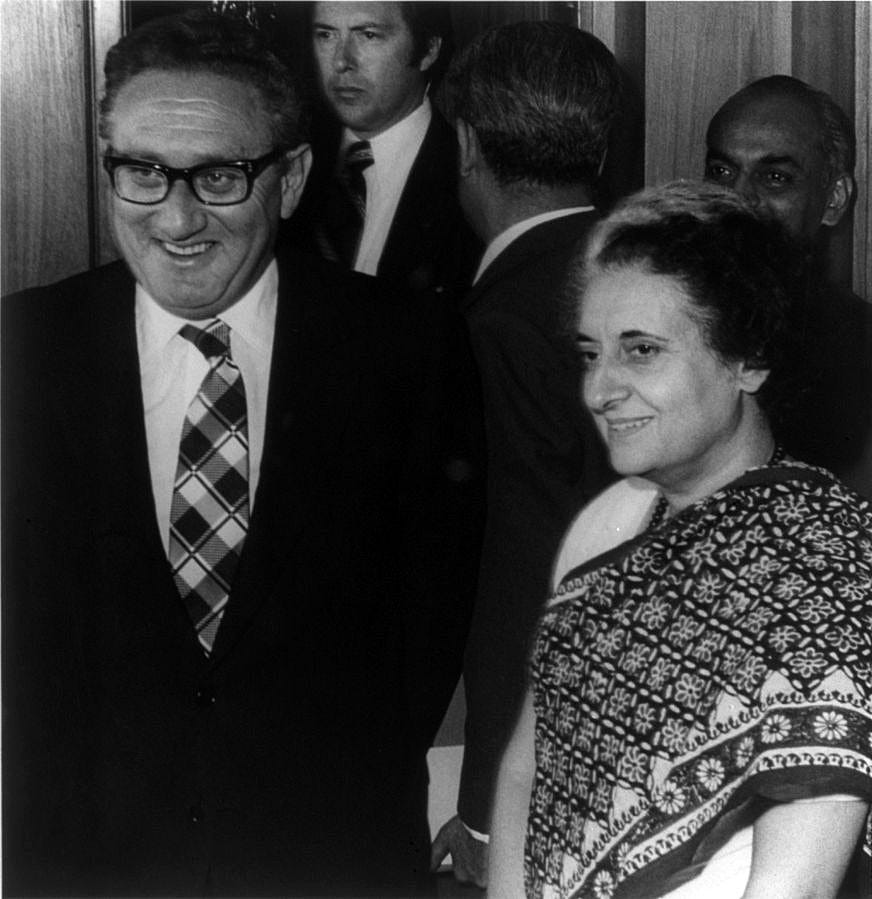
Several months after India’s first nuclear test, Secretary of State Henry Kissinger and Prime Minister Indira Gandhi met during the former’s visit, October 27–30, 1974. (Source: United States Information Agency, Public domain, via Wikimedia Commons
India officially declared it was “only testing a PNE, not an actual weapon, This “dual-use approach” allowed the Indian government to retain full freedom of action to secretly develop nuclear weapons options while officially rejecting international safeguards and refusing to sign the Nuclear Non-Proliferation Treaty (NPT). The CIA believed that the best move for India was to keep its nuclear program small and covert (secret). This was an “attractive option” because it was affordable and allowed India to keep up with Pakistan.
Most importantly, it gave India **“plausible denial”** — a way to deny having a bomb so it wouldn’t get hit with international sanctions or lose the foreign aid it desperately needed.
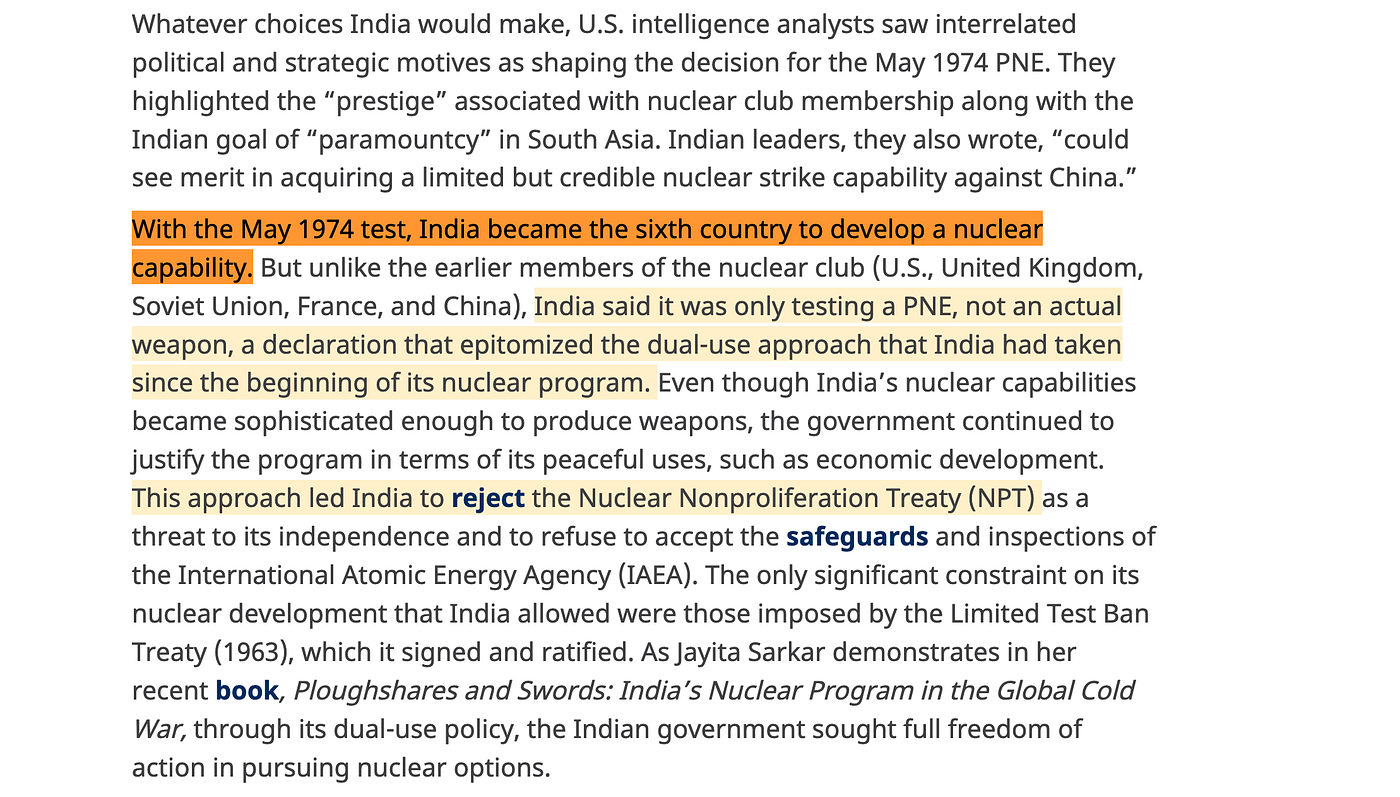
Image Source: Burr, William, ed. “The U.S., Canada, and the Indian Nuclear Program, 1968–1974.” National Security Archive, 9 Dec. 2022.
Ultimately, India did not officially step out of the shadows to declare itself a nuclear state until May 1998.
The Indian govt carried out this promise by conducting two sets of nuclear tests on May 11 and 13, 1998
The May 1998 nuclear tests caught the U.S. Intelligence Community completely by surprise. Just one month earlier, a CIA report had predicted that India was not planning to change its nuclear policy. Immediately after the tests, U.S. policy was aggressive. The Clinton administration imposed heavy economic and technological sanctions, cutting off aid and military sales to India.
The Limits of Deterrence: Can the Middle East Follow the Same Logic?
The thing that I have told you since the beginning of the article is just one side of the story, which states why Iran should get a nuclear weapon, and how the USA and the CIA are involved in preventing the proliferation of nuclear weapons, not only in Iran but in India too.
But according to the Kenneth Waltz the nuclear weapons ultimately bring stability. But that assumption may not fit when we apply it to the modern Middle East.
The application of Cold War deterrence logic to today’s regional dynamics is a dangerous oversimplification.
What worked between the United States and the Soviet Union cannot be directly applied to a region like the Middle East, where conflict is more fragmented, ideological, and fast-moving.
Many experts argue that instead of creating stability, a nuclear Iran could become a game-changing factor that destabilizes the region even further. One key concern is how Israel perceives Iran. For Israel, an Iranian nuclear capability is not just a strategic challenge — it is seen as a potential existential threat. This perception alone makes deterrence far more fragile than in other cases.
Even if both sides — Iran and Israel — develop a deterrence relationship similar to India and Pakistan, the risks remain extremely high.
The geography of the Middle East, short missile flight times, and the absence of deep trust or stable communication channels create a situation where miscalculation becomes far more likely. A small conventional clash could quickly escalate into something uncontrollable, even a nuclear exchange.
So the nuclear weapons automatically make states more cautious and defensive. In the case of Iran, this assumption is not fully convincing.
Iran already relies heavily on a network of proxy actors such as Hezbollah, Hamas, and the Houthis to project power and confront its adversaries. A nuclear shield could, instead of restraining Iran, embolden it. Protected by nuclear deterrence, Iran may feel more confident in expanding its proxy conflicts, knowing that direct retaliation from its adversaries would carry the risk of nuclear escalation.
And the Another major concern is the possibility of a regional and even global arms race. If Iran acquires nuclear weapons, countries like Saudi Arabia and Turkey could feel compelled to follow the same path.
This would transform the Middle East from a region with one undeclared nuclear state into a multi-nuclear environment, drastically increasing the chances of conflict.
At the same time, we should also not understand Iran’s own perspective.
For Iran, nuclear weapons are not simply about prestige or power projection — they are increasingly seen as essential for survival.
Iran’s historical experience, especially the 1953 Iranian coup d’état, and continued U.S. interventions in the region have created a deep sense of insecurity.
From Tehran’s perspective, nuclear capability becomes the ultimate guarantee against regime change and foreign intervention.
Recent conflicts and strikes have only strengthened this belief. For Iranian leadership, nuclear weapons are not a choice — they are seen as a necessity to ensure that no external power, particularly the United States, can dictate its future.
This also connects to a larger geopolitical reality. A nuclear Iran would directly challenge U.S. strategic dominance in the Middle East. It would weaken Washington’s ability to control regional dynamics, including energy routes and security arrangements.
For the U.S., preventing Iran from acquiring nuclear weapons is not just about non-proliferation; it is about maintaining its influence and strategic position in the region.
So we arrive at a paradox. On one hand, nuclear weapons could create deterrence and balance, as Kenneth Waltz suggests. On the other hand, the unique realities of the Middle East — proxy warfare, ideological hostility, rapid escalation risks, and regional rivalries — make that outcome highly uncertain.
In the end, the debate is not about whether nuclear weapons bring stability in theory, but whether they can do so in a region where miscalculation, mistrust, and constant conflict are already deeply embedded.
메타데이터
- post_id
- 6169eac34ab7
- slug
- why-iran-should-have-the-nuclear-weapons-6169eac34ab7
- url
- https://medium.com/the-geopolitical-economist/why-iran-should-have-the-nuclear-weapons-6169eac34ab7
- canonical_url
- https://medium.com/the-geopolitical-economist/why-iran-should-have-the-nuclear-weapons-6169eac34ab7
- author_url
- https://medium.com/@vikas162202
- status
- ok
- fetched_at
- 2026-07-14 13:54:22